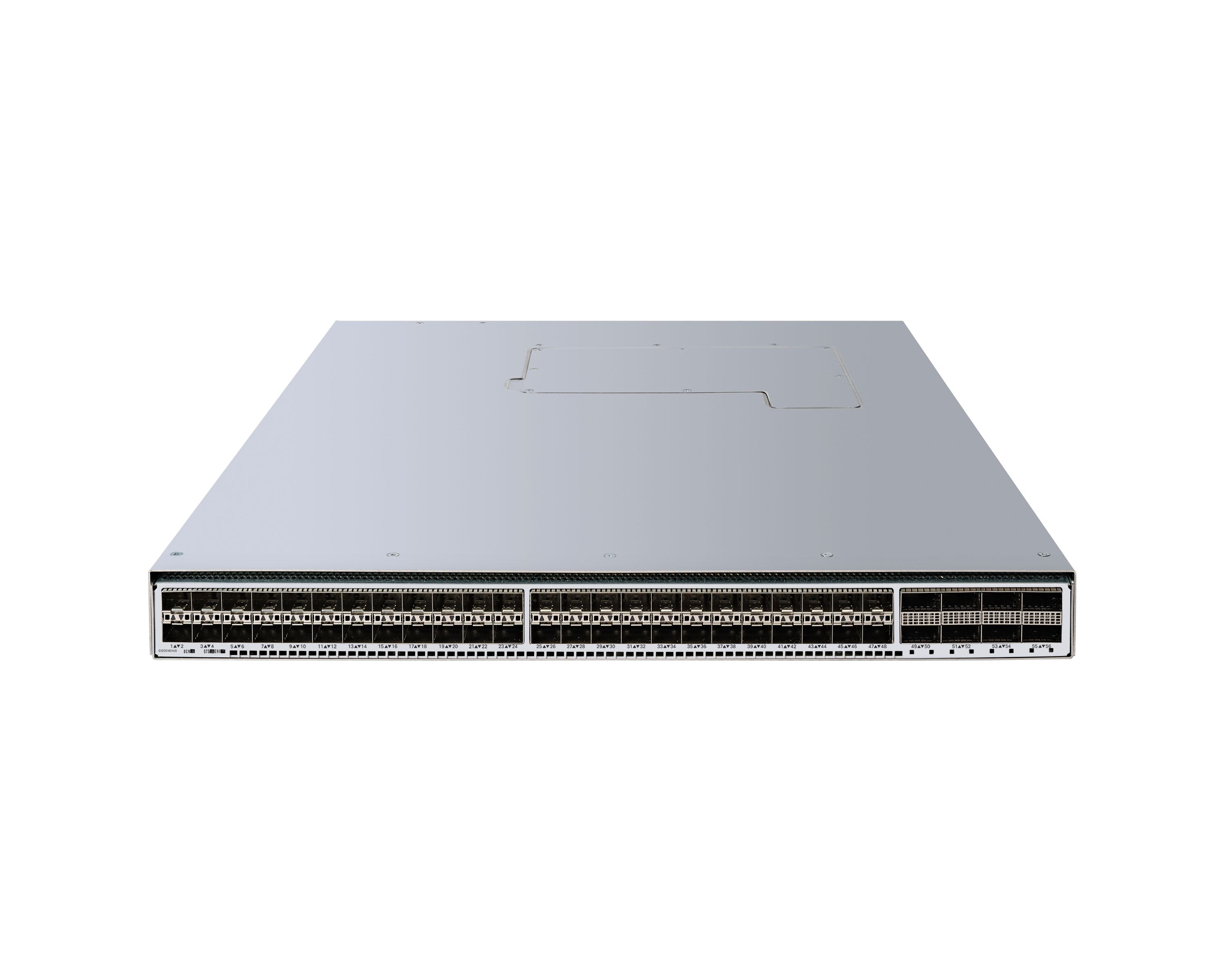
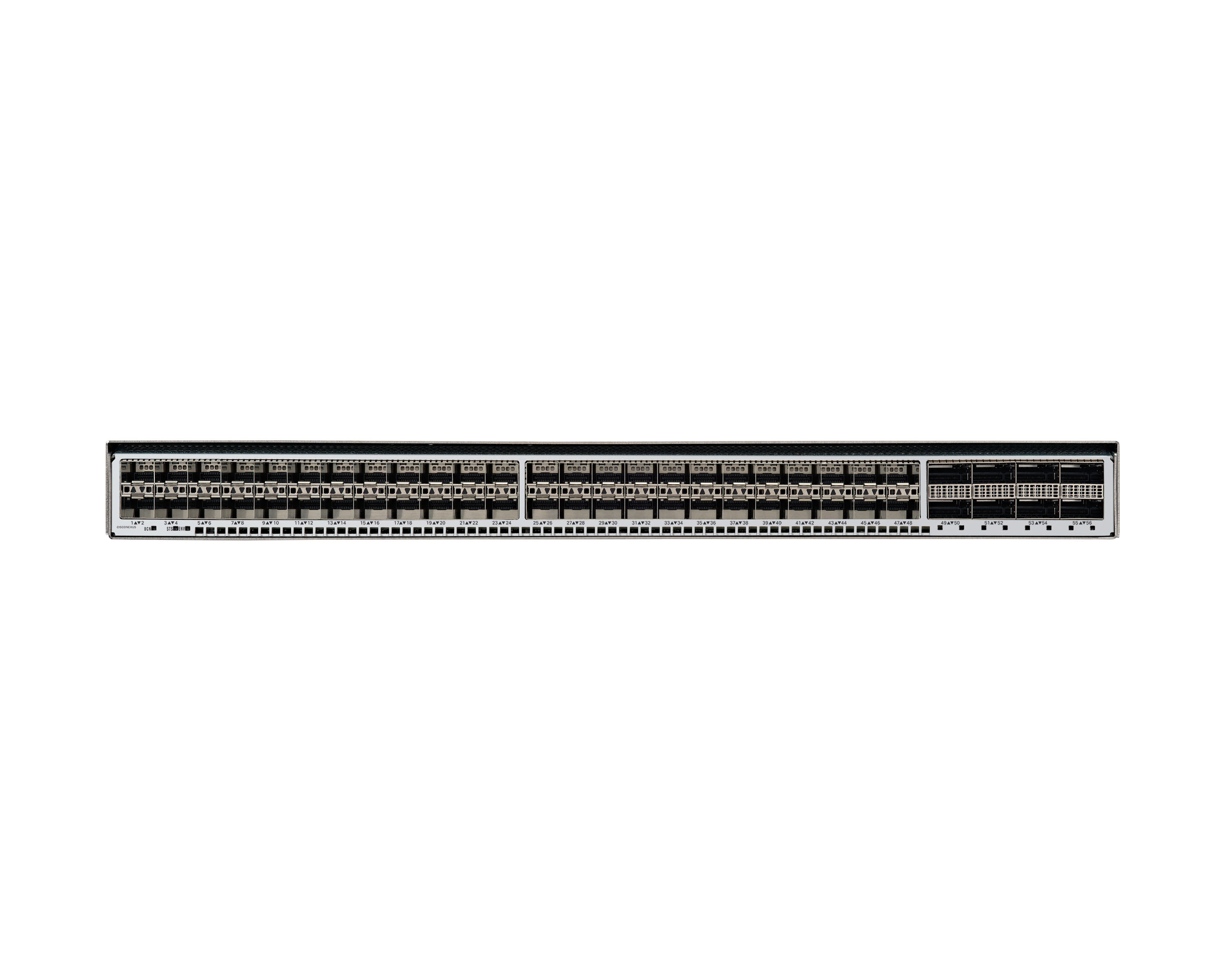
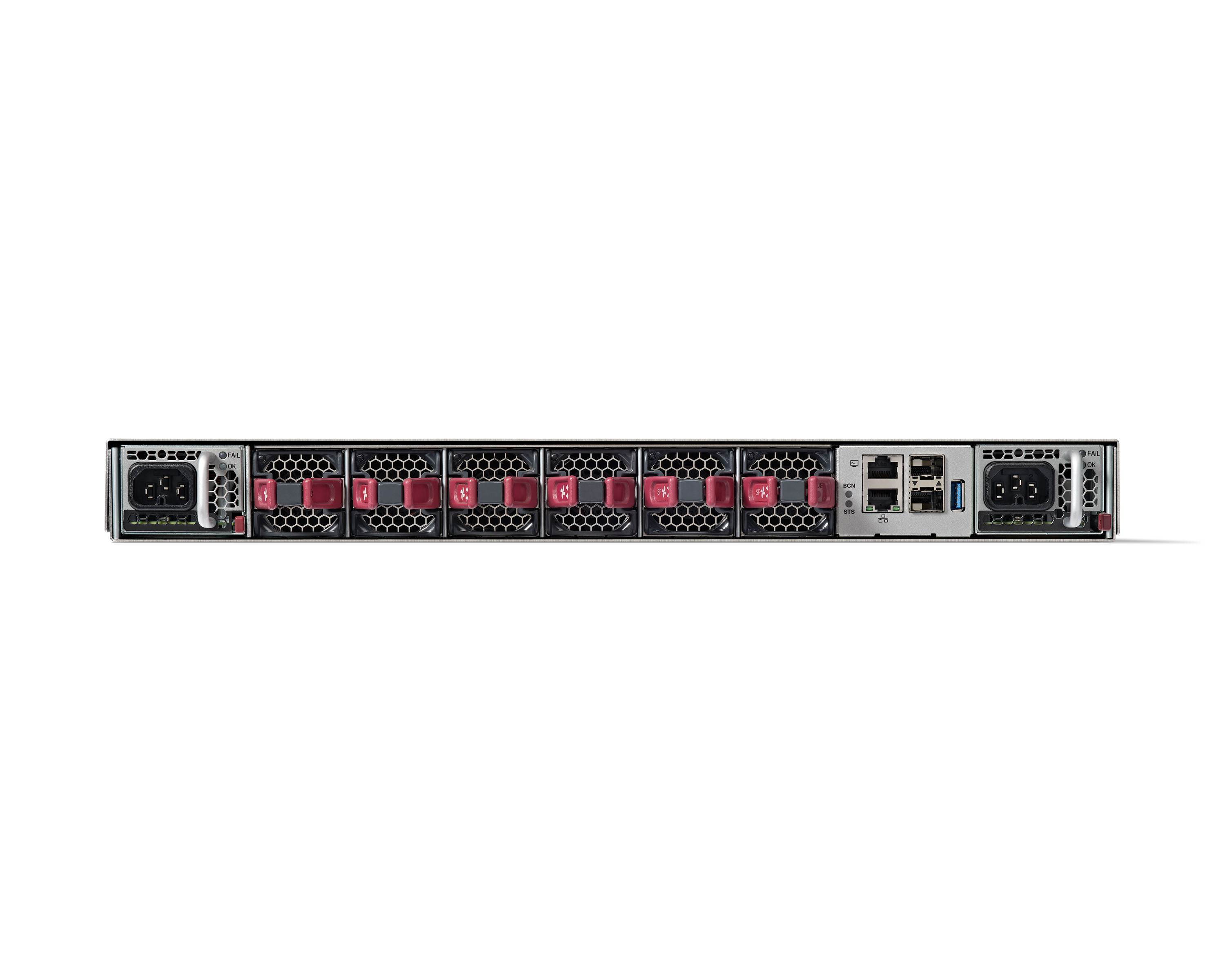
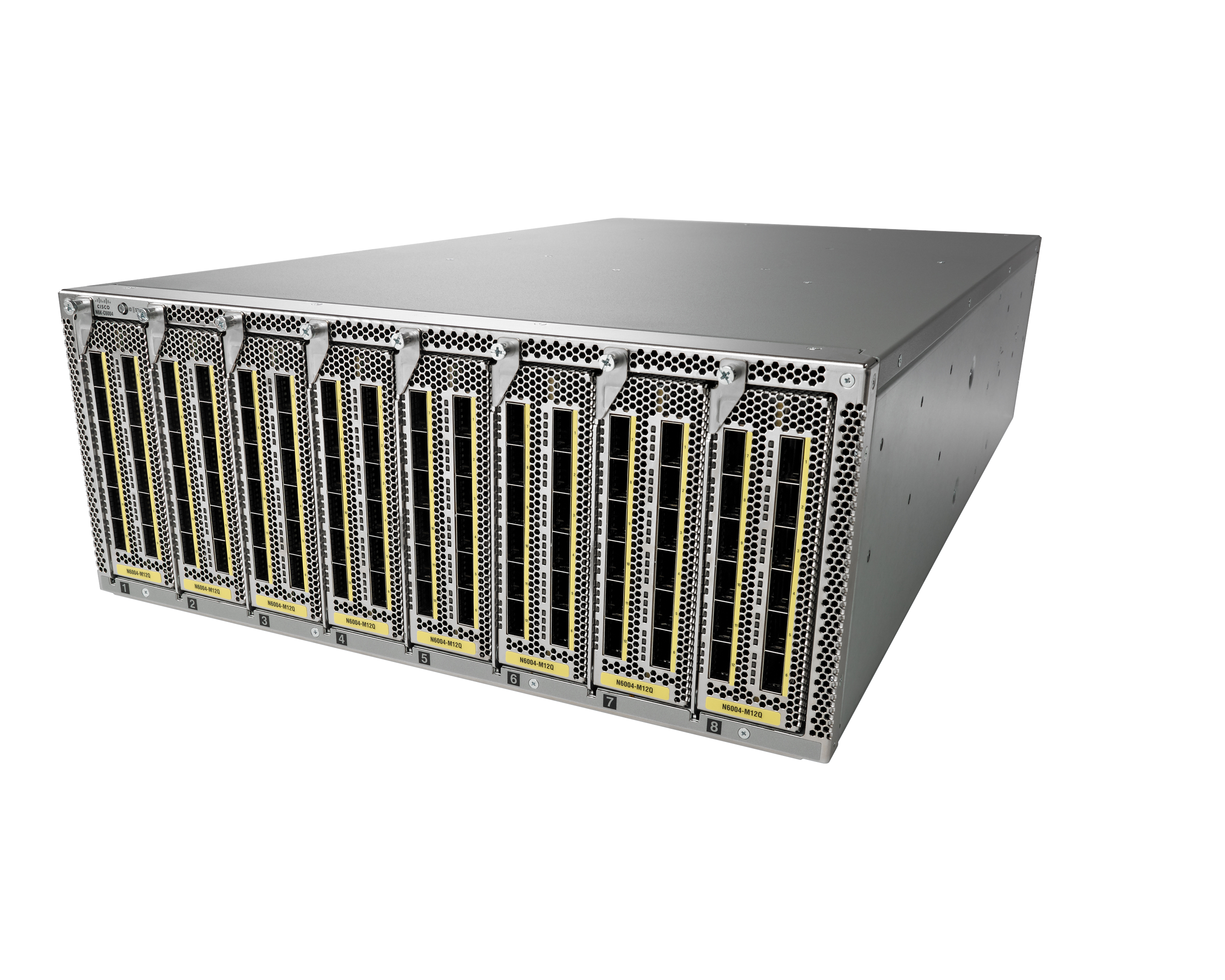
Cisco Nexus Dashboard simplifies data-center networks with automation and analytics. The data-center network helps organizations to meet business demands, and provision reliable data-center networking services as fast as possible, when and where organizations need it. As network infrastructure management is becoming more complex, diverse, and distributed, with multiple configuration points, monitoring tools, and vast amounts of data being generated every second. Cisco Nexus Dashboard is…
N/A
Cisco Nexus Series Switches
Score 9.3 out of 10
N/A
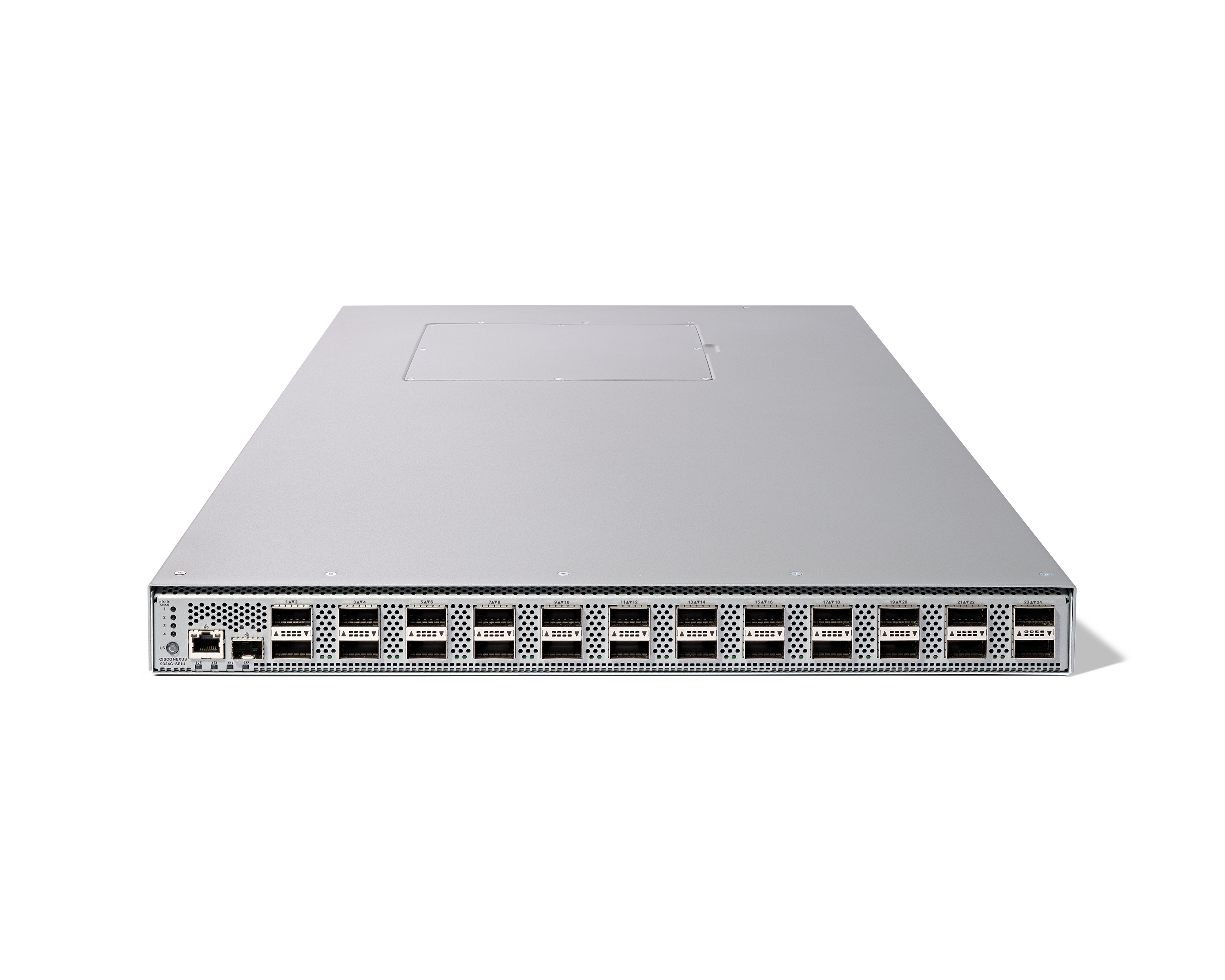
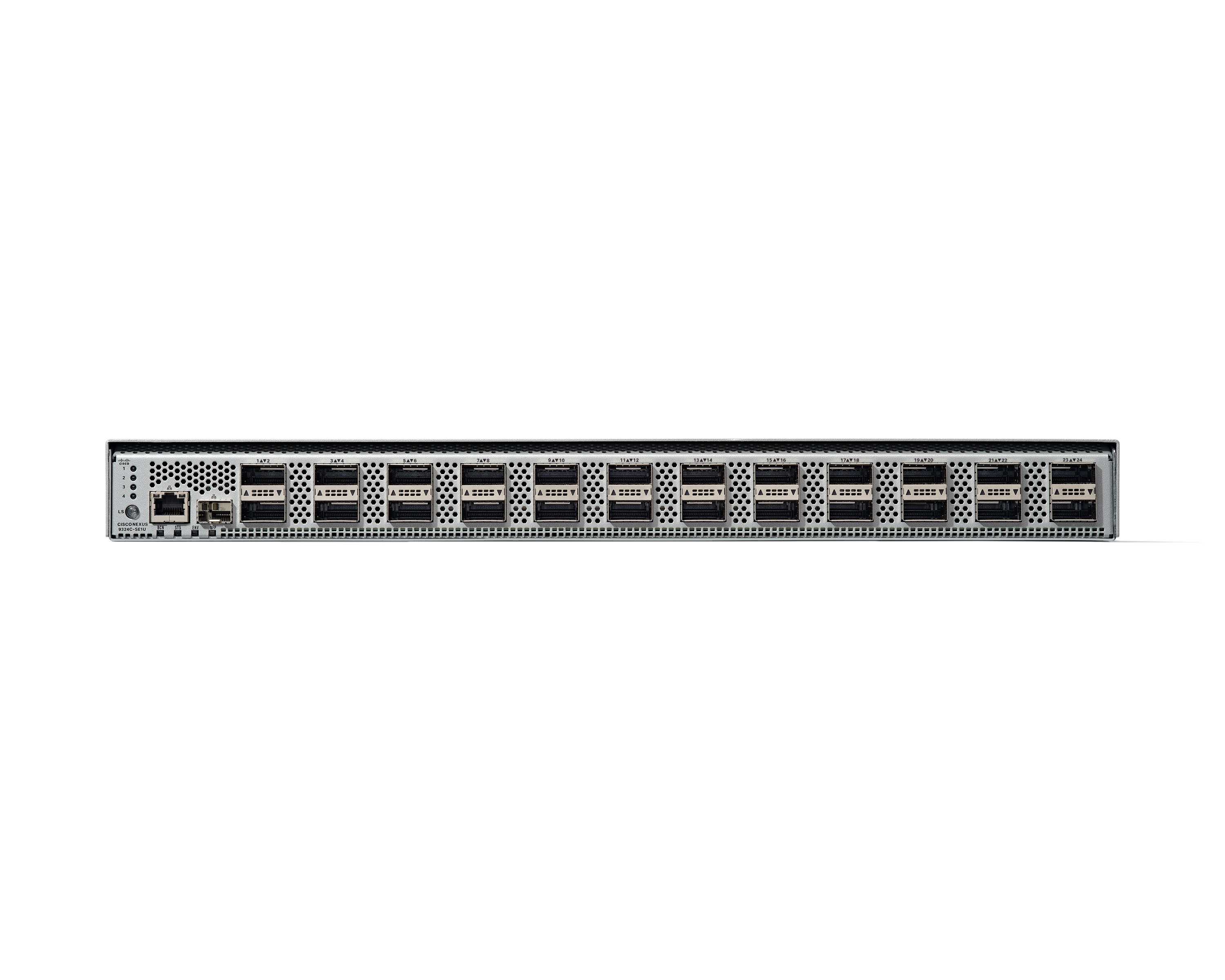
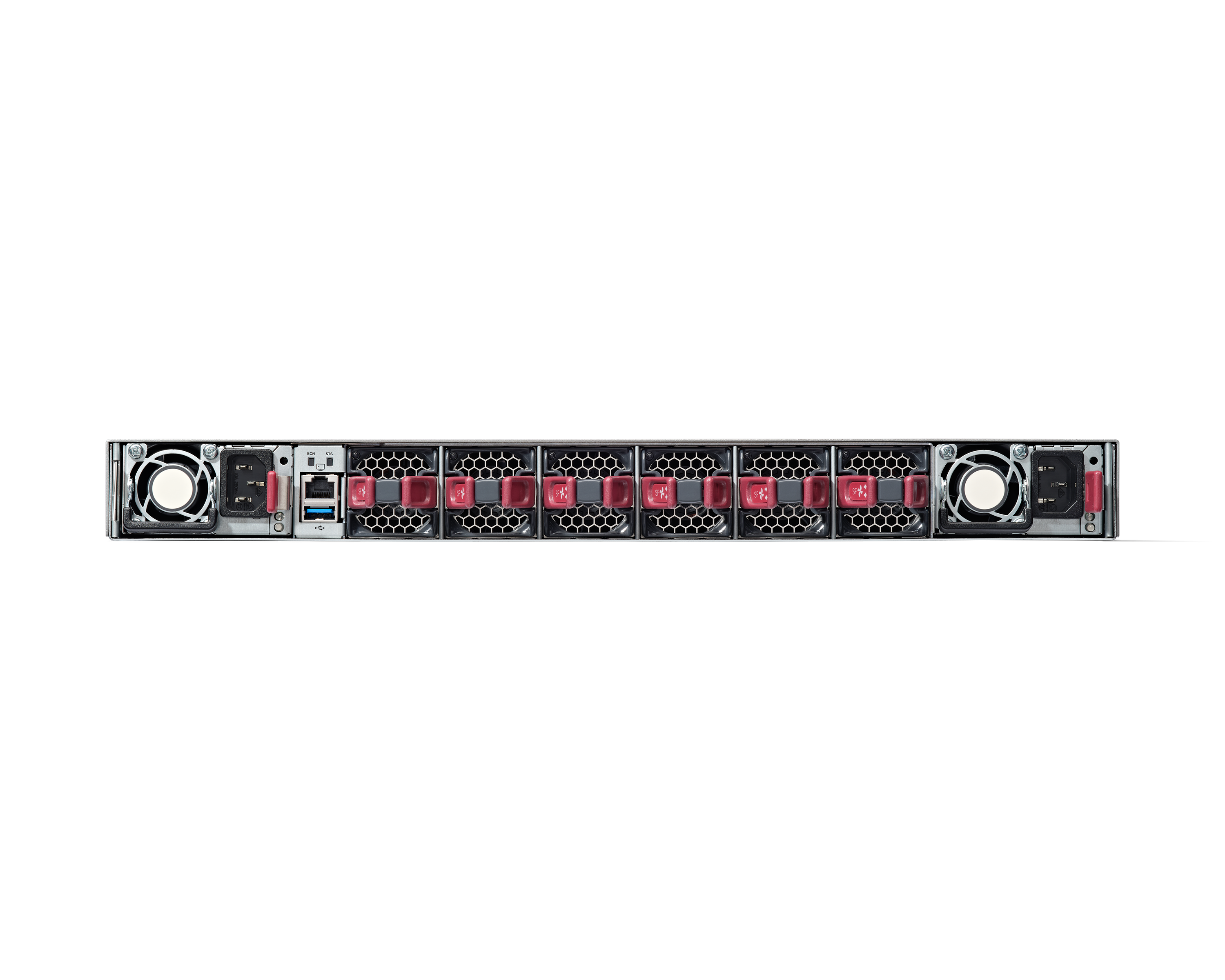
Cisco Nexus is a series of network switches.
N/A
Darktrace
Score 8.5 out of 10
N/A
Darktrace AI interrupts in-progress cyber-attacks, including ransomware, email phishing, and threats to cloud environments. It's able to detect and establish baselines for your organization so it can make the distinction between what is and what isn't normal network activity for your organization. This allows it to tackle complex cyber-attacks as they happen and prevent future cyber-attacks from happening.
We used Cisco Nexus Dashboard specifically for automating the creation of networks in our private cloud environment using a VXLAN EVPN multisite environment. It integrates into Infoblox well. It's also very suited in network troubleshooting for past and present issues. Where I don't see it being used much is in the campus but it's nice to know we have the ability to add catalyst if needed.
It fits perfectly in all our data centers where we are using it. For small companies or smaller racks or something. I don't think it fits there because Cisco Nexus Series Switches is a big one. It's the most advanced one.
Darktrace is a product well suited for the vast majority of infrastructures and helps monitoring and responding to threats based on the network in a very elastic way. This is a product based on on-premise infrastructures that hosts its machines locally, of course it can be technically difficult to monitor an entire On-Cloud infrastructure but even there there's room for sensors and monitoring, not to mention the SaaS and mail integration that completes the product.
Maintenance, upgrades, and software certification can be performed without service interruptions because of the modular nature of NX-OS and features such as In-Service Software Upgrade (ISSU) and the capability for processes to restart dynamically
FabricPath:
Enables each device to build an overall view of the topology; this is similar to other link state routing protocols. Each device in the FabricPath topology is identified by a switch-id. The Layer 2 forwarding tables are built based on reachability to each switch-id, not by the MAC address. Eliminates spanning-tree to maximize network bandwidth and flexibility in topological configurations, as well as simplify operational support and configuration. This enables a tremendous amount of flexibility on the topology because you can now build FabricPath topologies for Layer 2-based networks the same as for Layer 3-based networks
Overlay Transport Virtualization (OTV): Enables the Layer 2 extension between distributed data centers over any transport Layer 3 network
Uses it Al model UEBA to detect anomalies in the behaviour of not only the users in a corporate network but also the routers, servers, and endpoints in that network.
Provides a visualisation of both egress and outbound network traffics flowing in and out of the organisation.
Darktrace comes with it autonomous AI model detection and responses capabilities.
Darktrace as an AI next generation NDR solution, prevents ,contains and quarantines malicious traffics from and into the corporate network.
With the latest version release of Cisco Nexus Dashboard to version 3.0.1 I can say that most of the features have already improved but one of the wishlists that I want for ND is the possibility of extracting lists of Anomaly.
Include older versions of Firmware in the list of choices when doing the firmware upgrade analysis, currently only the recommended is in the list of choices.
If possible, include all the prechecks in the Firmware pre-upgrade analysis same in the script provided by Cisco.
Implementing jumbo frames on interfaces of its fabric extender series (N2k, etc.) by editing the network QoS does not have to be a global configuration that would affect all its interfaces. It can be improved to become just an interface configuration.
Licensing on the NXOS is a bit complicated and expensive. I understand that the Nexus is made for core data center switching but it does not have to break the bank.
OTV technology is for Nexus only. Based on the advantage of the technology, it should be made vendor-neutral to accommodate other vendor devices.
There are few areas that I would say need to be improved; their customer support portal allows you to log tickets with any suggestions or things you feel the product is missing, and they will generally show you how to achieve what you want, or in some cases, introduce it as a feature in a later update.
We observe significant product development with each release, along with substantial expansion of functionality. The program code has been consolidated into a single image, which simplifies installation and routine system update operations. Additionally, it is possible to install it outside the production network, which further enhances the solution’s availability.Additionally, the new graphical interface is very simplified and user-friendly.
Actually if we need to implement or develop our actual DC we will use Cisco Nexus Series Switches again. The solution is well known and we will be able to interconnect easily the switches, as we're not using all the possibilities of features we know what is solution is a long term solution.
For the end user, it is relatively easy to use. However, some training and practice is a must because the NSO is not as straightforward as the traditional router CLI. For the administrator, Cisco Network Service Orchestrator (NSO) is just like another program running on the Linux system--there is no big difference.
The platform has a good performance. The major issue is all the bugs you can discover across the operations, and it can be a big challenge depending on the number of Cisco Nexus Series Switches you have deployed. In our case, we own more than 200 Cisco Nexus Series Switches 9k, and we face an upgrade process, it could be a long time project to grant a new software deployment in all our switches platform.
The Darktrace toolset is very expansive, allowing it to handle many different tasks, but this leads to a user interface that is sometimes not at all intuitive. Icons don't always make sense visually, and the associated tool tips do not always provide enough detail on what action the button performs
Great and effective automation functionalities and the tools on network security management are the best and easy data reports building. Cisco Nexus Dashboard Fabric Controller feature for the network monitoring and easy management of various services and even offers the best analytics and also powerful integration tools for easy data migration.
These switches are very fast. They've been designed to work within the data center. We connect them to Cisco UCS-B Mini servers with the storage being directly attached. They are able to handle the data traffic pretty easily. We can also move servers pretty fast from data center to data center without overloading them. This has allowed our company to stay running during any kind of conditional outage. We have come to really rely on them for business continuity.
here was never a need to contact support, as the system includes several commands that allow for self-healing. Even if, after the upgrade process, one of the processes was not running, I was able to quickly find the appropriate sequence of commands that definitively resolved the issue. The entire architecture was designed in such a way as to be resilient to the failure of one node in a three-server setup.
Overall, Cisco has great products and I believe that they believe in the philosophy of a great customer experience. Although there have been a few technical support issues that caused a lot of company anxiety, in most cases, Cisco has gone above and beyond in making a valiant effort to help the customer solve any issues.
Darktrace support is excellent in my experience. They send a competent engineer on-site to provide on-boarding training. They were also very responsive in responding to questions and concerns. Having an individual point of contact who is a competent network and security engineer is not a common experience, at least for me.
Honestly, the product implementation took 1–2 days to comprehensively manage the client’s entire infrastructure. The delivered on-premise solution, provided as physical servers, quickly builds the required environment in which individual data centers are rapidly added. The data collection process takes some time but also depends on the number of devices in the network.
The Cisco Nexus Series switches perform admirably in our blended distributed system. We have been dealing with any of these sorts of switches for over 5 years and have been exceptionally happy with their functionality. Several of our other computer networks in our data rooms have proved effective with Cisco equipment. Because of the simplicity of maintenance and the high quality of technical support provided by Cisco representatives, there is a high level of trust in these switches.
The Cisco 9000 stacks up quite well against the Cisco Catalyst 3850 switches. The additional features available in the Nexus 9000, such as VPN, FCoE, 40 gigabits, give us the ability to support the future needs of the company in our data center. The Nexus 9000 allowed us to condense our core and aggregation environment that comprised of 2 Catalyst 6504 and 2 Catalyst 6509 to a port of Nexus 9000. Although the Catalyst 3850 would be sufficient to handle routing, those features in the Nexus 9000 made it the clear choice for us.
We did NOT select Darktrace. OSSIM/AlienVault is a more mature product and it provided better intelligence and reporting. The end user interface is much easier to use - and you can tell built form engineers who have had to do the work. My suggestion for anyone considering Darktrace, is to get the price upfront; do a 30/60 onsite trail; and do the same thing, at the same time, with AlienVault. AlientVault will win every time. I say that because that's exactly what I did.
We recently use the entreprise agreement on another perimeter, I could say that is linked to the typology of deployment. On our nexus perimeter, pricing and contract terms are defined without any evolution also is quite simple.
The platform is very well done, and to date, I have had no complaints about the implementation of the platform and no security issues or vulnerabilities. Cisco in all its product releases new versions to resolve security issues or bugs that appear on the platform, this is a big plus.
The Nexus 3000 series switches are data center switches, so I would say they have similar security ability to other switches in this segment. I don't have a lot of experience doing more than basic ACL security on switches, but I know these can be integrated into other security solutions like Cisco ISE and 802.1x authentication. It could also be integrated into an ACI solution to add micro segmentation, which would bring in other security functions.
One big positive is how it helps us with the security assessments that clients have done on us. They are looking to see if we know how we might have unusual/malicious traffic running on the network.
If you have a small network and only need 1 appliance, it can be a good ROI and peace of mind.
You could go down a hole in trying to spend time looking at all of your traffic with this software. You need to focus only on what it is showing as potential bad traffic.