CloudBees Continuous Integration (formerly the CloudBees Jenkins Platform) is a continuous integration (CI) and continuous delivery (CD) solution that extends Jenkins. Developed for on-premise installations, CloudBees CI offers stable releases with monthly updates, as well as additional proprietary tools and enterprise features to enhance the manageability and security of Jenkins. CloudBees CI helps administrators manage growing installations due to ever-increasing teams, projects and jobs…
N/A
GitLab
Score 8.8 out of 10
N/A
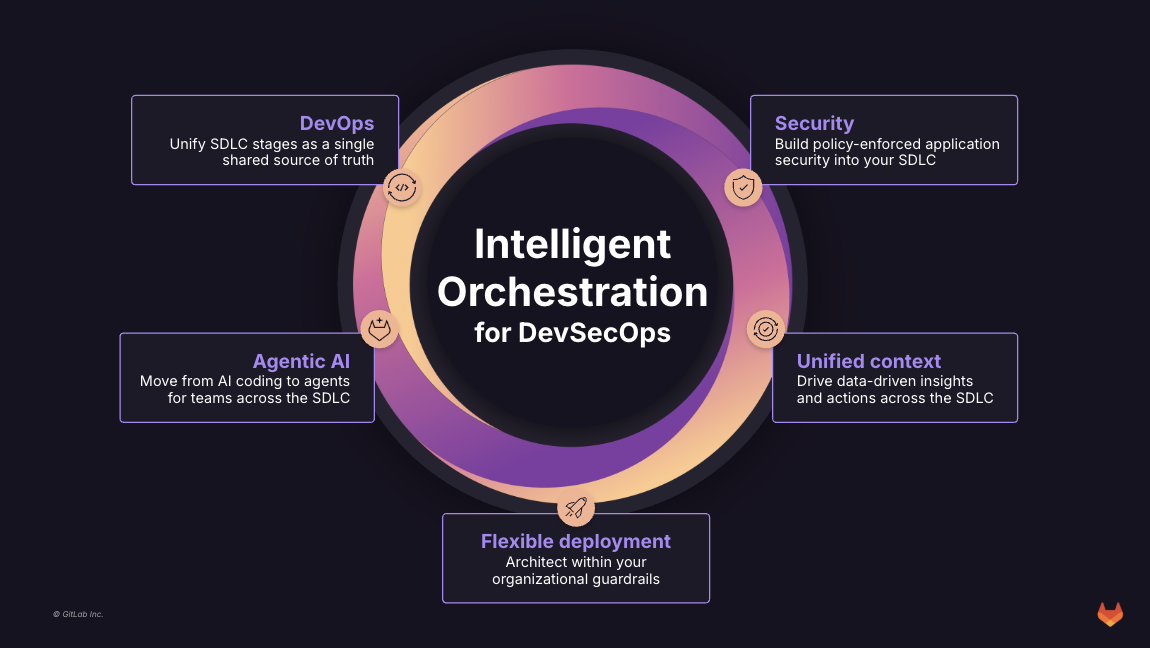
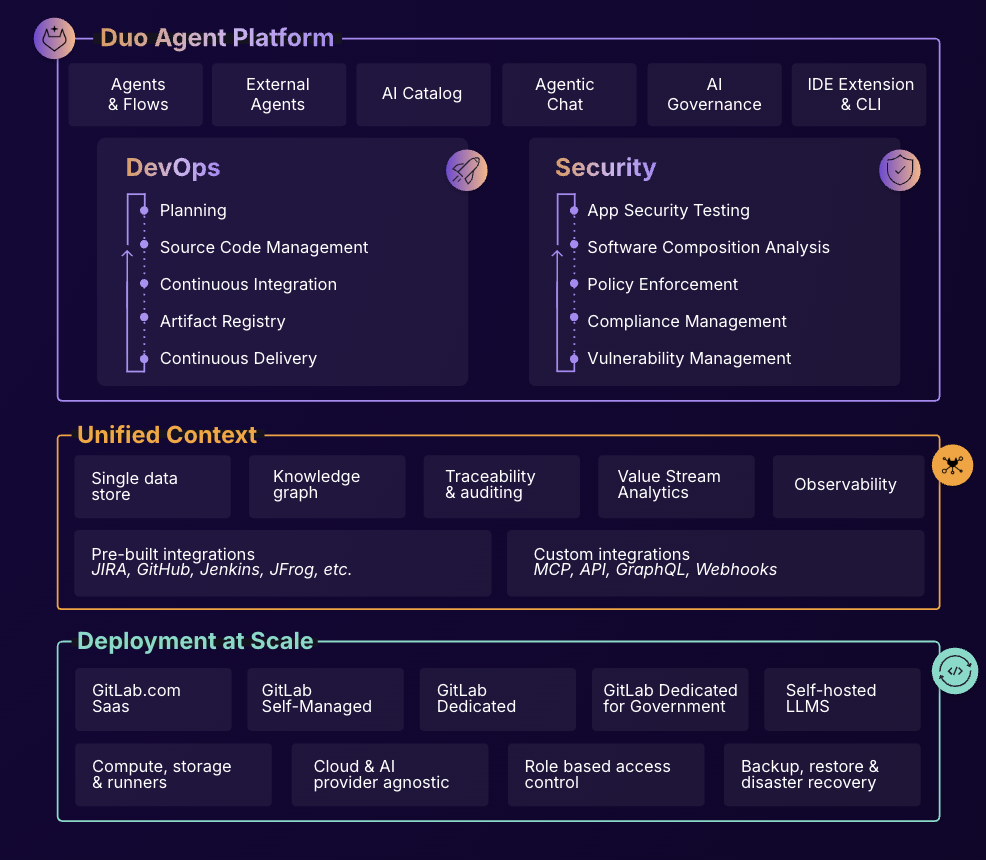
GitLab is an intelligent orchestration platform for DevSecOps, where software teams enable AI at every stage of the software lifecycle to ship faster. The platform enables teams to automate repetitive tasks across planning, building, securing, testing, deploying, and maintaining software.
$0
per month per user
GoCD
Score 8.0 out of 10
N/A
GoCD, from ThoughtWorks in Chicago, is an application lifecycle management and development tool.
N/A
Pricing
CloudBees Continuous Integration
GitLab
GoCD
Editions & Modules
No answers on this topic
GitLab Free (self-managed)
$0
GitLab Free
$0
GitLab Premium
$29
per month per user
GitLab Premium (self-managed)
$29
per month per user
GitLab Ultimate
Contact Sales
GitLab Ultimate (self-managed)
Contact Sales
No answers on this topic
Offerings
Pricing Offerings
CloudBees Continuous Integration
GitLab
GoCD
Free Trial
No
Yes
No
Free/Freemium Version
No
Yes
No
Premium Consulting/Integration Services
No
Yes
No
Entry-level Setup Fee
Optional
Optional
No setup fee
Additional Details
—
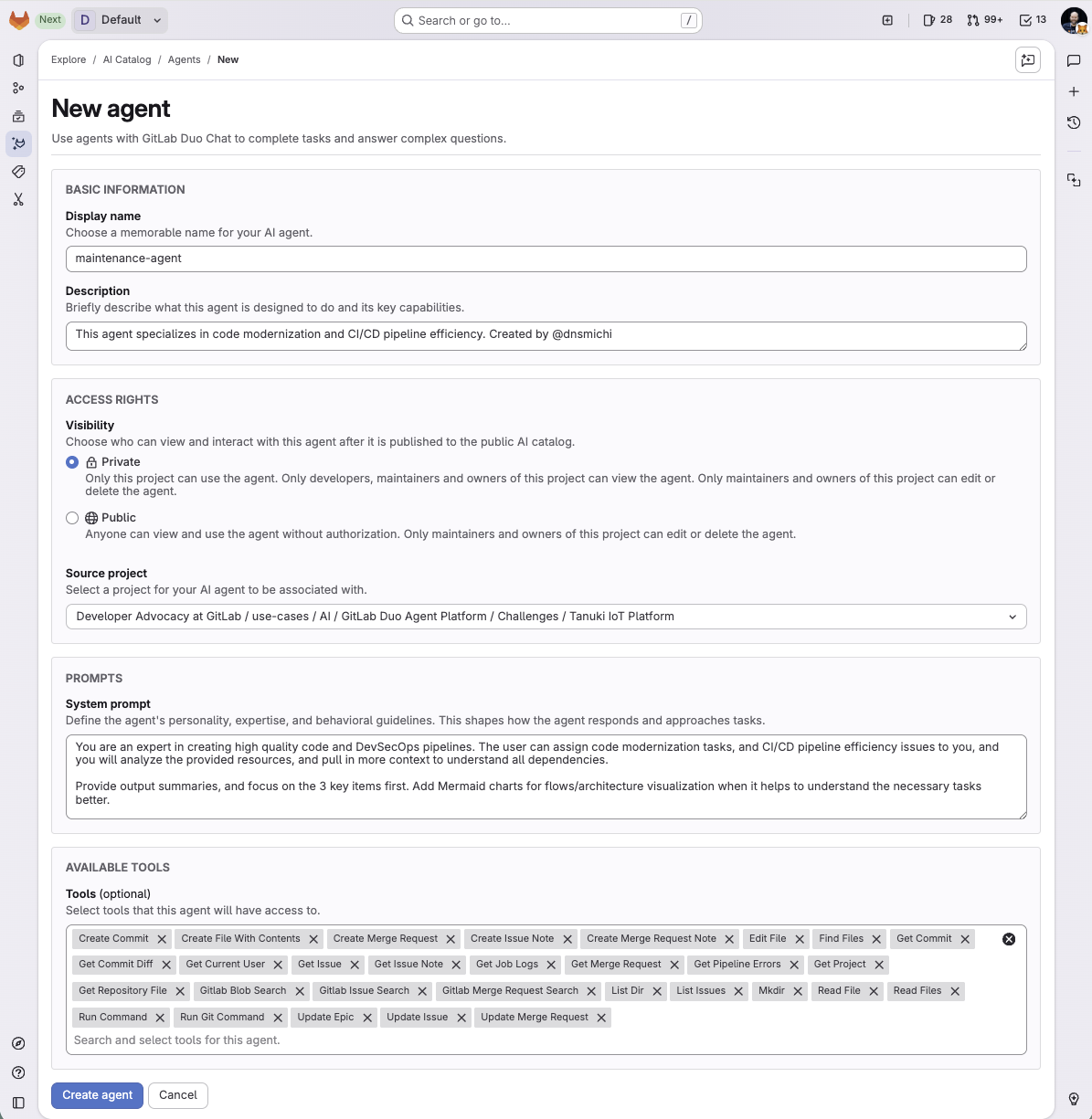
GitLab Credits enable flexible, consumption-based access to agentic AI capabilities in the GitLab platform, allowing you to scale AI adoption at your own pace while maintaining cost predictability. Powered by Duo Agent Platform, GitLab’s agentic AI capabilities help software teams to collaborate at AI speed, without compromising quality and enterprise security.
If usage exceeds monthly allocations and overage terms are accepted, automated on-demand billing activates without service interruption, so your developers never lose access to AI capabilities they need.
Real-time dashboards provide transparency into AI consumption patterns. Software teams can see usage across users, projects, and groups with granular attribution for cost allocation. Automated threshold alerts facilitate proactive planning. Advanced analytics deliver trending, forecasting, and FinOps integration.
Easy to lean, use, highly customizable pipelines, works well for version control, etc. Example Digital.ai gives all those features which can be done in Jenkins like builds, deployment, release management, etc. But, it requires universal templates to be created which are …
For all continuous integration features like multi branch pipeline, continuous build, and deployment execution, highly customizable groovy scripting, well integration with most of repositories like SVN, GIT, etc. are some of the exceptional features which helps devOps related tasks a treat to work everyday. With some minor changes in agent configuration and handling of their configuration on master instances would reduce a lot of issues. Also, cache of maven handling on agents needs to be improved (though not related to tool but the CI pipelines). But, since this is a very mature and performant tool, we expect some out of the box functionalities to handle all such scenarios. Overall, the tool works wonders because of its highly customizable features.
GitLab is good if you work a lot with code and do complex repository actions. It gives you a very good overview of what were the states of your branches and the files in them at different stages in time. It's also way easier and more efficient to write pipelines for CI\CD. It's easier to read and it's easier to write them. It takes fewer clicks to achieve the same things with GitLab than it does for competitor products.
Previously, our team used Jenkins. However, since it's a shared deployment resource we don't have admin access. We tried GoCD as it's open source and we really like. We set up our deployment pipeline to run whenever codes are merged to master, run the unit test and revert back if it doesn't pass. Once it's deployed to the staging environment, we can simply do 1-click to deploy the appropriate version to production. We use this to deploy to an on-prem server and also AWS. Some deployment pipelines use custom Powershell script for.Net application, some others use Bash script to execute the docker push and cloud formation template to build elastic beanstalk.
Pipeline-as-Code works really well. All our pipelines are defined in yml files, which are checked into SCM.
The ability to link multiple pipelines together is really cool. Later pipelines can declare a dependency to pick up the build artifacts of earlier ones.
Agents definition is really great. We can define multiple different kinds of environments to best suit our diverse build systems.
I really feel the platform has matured quite faster than others, and it is always at the top of its game compared to the different vendors like GitHub, Azure pipelines, CircleCI, Travis, Jenkins. Since it provides, agents, CI/CD, repository hosting, Secrets management, user management, and Single Sign on; among other features
I find it easy to use, I haven't had to do the integration work, so that's why it is a 9/10, cause I can't speak to how easy that part was or the initial set up, but day to day use is great!
I've never had experienced outages from GItlab itself, but regarding the code I have deployed to Gitlab, the history helps a lot to trace the cause of the issue or performing a rollback to go back to a working version
GItlab reponsiveness is amazing, has never left me IDLE. I've never had issues even with complex projects. I have not experienced any issues when integrating it with agents for example or SSO
Support seems very unreachable from my experience. They handle cases if developers are facing issues, support seems to be very limited. It's not like other tools in a market where every mail is being taken priority and responses are sent. We see a lack in this particular aspect when it comes to CloudBees Jenkins Platform.
At this point, I do not have much experience with Gitlab support as I have never had to engage them. They have documentation that is helpful, not quite as extensive as other documentation, but helpful nonetheless. They also seem to be relatively responsive on social media platforms (twitter) and really thrived when GitHub was acquired by Microsoft
CloudBees Jenkins Support is on par with the other enterprise tools we're currently using. It has performed well enough that we've adopted the product and placed it in the critical path of our software delivery pipelines.
Gitlab seems more cutting-edge than GitHub; however, its AI tools are not yet as mature as those of CoPilot. It feels like the next-generation product, so as we selected a tool for our startup, we decided to invest in the disruptor in the space. While there are fewer out-of-the-box templates for Gitlab, we have never discovered a lack of feature parity.
GoCD is easier to setup, but harder to customize at runtime. There's no way to trigger a pipeline with custom parameters.
Jenkins is more flexible at runtime. You can define multiple user-provided parameters so when user needs to trigger a build, there's a form for him/her to input the parameters.
Settings.xml need to be backed up periodically. It contains all the settings for your pipelines! We accidentally deleted before and we have to restore and re-create several missing pipelines
More straight forward use of API and allows filtering e.g., pull all pipelines triggered after this date