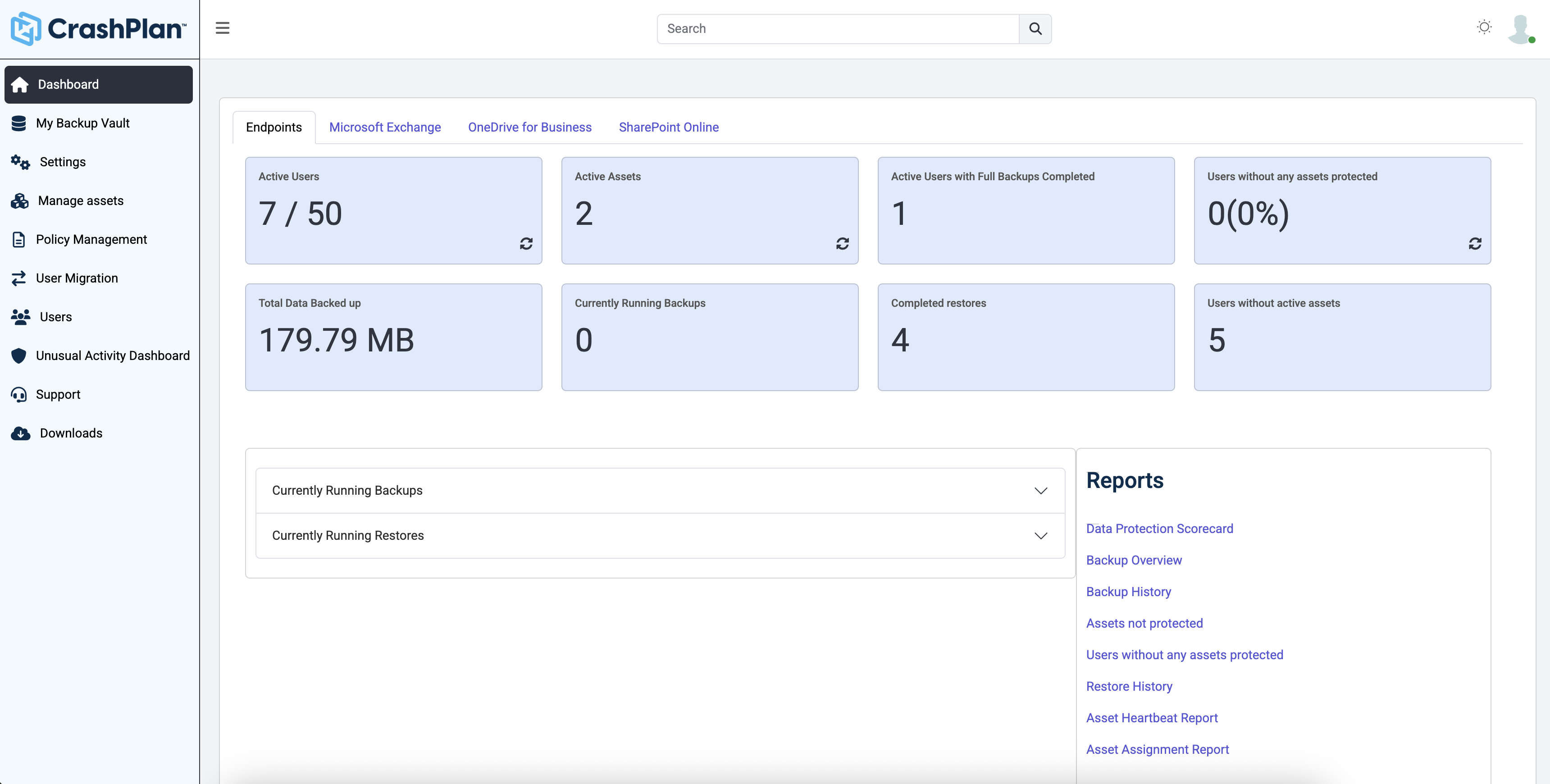
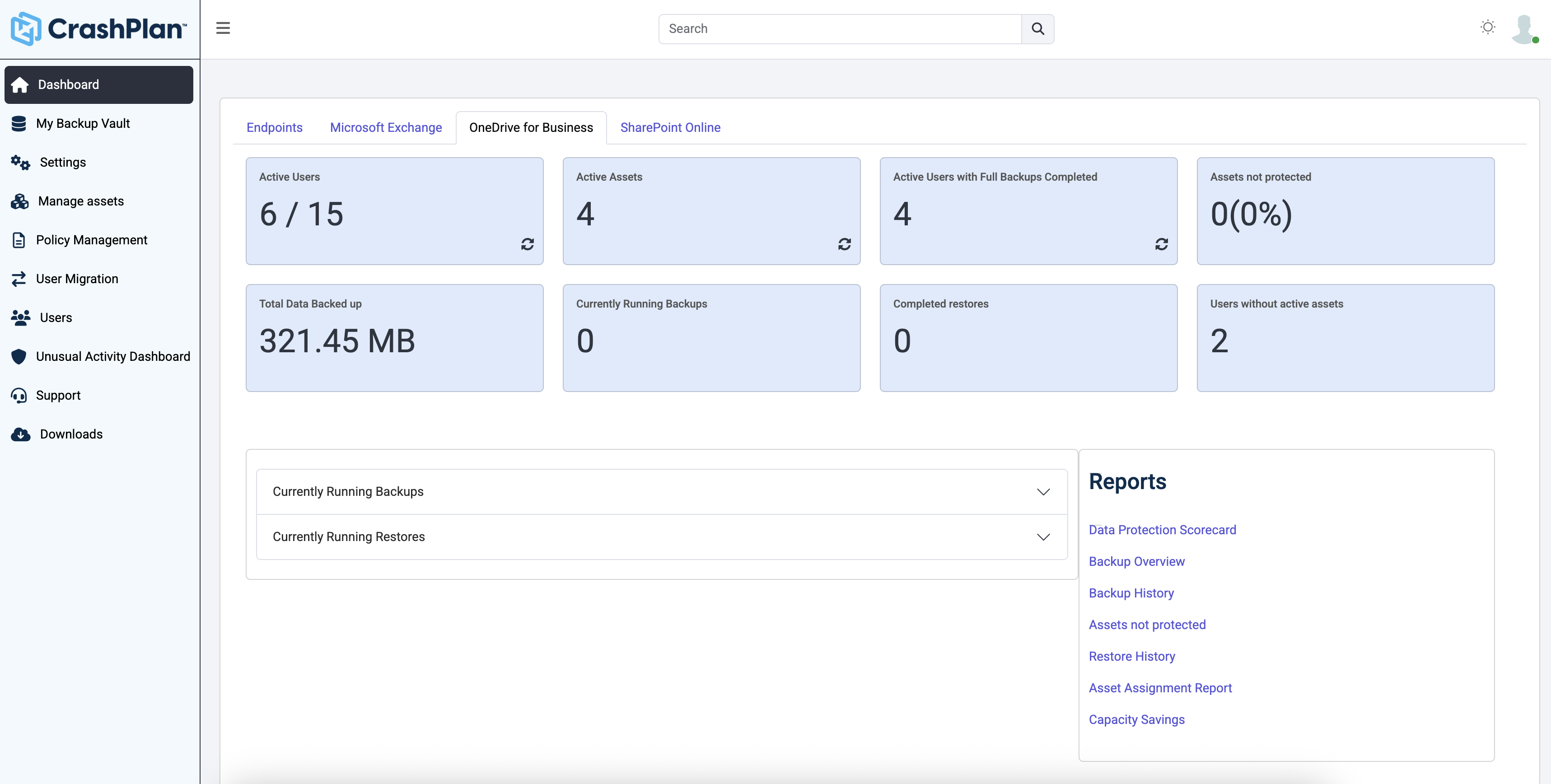
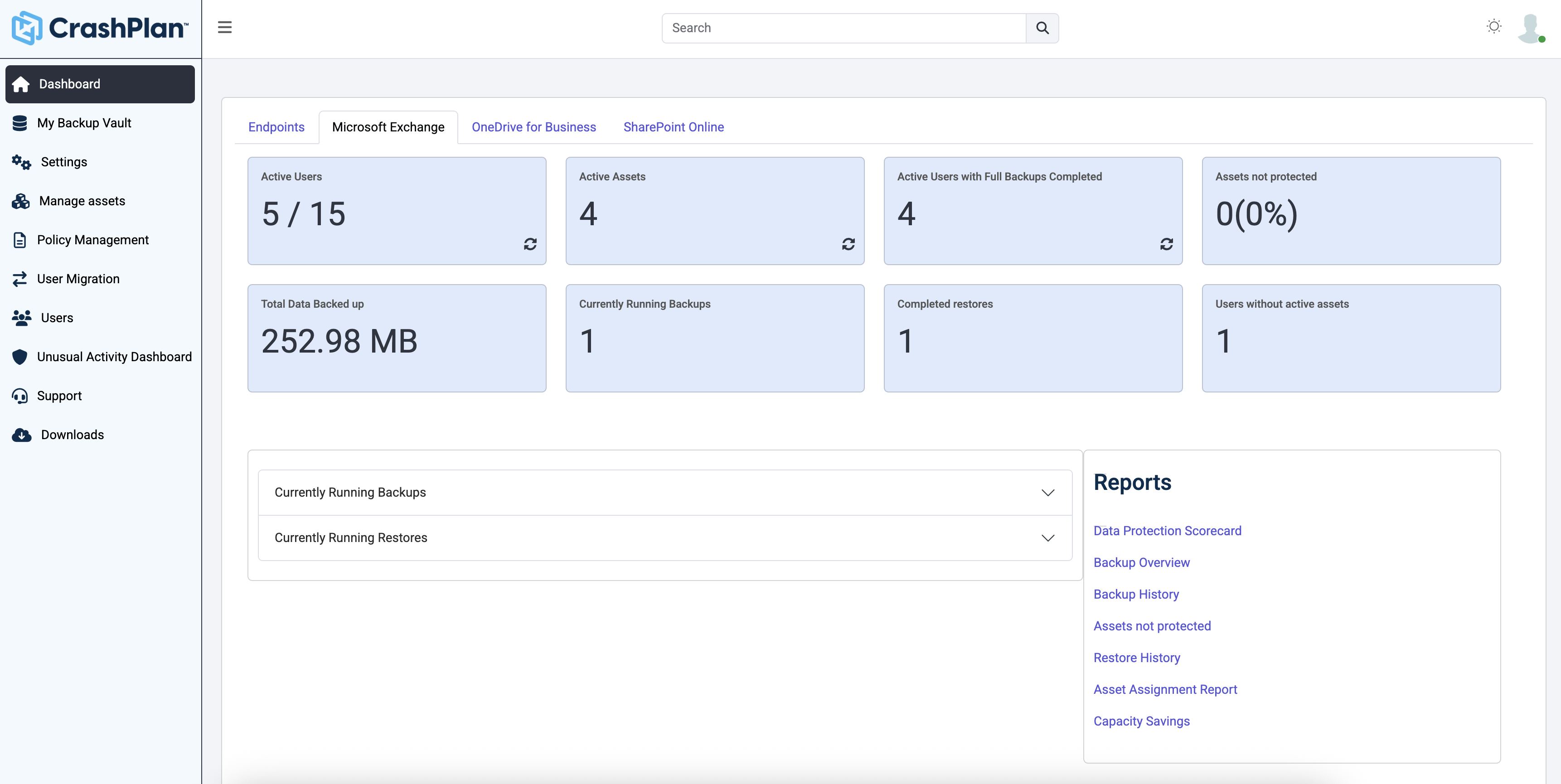
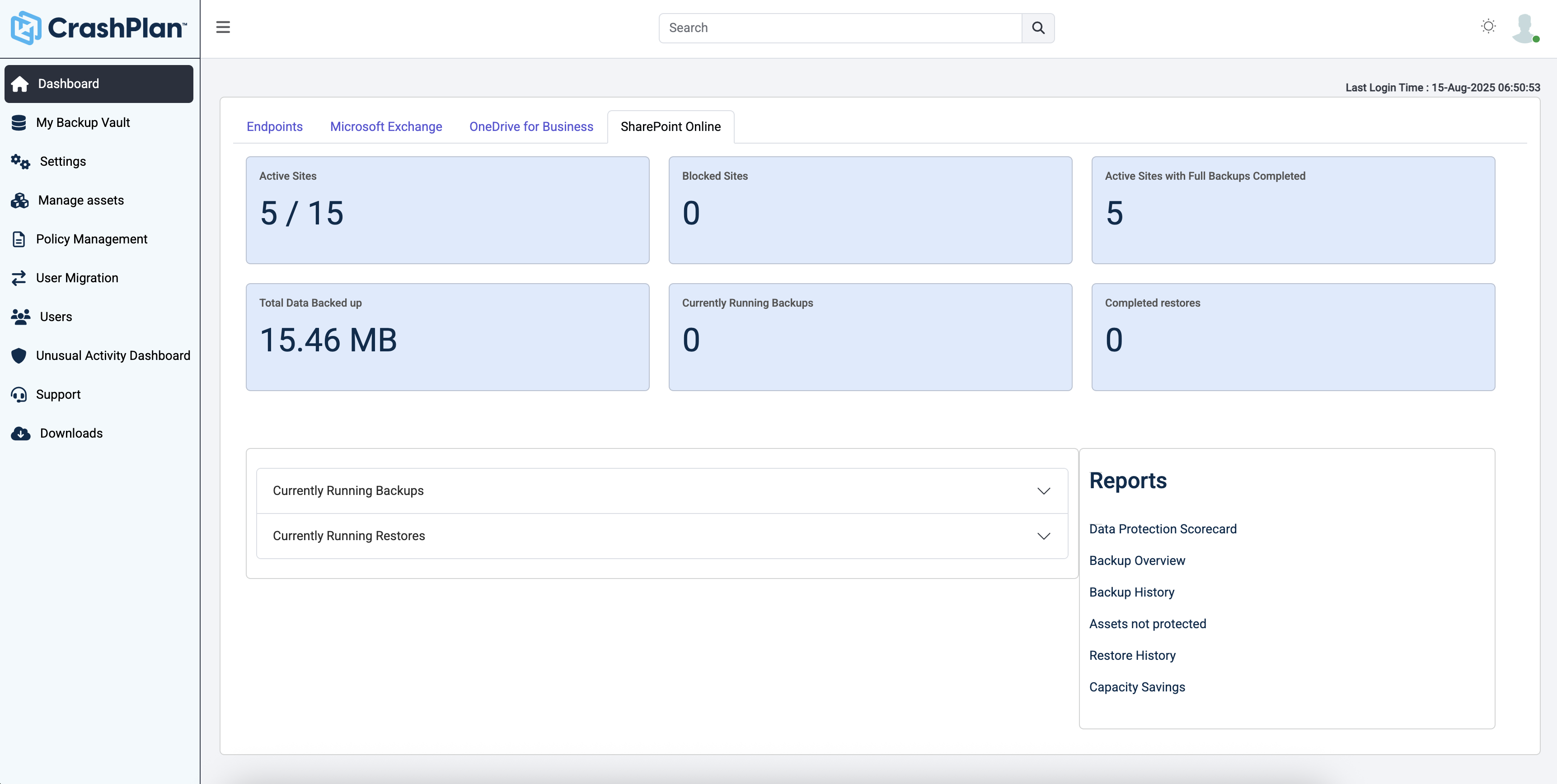
CrashPlan® provides secure, scalable, and straightforward endpoint data backup, to help organizations recover from any worst-case scenario, whether it is a disaster, simple human error, a stolen laptop, ransomware, or an as-of-yet-undiscovered calamity.
$8
per month per user
Dell Networker
Score 5.7 out of 10
N/A
Dell NetWorker is an enterprise-level data protection software product that unifies and automates backup to tape, disk-based, and flash-based storage media across physical and virtual environments for granular and disaster recovery.
N/A
Pricing
CrashPlan
Dell Networker
Editions & Modules
No answers on this topic
No answers on this topic
Offerings
Pricing Offerings
CrashPlan
Dell Networker
Free Trial
Yes
No
Free/Freemium Version
No
No
Premium Consulting/Integration Services
No
No
Entry-level Setup Fee
No setup fee
No setup fee
Additional Details
Discount available for annual billing.
—
More Pricing Information
Community Pulse
CrashPlan
Dell Networker
Features
CrashPlan
Dell Networker
Data Center Backup
Comparison of Data Center Backup features of Product A and Product B
CrashPlan
8.3
1 Ratings
3% below category average
Dell Networker
5.0
11 Ratings
51% below category average
Universal recovery
9.01 Ratings
5.29 Ratings
Instant recovery
9.01 Ratings
6.011 Ratings
Recovery verification
9.01 Ratings
6.09 Ratings
Business application protection
7.01 Ratings
4.49 Ratings
Multiple backup destinations
8.01 Ratings
3.010 Ratings
Incremental backup identification
7.01 Ratings
4.811 Ratings
Backup to the cloud
8.01 Ratings
5.26 Ratings
Flexible deployment
8.01 Ratings
2.79 Ratings
Management dashboard
9.01 Ratings
4.59 Ratings
Platform support
8.01 Ratings
3.99 Ratings
Retention options
9.01 Ratings
4.79 Ratings
Deduplication and file compression
00 Ratings
6.910 Ratings
Snapshots
00 Ratings
6.09 Ratings
Encryption
00 Ratings
7.27 Ratings
Enterprise Backup
Comparison of Enterprise Backup features of Product A and Product B
Individuals (SOHO), families and SMBs, who have a tight budget for offsite critical company data backup are well suited to this product. Especially if you want your data to be hosted locally (Australia in our case). Larger companies, with higher requirements and budgets would be better served elsewhere. Especially when you consider the poor technical support. Although, to be fair, their poor support may just be issues with their Pro/SMB products, as opposed to their enterprise products. However, if that is the case it's a pretty poor show/indicator still.
For users with a basic backup system that does not provide advanced data protection this is a life saver in the age we live in where hackers are looking to encrypt and ruin your important backups. I would recommend [Dell EMC Networker] based on its features, price, and ease of use. If you have a similar product already it does not offer many unique features however.
Code42 is the most affordable backup system offering unlimited storage that I could find. I came from SOS Online Backup, which I ultimately decided to drop after my monthly rate for their unlimited plan increased by 20x.
With Code42's unlimited storage option, I don't have to worry about the fact that my backups are significant in space. As a photographer with thousands of images at stake, I need to run large backups often.
Code42 runs continuously and silently in the background of my desktop computer. It is truly "set and go", so I don't have to think about it when I'm away. It runs until the designated drive has been fully backed up to my cloud storage. It will then automatically email me once the backup is complete (or, it will email me if it encounters any errors).
Customer service is above par. Anytime I need help, a chat agent is available (chat is my communication preference), they are always friendly, and go above and beyond to resolve my needs.
Seamlessly integrates with vmWare for extremely fast VM backups
Provides agent-based integration for a very wide array of applications-aware backups, including but not limited to: Microsoft SQL/Exchange/Sharepoint, Meditech, Oracle, DB2, Informix, SAP
Integrates with a wide family of NAS solutions for NDMP backups
The CrashPlan program installed on your computer is Java-based vs. a native application. While this makes development for CrashPlan easier, there are a lot of drawbacks to Java programs including more resources usage, less stability, and overall more clunky interface.
While this was also in the Pros category - CrashPlan is an extremely powerful and flexible program, which adds a great deal of complexity. Setting up CrashPlan isn't always a simple procedure, and depending on the complexity of your backup set, can take a while to tinker around with the settings to get everything to work properly.
The CrashPlan desktop program consists of a Java program front end, as well as a backend service - there are times when the backend service will crash, and the front end Java program will refuse to load. Typically, restarting the service or restarting the computer will resolve the issue, but sometimes more in-depth troubleshooting is required.
Perhaps one of the biggest downsides to CrashPlan is its price - at $10/month/computer CrashPlan is more than double the price of some existing backup services such as Backblaze (priced at $50/year/computer). To add salt to the wound, about a year and a half ago, CrashPlan discontinued their consumer options - which were very reasonably priced at $60/year for a single computer or a family plan priced at $150/year for up to 10 computers. When these options were discontinued, the cost of backing up with CrashPlan was effectively doubled for the same feature set.
Along with the previous example, CrashPlan had the option to back up to a remote machine on a different network with a free Crashplan account. This option was eliminated when the consumer line of services were discontinued.
While the backup service provided by CrashPlan are still first in class, the above two controversial changes have broken some trust between CrashPlan and its clients.
The GUI is horrible. Giant windows that don't size properly, confusing terminology, multiple clicks to get things done, it's just a disorganized mess. I can't put this in front of my junior techs because it requires some background in DR software to fully comprehend, and even then it's not easy. It feels very much like this was tacked on to a command-line based product as an afterthought.
Better management features. It's difficult to integrate with Active Directory, for one. You'll need a Dell EMC tech to help you. Items can't be renamed and have to be recreated. Options are buried in multiple GUI tabs and often are just command line strings in a free-text field. Diagnosing failed jobs and workflows is cumbersome and the errors are often cryptic without some experience. Design it well and pray for uptime, because you need this to work when disaster requires it to.
Poor reporting features for an enterprise class product. You can't schedule any type of simple summary (an audit requirement for us) in the base product. To do this requires the additional cost of Data Protection Advisor, which is also horribly designed and impossible to get working quickly.
Post-sales contact is non-existent. We've been through a few reps and the project team dropped us at one point with a half-finished implementation when the original sales guy moved on. We only got the the promised product implementation by telling Dell that we weren't paying the bill until they delivered what they promised and were contractually obligated to.
There are three reasons for not renewing our use of NetWorker: 1) the rising and extremely high cost of support and proprietary hardware needed for deduplication, 2) the complete unreliability of the product (we couldn't recover from a true disaster if we wanted to), and 3) the horrible support from EMC for the product
NetWorker has the clunkiest interface and unfriendliest CLI with which I have ever had to work. I spent three years hating this application because it took ALL of my time just to keep it running. Even then, I had no confidence in our ability to recover from a disaster because of its unreliability.
Friendly and knowledgeable support team available to assist with this product. Code 42 (formerly CrashPlan) offers unlimited storage options for reasonable costs, so you really can't go wrong with this product. They have been a reliable resource for our company, and I would recommend to others looking for an easy setup with unlimited storage.
The support team has always been good, and there is never an issue that can't be resolved. The techs are competent and know the product. The slightly less than perfect rating I'm giving is because Support shouldn't carry the burden themselves. We hear from Dell sales people all the time, but they never call and ask about this product, nor do they offer to upsell it or make it better. That lack of sales support and coherence hurts the overall rating a bit. When I spend my company's money on your product, I expect you to at least ACT like you care, if not actually care for real. It influences my opinion and future purchasing habits.
How can anyone build a house without a blueprint? NetWorker was ramrodded into place here without a design or implementation plan. The result was a setup that was doomed from the start and never worked reliable over the full three years of our contract obligation.
Unitrends is our primary backup solution here at my place of employment, and I have no complaints. It does on-prem backups to a storage pool and with that, we chose not to also use Unitrends could storage as the cost was pretty high. Crashplan has a low cost and we were familiar with it. We found a great fit for Crashplan at a remote office with a web server, file share server, and a Domain Controller in addition to the Unitrends solution there. I also set up CrashPlan for a nonprofit org, as well as a Health foods store. I felt like I could stand behind the CrashPlan solution with my experience with it, in places like these where every dollar mattered.
EMC and Unitrends are equal at the file level and SQL backups. What makes Unitrends the better product is the ability to backup VMs as a whole. They both have the ability to email reports about failures and hardware issues. Unitrends has superior support and knowledge base and support is available 24/7.
Tremendous cost savings as the amount of data you backup doesn't impact cost. One flat rate!
Implementation time was minimal and requires little to no maintenance. Since installation, I've not had to correct or fix any issues. It just works.
We opted to supplement Code42 with another solution that allowed us to backup data to a local repository due to the amount for data that changes in our firm.