DataKitchen DataOps Platform vs. Heroku Platform

Overview
ProductRatingMost Used ByProduct SummaryStarting Price
DataKitchen DataOps Platform
Score 0.0 out of 10
N/A
The DataKitchen DataOps Platform aims to automate key functions of data development & production workflows so data teams can collaborate, quickly innovate & deliver error-free, on-demand insight. Tool-Agnostic DataOps Platform supports an array of native tooling integrations & flexible methods for integrating new tools as they come available. Meta-Orchestration Meta-orchestrates all the steps in production & development…N/A
Heroku Platform
Score 7.9 out of 10
N/A
The Heroku Platform, now from Salesforce, is a platform-as-a-service based on a managed container system, with integrated data services and ecosystem for deploying modern apps. It takes an app-centric approach for software delivery, integrated with developer tools and workflows. It’s three main tool are: Heroku Developer Experience (DX), Heroku Operational Experience (OpEx), and Heroku Runtime. Heroku Developer Experience (DX) Developers deploy directly from tools like…
$85
per month
Pricing
DataKitchen DataOps PlatformHeroku Platform
Editions & Modules
No answers on this topic
Production
$25.00
per month
Advanced
$250.00
per month
Offerings
Pricing Offerings
DataKitchen DataOps PlatformHeroku Platform
Free Trial
NoNo
Free/Freemium Version
NoNo
Premium Consulting/Integration Services
YesNo
Entry-level Setup FeeNo setup feeNo setup fee
Additional Details
More Pricing Information
Community Pulse
DataKitchen DataOps PlatformHeroku Platform
Features
DataKitchen DataOps PlatformHeroku Platform
Platform-as-a-Service
Comparison of Platform-as-a-Service features of Product A and Product B
DataKitchen DataOps Platform
-
Ratings
Heroku Platform
7.2
44 Ratings
8% below category average
Ease of building user interfaces00 Ratings6.027 Ratings
Scalability00 Ratings7.044 Ratings
Platform management overhead00 Ratings7.043 Ratings
Workflow engine capability00 Ratings6.030 Ratings
Platform access control00 Ratings7.043 Ratings
Services-enabled integration00 Ratings6.042 Ratings
Development environment creation00 Ratings9.039 Ratings
Development environment replication00 Ratings9.038 Ratings
Issue monitoring and notification00 Ratings8.042 Ratings
Issue recovery00 Ratings7.039 Ratings
Upgrades and platform fixes00 Ratings7.044 Ratings
Best Alternatives
DataKitchen DataOps PlatformHeroku Platform
Small Businesses
GitLab
GitLab
Score 8.7 out of 10
AWS Lambda
AWS Lambda
Score 8.3 out of 10
Medium-sized Companies
GitLab
GitLab
Score 8.7 out of 10
Red Hat OpenShift
Red Hat OpenShift
Score 9.2 out of 10
Enterprises
GitLab
GitLab
Score 8.7 out of 10
Red Hat OpenShift
Red Hat OpenShift
Score 9.2 out of 10
All AlternativesView all alternativesView all alternatives
User Ratings
DataKitchen DataOps PlatformHeroku Platform
Likelihood to Recommend
-
(0 ratings)
7.0
(47 ratings)
Likelihood to Renew
-
(0 ratings)
9.5
(6 ratings)
Usability
-
(0 ratings)
9.2
(17 ratings)
Availability
-
(0 ratings)
8.0
(1 ratings)
Performance
-
(0 ratings)
9.0
(1 ratings)
Support Rating
-
(0 ratings)
8.7
(19 ratings)
Online Training
-
(0 ratings)
6.0
(1 ratings)
Implementation Rating
-
(0 ratings)
9.0
(3 ratings)
User Testimonials
DataKitchen DataOps PlatformHeroku Platform
Likelihood to Recommend
DataKitchen
No answers on this topic
Salesforce
Heroku is very well suited for startups looking to get a server stack up and running quickly. There is little to no overhead when managing your instances. However, you'll need a background in basic DevOps or system management to make sure everything is set up correctly. In addition, it's easy to accidentally go crazy on pricing. Make sure you're only creating the server instances you need to run the base application and set up an auto-scaler plugin to handle peaks.
Read full review
Pros
DataKitchen
No answers on this topic
Salesforce
  • Heroku has a very simple deployment model, making it easy to get your application up-and-running with minimal effort. We can focus on our efforts the unique aspects of our application.
  • The robust add-on marketplace makes it easy to try out new approaches with minimal effort and investment -- and when we settle on a solution, we can easily scale it.
  • Heroku's support is quite good -- their staff is quite technical and willing to get into the weeds to diagnose even complicated problems.
Read full review
Cons
DataKitchen
No answers on this topic
Salesforce
  • Large price jumps between certain resource tiers (2x Dyno for $50 per month versus Performance Dyno for $250). Free Postgres next jumps to $50 per month.
  • Marketing/Branding to non-technical stakeholders. As the years pass, I've had to fight more to convince stakeholders on the value of Heroku over AWS.
  • Improve Buildpack documentation. This is one area where Heroku's documentation is fairly confusing.
Read full review
Likelihood to Renew
DataKitchen
No answers on this topic
Salesforce
Heroku is easy to use, services a ton of functions for you out of the box, and provides a means to get a software product off the ground and managed quickly and easily. The tools provide allows a small to medium size org to move very quickly. The CLI tools provided make managing an entire technical infrastructure simple.
Read full review
Usability
DataKitchen
No answers on this topic
Salesforce
Easy to use web based console and easy to use command line tools; deployment is done directly from a GIT repository. What more could you ask for? The one thing that keeps me from giving it a 10 is that custom build packs are almost incomprehensible. We used one for a while because we needed cairo graphics processing. Fortunately, I was able to figure out a different way to do what we needed so that we could get off the custom build pack.
Read full review
Reliability and Availability
DataKitchen
No answers on this topic
Salesforce
Heroku availability correlates pretty strongly to AWS US EAST availability. We had a couple of times where there was a Heroku-specific issue but not for the last 7-8 months.
Read full review
Performance
DataKitchen
No answers on this topic
Salesforce
The only issue that I ever have is that about 1 out of 20 deployments (git push) will hang and need to be cancelled and done again.
Read full review
Support Rating
DataKitchen
No answers on this topic
Salesforce
I've used it for many years without facing any major problem. It's not hard at all to get used to it, it's documentation is outstanding and simple. We are close to 2020 and I don't think most of the existing companies or startups should still face old problems such as wasting time deploying code and calculate computing resources.
Read full review
Implementation Rating
DataKitchen
No answers on this topic
Salesforce
Be ready to pay a bit more than expected in the beginning if you're migrating from a big server. The application is probably not ready for the change and you have to keep improving it with time.
It's also important to consider that you can't save anything to the disc as it will be lost when your application restarts, so you have to think about using something like S3.
Read full review
Alternatives Considered
DataKitchen
No answers on this topic
Salesforce
Heroku is the more expensive option for hosting compared to some of the cloud platforms we investigated, but it's worth it for us because of the plug-and-play nature of Heroku deployment. We can be up and running in a few minutes and know with precision how much it will cost us each month to run the application, unlike Amazon Web Services where you have to go to great pains to configure it correctly or else you might end up with a shocking monthly bill. Overall, spending the time to configure Amazon Web Services or one of its competitors is likely the more affordable and powerful choice, because you have control over so many specifics of the configuration. But it also requires the burden of continuing to maintain and update your AWS instance, whereas with Heroku they take care of security fixes and platform upgrades. It's a great service and we are happy to pay the extra cost for the value-adds Heroku provides.
Read full review
Return on Investment
DataKitchen
No answers on this topic
Salesforce
  • It has been critical in seamlessly operating our platform with runs all of our programs.
  • It has been impressive with its ability to scale quickly which results in the growth of our work.
  • It allows for tracking of different features which allows for quick problem solving which saves us time.
Read full review
ScreenShots

DataKitchen DataOps Platform Screenshots
Screenshot of Meta-Orchestration
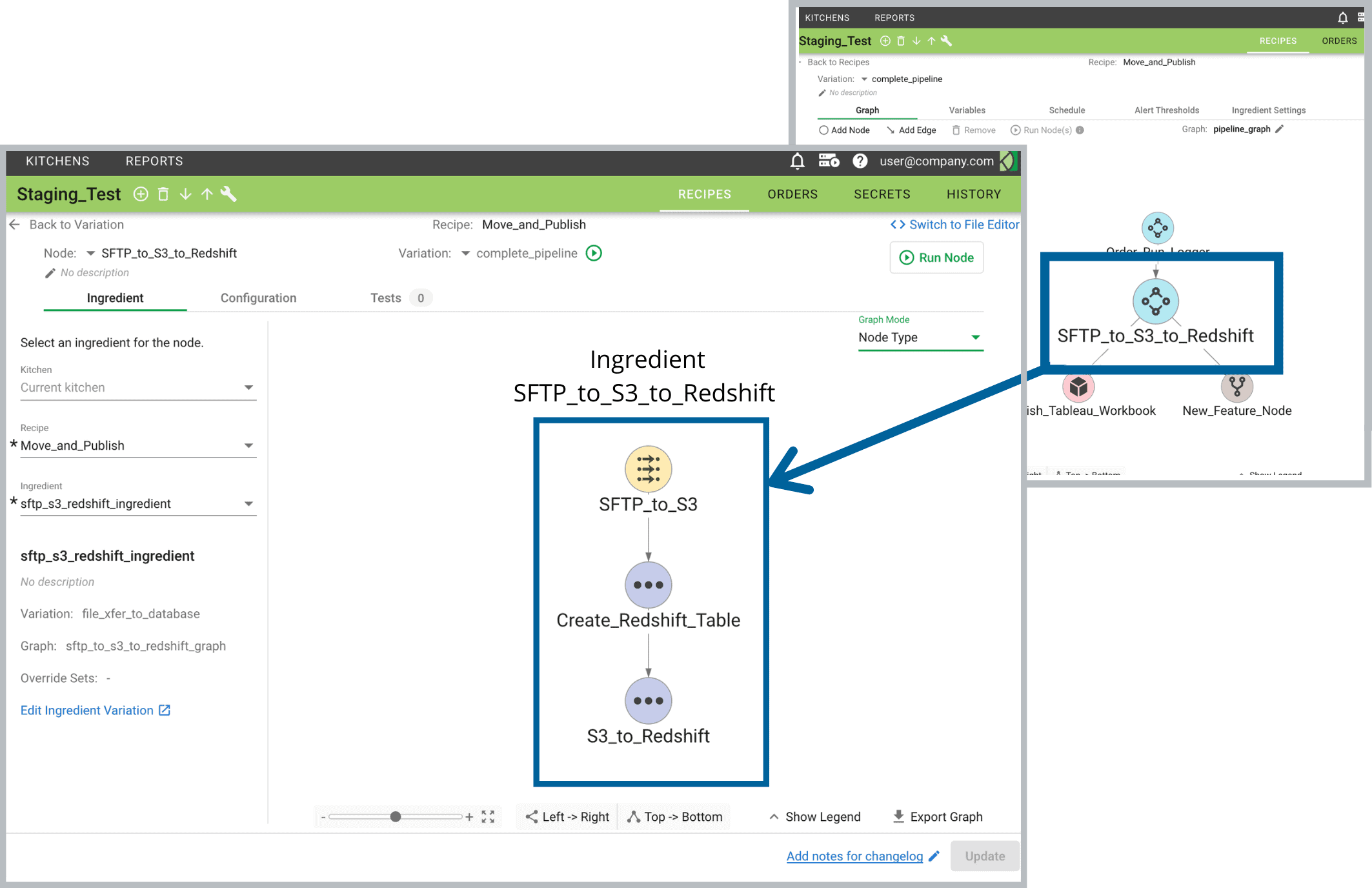
Data organizations may be hierarchical and siloed, but analytics production cuts across teams, locations, and environments. The DataKitchen Platform meta-orchestrates all the steps in your production and development pipelines (and even pipelines of pipelines), providing a coherent framework for inter-team collaboration that transcends heterogeneous toolchains and distributed data centers.Screenshot of Environment Creation & Management
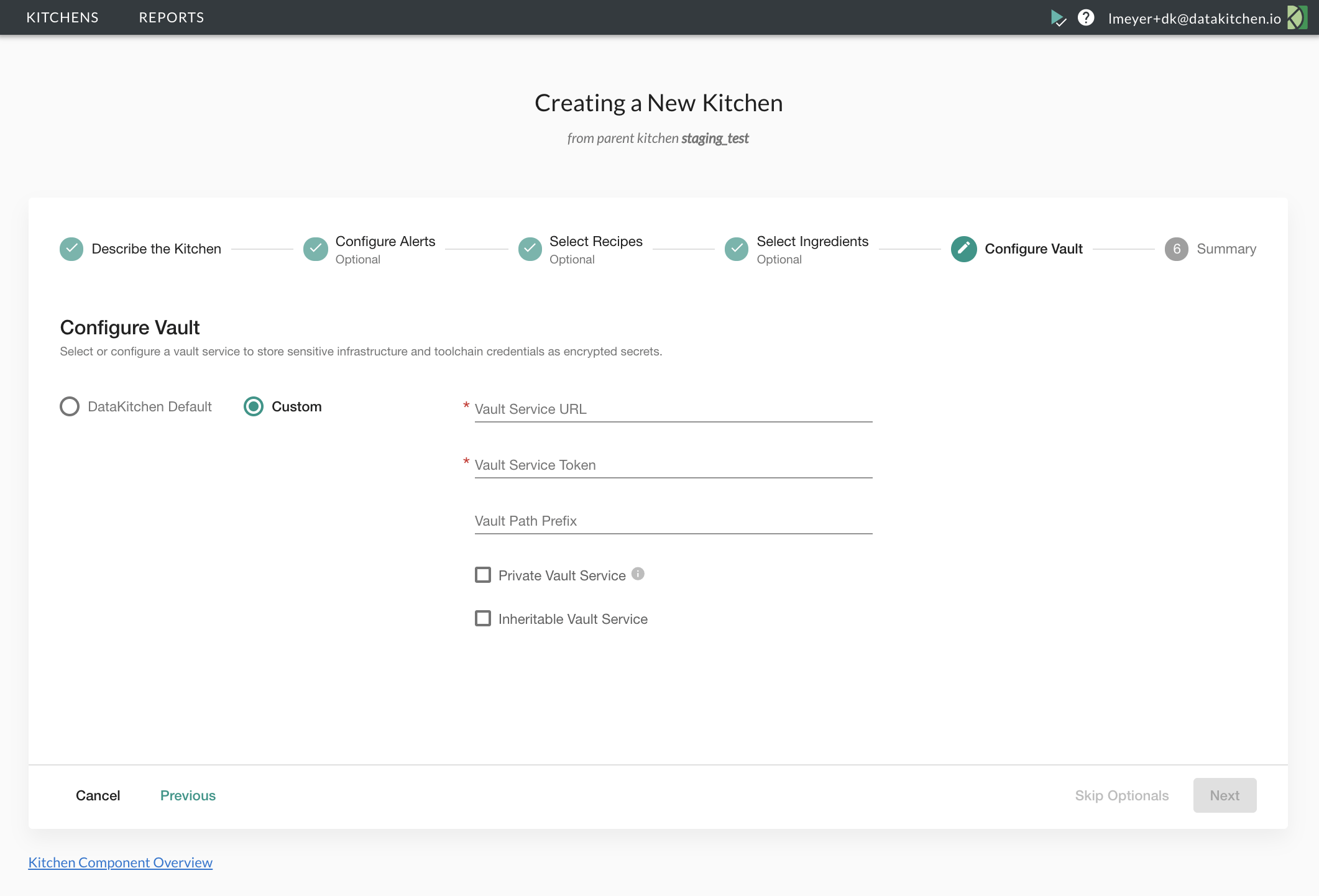
With the DataKitchen Platform, create Kitchen workspaces in minutes – not weeks or months – to provide developers with a controlled and secure space to work. Kitchens contain pre-configured tools, datasets, hardware, and tests – everything users need to create and innovate.  When new analytics are ready, Kitchens streamline an individual’s work into a team’s work and eventually into production by seamlessly merging to aligned environments.Screenshot of Continuous Deployment
Analytics can’t be agile with manual, error-prone, and time-consuming release processes. The DataKitchen Platform automates the end-to-end deployment process allowing analytics teams to test and release new analytics on-demand. Kitchens align and integrate toolchain environments so continuous deployment orchestrations can easily migrate analytics to production.Screenshot of Automated Testing & Monitoring
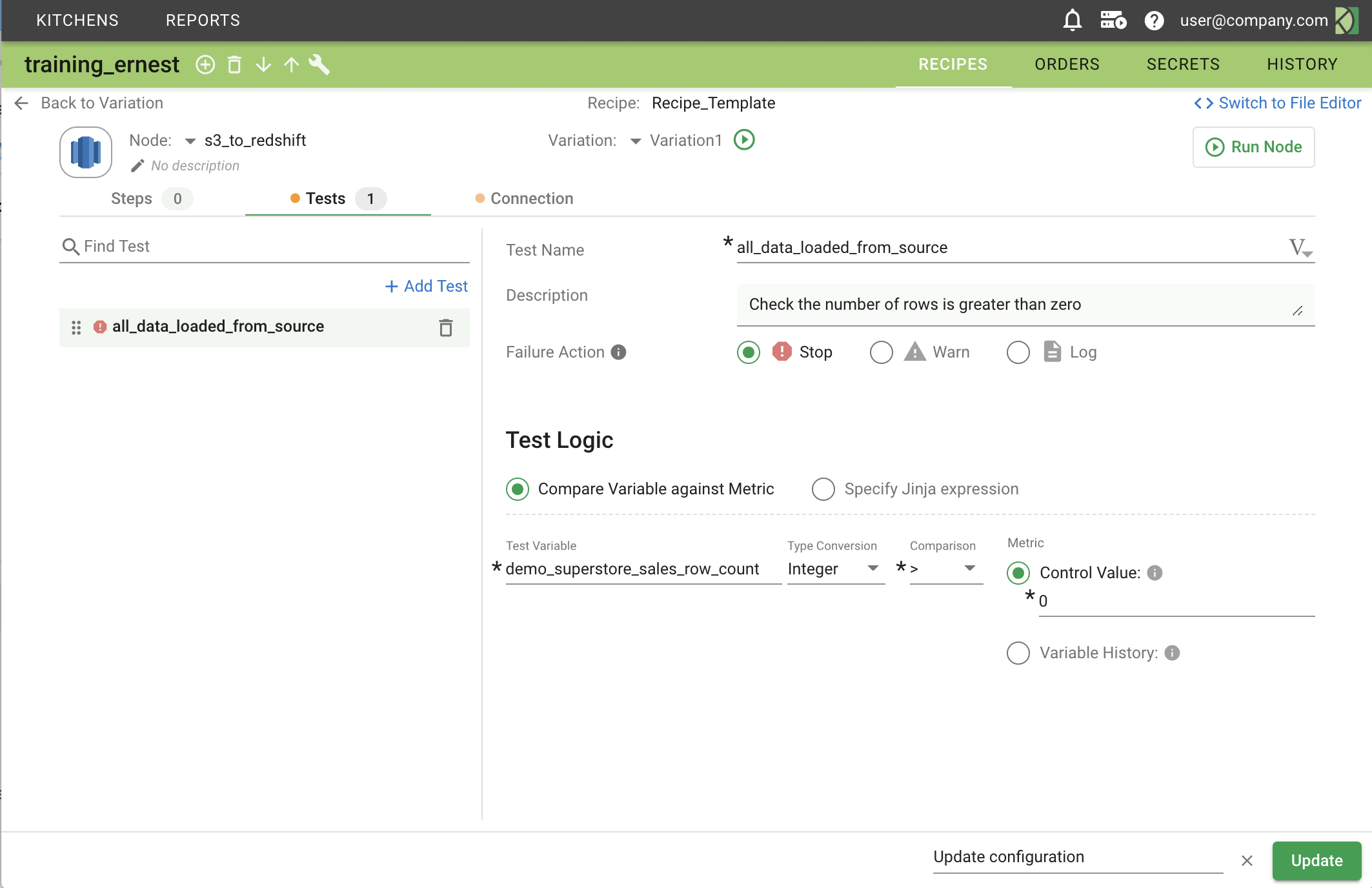
Automated testing and monitoring are foundational to DataOps. The Platform enables you to dramatically improve data quality by catching costly and embarrassing data errors early.  Embed automated tests at every step in your production and development pipelines. Use failures as an opportunity to add more tests and increase the reliability of your pipelines over time. Preset alerts to increase agility and reduce data downtime.Screenshot of Collaboration & Sharing
DataOps is a team effort, and the DataKitchen Platform fosters collaboration by providing a common place to work and a single view of the end-to-end analytic process.  Team members innovate and experiment in separate but aligned Kitchens, then integrate the collective work with confidence.  Teams can easily save and share commonly used parts of pipelines as Ingredients – a significant productivity multiplier.Screenshot of DataOps Process Analytics
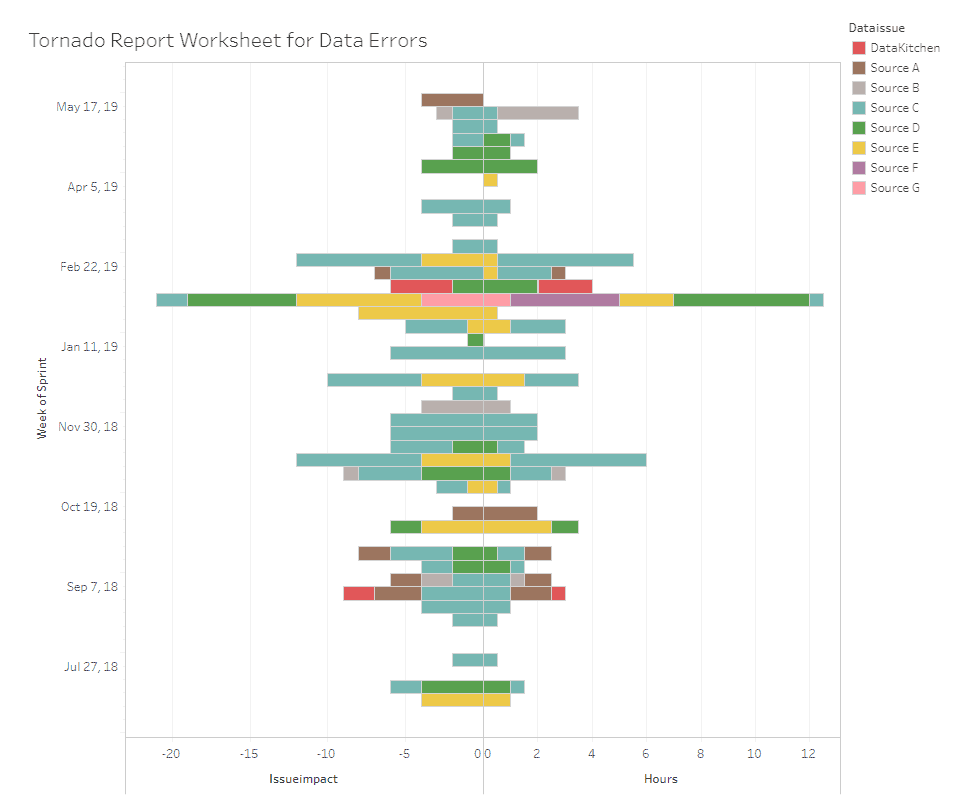
You can’t improve what you don’t measure. The DataKitchen Platform provides unprecedented visibility into the state of your data operations.  Process metrics show how your teams are increasing collaboration, improving productivity, expanding test coverage, reducing errors, speeding deployment cycle times, and consistently meeting deadlines.