The DataRobot AI Platform is presented as a solution that accelerates and democratizes data science by automating the end-to-end journey from data to value and allows users to deploy AI applications at scale. DataRobot provides a centrally governed platform that gives users AI to drive business outcomes, that is available on the user's cloud platform-of-choice, on-premise, or as a fully-managed service. The solutions include tools providing data preparation enabling users to explore and…
$0
SAP Business Data Cloud
Score 8.6 out of 10
N/A
SAP Business Data Cloud is a fully managed SaaS solution that unifies and governs all SAP data and seamlessly connects with third-party data—giving line-of-business leaders context to make even more impactful decisions.
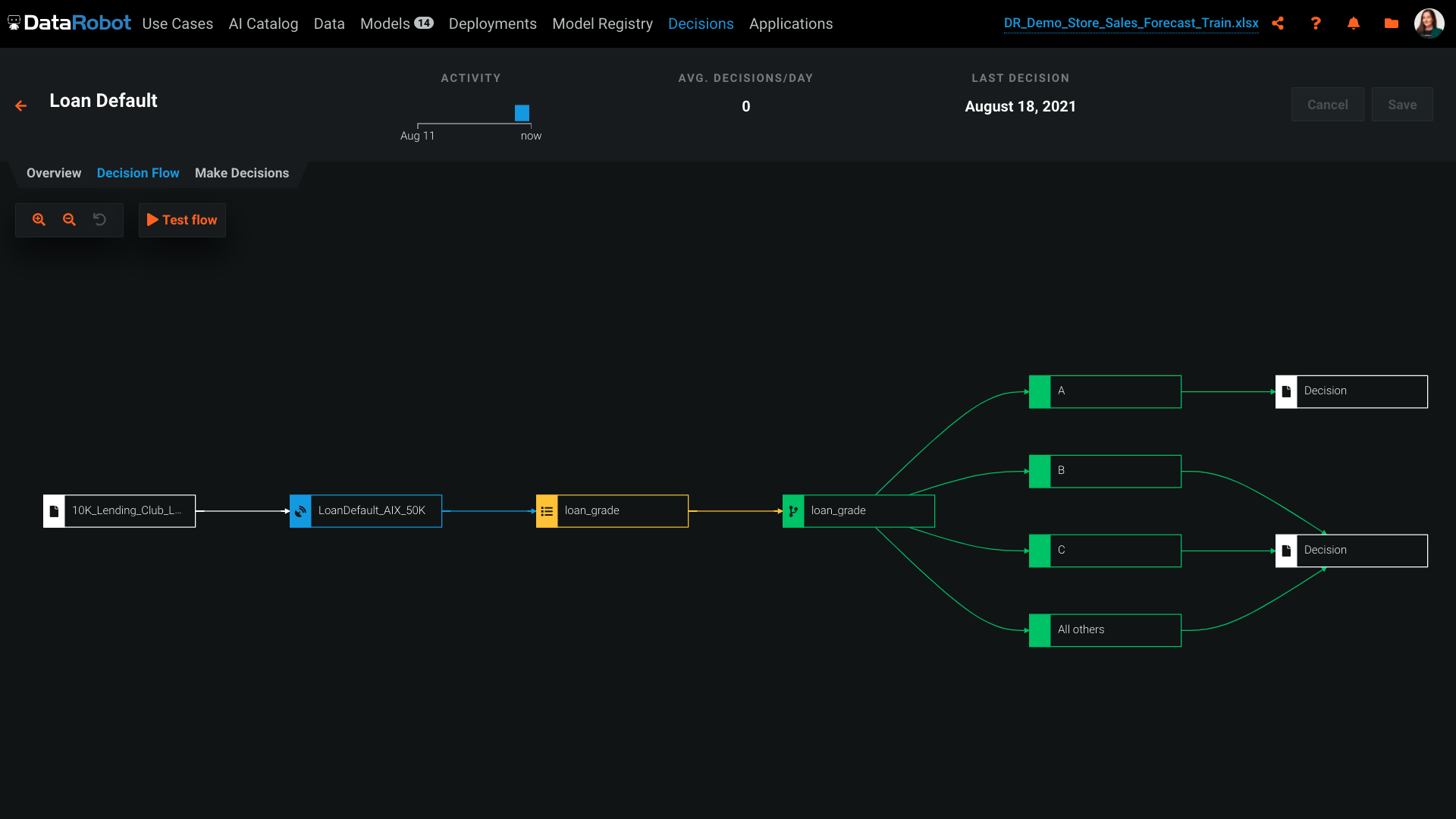
DataRobot can be used for risk assessment, such as predicting the likelihood of loan default. It can handle both classification and regression tasks effectively. It relies on historical data for model training. If you have limited historical data or the data quality is poor, it may not be the best choice as it requires a sufficient amount of high-quality data for accurate model building.
SAP Business Data Cloud is suited mainly for SAP data integration. We could able to easily consolidate the data from S4 and service cloud V2 system. SAP Business Data Cloud enables realtime data replications. We could able to leverage the AI core features. As my previous data warehousing skill is from SAP BW, I am missing some basic features comparing to BW. Master data manual maintenance, Time dependant masterdata, language independent text is also not straightforward.
DataRobot helps, with algorithms, to analyze and decipher numerous machine-learning techniques in order to provide models to assist in company-wide decision making.
Our DataRobot program puts on an "even playing field" the strength of auto-machine learning and allows us to make decisions in an extremely timely manner. The speed is consistent without being offset by errors or false-negatives.
It encompasses many desired techniques that help companies in general, to reconfigure in to artificial intelligence driven firms, with little to no inconvenience.
Support for AI/ML use cases with SAP Data bricks and without the need to physically transfer the data from datasphere environment.
Provide near realtime data for analytics from S4C public cloud via data products which was the primary business problem that our customers were concerned with
Provides support to use the best of both the worlds like SAP and Databricks
New releases that support for the zero-copy delta share via SAP Business Data Cloud connect to other products like snowflake, google big query and other products in roadmap
Moving towards the lakehouse architecture or similar architecture from the former warehouse architecture to meet the increasing demand for the data
The platform itself is very complicated. It probably can't function well without being complicated, but there is a big training curve to get over before you can effectively use it. Even I'm not sure if I'm effectively using it now.
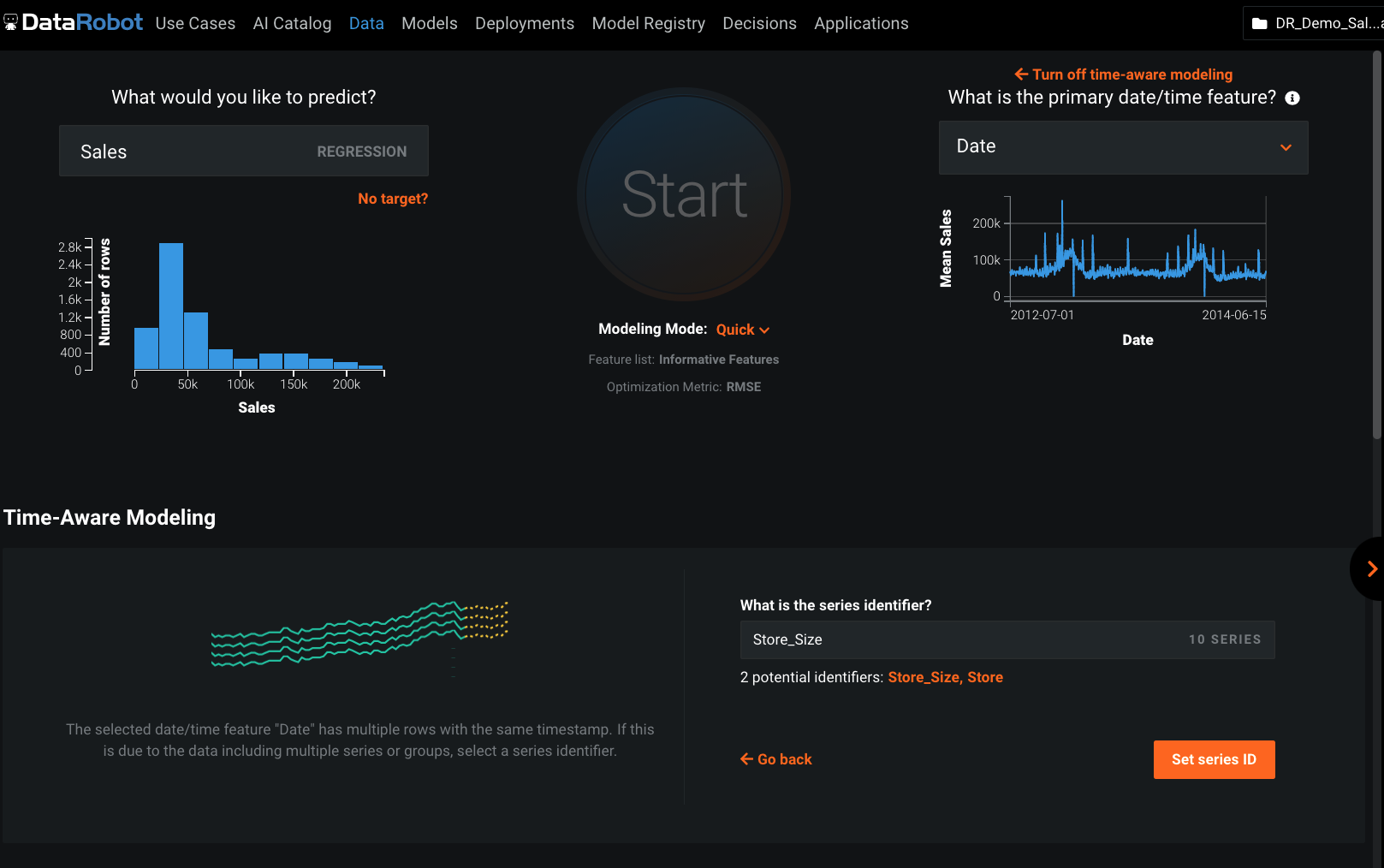
The suggested model DataRobot deploys often not the best model for our purposes. We've had to do a lot of testing to make sure what model is the best. For regressive models, DataRobot does give you a MASE score but, for some reason, often doesn't suggest the best MASE score model.
The software will give you errors if output files are not entered correctly but will not exactly tell you how to fix them. Perhaps that is complicated, but being able to download a template with your data for an output file in the correct format would be nice.
DataRobot presents a machine-learning platform designed by data scientists from an array of backgrounds, to construct and develop precise predictive modeling in a fraction of the time previously taken. The tech invloved addresses the critical shortage of data scientists by changing the speed and economics of predictive analytics. DataRobot utilizes parallel processing to evaluate models in R, Python, Spark MLlib, H2O and other open source databases. It searches for possible permutations and algorithms, features, transformation, processes, steps and tuning to yield the best models for the dataset and predictive goal.
In the new analytics world, BDC has been a game changer for SAP Analytics. Extending the SAP data for the usage in Databricks, snow flake, GCP has opened new doors for Analytics . Shift from traditional data warehousing to Business Data fabric adapting to the change in the analytics world is the need of the hour and Sap has managed to pulled it off with BDC
SAP Business Data Cloud offers robust capabilities that enable me to analyze data and extract valuable business insights. It creates a single source of truth with seamless SAP integrations that enable faster, more reliable reporting. It has freed my team from complex engineering efforts by simplifying data analytics, giving us more time to focus on generating insights.
SAP Business Data Cloud has been highly available and reliable for our day-to-day activities. We have experienced very few disruptions, and the platform generally performs consistently. The reason for not awarding a perfect score is that occasional maintenance activities or cloud service issues can occur, as is common with any enterprise SaaS platform. Overall, availability has met our business needs very well.
SAP Business Data Cloud provides solid overall performance, with pages and standard reports generally loading within an acceptable timeframe. The platform handles enterprise-scale data and analytics workloads effectively. While very large datasets, complex reports, or extensive integrations can occasionally impact response times, overall performance has been reliable and suitable for business operations.
As I am writing this report I am participating with Datarobot Engineers in an complex environment and we have their whole support. We are in Mexico and is not common to have this commitment from companies without expensive contract services. Installing is on premise and the client does not want us to take control and they, the client, is also limited because of internal IT regulations ,,, soo we are just doing magic and everybody is committed.
support team is generally responsive and knowledgeable, and most issues are addressed within acceptable timelines. Documentation and standard guidance are helpful for common scenarios.
It will be more effective. Higher Engagement and Focus. we can ask questions and get the clarity on the spot. Better Knowledge Retention. Stronger Collaboration and Networking. Overall it will be a rich Communication. Sensitive or complex topics are often easier to discuss in person. Informal discussions during breaks often lead to valuable knowledge sharing.
One of the best training session I attended and they covered most of the topics and answered all our questions. participants joined from different regions, infact they all had a different questions and it was different thoughts from all of then and helped to learn better. Though I was on travel, I could able yo attend the session.
I have done implementation of models in traditional bw and Using BDC. The integration of BDC with S4 hana for creating sap data products is seamless and reduces lot of implementation effort. The intelligent app feature is BDC also eases the implementation effort. If i have to compare the previous world with new BDC, implementation effort is largely saved
I've done machine learning through python before, however having to code and test each model individually was very time consuming and required a lot of expertise. The data Robot approach, is an excellent way of getting to a well placed starting point. You can then pick up the model from there and fine tune further if you need.
With a S4 backend a lot of core functionality is made simpler - authorization, data types, currency conversion. In particular if the front end choice is SAP Analytics Cloud. The lack of a good connection from Power BI to the datasphere application (instead of the underlying HANA cloud) is a major drawback in that scenario.
I would rate the contract terms and pricing structure of SAP Business Data Cloud as 7 out of 10. The pricing model is generally aligned with enterprise-scale deployments and provides flexibility for organizations looking to consolidate data, analytics, and governance capabilities on a single platform. The contract terms are comprehensive, and SAP offers multiple licensing options to support different business requirements and growth scenarios.The primary reason for this rating is that the pricing and licensing structure can be complex to understand, particularly when estimating long-term costs as data volumes, users, and workloads increase. Greater transparency around consumption-based charges, usage forecasting, and future scaling costs would make planning easier. I would also prefer simpler licensing bundles and more predictable pricing tiers. Overall, the model supports enterprise needs well, but additional simplicity and clarity would improve the customer experience and make budgeting more straightforward.
SAP Business Data Cloud provides strong scalability for enterprise data management and analytics, supporting growth in data volumes, users, and business use cases. The platform's extensibility and integration capabilities make it adaptable across departments and sites. The reason I did not rate it higher is that large-scale deployments may require additional effort around governance, integration, and advanced customization to fully realize enterprise-wide adoption
The professional services team demonstrated strong technical expertise and a solid understanding of data integration, analytics, governance, and cloud architecture. They provided valuable guidance during planning, implementation, and configuration phases, helping accelerate deployment and reduce potential risks. Their recommendations aligned well with best practices and supported a smooth transition to the platform.The reason I did not assign a higher rating is that some specialized requirements required additional consultation cycles and coordination between different teams, which occasionally extended timelines. In certain cases, deeper industry-specific examples or more tailored implementation guidance would have been beneficial. Despite these challenges, the team remained responsive, collaborative, and focused on achieving business outcomes. Overall, the professional services engagement added significant value and helped maximize the benefits of the SAP Business Data Cloud investment.