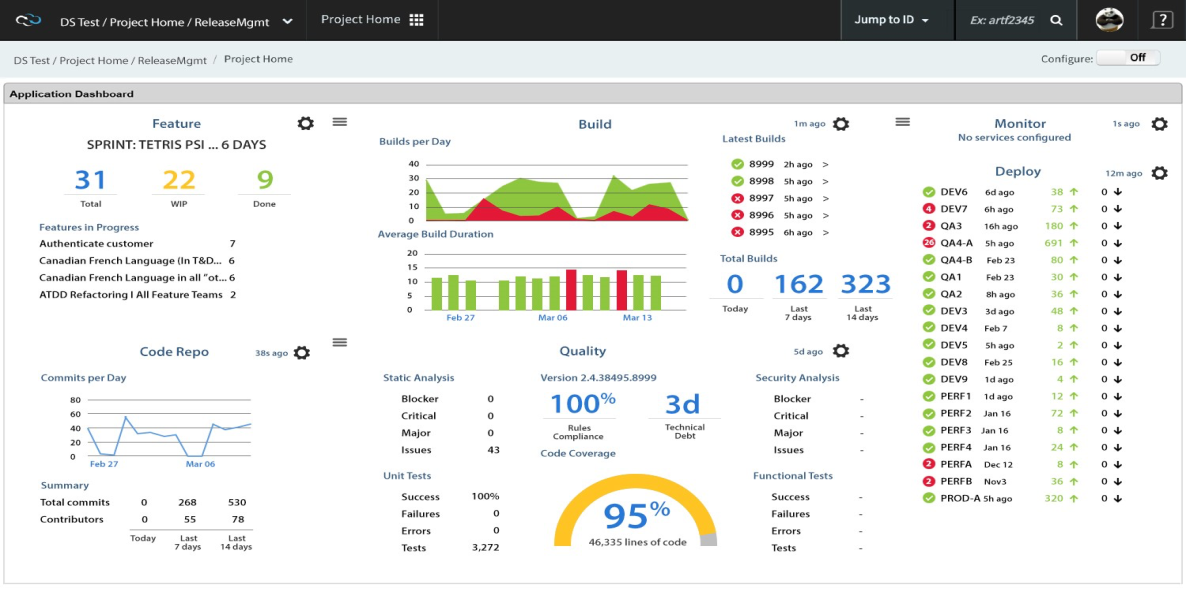
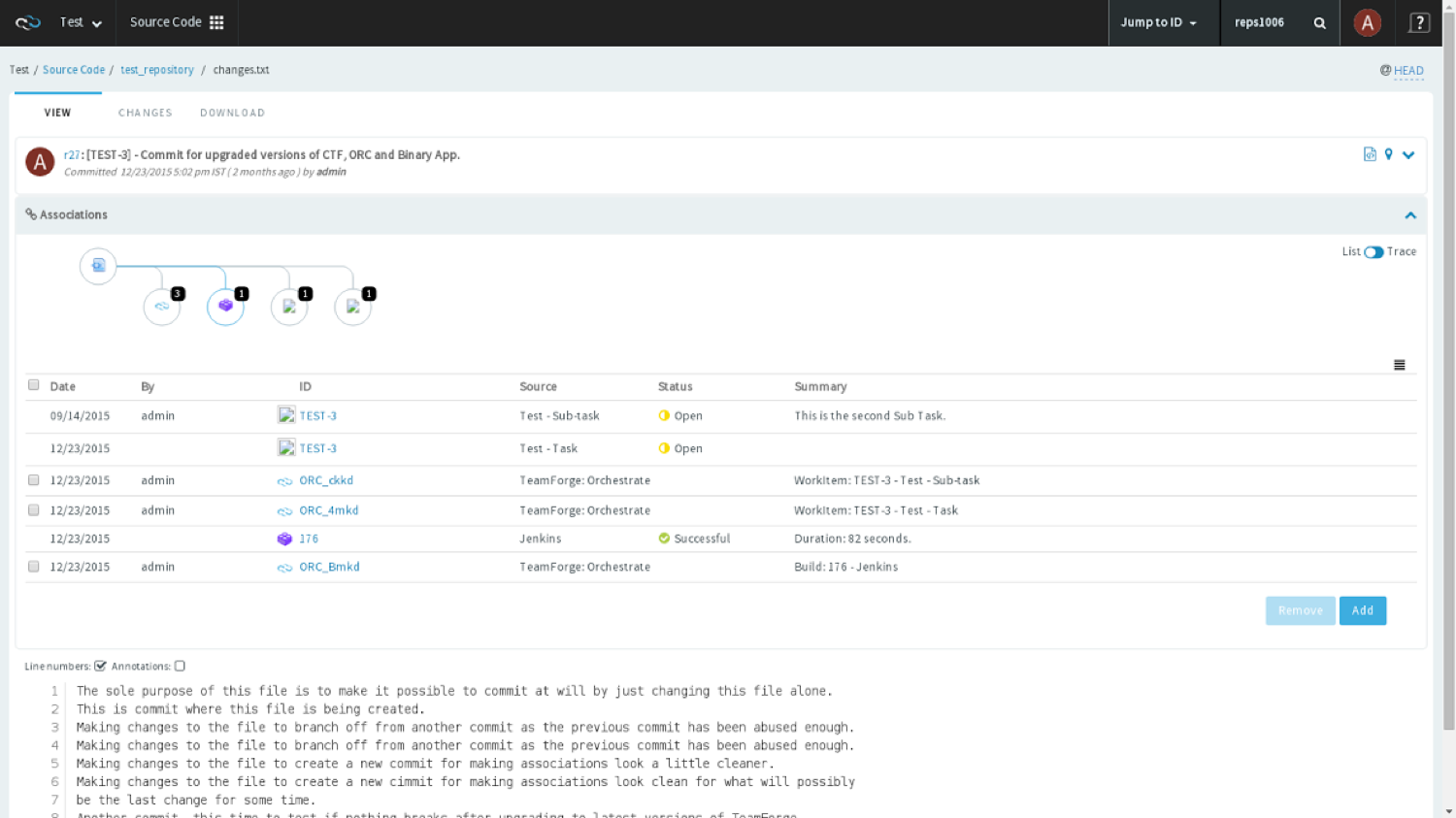
Digital.ai (formerly CollabNet) aims to help enterprises and government organizations deliver high-quality software at speed with TeamForge, its application lifecycle management suite. According to the vendor, Digital.ai offers innovative solutions, provides consulting and Agile training services, supports more than 10,000 customers with 6 million users in 100 countries, and has been recognized for 13 consecutive years as SD Times 100 “Best in Show” winner in the…
N/A
Jellyfish
Score 8.7 out of 10
N/A
Jellyfish is an intelligence platform for AI-Integrated Engineering. According to the vendor, the solution assists over 1,000 companies—including DraftKings, Box, and Blue Yonder—in utilizing Artificial Intelligence to manage software development lifecycles. By aggregating engineering data and contextual intelligence, Jellyfish is designed to help Research and Development (R&D) organizations measure impact, adopt industry practices, and support decision-making across AI adoption, project…
N/A
Rally Software
Score 7.7 out of 10
N/A
Rally Software headquartered in Boulder, Colorado developed the Rally agile software development / ALM platform which was acquired by CA Technologies and rebranded as CA Agile Central. After CA's acquisition by Broadcom the software was once again rebranded as Rally.
N/A
Pricing
Digital.ai TeamForge
Jellyfish
Rally Software
Editions & Modules
No answers on this topic
No answers on this topic
No answers on this topic
Offerings
Pricing Offerings
Digital.ai TeamForge
Jellyfish
Rally Software
Free Trial
Yes
No
No
Free/Freemium Version
No
No
No
Premium Consulting/Integration Services
No
No
No
Entry-level Setup Fee
No setup fee
No setup fee
No setup fee
Additional Details
—
—
—
More Pricing Information
Community Pulse
Digital.ai TeamForge
Jellyfish
Rally Software
Considered Multiple Products
Digital.ai TeamForge
Verified User
Anonymous
Chose Digital.ai TeamForge
CollabNet TeamForge is superior to Mercury mainly because it has a subversion change management tool integrated with the product. CollabNet TeamForge offers more complexity but with more flexibility for managing and tracking projects. I think
CollabNet TeamForge is more …
GitHub provided a lot of issues for us from an end-user point of view. Overall, Jellyfish is more intuitive; although it does come with its struggles and downfalls, these are something that just takes time to figure out. GitHub was more focused on developing metrics ONLY, and a …
The really cool thing about Jellyfish is the integrations that it has with the other tools, which are also very common within the software development industry. Consolidating all this data and being able to see graphs, numbers, and percentages in one place gives you a better …
Rally Software and Jira are both good. Rally Software is better at handling large scale projects. It offers advanced reporting, release tracking and portfolio management. Jira is more flexible but Rally Software is definitely better for large organizations. We selected Rally …
I believe that it stacks up well against any other software. There are several things they do better and there are several things it doesn't do better. However, in the end it seems all of the software can get the job done.
Rally is very good in tracking, compared with others, and also reporting is made very helpful for our business growth, tracking the deliverables, and making sure we have the proper capacity planning for completing the project in a timely manner. really Rally made us very happy …
Rally and Asana have comparable features and are both valuable project management tools, but Asana's user interface is well-organized and highly intuitive. It's easy to add tasks and collaborators, edit due dates, indicate progress on tasks, close out projects, etc. However, …
Overall, Rally Software is a better and more powerful tool than Jira for the same exact purposes. Jira cannot function as a requirements repository so it needs plugins or separate tools to do the same thing. There is no space or option to see all defects or user stories or …
We have used Jira in the past. Jira is easy to use and seems to be an industry standard. Rally is clunky and expensive. The dev side did not pick it, the business did due to its reporting capabilities.
I did not select Rally; it was chosen by the organization. If I were choosing what to use within my own team, I would use Trello. It's free, very simple to use, and has a much nicer user interface. My company previously used VersionOne however, and I prefer Rally over that …
It was a close race between JAMA, JIRA and Rally. We decided to go for JAMA as a requirements management tool and use Rally for Agile projects. The cost was another factor that made us select Rally.
Our evaluation was done many years ago, but at the time Rally provided the best mix of SCRUM-driven features, visibility and economy for our product engineering teams.
Selected because the others seemed worse two years ago when the decision was made. VersionOne seemed ugly and too restricted. Might look better now. Microsoft TFS, now VSO, looked limited but also might look better now. Microsoft is improving it at a remarkably rapid pace. Jira …
The process we used to select a tool was to create a scorecard of IT and Business stakeholder needs. We then reviewed seven tools and graded them against the scorecard requirements. We took the top two products and had a one day hands on demonstration with selected IT and …
We used CA Agile Central (formerly Rally) before but recently switched to Jira. I used jira before Rally too, and I think it was easier to manage defects in Jira. Also, I think Jira is better for teams and companies that want to implement agile/scrum life cycles. It's easier to …
We started exploring new tools, and found better adaptation of our team toward Jira. Jira provided engineers with simpler interfaces and more reliable service, even though less unnecessary features. Also the managers found in Jira better ability to eliminate noise and focus on …
I've also evaluated the following agile solutions: ActiveCollab, Agile Bench, Agilo for Scrum, Atlassian JIRA, Pivotal Tracker, SpringGround, Targetprocess. Telerik Teamprocess, VersionOne, ZebraPlan etc. If it’s time to transition to software that’s specific to your Agile …
Rally has much more features with regards to the the traditional Agile methodology and has more extensive tracking features for the project managers. Pivotal tracker was used for a smaller company and smaller teams but since my current company is larger in scale and has more to …
As long as you are looking for a tool that segregates who can do what with a given repository and branch in GIT, and do not mind strictly using TeamForge's Agile tracking software that comes native to the application, this is the tool for you. The tool is fairly user-friendly, and they have an excellent support staff. You're really buying that support, more than anything else. If however, your company insists on using separated agile tracking software such as Version One, I would not recommend TeamForge. They prefer an all or nothing kind of deal.
I really recommend using Jellyfish; if this is something that your company is looking for, definitely give it a try. The Jellyfish team is also very responsive and supportive while updating, changing, or modifying required data. Having metrics from different tools in one place is very useful, especially when you have several engineering teams.
Rally is well suited to help outline the specific tasks of a project, create timelines, indicate progress/status of tasks and provide views of team members' workloads. My team used it for our weekly stand up meetings in order to update one another on our progress, and our manager used it as a way to determine who had capacity for additional tasks. It facilitated our transition to a more agile work environment and we used it to implement 2 week "sprints".
The ability to tailor the tool for each product. For example some simpler projects can be managed with simple user stories, a Kanban process and board. Large projects are managed with iterations, releases, tasks and burn down charts.
Create a home dashboard and customize it to show user stories and tasks assigned to you and a personal burn down chart.
A portfolio management capability where you can link and view the entire hierarchy from theme to initiative to feature to user story(s) and finally to tasks.
I would like to see personalization for managing artifacts, that is, allowing the user to customize pages and save personalized settings and then save them as bookmarks.
I would like an improved subversion browser such as a graphical user interface rather than a basic file explorer.
I would like built in features for CollabNet TeamForge integrated with subversion so that i can associate my private code branches and code changes.
UI and navigation aren't very intuitive and require additional research before being able to use.
The individual developer metrics are not very useful and make the interface feel cluttered.
Overall, it takes time for the end-user to truly learn how to use the platform and navigate. There is so much information/data available that although the above is a con, we felt it still made sense, despite the learning curve.
the service was intermittently down, sometimes for several hours.
Rally is a very large powerful tool, and that also is the reason why it can't be a good fit for small teams who want simpler interfaces and way less features.
loading pages is slow, add to that if you (like me) keep it open all day after signing in, the systems logs you out automatically.
pening multiple windows (on separate tabs) has some problematic issues esp. when your sessions expires, and you will need to sign in to all other tabs one by one. Also if you attempt to sign in again on one tab, all the other tabs redirect to the same page of the first tab you signed in.
a steep learning curve for agile beginners/novice team member - leaving those members to use the tool without any training makes it almost impossible for them to know what they must do to get by their daily tasks
Assuming we were paying - right now my group gets it for free as the broader engineering organization pays for it. There would be switching costs. There would be pretty minimal data migration, but the biggest cost is getting people to learn a new tool and starting off on the right footing. Evaluation and identification of the right product is a big part of switching too
Great UI, recent refresh was terrific. Great graphs and metrics, inline editing for updates, and a multitude of views on sprint progress make for a great team collaboration experience. There is also an active community and forums so that if you do need help, it is readily available
The screens render relatively quickly but many actions that you would expect to require a single click require multiple clicks and pop-up windows. The extra windows and clicks make the product feel ponderous.
They always answer the phone when we put a call in, any time. They have consistently sent out contractors when needed and were there every step of the way when we switched over from ClearCase to TeamForge years ago. The support is what you really pay for when you buy into TeamForge.
I've had to use support only one time and my issue was eventually resolved but not because of my ticket--because others complained about the functionality taken away so they brought it back. My ticket was never answered or addressed. So I can't really say much for the support factor for Rally.
It more or less confirmed that we are using it the way they had in mind. We were hoping for a epiphany in terms of how we could use it better.
They also want to be a go to source for agile processes and have an online resource center. It’s not that great but had a couple of nuggets. It hasn’t really helped us too much and we are not too far off from the classical interpretation of agile.
I would recommend training, in particular for organizations that multiple on-going projects. The product seems optimized for larger, more complex teams and getting proper training on how to configure, administer and use the system would be beneficial
Implementation of RALLY services and program satisfaction among various group,... 1) Dev Outcomes: How were our resiliencies, development, learning & practitioners “make them do the work,” but that they ask you to do it “in a way like before. 2) The Ops group: Just wish to make sure any change won't break current production envirements All the stake holders has to be on the same page
CollabNet TeamForge is superior to Mercury mainly because it has a subversion change management tool integrated with the product. CollabNet TeamForge offers more complexity but with more flexibility for managing and tracking projects. I think CollabNet TeamForge is more comprehensive than either Mercury and JIRA. They're all user friendly tools with short learning curves but CollabNet TeamForge is most efficient in my experience. JIRA was recently adopted for particular applications and is currently being evaluated by various technology teams.
GitHub provided a lot of issues for us from an end-user point of view. Overall, Jellyfish is more intuitive; although it does come with its struggles and downfalls, these are something that just takes time to figure out. GitHub was more focused on developing metrics ONLY, and a lot of these metrics were black and white, which resulted in a failure to analyze the bigger picture. GitHub's metrics were mostly unreliable. After using Jellyfish for the past 2ish years, we love it so much better. Despite the learning curve to understand how to use the interface, overall, this provides so much more insights and analytics in a way that allows us to be strategic with our business goals.
Rally Software and Jira are both good. Rally Software is better at handling large scale projects. It offers advanced reporting, release tracking and portfolio management. Jira is more flexible but Rally Software is definitely better for large organizations. We selected Rally Software because our organization needed robust support for our Safe framework with detailed tracking across multiple teams and enterprise level reporting. Rally Software's ability to offer visibility into progress at all levels gave it the edge.
CollabNet TeamForge has had a positive impact on the efficiency and productivity of managing and completing projects from specifications to software enhancements and from production issues/defects to bug fixes.
As a developer, CollabNet TeamForge allows me to focus more on delivering projects accurately and timely while maintaining communications with the business.
CollabNet TeamForge Is an efficiency life-cycle management product that helps my team meet business objectives by quickly delivering quality software, documenting projects in a smart and organized way and updating project status to senior management.
CollabNet TeamForge Subversion meets developers needs for change management and improves overall software development process in all phases of software lifecycle.
We has improved our accuracy in estimating release capacity and timelines and tracking team throughput.
Team collaboration has improved which is critical for us as teams were distributed at three locations. The Big Room Planning feature allows teams to identify the work to be done as well as dependencies and challenges. It helps team members to stay on the same page.
CA Agile Central has customized dashboards to view information in Scrum, Kanban or custom views. It helps senior management in closely tracking their releases & helps them in taking corrective action in case they feel milestones will not be met.
We are able to deliver every sprint into production since Continuous Integration environment has been setup with ease using github integration with CA Agile Central.