Elasticsearch is an enterprise search tool from Elastic in Mountain View, California.
$16
per month
GitLab
Score8.9 out of 10
N/A
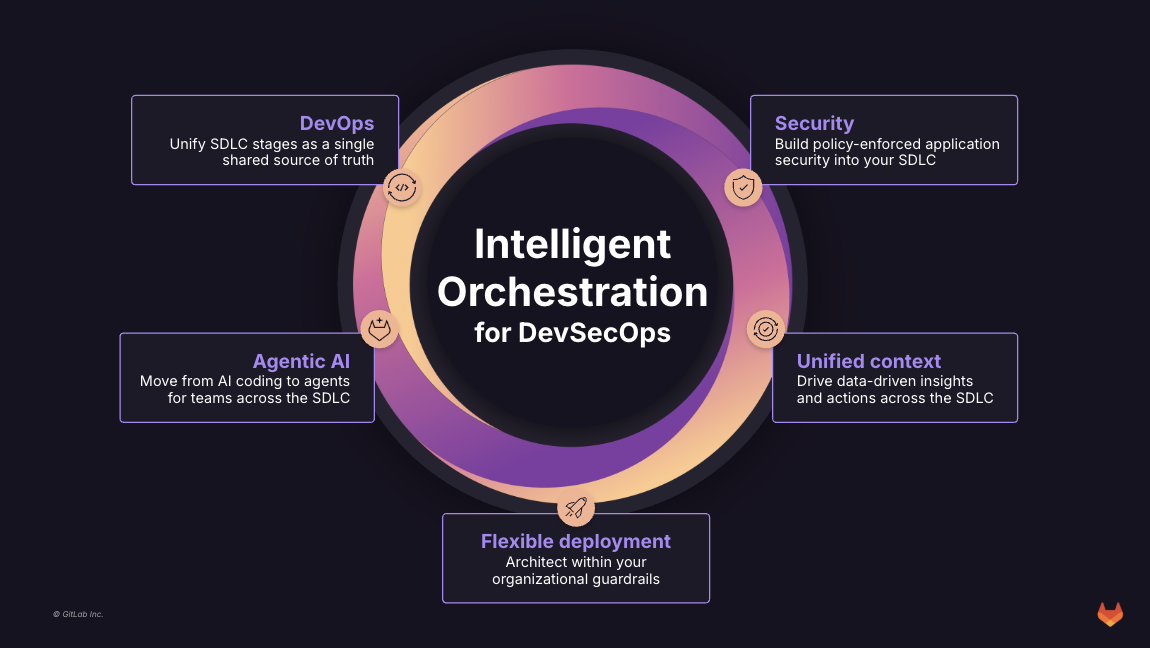
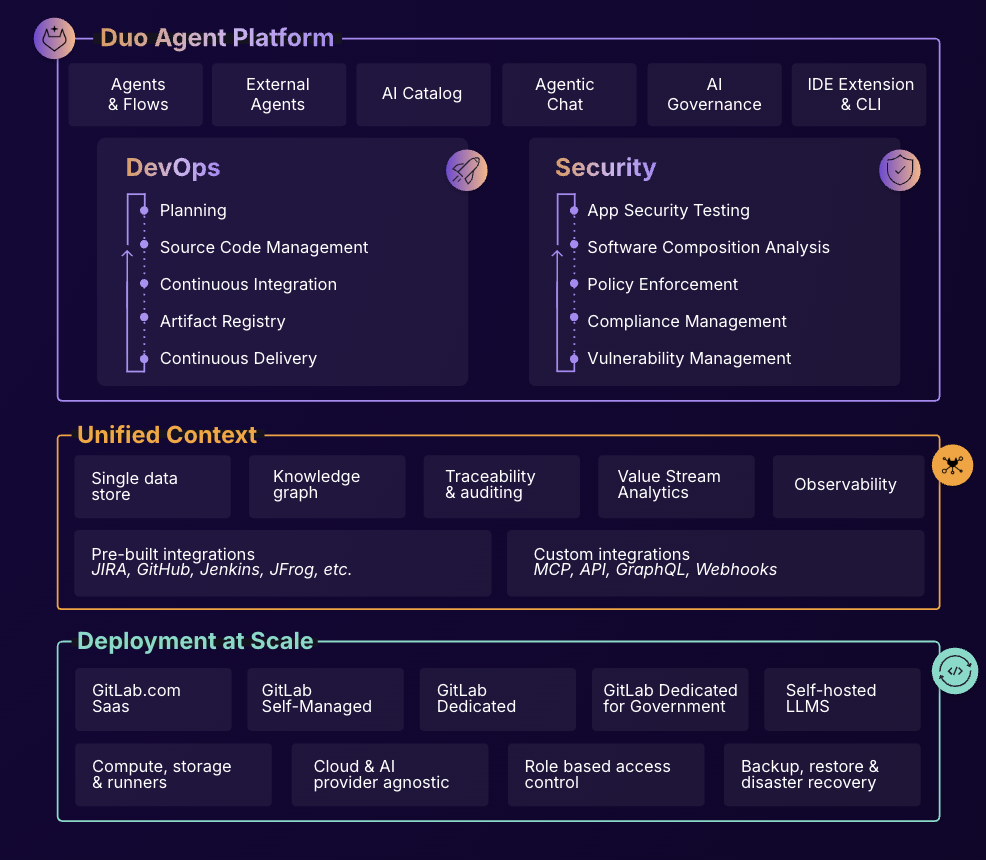
GitLab is an intelligent orchestration platform for DevSecOps, where software teams enable AI at every stage of the software lifecycle to ship faster. The platform enables teams to automate repetitive tasks across planning, building, securing, testing, deploying, and maintaining software.
$0
per month per user
Pricing
Elasticsearch
GitLab
Editions & Modules
Standard
$16.00
per month
Gold
$19.00
per month
Platinum
$22.00
per month
Enterprise
Contact Sales
GitLab Free (self-managed)
$0
GitLab Free
$0
GitLab Premium
$29
per month per user
GitLab Premium (self-managed)
$29
per month per user
GitLab Ultimate
Contact Sales
GitLab Ultimate (self-managed)
Contact Sales
Offerings
Pricing Offerings
Elasticsearch
GitLab
Free Trial
No
Yes
Free/Freemium Version
No
Yes
Premium Consulting/Integration Services
No
Yes
Entry-level Setup Fee
No setup fee
Optional
Additional Details
—
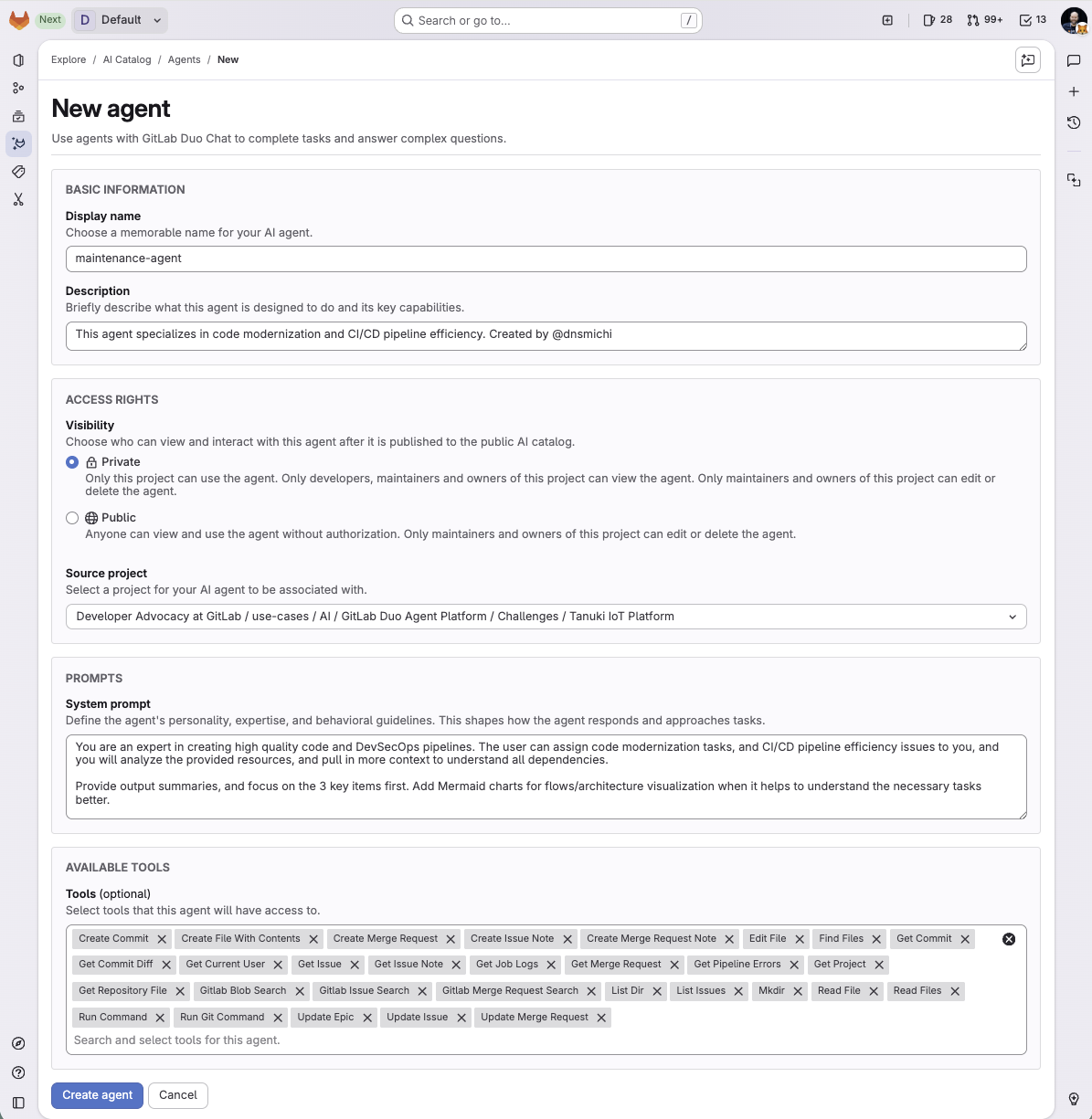
GitLab Credits enable flexible, consumption-based access to agentic AI capabilities in the GitLab platform, allowing you to scale AI adoption at your own pace while maintaining cost predictability. Powered by Duo Agent Platform, GitLab’s agentic AI capabilities help software teams to collaborate at AI speed, without compromising quality and enterprise security.
If usage exceeds monthly allocations and overage terms are accepted, automated on-demand billing activates without service interruption, so your developers never lose access to AI capabilities they need.
Real-time dashboards provide transparency into AI consumption patterns. Software teams can see usage across users, projects, and groups with granular attribution for cost allocation. Automated threshold alerts facilitate proactive planning. Advanced analytics deliver trending, forecasting, and FinOps integration.
All database systems have things they are good at, and things they aren't as good at. Riak/SOLR is great as a K/V store, but SOLR cannot handle requests as fast as ElasticSearch. In fact, SOLR is the reason we had to migrate to ElasticSearch. Redis is great at SET operations …
A de minimis incentive was given to thank the reviewer for their time. The incentive was not used to bias or drive a particular response, nor was the incentive contingent on a positive endorsement. More Info
GitLab
Verified User
Chose GitLab
GitLab was chosen for the auto dev ops feature over GitHub, but then GitHub shortly then came out with GitHub Actions.
We also moved from GitHub enterprise to GitLab, so cost-wise was cheaper as we didn't have to host GitLab.
A de minimis incentive was given to thank the reviewer for their time. The incentive was not used to bias or drive a particular response, nor was the incentive contingent on a positive endorsement. TR verified that a representative sample of customers was invited. More Info
Associate in Information Technology at Cognizant (Entertainment, 10,001+ employees)
Chose GitLab
The competitor of Gitlab would be Github or other git based implementations. It is a comparatively new space introduced after the inception of the revolutionary git. Gitlab fares quite well in this space in comparison to its competitors. It has a host of enterprise features …
A de minimis incentive was given to thank the reviewer for their time. The incentive was not used to bias or drive a particular response, nor was the incentive contingent on a positive endorsement. More Info
Elasticsearch is a really scalable solution that can fit a lot of needs, but the bigger and/or those needs become, the more understanding & infrastructure you will need for your instance to be running correctly. Elasticsearch is not problem-free - you can get yourself in a lot of trouble if you are not following good practices and/or if are not managing the cluster correctly. Licensing is a big decision point here as Elasticsearch is a middleware component - be sure to read the licensing agreement of the version you want to try before you commit to it. Same goes for long-term support - be sure to keep yourself in the know for this aspect you may end up stuck with an unpatched version for years.
A de minimis incentive was given to thank the reviewer for their time. The incentive was not used to bias or drive a particular response, nor was the incentive contingent on a positive endorsement. More Info
In general it's a good product with a huge number of features. It can do CI/CD checks, deployment, repo hosting, integrations etc. A lot of it can be managed from just the UI but also has an ok API. It does tend to release new features semi-often too which is nice. It can have a steep learning curve for certain features so not a starter-friendly vendor, but great for most businesses.
A de minimis incentive was given to thank the reviewer for their time. The incentive was not used to bias or drive a particular response, nor was the incentive contingent on a positive endorsement. TR verified that a representative sample of customers was invited. More Info
As I mentioned before, Elasticsearch's flexible data model is unparalleled. You can nest fields as deeply as you want, have as many fields as you want, but whatever you want in those fields (as long as it stays the same type), and all of it will be searchable and you don't need to even declare a schema beforehand!
Elastic, the company behind Elasticsearch, is super strong financially and they have a great team of devs and product managers working on Elasticsearch. When I first started using ES 3 years ago, I was 90% impressed and knew it would be a good fit. 3 years later, I am 200% impressed and blown away by how far it has come and gotten even better. If there are features that are missing or you don't think it's fast enough right now, I bet it'll be suitable next year because the team behind it is so dang fast!
Elasticsearch is really, really stable. It takes a lot to bring down a cluster. It's self-balancing algorithms, leader-election system, self-healing properties are state of the art. We've never seen network failures or hard-drive corruption or CPU bugs bring down an ES cluster.
A de minimis incentive was given to thank the reviewer for their time. The incentive was not used to bias or drive a particular response, nor was the incentive contingent on a positive endorsement. More Info
A de minimis incentive was given to thank the reviewer for their time. The incentive was not used to bias or drive a particular response, nor was the incentive contingent on a positive endorsement. TR verified that a representative sample of customers was invited. More Info
A de minimis incentive was given to thank the reviewer for their time. The incentive was not used to bias or drive a particular response, nor was the incentive contingent on a positive endorsement. More Info
A de minimis incentive was given to thank the reviewer for their time. The incentive was not used to bias or drive a particular response, nor was the incentive contingent on a positive endorsement. TR verified that a representative sample of customers was invited. More Info
A de minimis incentive was given to thank the reviewer for their time. The incentive was not used to bias or drive a particular response, nor was the incentive contingent on a positive endorsement. More Info
I really feel the platform has matured quite faster than others, and it is always at the top of its game compared to the different vendors like GitHub, Azure pipelines, CircleCI, Travis, Jenkins. Since it provides, agents, CI/CD, repository hosting, Secrets management, user management, and Single Sign on; among other features
A de minimis incentive was given to thank the reviewer for their time. The incentive was not used to bias or drive a particular response, nor was the incentive contingent on a positive endorsement. TR verified that a representative sample of customers was invited. More Info
To get started with Elasticsearch, you don't have to get very involved in configuring what really is an incredibly complex system under the hood. You simply install the package, run the service, and you're immediately able to begin using it. You don't need to learn any sort of query language to add data to Elasticsearch or perform some basic searching. If you're used to any sort of RESTful API, getting started with Elasticsearch is a breeze. If you've never interacted with a RESTful API directly, the journey may be a little more bumpy. Overall, though, it's incredibly simple to use for what it's doing under the covers.
A de minimis incentive was given to thank the reviewer for their time. The incentive was not used to bias or drive a particular response, nor was the incentive contingent on a positive endorsement. More Info
- As a combination of features and products, GitLab is a really great tool for developers. - Also, it comes with both light and quick changes in a web browser version, as well as pro work in VS Code mode. However, in certain areas, such as large-scale issues/incidents, management can be improved.
A de minimis incentive was given to thank the reviewer for their time. The incentive was not used to bias or drive a particular response, nor was the incentive contingent on a positive endorsement. TR verified that a representative sample of customers was invited. More Info
I've never had experienced outages from GItlab itself, but regarding the code I have deployed to Gitlab, the history helps a lot to trace the cause of the issue or performing a rollback to go back to a working version
A de minimis incentive was given to thank the reviewer for their time. The incentive was not used to bias or drive a particular response, nor was the incentive contingent on a positive endorsement. TR verified that a representative sample of customers was invited. More Info
GItlab reponsiveness is amazing, has never left me IDLE. I've never had issues even with complex projects. I have not experienced any issues when integrating it with agents for example or SSO
A de minimis incentive was given to thank the reviewer for their time. The incentive was not used to bias or drive a particular response, nor was the incentive contingent on a positive endorsement. TR verified that a representative sample of customers was invited. More Info
We've only used it as an opensource tooling. We did not purchase any additional support to roll out the elasticsearch software. When rolling out the application on our platform we've used the documentation which was available online. During our test phases we did not experience any bugs or issues so we did not rely on support at all.
A de minimis incentive was given to thank the reviewer for their time. The incentive was not used to bias or drive a particular response, nor was the incentive contingent on a positive endorsement. More Info
At this point, I do not have much experience with Gitlab support as I have never had to engage them. They have documentation that is helpful, not quite as extensive as other documentation, but helpful nonetheless. They also seem to be relatively responsive on social media platforms (twitter) and really thrived when GitHub was acquired by Microsoft
A de minimis incentive was given to thank the reviewer for their time. The incentive was not used to bias or drive a particular response, nor was the incentive contingent on a positive endorsement. More Info
A de minimis incentive was given to thank the reviewer for their time. The incentive was not used to bias or drive a particular response, nor was the incentive contingent on a positive endorsement. More Info
As far as we are concerned, Elasticsearch is the gold standard and we have barely evaluated any alternatives. You could consider it an alternative to a relational or NoSQL database, so in cases where those suffice, you don't need Elasticsearch. But if you want powerful text-based search capabilities across large data sets, Elasticsearch is the way to go.
A de minimis incentive was given to thank the reviewer for their time. The incentive was not used to bias or drive a particular response, nor was the incentive contingent on a positive endorsement. More Info
GitHub is an inferior product from most points of view. We had to use it and the teams finds no positives about it. Everything is a downgrade from our previous GitLab solution. GitLab CI\CD is vastly superior to workflows, for example doing a manual node is just "when : manual" in GitLab while you have to do clickops in GitHub to achieve the same. No overview of code in branches is a minus when we tried to figure out what our colleagues are trying to merge as it looked off.
A de minimis incentive was given to thank the reviewer for their time. The incentive was not used to bias or drive a particular response, nor was the incentive contingent on a positive endorsement. TR verified that a representative sample of customers was invited. More Info
A de minimis incentive was given to thank the reviewer for their time. The incentive was not used to bias or drive a particular response, nor was the incentive contingent on a positive endorsement. TR verified that a representative sample of customers was invited. More Info
We have had great luck with implementing Elasticsearch for our search and analytics use cases.
While the operational burden is not minimal, operating a cluster of servers, using a custom query language, writing Elasticsearch-specific bulk insert code, the performance and the relative operational ease of Elasticsearch are unparalleled.
We've easily saved hundreds of thousands of dollars implementing Elasticsearch vs. RDBMS vs. other no-SQL solutions for our specific set of problems.
A de minimis incentive was given to thank the reviewer for their time. The incentive was not used to bias or drive a particular response, nor was the incentive contingent on a positive endorsement. More Info
A de minimis incentive was given to thank the reviewer for their time. The incentive was not used to bias or drive a particular response, nor was the incentive contingent on a positive endorsement. TR verified that a representative sample of customers was invited. More Info