Function Point is a project management software built specifically for ad agencies, design studios, and marketing departments.
$46
per month per user
StoriesOnBoard
Score1.1 out of 10
N/A
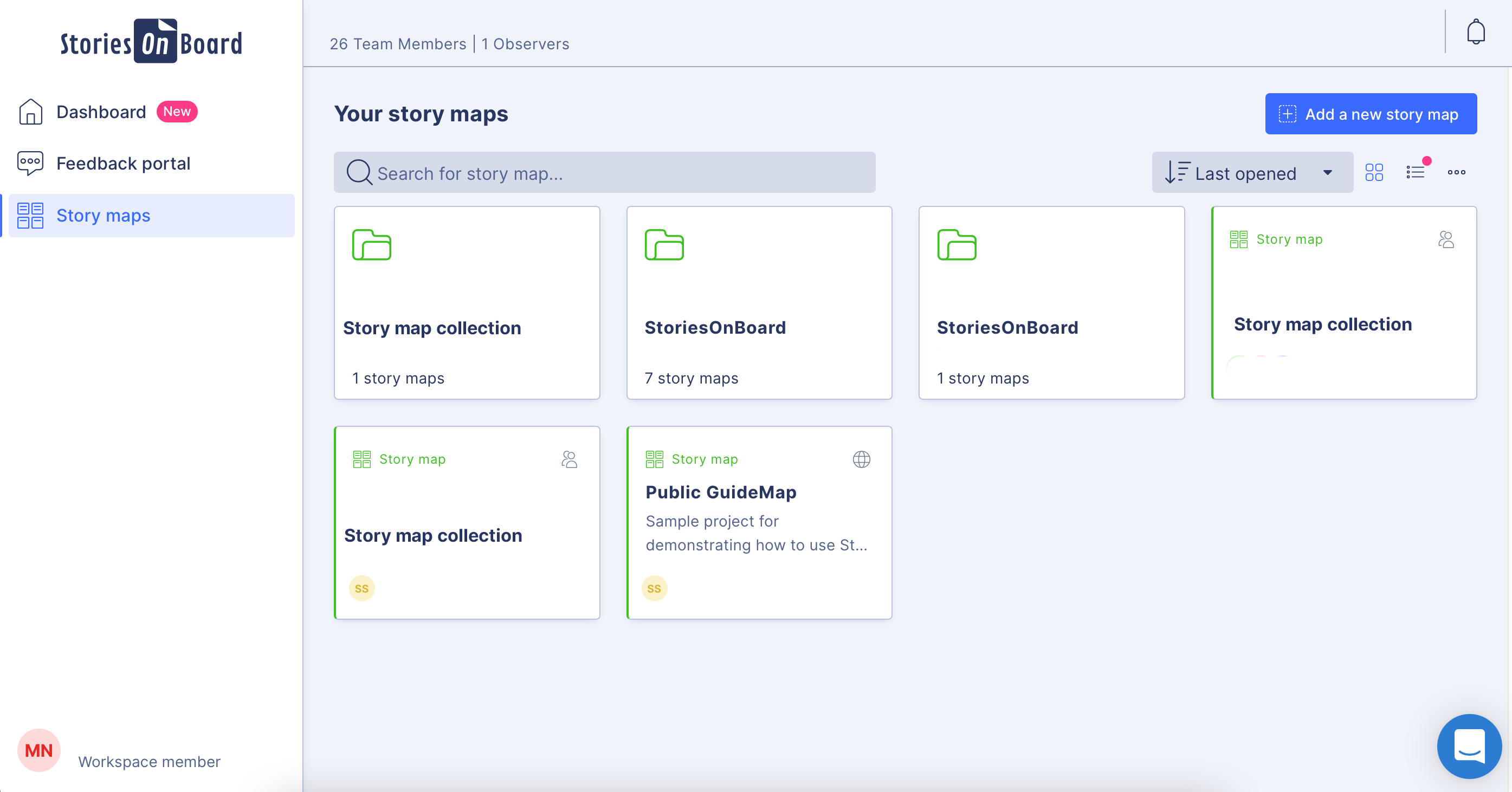
StoriesOnBoard is a holistic product management tool powered by user feedback. Through collecting user and customer feedback into a single repository and sorting it based on custom rules and collaborating with stakeholders to form actionable feature ideas from them, users can make sure their ideas will be driven by real user needs. Ideas can be validated on a public roadmap and then placed on a user story map to plan releases. StoriesOnBoard supports the product management…
$19
per edior
Pricing
Function Point Productivity Software
StoriesOnBoard
Editions & Modules
Agency (30-49)
$46
per month per user
Studio (10-29)
$48
per month per user
Boutique (5-9)
$52
per month per user
Enterprise
Call for Pricing
per month per user
Basic - billed annually
$19
per edior
Standard - billed annually
$26
per edior
Pro - billed annually
$45
per edior
Enterprise - billed annually
$499
40+ users
Offerings
Pricing Offerings
Function Point Productivity Software
StoriesOnBoard
Free Trial
No
Yes
Free/Freemium Version
No
No
Premium Consulting/Integration Services
No
Yes
Entry-level Setup Fee
No setup fee
No setup fee
Additional Details
Customers save 11% on annual billing. Demo’s available.
—
More Pricing Information
Features
Function Point Productivity Software
StoriesOnBoard
Project Management
Comparison of Project Management features of Function Point Productivity Software and StoriesOnBoard
Feature
Function Point Productivity Software
7.9
6 Ratings
3% above category average
StoriesOnBoard
-
Ratings
Task Management
8.86 Ratings
00 Ratings
Resource Management
8.85 Ratings
00 Ratings
Gantt Charts
8.86 Ratings
00 Ratings
Scheduling
8.86 Ratings
00 Ratings
Workflow Automation
8.06 Ratings
00 Ratings
Team Collaboration
7.96 Ratings
00 Ratings
Support for Agile Methodology
7.25 Ratings
00 Ratings
Support for Waterfall Methodology
8.35 Ratings
00 Ratings
Document Management
5.45 Ratings
00 Ratings
Email integration
7.24 Ratings
00 Ratings
Mobile Access
6.34 Ratings
00 Ratings
Timesheet Tracking
8.86 Ratings
00 Ratings
Change request and Case Management
8.15 Ratings
00 Ratings
Budget and Expense Management
8.56 Ratings
00 Ratings
Professional Services Automation
Comparison of Professional Services Automation features of Function Point Productivity Software and StoriesOnBoard
A de minimis incentive was given to thank the reviewer for their time. The incentive was not used to bias or drive a particular response, nor was the incentive contingent on a positive endorsement. More Info
As mentioned earlier, we also use StoriesOnBoard to create other processes (customer and employee journey). We use the swim lanes to differentiate between measures, tools and processes and working with them is very easy and understandable for this purpose.
Less easy is the use of context, i.e. when one part of a story map depends on another story map. This cannot be avoided (at least for us) to avoid creating redundancy (and the risk of creating different stages). At appropriate places, we refer to the other map in the title.
Time tracking - like several time tracking solutions, FP uses a clock that will track in real time so that you do not need to remember how long you worked on a project to input later.
Dashboards - I love FP's dashboards that let me track my personal utilization, the utilization of my team members and all of my open tasks.
Reporting - FP's reports provide insight organization-wide into how we are doing and where we (as an organization) are spending our time. As with any reporting, though, it is important to manage the cleanliness of your data to make the reporting useful.
A de minimis incentive was given to thank the reviewer for their time. The incentive was not used to bias or drive a particular response, nor was the incentive contingent on a positive endorsement. More Info
Function Point often provided reports that were inaccurate due to bad calculations. The support team would work with us to troubleshoot these issues, but the fact remained that calculations were wrong.
Function Point was purchased by a new parent company that increased prices over their nearest, superior, competitor, pricing themselves out of the market.
Function Point's interface is dated, as is its code base.
New features are being implemented not as software revisions or upgrades, but as new for-pay features.
A de minimis incentive was given to thank the reviewer for their time. The incentive was not used to bias or drive a particular response, nor was the incentive contingent on a positive endorsement. More Info
StoriesOnBoard works really well; all features are well thought through. It could look a bit fresher, although the new updated dashboard is already much better than it was.
A de minimis incentive was given to thank the reviewer for their time. The incentive was not used to bias or drive a particular response, nor was the incentive contingent on a positive endorsement. More Info
Workamajig was NOT a good fit, after over a year of back-end setup. FunctionFox didn't have the financial integration capabilities we needed, but we used it for years and were happy with the service and support. FunctionPoint brought together the 30,000-foot view of the projects and resources with a simplified process for getting day-to-day jobs into the queue, which was essential for our organization.
A de minimis incentive was given to thank the reviewer for their time. The incentive was not used to bias or drive a particular response, nor was the incentive contingent on a positive endorsement. More Info
The only other competitor we looked at was cardboardit.com. Both had solid functionality, but StoriesOnBoard was more user-friendly and quick to learn and use in our opinion.
A de minimis incentive was given to thank the reviewer for their time. The incentive was not used to bias or drive a particular response, nor was the incentive contingent on a positive endorsement. More Info
StoriesOnBoard (and story mapping in general) creates a low-cost visual method of aligning on high-level business and technical requirements early in a project and provides an ongoing reference as the project progresses. Having this alignment is critical for the later stages of the project.