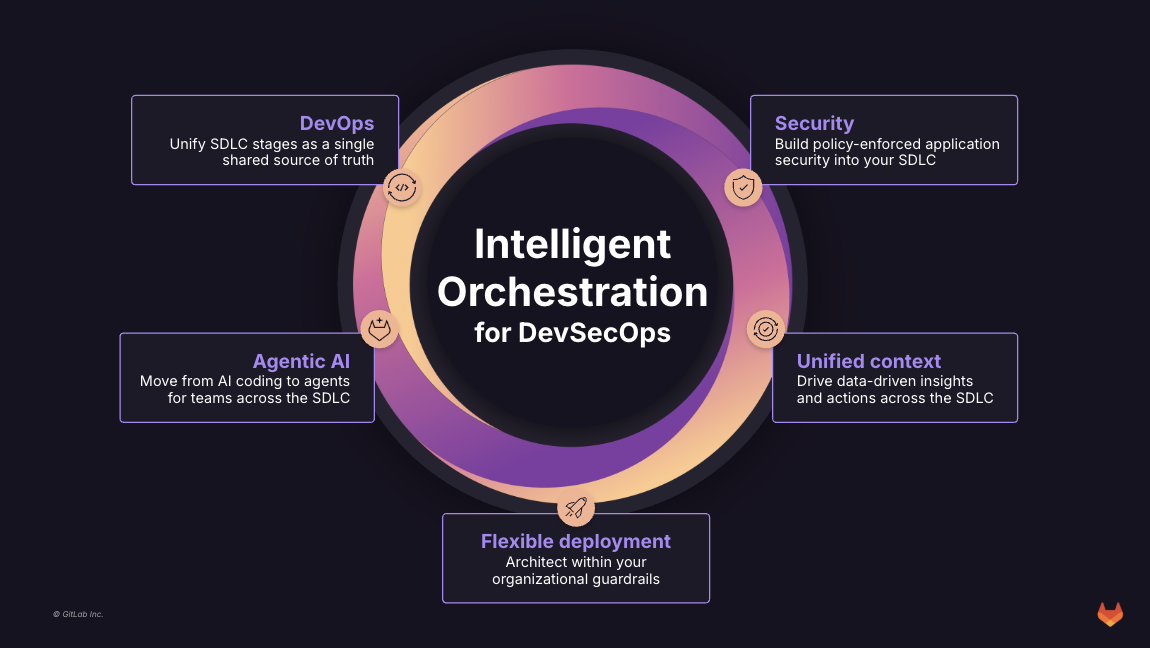
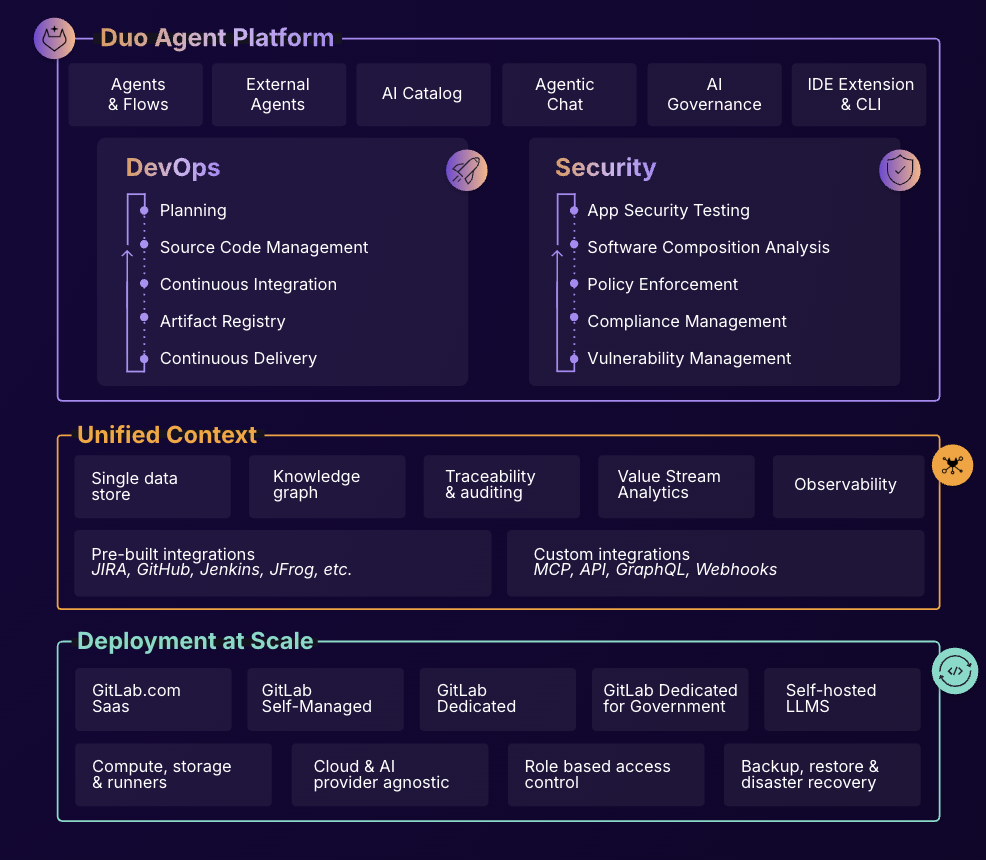
GitLab is an intelligent orchestration platform for DevSecOps, where software teams enable AI at every stage of the software lifecycle to ship faster. The platform enables teams to automate repetitive tasks across planning, building, securing, testing, deploying, and maintaining software.
$0
per month per user
IBM Cloud Kubernetes Service
Score8 out of 10
Mid-Size Companies (51-1,000 employees)
IBM Cloud Kubernetes Service is a
managed Kubernetes offering, delivering user tools and built-in security for rapid delivery of applications
that users can bind to cloud services related to IBM Watson®, IoT, DevOps
and data analytics. As a certified K8s provider, IBM Cloud Kubernetes
Service provides intelligent scheduling, self-healing, horizontal
scaling, service discovery and load balancing, automated rollouts and
rollbacks, and secret and configuration management. The Kubernetes…
N/A
Pricing
GitLab
IBM Cloud Kubernetes Service
Editions & Modules
GitLab Free (self-managed)
$0
GitLab Free
$0
GitLab Premium
$29
per month per user
GitLab Premium (self-managed)
$29
per month per user
GitLab Ultimate
Contact Sales
GitLab Ultimate (self-managed)
Contact Sales
No answers on this topic
Offerings
Pricing Offerings
GitLab
IBM Cloud Kubernetes Service
Free Trial
Yes
No
Free/Freemium Version
Yes
Yes
Premium Consulting/Integration Services
Yes
Yes
Entry-level Setup Fee
Optional
Optional
Additional Details
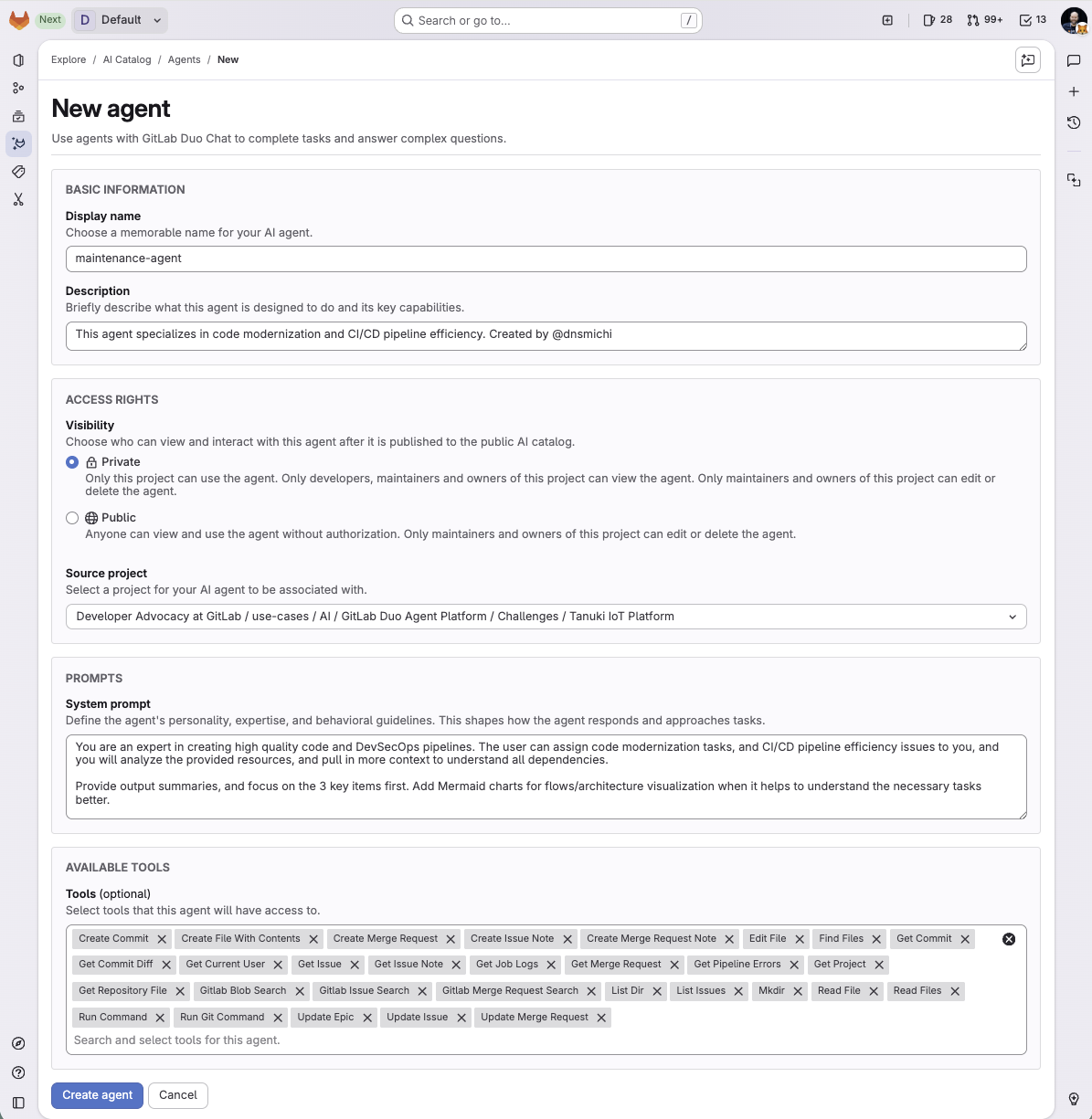
GitLab Credits enable flexible, consumption-based access to agentic AI capabilities in the GitLab platform, allowing you to scale AI adoption at your own pace while maintaining cost predictability. Powered by Duo Agent Platform, GitLab’s agentic AI capabilities help software teams to collaborate at AI speed, without compromising quality and enterprise security.
If usage exceeds monthly allocations and overage terms are accepted, automated on-demand billing activates without service interruption, so your developers never lose access to AI capabilities they need.
Real-time dashboards provide transparency into AI consumption patterns. Software teams can see usage across users, projects, and groups with granular attribution for cost allocation. Automated threshold alerts facilitate proactive planning. Advanced analytics deliver trending, forecasting, and FinOps integration.
This is a very difficult question, because there are a lot of similarities and the differences are minor but could be important if your use-case requires something like that. For example if you need a cluster that is ready sooner than 45 minutes or a data center/location in …
A de minimis incentive was given to thank the reviewer for their time. The incentive was not used to bias or drive a particular response, nor was the incentive contingent on a positive endorsement. TR verified that a representative sample of customers was invited. More Info
In general it's a good product with a huge number of features. It can do CI/CD checks, deployment, repo hosting, integrations etc. A lot of it can be managed from just the UI but also has an ok API. It does tend to release new features semi-often too which is nice. It can have a steep learning curve for certain features so not a starter-friendly vendor, but great for most businesses.
A de minimis incentive was given to thank the reviewer for their time. The incentive was not used to bias or drive a particular response, nor was the incentive contingent on a positive endorsement. TR verified that a representative sample of customers was invited. More Info
IBM Cloud Kubernetes Service also stands out in environments where the workloads vary continuously and require befitting scale. The product excels particularly in microservices structures, wherein the companies would harness the capacity for container orchestration and automated scaling. Still, it may face the challenges due to monolith applications that have not been originally developed for using container technology.
A de minimis incentive was given to thank the reviewer for their time. The incentive was not used to bias or drive a particular response, nor was the incentive contingent on a positive endorsement. TR verified that a representative sample of customers was invited. More Info
IBM has a strong focus on serverless and Kubernetes. This shows in the platform. Deploying containers to Kubernetes was very easy.
Deploying a Kubernetes cluster through the GUI is very easy and quick. On top of that, IBM Cloud offers a single node cluster for Free.
Container Registry is a very good product for managing container images. Integration with Kubernetes was seemless.
Portability. To transition from Google Cloud Kubernetes to IBM Cloud Kubernetes took almost no effort. We mostly use the CLI and the standard tools such as kubectl were present.
A de minimis incentive was given to thank the reviewer for their time. The incentive was not used to bias or drive a particular response, nor was the incentive contingent on a positive endorsement. More Info
A de minimis incentive was given to thank the reviewer for their time. The incentive was not used to bias or drive a particular response, nor was the incentive contingent on a positive endorsement. TR verified that a representative sample of customers was invited. More Info
I constantly get this error even when everything is well configured prefect.exceptions.AuthorizationError: [{'path': ['auth_info'], 'message': 'AuthenticationError: Forbidden', 'extensions': {'code': 'UNAUTHENTICATED'}}]
Then sometimes the error disapear without changine anything, happened twice to me. Should there be an issue with the authentication service? Please let's improve or let users know why this may be happening.
Improve the UX in the browse console when removing many images at once
UX on the process of installing KeyCloack operator
A de minimis incentive was given to thank the reviewer for their time. The incentive was not used to bias or drive a particular response, nor was the incentive contingent on a positive endorsement. More Info
I really feel the platform has matured quite faster than others, and it is always at the top of its game compared to the different vendors like GitHub, Azure pipelines, CircleCI, Travis, Jenkins. Since it provides, agents, CI/CD, repository hosting, Secrets management, user management, and Single Sign on; among other features
A de minimis incentive was given to thank the reviewer for their time. The incentive was not used to bias or drive a particular response, nor was the incentive contingent on a positive endorsement. TR verified that a representative sample of customers was invited. More Info
We have our application running on a CentOS compartment on IBM Cloud Kubernetes Service. We have been utilizing the help since IBM Cloud initially dispatched. We liked the adaptability and versatility that IBM Cloud Kubernetes Service give us. Since we are tiny, the Kubernetes administration is just utilized at present inside my venture bunch.
A de minimis incentive was given to thank the reviewer for their time. The incentive was not used to bias or drive a particular response, nor was the incentive contingent on a positive endorsement. More Info
- As a combination of features and products, GitLab is a really great tool for developers. - Also, it comes with both light and quick changes in a web browser version, as well as pro work in VS Code mode. However, in certain areas, such as large-scale issues/incidents, management can be improved.
A de minimis incentive was given to thank the reviewer for their time. The incentive was not used to bias or drive a particular response, nor was the incentive contingent on a positive endorsement. TR verified that a representative sample of customers was invited. More Info
We actually haven't had any real problems in our clusters recently and the results we have gotten from adopting IBM Cloud Kubernetes Service have been beyond even our greatest expectations. The community has helped optimize the use of the system and make it relatively simpler to use.
A de minimis incentive was given to thank the reviewer for their time. The incentive was not used to bias or drive a particular response, nor was the incentive contingent on a positive endorsement. TR verified that a representative sample of customers was invited. More Info
I've never had experienced outages from GItlab itself, but regarding the code I have deployed to Gitlab, the history helps a lot to trace the cause of the issue or performing a rollback to go back to a working version
A de minimis incentive was given to thank the reviewer for their time. The incentive was not used to bias or drive a particular response, nor was the incentive contingent on a positive endorsement. TR verified that a representative sample of customers was invited. More Info
A de minimis incentive was given to thank the reviewer for their time. The incentive was not used to bias or drive a particular response, nor was the incentive contingent on a positive endorsement. More Info
GItlab reponsiveness is amazing, has never left me IDLE. I've never had issues even with complex projects. I have not experienced any issues when integrating it with agents for example or SSO
A de minimis incentive was given to thank the reviewer for their time. The incentive was not used to bias or drive a particular response, nor was the incentive contingent on a positive endorsement. TR verified that a representative sample of customers was invited. More Info
A de minimis incentive was given to thank the reviewer for their time. The incentive was not used to bias or drive a particular response, nor was the incentive contingent on a positive endorsement. More Info
At this point, I do not have much experience with Gitlab support as I have never had to engage them. They have documentation that is helpful, not quite as extensive as other documentation, but helpful nonetheless. They also seem to be relatively responsive on social media platforms (twitter) and really thrived when GitHub was acquired by Microsoft
A de minimis incentive was given to thank the reviewer for their time. The incentive was not used to bias or drive a particular response, nor was the incentive contingent on a positive endorsement. More Info
The self-guided support was solid, and there are plenty of online videos to guide first time users, but I think one area of improvement is a faster way to transfer a large quantity of files from our local machine to the cloud for storage (Aspera)
A de minimis incentive was given to thank the reviewer for their time. The incentive was not used to bias or drive a particular response, nor was the incentive contingent on a positive endorsement. TR verified that a representative sample of customers was invited. More Info
Online training is really an important resource for using these tools. IBM's help center is rich in useful information and tips. Also, external guides and tutorials are available (e.g. on youtube), but I followed only IBM ones and I had no difficulties.
A de minimis incentive was given to thank the reviewer for their time. The incentive was not used to bias or drive a particular response, nor was the incentive contingent on a positive endorsement. More Info
Ease of use. Very intuitive. We have been looking for a product that allows us to orchestrate our docker containers in a way where it allows us to effectively scale our applications to production. It also provides us a way of monitoring all our infrastructure in a very clear concise way.
A de minimis incentive was given to thank the reviewer for their time. The incentive was not used to bias or drive a particular response, nor was the incentive contingent on a positive endorsement. More Info
GitHub is an inferior product from most points of view. We had to use it and the teams finds no positives about it. Everything is a downgrade from our previous GitLab solution. GitLab CI\CD is vastly superior to workflows, for example doing a manual node is just "when : manual" in GitLab while you have to do clickops in GitHub to achieve the same. No overview of code in branches is a minus when we tried to figure out what our colleagues are trying to merge as it looked off.
A de minimis incentive was given to thank the reviewer for their time. The incentive was not used to bias or drive a particular response, nor was the incentive contingent on a positive endorsement. TR verified that a representative sample of customers was invited. More Info
We mainly selected [IBM Cloud Kubernetes Service] because IBM fabric blockchain service is mostly compatible with it. To have all the infrastructure in a single cloud to get the best output we selected the [IBM Cloud Kubernetes Service].
A de minimis incentive was given to thank the reviewer for their time. The incentive was not used to bias or drive a particular response, nor was the incentive contingent on a positive endorsement. TR verified that a representative sample of customers was invited. More Info
A de minimis incentive was given to thank the reviewer for their time. The incentive was not used to bias or drive a particular response, nor was the incentive contingent on a positive endorsement. TR verified that a representative sample of customers was invited. More Info
IBM's CKS does not offers automatic autoscaling nor vertical scaling (automatic). Other services like Google Kubernetes Engine scales up and down very well
A de minimis incentive was given to thank the reviewer for their time. The incentive was not used to bias or drive a particular response, nor was the incentive contingent on a positive endorsement. More Info
A de minimis incentive was given to thank the reviewer for their time. The incentive was not used to bias or drive a particular response, nor was the incentive contingent on a positive endorsement. TR verified that a representative sample of customers was invited. More Info
A de minimis incentive was given to thank the reviewer for their time. The incentive was not used to bias or drive a particular response, nor was the incentive contingent on a positive endorsement. More Info