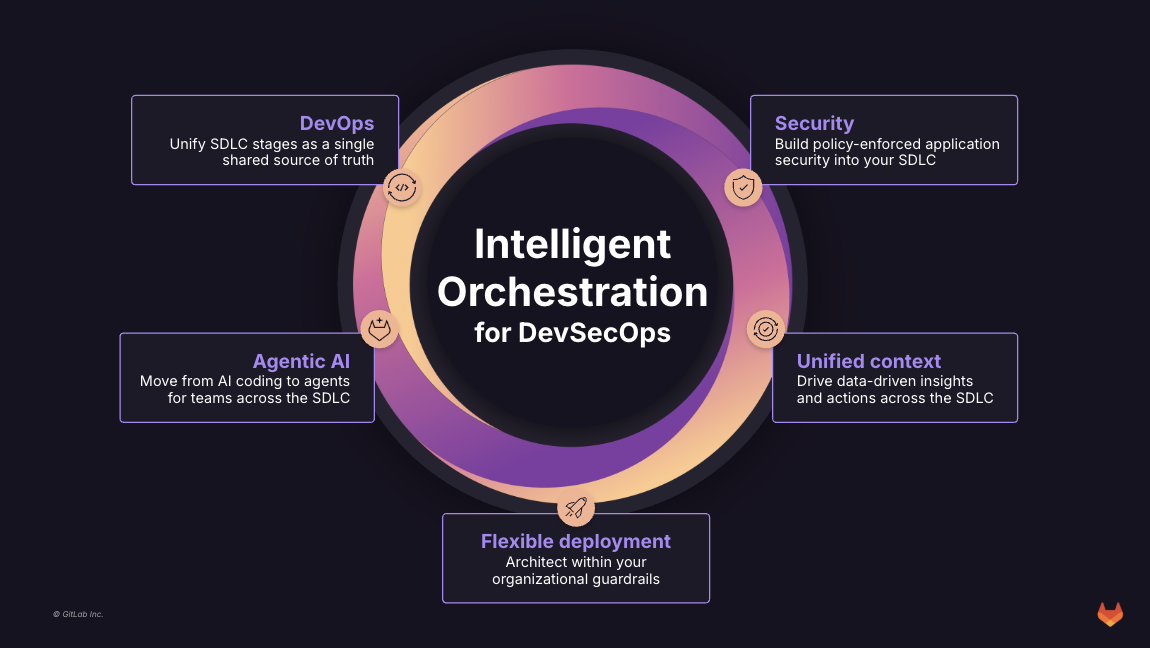
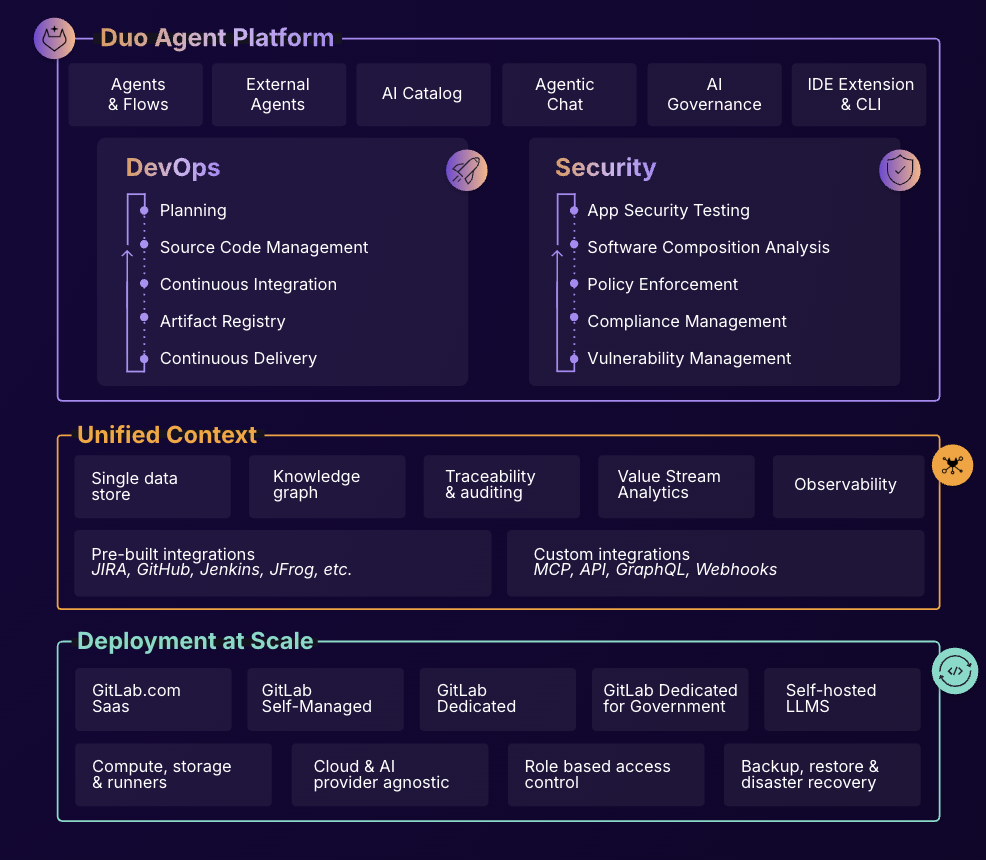
GitLab is an intelligent orchestration platform for DevSecOps, where software teams enable AI at every stage of the software lifecycle to ship faster. The platform enables teams to automate repetitive tasks across planning, building, securing, testing, deploying, and maintaining software.
$0
per month per user
OpenText ALM/Quality Center
Score 9.3 out of 10
N/A
OpenText™ ALM/Quality Center, formerly from Micro Focus, serves as the single pane of glass for software quality management. It helps users to govern application lifecycle management activities and implement rigorous, auditable lifecycle processes.
N/A
Pricing
GitLab
OpenText ALM/Quality Center
Editions & Modules
GitLab Free (self-managed)
$0
GitLab Free
$0
GitLab Premium
$29
per month per user
GitLab Premium (self-managed)
$29
per month per user
GitLab Ultimate
Contact Sales
GitLab Ultimate (self-managed)
Contact Sales
No answers on this topic
Offerings
Pricing Offerings
GitLab
OpenText ALM/Quality Center
Free Trial
Yes
No
Free/Freemium Version
Yes
No
Premium Consulting/Integration Services
Yes
No
Entry-level Setup Fee
Optional
No setup fee
Additional Details
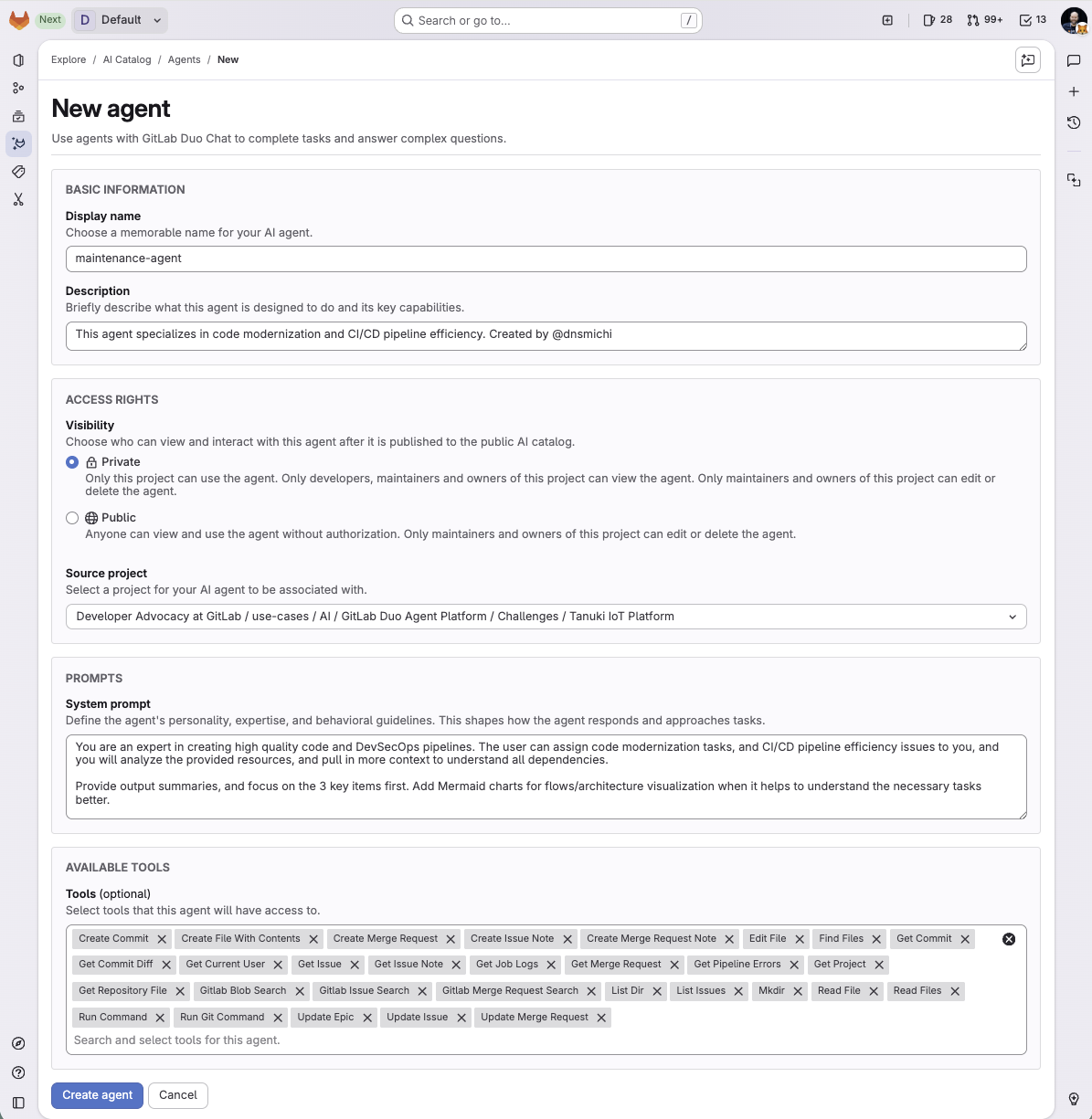
GitLab Credits enable flexible, consumption-based access to agentic AI capabilities in the GitLab platform, allowing you to scale AI adoption at your own pace while maintaining cost predictability. Powered by Duo Agent Platform, GitLab’s agentic AI capabilities help software teams to collaborate at AI speed, without compromising quality and enterprise security.
If usage exceeds monthly allocations and overage terms are accepted, automated on-demand billing activates without service interruption, so your developers never lose access to AI capabilities they need.
Real-time dashboards provide transparency into AI consumption patterns. Software teams can see usage across users, projects, and groups with granular attribution for cost allocation. Automated threshold alerts facilitate proactive planning. Advanced analytics deliver trending, forecasting, and FinOps integration.
In general it's a good product with a huge number of features. It can do CI/CD checks, deployment, repo hosting, integrations etc. A lot of it can be managed from just the UI but also has an ok API. It does tend to release new features semi-often too which is nice. It can have a steep learning curve for certain features so not a starter-friendly vendor, but great for most businesses.
For an organisation that has completely adopted SAFe structure including naming terminology, it is less appropriate and apart from that. It can suit any organisation out there, and it can solve all your problems one way or another by customising it. It is a robust and highly scalable solution to support all the business needs. It improves a lot of productivity and visibility.
If you have a mix of automation & manual test suites, HPALM is the best tool to manage that. It definitely integrates very well with HP automation tools like HP Unified Functional Testing and HP LoadRunner. Automated Suites can be executed, reports can be maintained automatically. It also classifies which test suites are manual & which are automated & managers can see the progress happening in moving from manual to automated suites. In HPA ALM all the functional test suites, performance test suites, security suites can be defined, managed & tracked in one place.
It is a wonderful tool for test management. Whether you want to create test cases, or import it, from execution to snapshot capturing, it supports all activities very well. The linking of defects to test runs is excellent. Any changes in mandatory fields or status of the defect triggers an e-mail and sent automatically to the user that the defect is assigned to.
It also supports devops implementation by interacting with development tool sets such as Jenkins & GIT. It also bring in team collaboration by supporting collaboration tools like Slack and Hubot.
This tool can integrate to any environment, any source control management tool bringing in changes and creates that trace-ability and links between source control changes to requirements to tests across the sdlc life-cycle.
The requirements module is not as user friendly as other applications, such as Blue Bird. Managing requirements is usually done in another tool. However, having the requirements in ALM is important to ensure traceability to tests and defects.
Reporting across multiple ALM repositories is not supported within the tool. Only graphs are included within ALM functionality. Due to size considerations, one or two projects is not a good solution. Alternatively, we have started leveraging the template functionality within ALM and are integrating with a third party reporting tool to work around this issue.
NET (not Octane) requires a package for deployment to machines without administrative rights. Every time there is a change, a new package must be created, which increases the time to deploy. It also forces us to wait until multiple patches have been provided before updating production.
I really feel the platform has matured quite faster than others, and it is always at the top of its game compared to the different vendors like GitHub, Azure pipelines, CircleCI, Travis, Jenkins. Since it provides, agents, CI/CD, repository hosting, Secrets management, user management, and Single Sign on; among other features
- As a combination of features and products, GitLab is a really great tool for developers. - Also, it comes with both light and quick changes in a web browser version, as well as pro work in VS Code mode. However, in certain areas, such as large-scale issues/incidents, management can be improved.
Because it lets me track the test cases with detailed scenarios and is clearly separated in folders. Also the defect filter helps me filter only the ones that have been assigned to a particular area of interest. The availability of reports lets me see the essentials fields which I might be missing the data on and helps me to work on these instead of having to go through everything.
I've never had experienced outages from GItlab itself, but regarding the code I have deployed to Gitlab, the history helps a lot to trace the cause of the issue or performing a rollback to go back to a working version
GItlab reponsiveness is amazing, has never left me IDLE. I've never had issues even with complex projects. I have not experienced any issues when integrating it with agents for example or SSO
At this point, I do not have much experience with Gitlab support as I have never had to engage them. They have documentation that is helpful, not quite as extensive as other documentation, but helpful nonetheless. They also seem to be relatively responsive on social media platforms (twitter) and really thrived when GitHub was acquired by Microsoft
It is a great tool, however, it got this rating because there is a lot of learning that takes a lot longer than other tools. There are no mobile versions of ALM even with just a project summary view. I believe ALM is well capable of integration with other analytics tools that can help business solutions prediction based on current and past project data. This is Data held in ALM but with no other use apart from human reading and project progress. ALM looks like a steady platform that I believe can handle more dynamic functionality. You could add an internal communication platform that is not a third party. Limit that communication tool to specific project members.
GitHub is an inferior product from most points of view. We had to use it and the teams finds no positives about it. Everything is a downgrade from our previous GitLab solution. GitLab CI\CD is vastly superior to workflows, for example doing a manual node is just "when : manual" in GitLab while you have to do clickops in GitHub to achieve the same. No overview of code in branches is a minus when we tried to figure out what our colleagues are trying to merge as it looked off.
We have other tools in our organization like Atlassian JIRA and Microsoft Team Foundation Server, which are very capable tools but very narrow in their approach and feature set and does not come even close to the some of the core capabilities of HP ALM. HP ALM is the "System of Record" in our organization. It gives visibility for an artifact throughout the delivery chain, which cut downs unnecessary bottlenecks and noise during releases.