Google Cloud Identity is a unified identity, access, app, and endpoint management (IAM/EMM) platform that gives users access to apps with single sign-on, provides multi-factor authentication to protect users and company data, and enforces policies for personal and corporate devices and endpoints.
N/A
Keeper
Score 8.3 out of 10
N/A
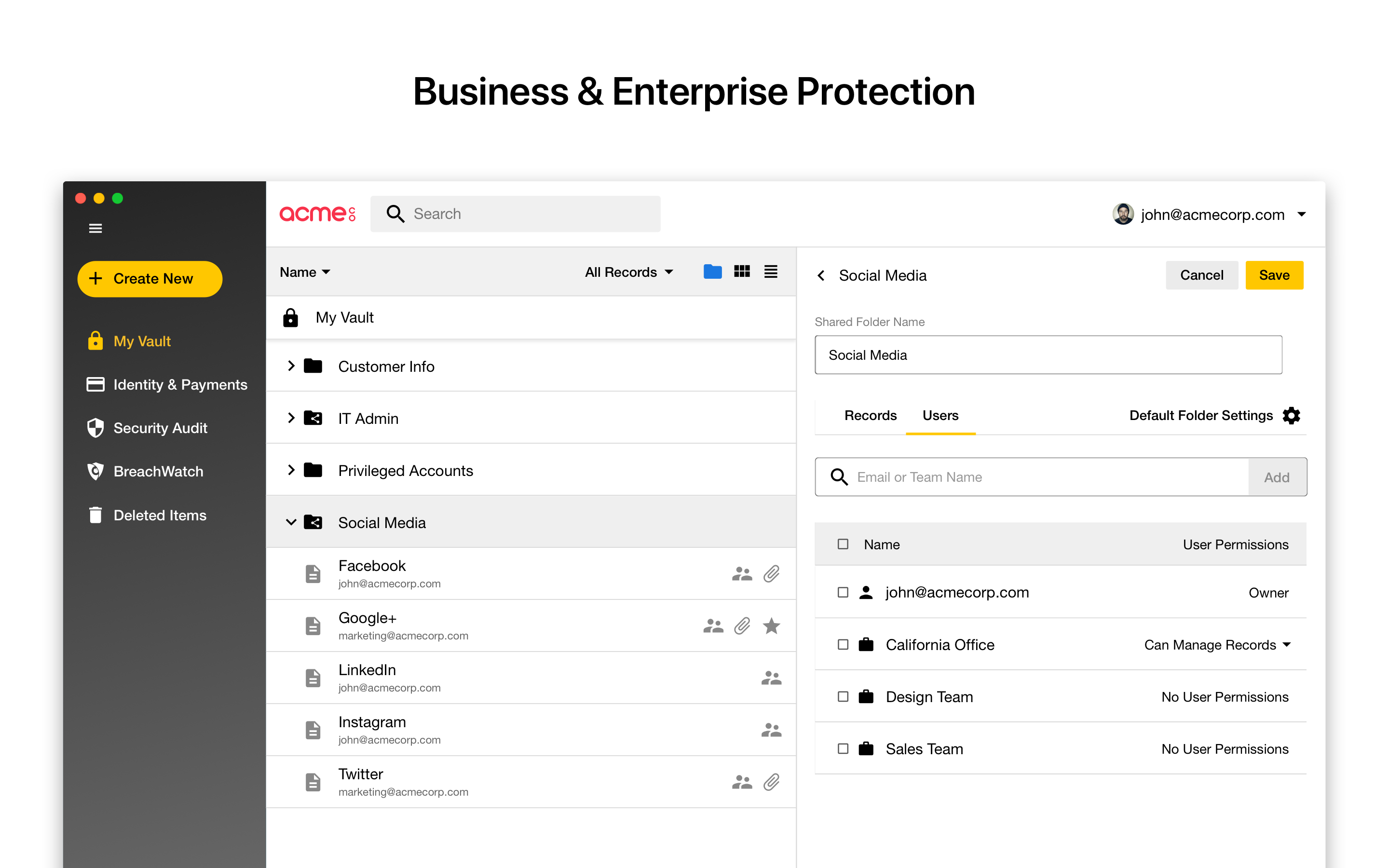
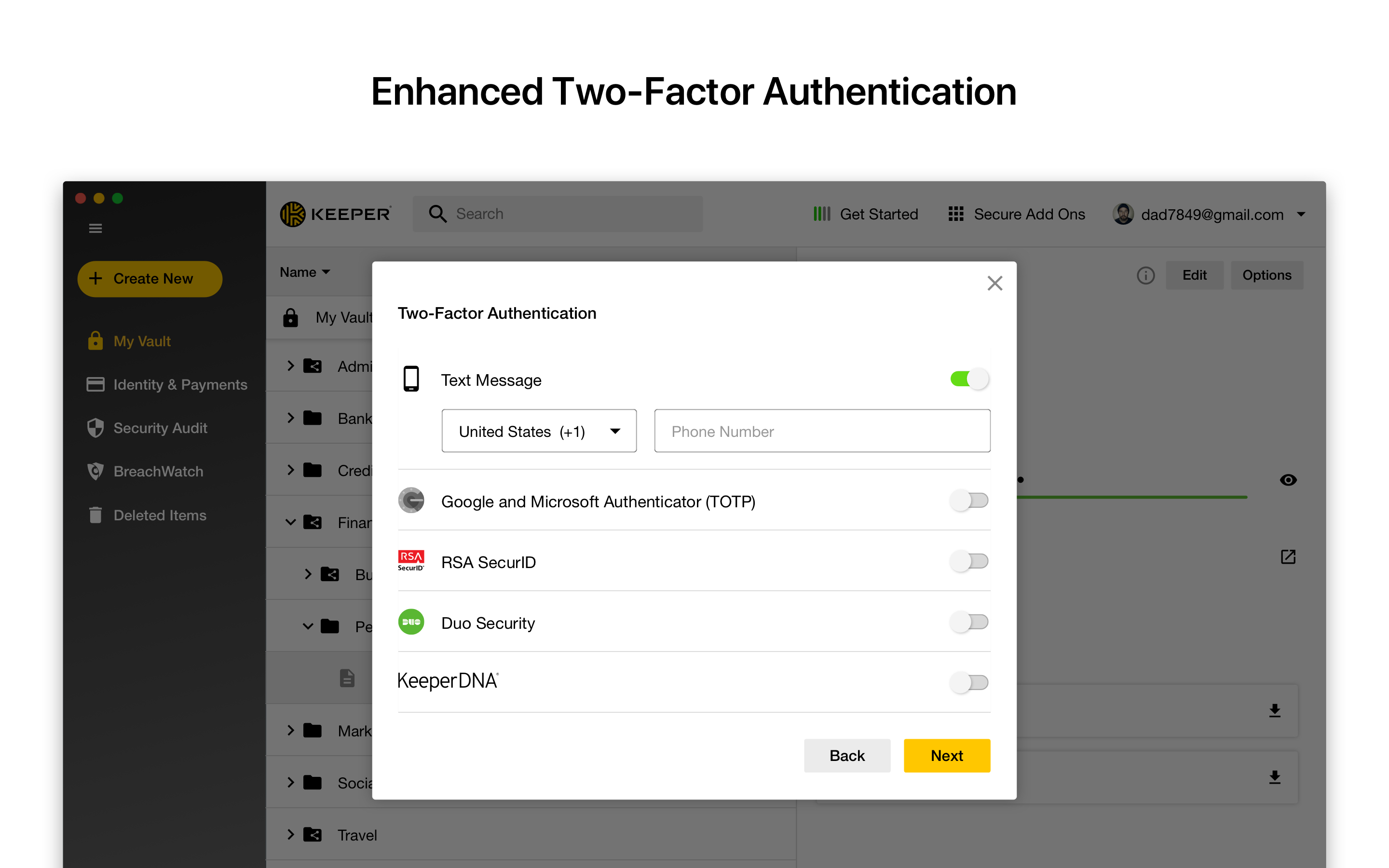
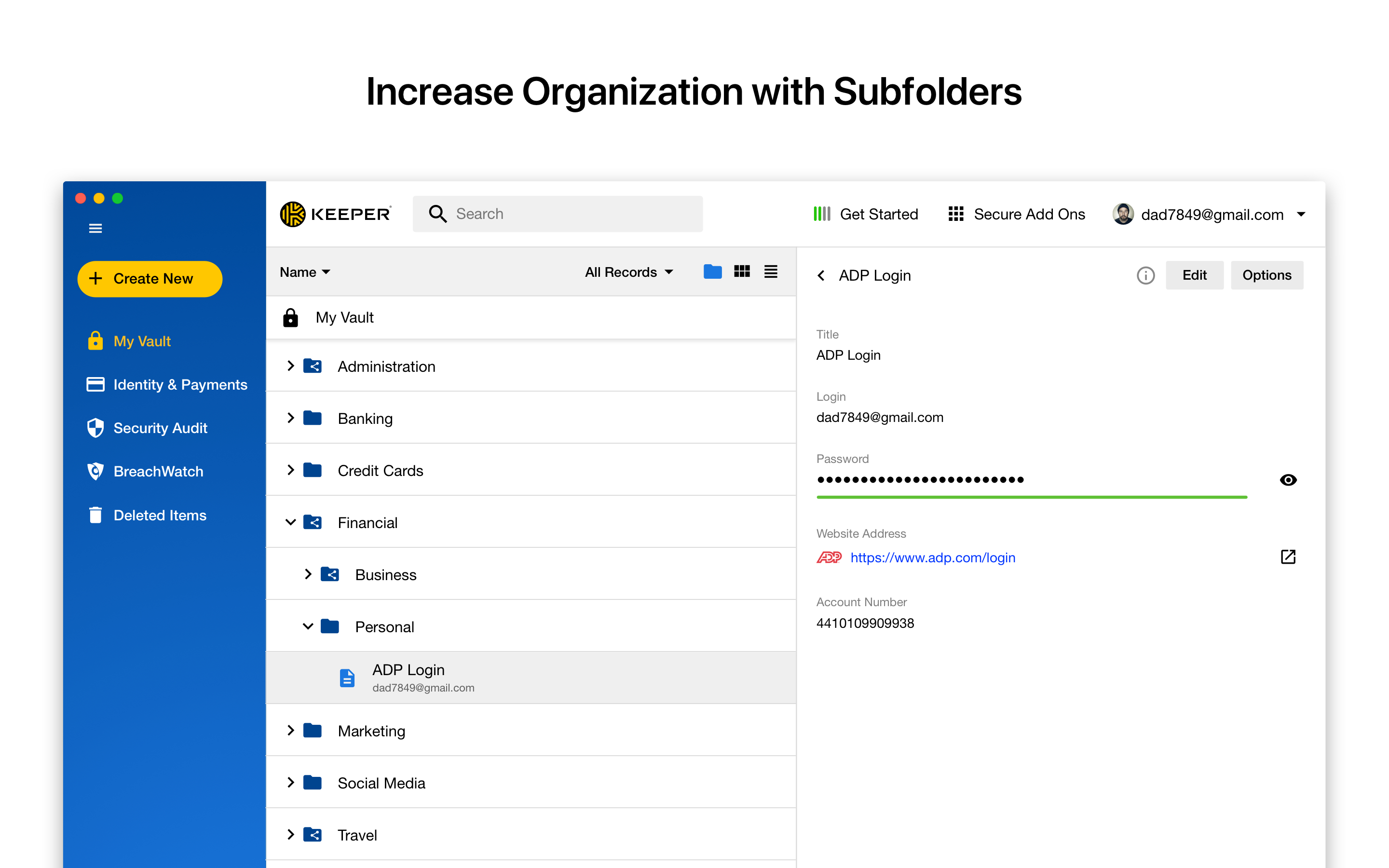
Keeper's password security and management platform boasts millions of people and thousands of businesses as users, who manage, secure and enforce strong passwords across all employee logins, applications and sites. Employees can access Keeper natively on all mobile operating systems, desktops and browsers. Keeper enables businesses to auto-generate high-strength passwords, protect sensitive files in an encrypted digital vault, securely share records with teams and integrate with SSO, LDAP and…
$2
per month per user
Pricing
Google Cloud Identity
Keeper
Editions & Modules
No answers on this topic
Keeper Business Starter
$2.00
per month per user
Keeper Enterprise
Contact Keeper for pricing
Offerings
Pricing Offerings
Google Cloud Identity
Keeper
Free Trial
No
Yes
Free/Freemium Version
Yes
No
Premium Consulting/Integration Services
No
Yes
Entry-level Setup Fee
No setup fee
No setup fee
Additional Details
—
—
More Pricing Information
Community Pulse
Google Cloud Identity
Keeper
Features
Google Cloud Identity
Keeper
Identity Management
Comparison of Identity Management features of Product A and Product B
For example, if the system you are building is a general application service that does not primarily focus on ID management, it would be wise to use a service like Google's rather than developing your own IDaaS. While there may be cases where an IDaaS other than Google's is acceptable, Google is likely one of the best solutions when considering user recognition and ease of use. On the other hand, Gmail addresses are commonly used for other purposes, and users may not pay much attention to password management, so you should avoid using them for systems that require security. To strengthen security, you should consider making multi-factor authentication mandatory, etc.
Would recommend both for organisations and personal users where passwords management is needed. Particularly in 2026 and the large emphasis of security in your day to day uses.
Having a secure management tool will assist with breaches and organisation of your credentials and confidential data that can be stored within the tenant.
This time, I investigated it in advance, and it worked as expected, so I don't have any specific ideas for improvement.
Additionally, if we were using another IDAAS, it would have been beneficial to have knowledge on how to integrate it with Google tools, along with some relevant case studies.
I chose Google because I thought it would be the best fit, but I didn't fully consider other cloud platforms (Azure, AWS, etc.), so I rated it 8. We assume that current Japanese users are familiar with Google, because we feel that there are far more people with Google email addresses than those with IDs on other cloud services.
It's just easy to use, plain and simple. It has the complexity and user-interface that gives you confidence in its build but the ease-of-use that keep things from getting too complicated. A huge plus when you have to onboard new members of the team or summer interns when you need them to step in and make orders on your behalf.
We adopted Google Cloud Identity as an additional feature because it allowed us to integrate with it using multi-factor authentication. The IBM Cloud platform remains valid, and we have no plans to discontinue its use for identity management. From the user's perspective, we simply added more authentication options. This also ensures we are prepared for future use when multi-factor authentication becomes available for user apps on the IBM Cloud.
I do not recall the other products I tested. I believe Keeper provided a free trial that allowed me to verify that it met my needs before I was required to purchase. I also found their support team to be responsive when I experienced some problems. The cliche, "If it ain't broke don't fix it" fits well in this case. I am able to create and use online profiles safe in the knowledge that my passwords cannot be easily hacked and my data is safe.
From a business perspective, there were two steps.
First, we switched from our in-house ID management system to a cloud service. This allowed us to focus our development resources on application development.
At the same time, we were able to localize the handling of personal information, which resulted in increased efficiency in management aspects, including handling external inquiries, and in the development of encryption.
The second step was adding Google Cloud Identity as an option.
This allows more users to easily use our services. It can be said that this has improved user convenience.
I expect Google to accommodate future changes in authentication requirements, such as biometric authentication.
We all know how difficult it can be in the workplace when you forget your password, or enter the wrong password, and you get blocked out. You have to go through the hassle of having it reset, which could mean sitting on hold, waiting for IT to pick up. This isn’t a problem when you have Keeper. If you forget your password once, you don’t have to take the chance of trying it 4 more times and getting locked out. Just pick up your phone, and your password is right there. It’s really just as simple as that.