The Heroku Platform, now from Salesforce, is a platform-as-a-service based on
a managed container system, with integrated data services and ecosystem for deploying modern apps. It takes an app-centric
approach for software delivery, integrated with developer tools and
workflows. It’s three main tool are: Heroku Developer Experience (DX), Heroku
Operational Experience (OpEx), and Heroku Runtime.
Heroku Developer Experience (DX)
Developers deploy directly from tools like…
$85
per month
Syncfusion Essential Studio
Score 6.7 out of 10
N/A
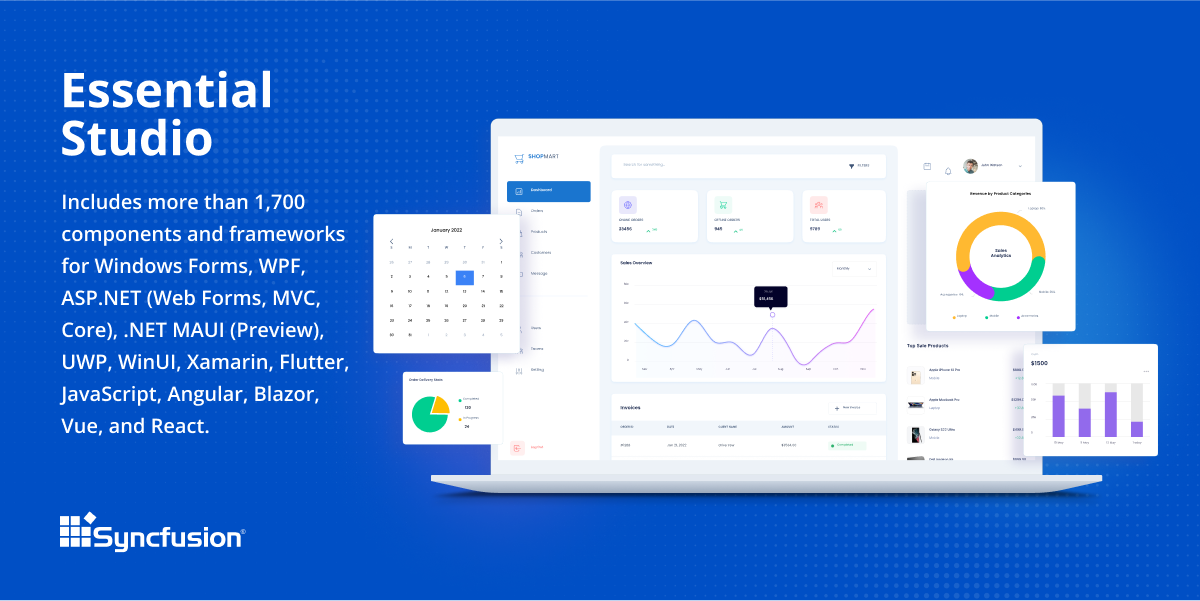
Since 2002, Essential Studio® has supported the development of software applications across industries and economic sectors, in both public and private enterprises.
$0
with the Syncfusion Community License. It includes free access to all 1,700+ controls and is available to companies and individuals with less than $1 million USD in annual gross revenue and 5 or fewer developers.
Tanzu Application Catalog
Score 8.7 out of 10
N/A
The Tanzu Application Catalog (or Bitnami) provides packaged applications for any platform. The platform delivers and maintains a catalog of 130+ ready-to-run server applications and development environments in partnership with cloud providers including Amazon, Google, Microsoft, and Oracle, driving over 1.5 million deployments per month.
Bitnami was acquired by VMware in 2019.
$0.50
per month
Pricing
Heroku Platform
Syncfusion Essential Studio
Tanzu Application Catalog
Editions & Modules
Production
$25.00
per month
Advanced
$250.00
per month
Essential Studio - Syncfusion Community License
$0
*up to 5 developers
Essential Studio - UI Edition
Custom Quote
per year Packages to suit teams of all sizes
Essential Studio - Document SDK
Custom Quote
per year Packages to suit teams of all sizes
Essential Studio - PDF Viewer
Custom Quote
per year Packages to suit teams of all sizes
Essential Studio - DOCX Editor
Custom Quote
per year Packages to suit teams of all sizes
Essential Studio - Spreadsheet Editor
Custom Quote
per year Packages to suit teams of all sizes
10GB
$0.50
per month
T3A Nano
$3.38
per month
Offerings
Pricing Offerings
Heroku Platform
Syncfusion Essential Studio
Tanzu Application Catalog
Free Trial
No
Yes
No
Free/Freemium Version
No
Yes
No
Premium Consulting/Integration Services
No
No
No
Entry-level Setup Fee
No setup fee
No setup fee
No setup fee
Additional Details
—
*The Syncfusion Community License includes free access to all 1,600+ controls and is available to companies and individuals with less than $1 million USD in annual gross revenue and 5 or fewer developers.
—
More Pricing Information
Community Pulse
Heroku Platform
Syncfusion Essential Studio
Tanzu Application Catalog
Considered Multiple Products
Heroku Platform
Verified User
Vice-President
Chose Heroku Platform
I have not evaluated Engine Yard in years, but at the time the starting price point and supported integrations could not begin to compete with Heroku.
Heroku is very well suited for startups looking to get a server stack up and running quickly. There is little to no overhead when managing your instances. However, you'll need a background in basic DevOps or system management to make sure everything is set up correctly. In addition, it's easy to accidentally go crazy on pricing. Make sure you're only creating the server instances you need to run the base application and set up an auto-scaler plugin to handle peaks.
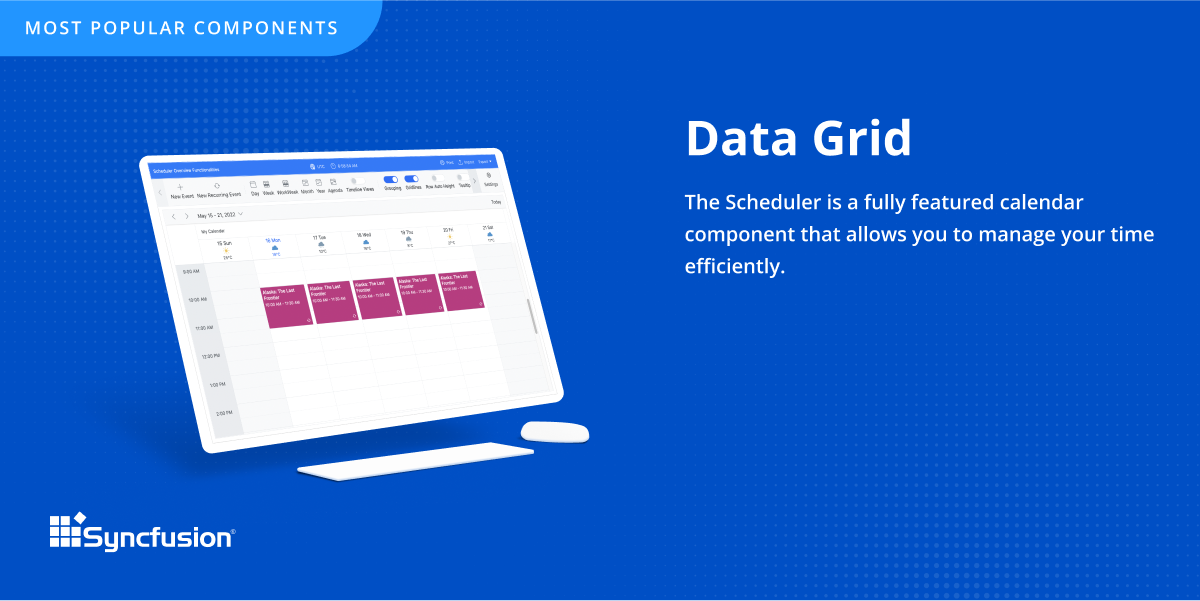
The datagrid is probably their most popular control I would think. It is so flexible and configurable. Most of mine are plain views in ASP.NET Core, but I have a whole bunch that are dynamically created at runtime in my controller. That is so powerful.
The best way to take advantage of VMware Application Catalog (Bitnami) is as in the case I mentioned, that you constantly implement these free software, where any time saved is important in terms of installation, configuration and testing environment, it really is a very useful solution, also if you need a good community and support; however the cloud and VMs solutions is not designed for huge products, these can be slow or remain insufficient if the use of these grows a lot, even though it is an easy-to-use product, you need to have enough knowledge in terms of installation and management of cloud solutions, a beginner can find himself in trouble
Heroku has a very simple deployment model, making it easy to get your application up-and-running with minimal effort. We can focus on our efforts the unique aspects of our application.
The robust add-on marketplace makes it easy to try out new approaches with minimal effort and investment -- and when we settle on a solution, we can easily scale it.
Heroku's support is quite good -- their staff is quite technical and willing to get into the weeds to diagnose even complicated problems.
Large price jumps between certain resource tiers (2x Dyno for $50 per month versus Performance Dyno for $250). Free Postgres next jumps to $50 per month.
Marketing/Branding to non-technical stakeholders. As the years pass, I've had to fight more to convince stakeholders on the value of Heroku over AWS.
Improve Buildpack documentation. This is one area where Heroku's documentation is fairly confusing.
Sometimes links point to dead addresses in the documentation.
Some components have a difficult learning curve but that is usually due to the complexity of the control.
Minor version changes introduce breaking changes, for example updating from 20.1.x to 20.2.x gives us licensing errors, which in my opinion is a kind of breaking change as it requires all users to update their licenses.
Theming with CSS variables is not possible. Access to Theme Studio code is not possible. So a fully custom solution is needed to make Syncfusion Essential Studio Enterprise Edition components themeable with CSS variables.
Heroku is easy to use, services a ton of functions for you out of the box, and provides a means to get a software product off the ground and managed quickly and easily. The tools provide allows a small to medium size org to move very quickly. The CLI tools provided make managing an entire technical infrastructure simple.
It takes effort to include a new component library into existing software, especially in our case where we have 5 large applications that are written and maintained by about 100 developers. So changing such a core thing comes with a lot of effort. The other reason we will very likely renew our use of Syncfusion Essential Studio Enterprise Edition is that it works really well and has helped us to speed up the development process.
Easy to use web based console and easy to use command line tools; deployment is done directly from a GIT repository. What more could you ask for? The one thing that keeps me from giving it a 10 is that custom build packs are almost incomprehensible. We used one for a while because we needed cairo graphics processing. Fortunately, I was able to figure out a different way to do what we needed so that we could get off the custom build pack.
I would rate Syncfusion® Essential Studio® a 10 out of 10 for overall usability. The components are intuitive to implement, with clear APIs and consistent design patterns across the suite. This makes it easy for developers to get started quickly and reduces the learning curve even when working with new controls. In addition, the documentation and sample projects provide practical guidance that helps accelerate development. The built-in customization options also allow us to adapt the components to fit our branding and business requirements without excessive effort. Overall, the usability is one of the key reasons why Syncfusion has become an essential part of our development toolset.
Heroku availability correlates pretty strongly to AWS US EAST availability. We had a couple of times where there was a Heroku-specific issue but not for the last 7-8 months.
I've used it for many years without facing any major problem. It's not hard at all to get used to it, it's documentation is outstanding and simple. We are close to 2020 and I don't think most of the existing companies or startups should still face old problems such as wasting time deploying code and calculate computing resources.
Although I have decades of software development experience, I had never created a website from scratch before, and my html and css skills are not particularly strong. Between documentation and incredible dedication from the support team they helped me overcome all of my challenges. It's amazing that they typically create sample code for most of the issues that I submitted. On rare occasions where I uncovered a defect they kept me informed as to its status, and typically resolved it in a short-term release, and/or gave me a reasonable workaround. They hopped on zoom calls with me on multiple occasions when necessary.
Be ready to pay a bit more than expected in the beginning if you're migrating from a big server. The application is probably not ready for the change and you have to keep improving it with time.
It's also important to consider that you can't save anything to the disc as it will be lost when your application restarts, so you have to think about using something like S3.
Heroku is the more expensive option for hosting compared to some of the cloud platforms we investigated, but it's worth it for us because of the plug-and-play nature of Heroku deployment. We can be up and running in a few minutes and know with precision how much it will cost us each month to run the application, unlike Amazon Web Services where you have to go to great pains to configure it correctly or else you might end up with a shocking monthly bill. Overall, spending the time to configure Amazon Web Services or one of its competitors is likely the more affordable and powerful choice, because you have control over so many specifics of the configuration. But it also requires the burden of continuing to maintain and update your AWS instance, whereas with Heroku they take care of security fixes and platform upgrades. It's a great service and we are happy to pay the extra cost for the value-adds Heroku provides.
Firstly, there is a free version for small businesses and it allows you to jump start without risk. I found one of the other products a bit short in the number of out-of-the-box supported events handlers for each control and, although you can manually add them, I feel more comfortable to just have them ready. After using the free version I just felt in love with Syncfusion Essential Studio Enterprise Edition controls and decided to stay with them; they have all I need and more. The usage of Syncfusion Essential Studio Enterprise Edition controls is straightforward and intuitive. Support is world-class even for the free version; you get answers in 24 hours at most. Also, the support team is ready to remotely connect to your project in case it is needed; we have had one situation like this, and the issue was solved.
VMware Application Catalog (Bitnami) offers better tools to complete the task faster and more efficiently. The customer support and knowledge base is also well presented and trained
First of all, I think the best positive impact is the reduce of time development. I do not know exactly how much time, but certainly, using the framework we save a lot of effort and time.
About negative impact, sometimes using the controls of the framewrok have a signifcant impact in the execution time and page load.
And of course, the use of Syncfusion Essential Studio Enterprise Edition has a significant impact of the learning of javascript and JQUERY.