
Hevo Data vs. Oracle Data Integrator (ODI) vs. SAS Data Management
Hevo Data vs. Oracle Data Integrator (ODI) vs. SAS Data Management
| Product | Rating | Most Used By | Product Summary | Starting Price |
|---|---|---|---|---|
 Hevo | N/A | Hevo Data is a no-code, bi-directional data pipeline platform specially built for modern ETL, ELT, and Reverse ETL Needs. It helps data teams streamline and automate org-wide data flows to save engineering time/week and drive faster reporting, analytics, and decision making. The platform supports 100+ ready-to-use integrations across Databases, SaaS Applications, Cloud Storage, SDKs, and Streaming Services. The platform boasts 500 data-driven companies spread across 35+… | $149 per month | |
 Oracle Data Integrator (ODI) | N/A | Oracle Data Integrator is an ELT data integrator designed with interoperability other Oracle programs. The program focuses on a high-performance capacity to support Big Data use within Oracle. | N/A | |
 SAS Data Management | N/A | A suite of solutions for data connectivity, enhanced transformations and robust governance. Solutions provide a unified view of data with access to data across databases, data warehouses and data lakes. Connects with cloud platforms, on-premises systems and multicloud data sources. | N/A |
| Hevo Data | Oracle Data Integrator (ODI) | SAS Data Management | ||||||||||||||||||||||
|---|---|---|---|---|---|---|---|---|---|---|---|---|---|---|---|---|---|---|---|---|---|---|---|---|
| Editions & Modules |
| No answers on this topic | No answers on this topic | |||||||||||||||||||||
| Offerings |
| |||||||||||||||||||||||
| Entry-level Setup Fee | No setup fee | No setup fee | No setup fee | |||||||||||||||||||||
| Additional Details | Hevo offers a Free Plan and a 14-day Free Trial for all the paid plans. | — | — | |||||||||||||||||||||
| More Pricing Information | ||||||||||||||||||||||||
| Hevo Data | Oracle Data Integrator (ODI) | SAS Data Management |
|---|
| Hevo Data | Oracle Data Integrator (ODI) | SAS Data Management | |||||||||||||||||||||||
|---|---|---|---|---|---|---|---|---|---|---|---|---|---|---|---|---|---|---|---|---|---|---|---|---|---|
| Data Source Connection |
| ||||||||||||||||||||||||
| Data Transformations |
| ||||||||||||||||||||||||
| Data Modeling |
| ||||||||||||||||||||||||
| Data Governance |
|
| Hevo Data | Oracle Data Integrator (ODI) | SAS Data Management | |
|---|---|---|---|
| Small Businesses |  Skyvia Score 10.0 out of 10 | Skyvia Score 10.0 out of 10 | Skyvia Score 10.0 out of 10 |
| Medium-sized Companies |  Astera Data Pipeline Builder (Centerprise) Score 8.8 out of 10 |  IBM InfoSphere Information Server Score 8.0 out of 10 | IBM InfoSphere Information Server Score 8.0 out of 10 |
| Enterprises |  Control-M Score 9.4 out of 10 | IBM InfoSphere Information Server Score 8.0 out of 10 | IBM InfoSphere Information Server Score 8.0 out of 10 |
| All Alternatives | View all alternatives | View all alternatives | View all alternatives |
| Hevo Data | Oracle Data Integrator (ODI) | SAS Data Management | |
|---|---|---|---|
| Likelihood to Recommend | 8.8 (4 ratings) | 8.0 (29 ratings) | 7.6 (11 ratings) |
| Likelihood to Renew | - (0 ratings) | 10.0 (4 ratings) | 9.0 (2 ratings) |
| Usability | - (0 ratings) | - (0 ratings) | 6.0 (2 ratings) |
| Performance | - (0 ratings) | - (0 ratings) | 9.0 (1 ratings) |
| Support Rating | - (0 ratings) | - (0 ratings) | 7.7 (6 ratings) |
| Implementation Rating | - (0 ratings) | 7.0 (1 ratings) | - (0 ratings) |
| Hevo Data | Oracle Data Integrator (ODI) | SAS Data Management | |
|---|---|---|---|
| Likelihood to Recommend | Hevo Data Inc.
 Shubham Rawat Data Analyst |  Oracle
 Paolo Borghi Oracle Business Intelligence Consultant | SAS
 Donald Wildeboer Information Analyst |
| Pros | Hevo Data Inc.
| Oracle
| SAS
 Nikardi Jallah Epidemiologist |
| Cons | Hevo Data Inc.
| Oracle
 James Parks Technology Consultant | SAS
|
| Likelihood to Renew | Hevo Data Inc. No answers on this topic | Oracle
| SAS
 Robert Goodman Director of Business Intelligence & Analytics |
| Usability | Hevo Data Inc. No answers on this topic | Oracle No answers on this topic | SAS
 Filippo Orlando Advanced Analytics Manager |
| Performance | Hevo Data Inc. No answers on this topic | Oracle No answers on this topic | SAS
|
| Support Rating | Hevo Data Inc. No answers on this topic | Oracle No answers on this topic | SAS
 Jim Metcalf Chief Data Scientist |
| Alternatives Considered | Hevo Data Inc.
Shubham Rawat Data Analyst | Oracle
 Cameron Gable Software Engineer III | SAS
|
| Return on Investment | Hevo Data Inc.
| Oracle
| SAS
Donald Wildeboer Information Analyst |
| ScreenShots | Hevo Screenshots 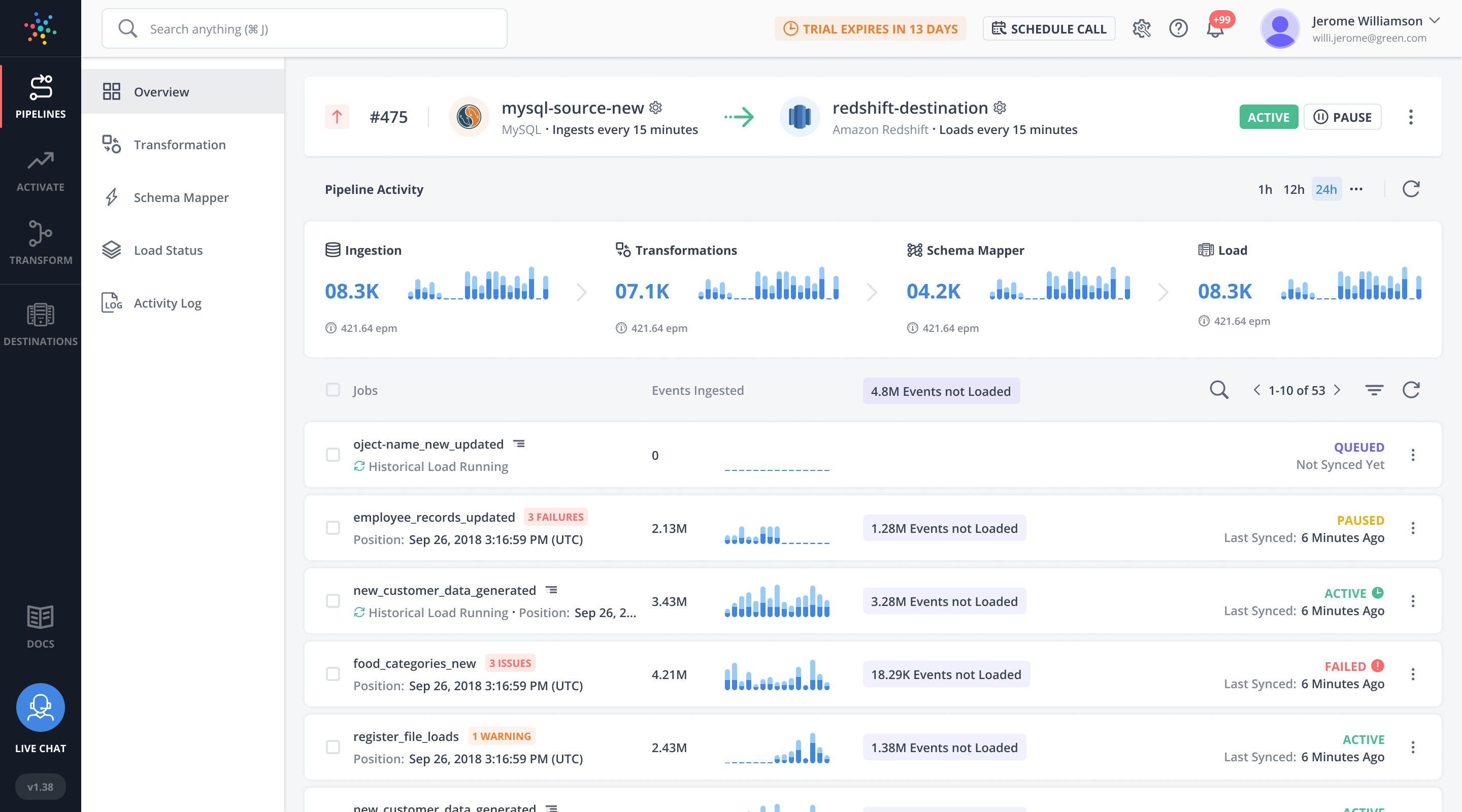   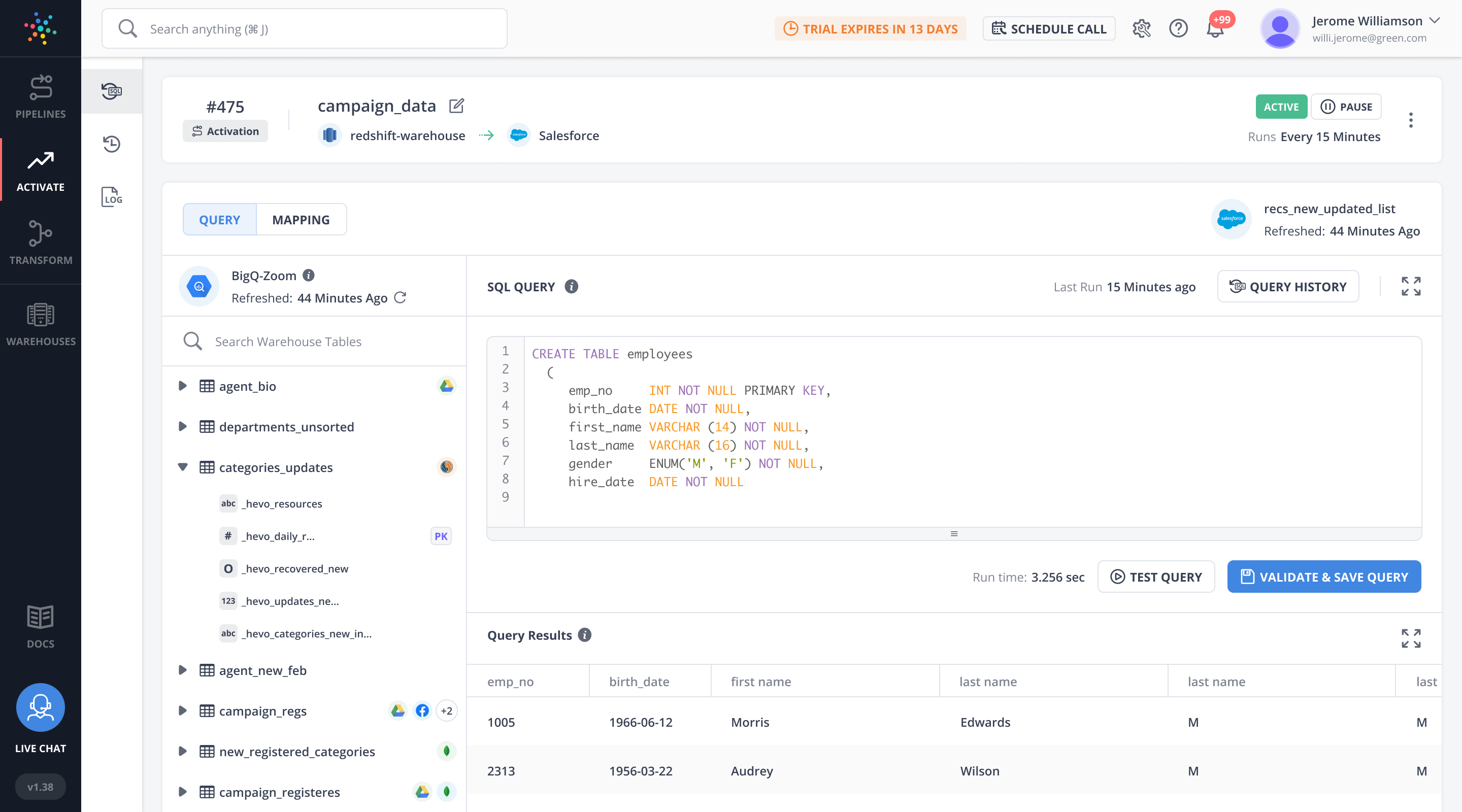 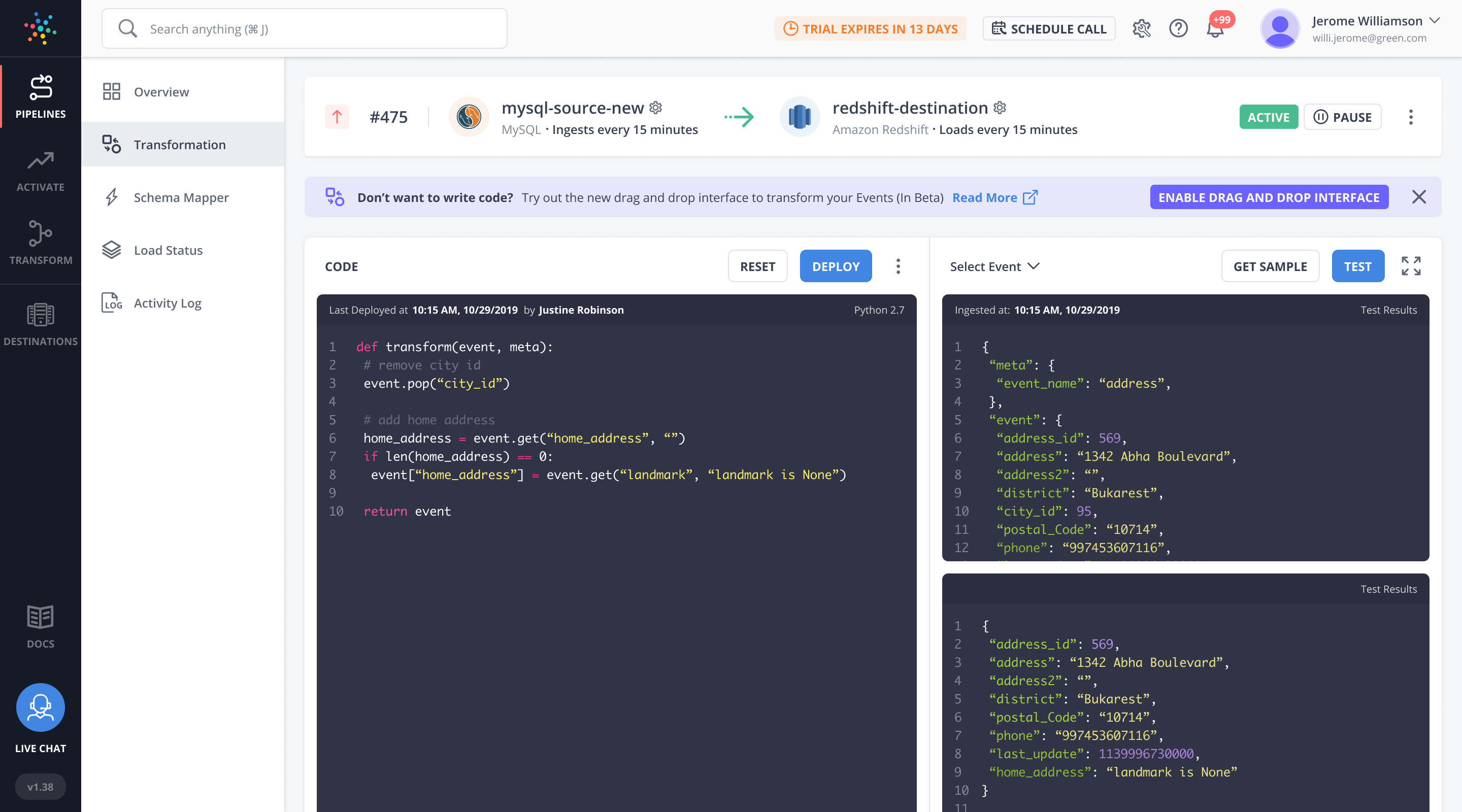 |