IBM’s App Connect is a cloud-based data integration platform with data mapping and transformation capabilities within connectors between high-volume systems. App Connect also offers near-real time data synchronization and an API builder that is adaptable to the user’s coding skill level.
N/A
Zoho Flow
Score 9.8 out of 10
N/A
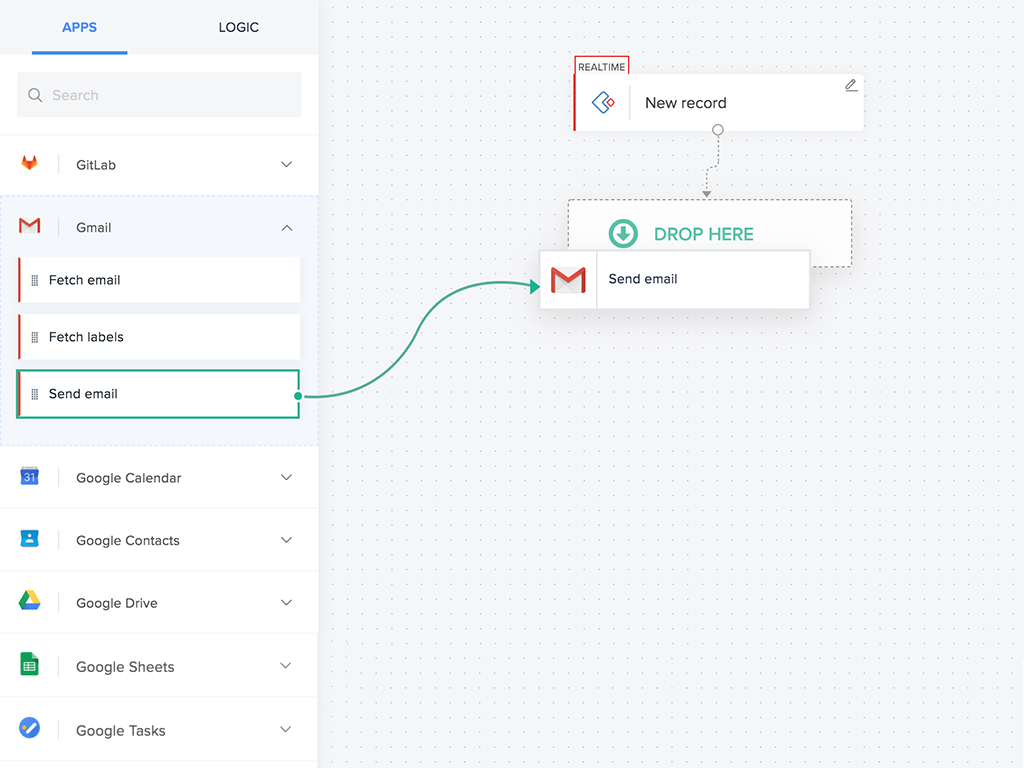
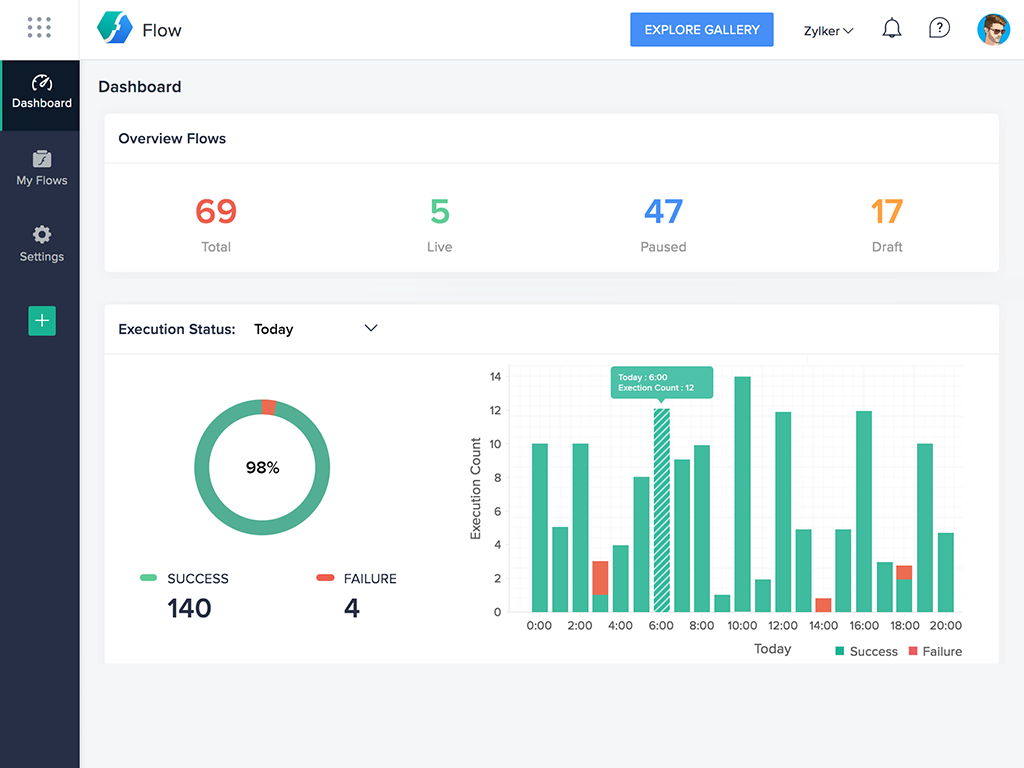
Zoho Flow allows the user to integrate business apps to automate a workflow.
$29
per month (for 5k tasks per month)
Pricing
IBM App Connect
Zoho Flow
Editions & Modules
No answers on this topic
Standard
starting at $29
per month starting with 5k tasks per month
Professional
starting at $49
per month starting with 10k tasks per month
Offerings
Pricing Offerings
IBM App Connect
Zoho Flow
Free Trial
Yes
Yes
Free/Freemium Version
No
Yes
Premium Consulting/Integration Services
No
Yes
Entry-level Setup Fee
No setup fee
Optional
Additional Details
—
Discount available for annual pricing. Higher monthly task volume available.
More Pricing Information
Community Pulse
IBM App Connect
Zoho Flow
Features
IBM App Connect
Zoho Flow
Cloud Data Integration
Comparison of Cloud Data Integration features of Product A and Product B
IBM App Connect Enterprise is well-suited for high-volume enterprise systems that demand robust scalability and high reliability. It excels at hybrid connectivity by easily integrating various on-premises systems using its extensive catalog of connectors. It is also ideal for workflows that require a balance between efficient low-code and the incorporation of complex, custom Java logic. On the other hand, the platform is less appropriate in scenarios requiring high development autonomy, as installation and configuration at the server level is excessively complex, creating a strong dependency on other infrastructure teams. It is also not ideal if detailed traceability and monitoring of workflows must be seamlessly managed within the tool itself, as this is difficult to manage directly in ACE. IBM App Connect Enterprise está bien adaptado para sistemas empresariales de alto volumen que exigen una escalabilidad robusta y alta confiabilidad. Sobresale en la conectividad híbrida al integrar fácilmente diversos sistemas locales (on-premises) utilizando su amplio catálogo de conectores. Además, es ideal para flujos que requieren un equilibrio entre el low-code eficiente y la incorporación de lógica Java compleja y personalizada. Por otro lado, la plataforma es menos apropiada en escenarios donde se requiere una alta autonomía de desarrollo, debido a que la instalación y configuración a nivel de servidor es excesivamente compleja , lo cual crea una fuerte dependencia de otros equipos de infraestructura. Tampoco es ideal si la trazabilidad detallada y el monitoreo de los flujos deben gestionarse sin problemas dentro de la propia herramienta, ya que esto resulta difícil de manejar directamente en ACE. Parts of this review were originally written in Spanish and have been translated into English using a third-party translation tool. While we strive for accuracy, some nuances or meanings may not be perfectly captured.
For small—to medium-sized connections between different applications, Zoho Flow is quick and easy to set up and test. However, as a Flow becomes more complicated with multiple connections and decisions, it becomes more difficult to track errors and faults and manage changes. Some of this is due to the history not being detailed enough, and some is just the UI, where you can't zoom in and out and clearly see connecting lines for flows.
It is the best on-premise application to cloud integration in the market. I guess IBM is planning to integrate IBM App Connect with the IBM API Connect solution.
You can do some really powerful things with this system. The overall design is an attempt to make configurable some of the routine tasks/common functionality, but allow for development/customization of the core of the application.
Flow can accomplish almost anything you want to do. It's imperfect, but it could be with just a few more features and better error management/visibility. For someone who's not a developer, this is a no-brainer. Having used other products in the past, like Zapier, this is as easy to use, if not even easier.
Usually, the IBM Ops team provides a resolution or a response for 80% of defects raised in my project. There is one which has been open on their end for more than 3 months. With literally no response even after multiple follow-ups.
I've reached out to the support team several times with assistance requests in Zoho Flow. Each time the team has answered my questions promptly and accurately. And because we are mainly integrating other Zoho apps their teams are perfectly positioned to solve our problems.
IBM App Connect started as MQSeries Integrator (MQSI) more than 20 years ago. In the IT environment, this is like an eternity. And this allowed a lot of customer experience and needs to be embedded in the product. Without it becoming a legacy application. The changes done in the latest version are preparing it for a Cloud/containers world without losing the previously learned knowledge.
I've used Zapier and both programs are similar. Zapier has deeper integrations or more apps to integrate with but considering Flow's association with other Zoho apps this does it for us!
We never implemented Cast Iron in production. When compared to five competing products in the iPaaS space it didn't make it past the first few test scenarios we threw at it.