Beats them all for reliability, security, ease of use and setup, as well as patching. It has fewer support problems and is easily serviced. Support is easy to find and quite helpful. Windows crashed all the time and Azure was at times spotty.
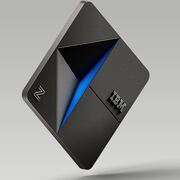
IBM LinuxONE dashboard is clean and friendly to welcome new users and the capabilities of the feature are excellent and easy to pull multiple data from other third parties platforms through the IBM LinuxONE integration functions and the data merging tools are very excellent. Multiple data processing operations are easily managed and monitored through this software and the reports are effective.
There's a lot of things that can and can't be discussed. But as I mentioned earlier, cloud computing and on-prem, and very much like in the cloud, having a standard image ISO, deploying that, the configurations with Ansible or packages installed via Ansible, instead of just a Kickstart script, you have a set of scripts that run in a pipeline that deploy Red Hat. So I'd say the environments, every time I've used Red Hat Enterprise Linux as a computing solution has been, like I mentioned, reusable, scalable, positive. And I don't think I've ever found any situations where I wish I were using something other than Red Hat Enterprise Linux, because the support is not there for anything else as much as it is for Red Hat Enterprise Linux.
Virtualization, like the operating system level task. I see this product is very good and it blends very well with the middleware components like all the JBoss and other things. And other than that, either you install it or a virtual machine or physical servers, it works seamlessly anywhere. And if you want to go further, like Red Hat OpenShift or those things also work very nice with it.
Red Hat Enterprise Linux (RHEL) needs better built-in developer-centric tooling.
The desktop experience is too barebones, which makes it less attractive for developer workstations.
Red Hat Enterprise Linux (RHEL) needs to be integrated and available in GItHub Actions as a supported platform so code developed on GitHub can be tested and qualified there.
It's pretty intuitive and easy to use. Everything is adjustable; everything is customizable through a set of yaml's and everything can be undone and re-done. Doing items such a modification and restarting the single app doesnt take down the whole operating system like one of the more popular GUI based operating systems. We can work on live production systems without breaking into a sweat.
Red Hat support has really come a long way in the last 10 years, The general support is great, and the specialized product support teams are extremely knowledgeable about their specific products. Response time is good and you never need to escalate.
Windows Server can take a long time to patch, waiting for the patch to install, then waiting to apply, after the OS is rebooted it can also take additional time to apply the update. Often times Windows Server patches can fail, leading to long troubleshooting times and application outages. Red Hat Enterprise Linux (RHEL) Patching is extremely quick, I've honestly not seen a Red Hat Enterprise Linux (RHEL) update fail to install in many years of Red Hat Enterprise Linux (RHEL) patching.
It has done wonders for my career because I come from a Linux background, HPUX, Solaris and AIX. So made this transition to Linux 20 years ago. So it has really put my career at the forefront of what we do in the company. We're still primarily a window shop, but with Red Hat and what they're doing with the Kubernetes integration with OpenShift, with the East Satellite Management, the Ansible stuff, all based on Red Hat. It's taken off at my company and we're very happy about it.