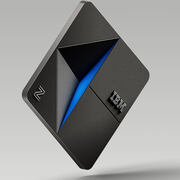
The IBM Power product line is a family of servers.
N/A
Teradata Autonomous Knowledge Platform
Score8 out of 10
N/A
Teradata Vantage is presented as a modern analytics cloud platform that unifies everything—data lakes, data warehouses, analytics, and new data sources and types. Supports hybrid multi-cloud environments and priced for flexibility, Vantage delivers unlimited intelligence to build the future of business.
Users can deploy Vantage on public clouds (such as AWS, Azure, and GCP), hybrid multi-cloud environments, on-premises with Teradata IntelliFlex, or on commodity hardware with VMware.
I'd strongly recommend IBM Power servers to anyone who has the budget for it. A Power Virtual Machine, what is generally called FlexTB VM, can support as many small VM of 256GB, and scale up to 32TB on the fly. If IBM recommended architecture is combined with your organizational reference architecture, then forget about running into unplanned downtimes.
A de minimis incentive was given to thank the reviewer for their time. The incentive was not used to bias or drive a particular response, nor was the incentive contingent on a positive endorsement. TR verified that a representative sample of customers was invited. More Info
Teradata Vantage is well suited for large scale ETL pipelines like the ones we developed for anti money laundering risk matrices. It handles heavy joins, aggregations, and transformations on transactional data efficiently. We generate alert variables, adjust for inflation, and monitor establishments monthly with it, all integrated with Python and Control-M for a centralised automation across the company. For less appropriate, I would say that heavy resource demands might slow down experimentation for iterative work.
A de minimis incentive was given to thank the reviewer for their time. The incentive was not used to bias or drive a particular response, nor was the incentive contingent on a positive endorsement. TR verified that a representative sample of customers was invited. More Info
A de minimis incentive was given to thank the reviewer for their time. The incentive was not used to bias or drive a particular response, nor was the incentive contingent on a positive endorsement. More Info
A solid IDE for editing programs. SEU was simple and solid. Then it became outdated and support for it ended as the language continued to evolve. That's fine. But RDi is expensive and shaky at best, and VS Code, while free, is severely lacking even the modicum of features RDi has.
A de minimis incentive was given to thank the reviewer for their time. The incentive was not used to bias or drive a particular response, nor was the incentive contingent on a positive endorsement. TR verified that a representative sample of customers was invited. More Info
Teradata is an excellent option but only for a massive amount of data warehousing or analysis. If your data is not that big then it could be a misfit for your company and cost you a lot. The cost associated is quite extensive as compared to some other alternative RDBMS systems available in the market.
Migration of data from Teradata to some other RDBMS systems is quite painful as the transition is not that smooth and you need to follow many steps and even if one of them fails. You need to start from the beginning almost.
Last but not least the UI is pretty outdated and needs a revamp. Though it is simple, it needs to be presented in a much better way and more advanced options need to bee presented on the front page itself.
A de minimis incentive was given to thank the reviewer for their time. The incentive was not used to bias or drive a particular response, nor was the incentive contingent on a positive endorsement. More Info
This is one of the best systems on the market. You can have Flash/Copy which created another LPAR to look like the system you are copying. This takes seconds and not minutes. Then you can use BRNS to do full system backups nightly with no downtime. I am ready for us to upgrade to a Power 10.
A de minimis incentive was given to thank the reviewer for their time. The incentive was not used to bias or drive a particular response, nor was the incentive contingent on a positive endorsement. TR verified that a representative sample of customers was invited. More Info
Teradata is a mature RDBMS system that expands its functionality towards the current cloud capabilities like object storage and flexible compute scale.
A de minimis incentive was given to thank the reviewer for their time. The incentive was not used to bias or drive a particular response, nor was the incentive contingent on a positive endorsement. More Info
They are very easy to set up and use once you re knowledgeable enough to deal with it. They are continuously enhance the user experience on the HMC and operations on the systems. Once setup it's like a beast, going on and on. I have experience with servers that are not being rebooted for more than 1000 days
A de minimis incentive was given to thank the reviewer for their time. The incentive was not used to bias or drive a particular response, nor was the incentive contingent on a positive endorsement. TR verified that a representative sample of customers was invited. More Info
Teradata Vantage allows us to create a scalable infrastructure to support our strategic initiatives. The dedicated compute power ensures reliable performance with isolated workloads and dedicated resources, optimizing workflows for faster, more efficient data transfers. The compute clusters support ETL processes and OSF’s developers and data science team with the flexibility to create self-service analytics, to spin up/down at any time, driving better performance and minimizing costs.
In all of the years I have used various Power System, I have never had any problems at all. Even when hackers were attacking our email servers and many users PCs, the IBM Power System came out completely unscathed. I haven't even had any application errors that were able to take the system down. Nor have I ever experienced an unplanned outage
A de minimis incentive was given to thank the reviewer for their time. The incentive was not used to bias or drive a particular response, nor was the incentive contingent on a positive endorsement. More Info
The IBM Power System is built for integration. It supports multiple operating systems and you can run multiple OS's on the same box with no problems at all. It also supports a number of open source languages such as PHP, Java, Python, and Perl which helps you continue to grow and integrate with lots of other systems.
A de minimis incentive was given to thank the reviewer for their time. The incentive was not used to bias or drive a particular response, nor was the incentive contingent on a positive endorsement. More Info
On large-scale systems, the rating would have been 10. However, I have seen some cases in more rural areas where the IBM onsite support is not as available or of the highest quality as in the past. For software support, there are sometimes instances of language barriers.
We have meetings at the beginning with the technical team to explain our requirements to them and they were really putting in a lot of effort to come up with a solution which will address all our needs. They implemented the software and also trained a few of our resources on the same too. We can get in touch with them now as well whenever we run into a roadblock but it's very less now.
A de minimis incentive was given to thank the reviewer for their time. The incentive was not used to bias or drive a particular response, nor was the incentive contingent on a positive endorsement. More Info
Systems are robust and you need to know exactly what your are going to do with them. There are multiple configurations possible and you need to gather your requirements first, before going on with the implementation. Tuning is a must before migrating production systems
A de minimis incentive was given to thank the reviewer for their time. The incentive was not used to bias or drive a particular response, nor was the incentive contingent on a positive endorsement. TR verified that a representative sample of customers was invited. More Info
Power server do not need a stack of software for viruses, spam and others... Power server do not need to have release often power server are much more strong then other manufacturer Power server do not need to restart offen
A de minimis incentive was given to thank the reviewer for their time. The incentive was not used to bias or drive a particular response, nor was the incentive contingent on a positive endorsement. TR verified that a representative sample of customers was invited. More Info
Teradata is way ahead of its competitor because of its unique features of ensuring data privacy and data never gets corrupted even in worst case scenario. In most cases, the data corruption is a major issue if left unused and it leads to important data being wiped off which in ideal case should be stored for 3 years
A de minimis incentive was given to thank the reviewer for their time. The incentive was not used to bias or drive a particular response, nor was the incentive contingent on a positive endorsement. More Info
This system can work in a small factory with a few users and easily scale out to thousands of users. It is truly amazing on how much you can throw at this box and it will just keep humming. It is great for use across multiple departments and even across multiple corporations. I worked at one company where we were hosting multiple corporations on just one large Power System and had ZERO problems.
A de minimis incentive was given to thank the reviewer for their time. The incentive was not used to bias or drive a particular response, nor was the incentive contingent on a positive endorsement. More Info
A de minimis incentive was given to thank the reviewer for their time. The incentive was not used to bias or drive a particular response, nor was the incentive contingent on a positive endorsement. More Info
Moving to Teradata in the Cloud-enabled a level of agility that previously didn't exist in the organization. It also enabled a level of analytic competency that was not achievable using other options on the aggressive timeline that was required. We didn't want to settle for reinventing a wheel when we had a super tuned performance capable beast readily available in Teradata. Teradata lets us focus on our business rather than spending money and effort trying to design software or database foundations features on an open source or lower performance platform.
A de minimis incentive was given to thank the reviewer for their time. The incentive was not used to bias or drive a particular response, nor was the incentive contingent on a positive endorsement. More Info