TrustRadius: an HG Insights company

IBM Spectrum Discover vs. Jupyter Notebook vs. TensorFlow

Save this comparison

Save this comparison

Add Product

Recommended Comparisons

    Overview
    ProductRatingMost Used ByProduct SummaryStarting Price

    IBM Spectrum Discover

    N/AN/AIBM Spectrum Discover is modern metadata management software that provides data insight for exabyte-scale unstructured storage. IBM Spectrum Discover connects to IBM Cloud Object Storage System and IBM Spectrum Scale to rapidly ingest, consolidate and index metadata for billions of files and objects, providing a rich metadata layer on top of these storage sources. This metadata enables data scientists, storage administrators, and data stewards to efficiently manage, classify and gain…N/A

    Jupyter Notebook

    Score8.6 out of 10
    N/AJupyter Notebook is an open-source web application that allows users to create and share documents containing live code, equations, visualizations and narrative text. Uses include: data cleaning and transformation, numerical simulation, statistical modeling, data visualization, and machine learning. It supports over 40 programming languages, and notebooks can be shared with others using email, Dropbox, GitHub and the Jupyter Notebook Viewer. It is used with JupyterLab, a web-based IDE for…N/A

    TensorFlow

    Score7.6 out of 10
    N/ATensorFlow is an open-source machine learning software library for numerical computation using data flow graphs. It was originally developed by Google.N/A
    Pricing
    IBM Spectrum DiscoverJupyter NotebookTensorFlow
    Editions & Modules
    No answers on this topic
    No answers on this topic
    No answers on this topic
    Offerings
    Pricing Offerings
    IBM Spectrum DiscoverJupyter NotebookTensorFlow
    Free Trial
    YesNoNo
    Free/Freemium Version
    NoNoNo
    Premium Consulting/Integration Services
    YesNoNo
    Entry-level Setup FeeNo setup feeNo setup feeNo setup fee
    Additional Details———
    More Pricing Information
    Community Pulse
    IBM Spectrum DiscoverJupyter NotebookTensorFlow
    Considered Multiple Products
    IBM
    No answer on this topic
    Open Source
    No answer on this topic
    Open Source
    No answer on this topic
    Key User Insights
    Would buy again
    No answers on this topic
    100%
    Would buy again
    23 Answers
    No answers on this topic
    Delivers good value for the price
    No answers on this topic
    100%
    Delivers good value for the price
    23 Answers
    No answers on this topic
    Happy with the feature set
    No answers on this topic
    96%
    Happy with the feature set
    22 Answers
    No answers on this topic
    Lived up to sales and marketing promises
    No answers on this topic
    100%
    Lived up to sales and marketing promises
    17 Answers
    No answers on this topic
    Implementation went as expected
    No answers on this topic
    95%
    Implementation went as expected
    20 Answers
    No answers on this topic
    Features
    IBM Spectrum DiscoverJupyter NotebookTensorFlow
    Platform Connectivity
    Comparison of Platform Connectivity features of IBM Spectrum Discover and Jupyter Notebook and TensorFlow
    Feature
    IBM Spectrum Discover
    -
    Ratings
    Jupyter Notebook
    9.0
    22 Ratings
    7% above category average
    TensorFlow
    -
    Ratings
    Connect to Multiple Data Sources00 Ratings10.022 Ratings00 Ratings
    Extend Existing Data Sources00 Ratings10.021 Ratings00 Ratings
    Automatic Data Format Detection00 Ratings8.514 Ratings00 Ratings
    MDM Integration00 Ratings7.415 Ratings00 Ratings
    Data Exploration
    Comparison of Data Exploration features of IBM Spectrum Discover and Jupyter Notebook and TensorFlow
    Feature
    IBM Spectrum Discover
    -
    Ratings
    Jupyter Notebook
    7.0
    22 Ratings
    19% below category average
    TensorFlow
    -
    Ratings
    Visualization00 Ratings6.022 Ratings00 Ratings
    Interactive Data Analysis00 Ratings8.022 Ratings00 Ratings
    Data Preparation
    Comparison of Data Preparation features of IBM Spectrum Discover and Jupyter Notebook and TensorFlow
    Feature
    IBM Spectrum Discover
    -
    Ratings
    Jupyter Notebook
    9.5
    22 Ratings
    15% above category average
    TensorFlow
    -
    Ratings
    Interactive Data Cleaning and Enrichment00 Ratings10.021 Ratings00 Ratings
    Data Transformations00 Ratings10.022 Ratings00 Ratings
    Data Encryption00 Ratings8.514 Ratings00 Ratings
    Built-in Processors00 Ratings9.314 Ratings00 Ratings
    Platform Data Modeling
    Comparison of Platform Data Modeling features of IBM Spectrum Discover and Jupyter Notebook and TensorFlow
    Feature
    IBM Spectrum Discover
    -
    Ratings
    Jupyter Notebook
    9.3
    22 Ratings
    9% above category average
    TensorFlow
    -
    Ratings
    Multiple Model Development Languages and Tools00 Ratings10.021 Ratings00 Ratings
    Automated Machine Learning00 Ratings9.218 Ratings00 Ratings
    Single platform for multiple model development00 Ratings10.022 Ratings00 Ratings
    Self-Service Model Delivery00 Ratings8.020 Ratings00 Ratings
    Model Deployment
    Comparison of Model Deployment features of IBM Spectrum Discover and Jupyter Notebook and TensorFlow
    Feature
    IBM Spectrum Discover
    -
    Ratings
    Jupyter Notebook
    10.0
    20 Ratings
    16% above category average
    TensorFlow
    -
    Ratings
    Flexible Model Publishing Options00 Ratings10.020 Ratings00 Ratings
    Security, Governance, and Cost Controls00 Ratings10.019 Ratings00 Ratings
    Best Alternatives
    IBM Spectrum DiscoverJupyter NotebookTensorFlow
    Small Businesses
    RapidMiner
    Score8.9 out of 10
    RapidMiner
    Score8.9 out of 10
    Google Cloud AI
    Score8.7 out of 10
    Medium-sized Companies
    Anaconda
    Score8.8 out of 10
    Anaconda
    Score8.8 out of 10
    Google Cloud AI
    Score8.7 out of 10
    Enterprises
    IBM Watson Studio
    Score10 out of 10
    IBM Watson Studio
    Score10 out of 10
    Google Cloud AI
    Score8.7 out of 10
    All AlternativesView all alternativesView all alternativesView all alternatives
    User Ratings
    IBM Spectrum DiscoverJupyter NotebookTensorFlow
    Likelihood to Recommend
    -
    (0 ratings)
    10.0
    (23 ratings)
    6.0
    (15 ratings)
    Usability
    -
    (0 ratings)
    10.0
    (2 ratings)
    9.0
    (1 ratings)
    Support Rating
    -
    (0 ratings)
    9.0
    (1 ratings)
    9.1
    (2 ratings)
    Implementation Rating
    -
    (0 ratings)
    -
    (0 ratings)
    8.0
    (1 ratings)
    User Testimonials
    IBM Spectrum DiscoverJupyter NotebookTensorFlow
    Likelihood to Recommend
    IBM
    No answers on this topic
    Open Source
    I've created a number of daisy chain notebooks for different workflows, and every time, I create my workflows with other users in mind. Jupiter Notebook makes it very easy for me to outline my thought process in as granular a way as I want without using innumerable small. inline comments.
    Incentivized
    Read full review
    Open Source
    TensorFlow is great for most deep learning purposes. This is especially true in two domains: 1. Computer vision: image classification, object detection and image generation via generative adversarial networks 2. Natural language processing: text classification and generation. The good community support often means that a lot of off-the-shelf models can be used to prove a concept or test an idea quickly. That, and Google's promotion of Colab means that ideas can be shared quite freely. Training, visualizing and debugging models is very easy in TensorFlow, compared to other platforms (especially the good old Caffe days). In terms of productionizing, it's a bit of a mixed bag. In our case, most of our feature building is performed via Apache Spark. This means having to convert Parquet (columnar optimized) files to a TensorFlow friendly format i.e., protobufs. The lack of good JVM bindings mean that our projects end up being a mix of Python and Scala. This makes it hard to reuse some of the tooling and support we wrote in Scala. This is where MXNet shines better (though its Scala API could do with more work).
    Incentivized
    Read full review
    Pros
    IBM
    No answers on this topic
    Open Source
    • Simple and elegant code writing ability. Easier to understand the code that way.
    • The ability to see the output after each step.
    • The ability to use ton of library functions in Python.
    • Easy-user friendly interface.
    Incentivized
    Read full review
    Open Source
    • A vast library of functions for all kinds of tasks - Text, Images, Tabular, Video etc.
    • Amazing community helps developers obtain knowledge faster and get unblocked in this active development space.
    • Integration of high-level libraries like Keras and Estimators make it really simple for a beginner to get started with neural network based models.
    Incentivized
    Read full review
    Cons
    IBM
    No answers on this topic
    Open Source
    • Need more Hotkeys for creating a beautiful notebook. Sometimes we need to download other plugins which messes [with] its default settings.
    • Not as powerful as IDE, which sometimes makes [the] job difficult and allows duplicate code as it get confusing when the number of lines increases. Need a feature where [an] error comes if duplicate code is found or [if a] developer tries the same function name.
    Incentivized
    Read full review
    Open Source
    • RNNs are still a bit lacking, compared to Theano.
    • Cannot handle sequence inputs
    • Theano is perhaps a bit faster and eats up less memory than TensorFlow on a given GPU, perhaps due to element-wise ops. Tensorflow wins for multi-GPU and “compilation” time.
    Read full review
    Usability
    IBM
    No answers on this topic
    Open Source
    Jupyter is highly simplistic. It took me about 5 mins to install and create my first "hello world" without having to look for help. The UI has minimalist options and is quite intuitive for anyone to become a pro in no time. The lightweight nature makes it even more likeable.
    Incentivized
    Read full review
    Open Source
    Support of multiple components and ease of development.
    Incentivized
    Read full review
    Support Rating
    IBM
    No answers on this topic
    Open Source
    I haven't had a need to contact support. However, all required help is out there in public forums.
    Incentivized
    Read full review
    Open Source
    Community support for TensorFlow is great. There's a huge community that truly loves the platform and there are many examples of development in TensorFlow. Often, when a new good technique is published, there will be a TensorFlow implementation not long after. This makes it quick to ally the latest techniques from academia straight to production-grade systems. Tooling around TensorFlow is also good. TensorBoard has been such a useful tool, I can't imagine how hard it would be to debug a deep neural network gone wrong without TensorBoard.
    Incentivized
    Read full review
    Implementation Rating
    IBM
    No answers on this topic
    Open Source
    No answers on this topic
    Open Source
    Use of cloud for better execution power is recommended.
    Incentivized
    Read full review
    Alternatives Considered
    IBM
    No answers on this topic
    Open Source
    With Jupyter Notebook besides doing data analysis and performing complex visualizations you can also write machine learning algorithms with a long list of libraries that it supports. You can make better predictions, observations etc. with it which can help you achieve better business decisions and save cost to the company. It stacks up better as we know Python is more widely used than R in the industry and can be learnt easily. Unlike PyCharm jupyter notebooks can be used to make documentations and exported in a variety of formats.
    Incentivized
    Read full review
    Open Source
    Keras is built on top of TensorFlow, but it is much simpler to use and more Python style friendly, so if you don't want to focus on too many details or control and not focus on some advanced features, Keras is one of the best options, but as far as if you want to dig into more, for sure TensorFlow is the right choice
    Incentivized
    Read full review
    Return on Investment
    IBM
    No answers on this topic
    Open Source
    • Positive impact: flexible implementation on any OS, for many common software languages
    • Positive impact: straightforward duplication for adaptation of workflows for other projects
    • Negative impact: sometimes encourages pigeonholing of data science work into notebooks versus extending code capability into software integration
    Incentivized
    Read full review
    Open Source
    • Learning is s bit difficult takes lot of time.
    • Developing or implementing the whole neural network is time consuming with this, as you have to write everything.
    • Once you have learned this, it make your job very easy of getting the good result.
    Incentivized
    Read full review
    ScreenShots

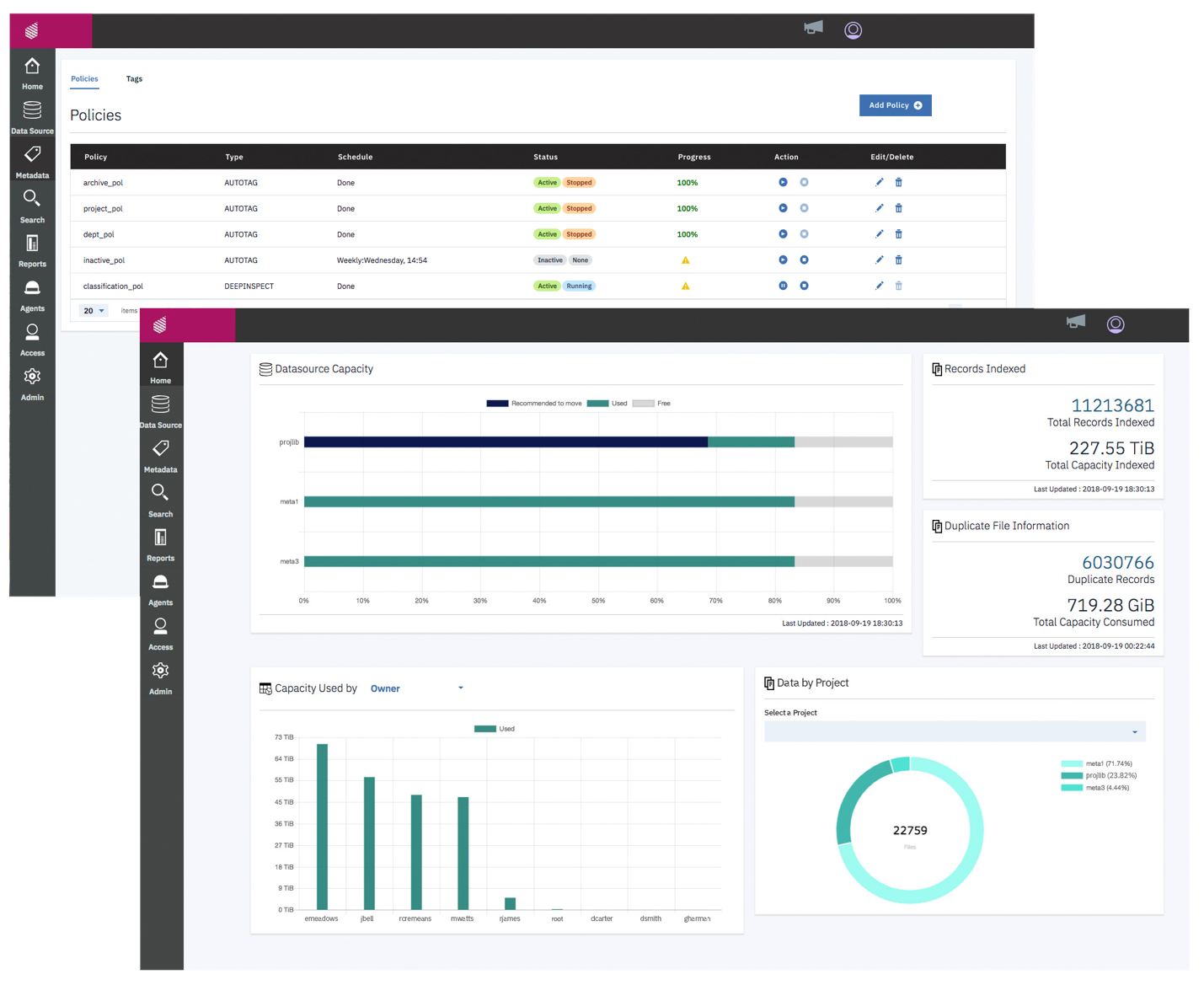
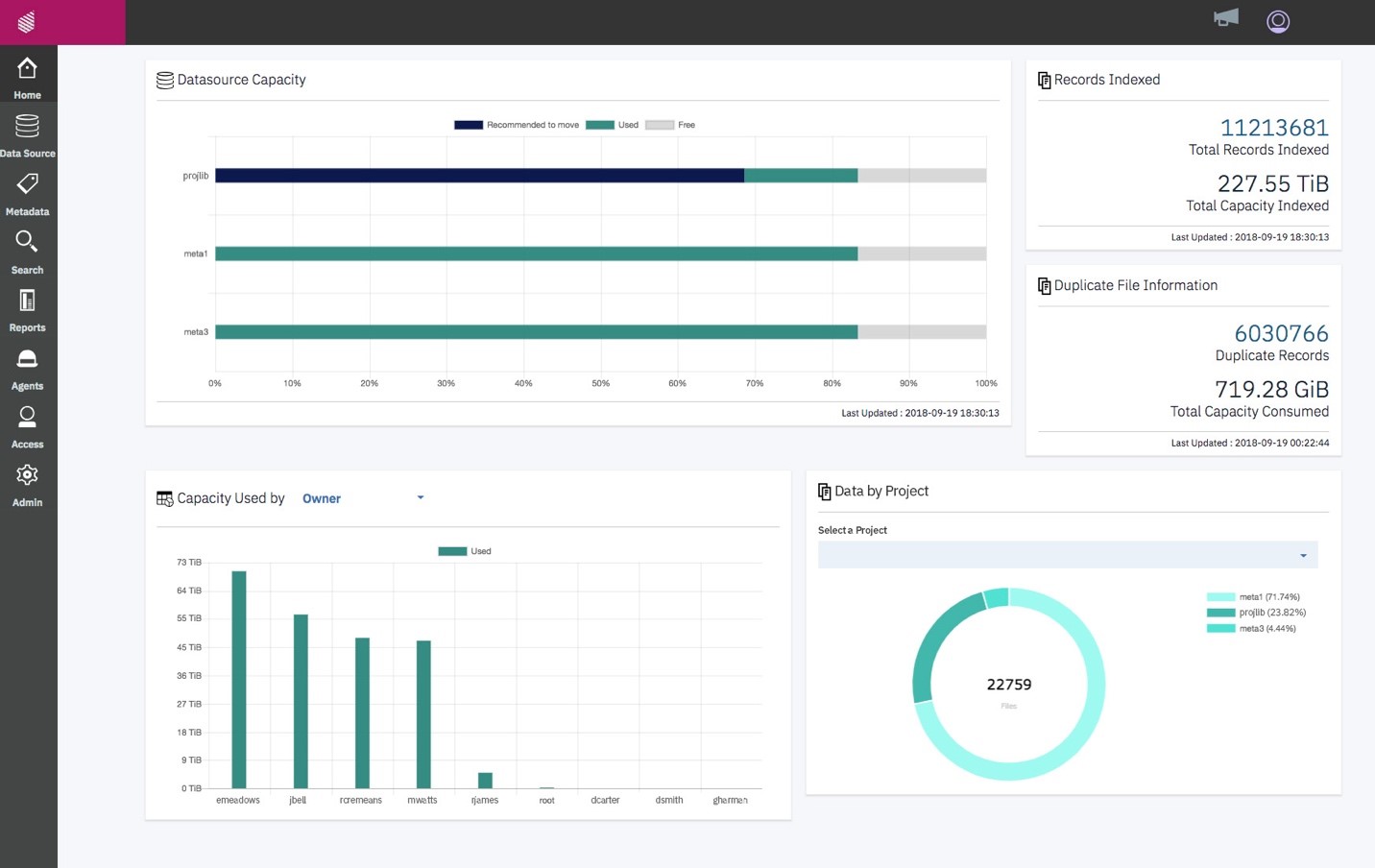
    IBM Spectrum Discover Screenshots

    Product screenshotProduct screenshotProduct screenshot