
Ray Chabot
Senior Technical Specialist
Chose IBM Z
Cost, control and staffing for intensive, low or zero-downtime applications can be significantly less costly on Z.

| Product | Rating | Most Used By | Product Summary | Starting Price |
|---|---|---|---|---|
 IBM Z | N/A | IBM Z is the company's mainframe enterprise server solution product line. | N/A | |
 Oracle Exadata | N/A | Oracle Exadata is an enterprise database platform that runs Oracle Database workloads of any scale and criticality with high performance, availability, and security. Exadata’s scale-out design employs optimizations that let transaction processing, analytics, machine learning, and mixed workloads run faster. Consolidating diverse Oracle Database workloads on Exadata platforms in enterprise data centers, Oracle Cloud Infrastructure (OCI), and multicloud environments helps organizations increase… | $2.90 Per Unit | |
 Teradata Vantage | N/A | Teradata Vantage is presented as a modern analytics cloud platform that unifies everything—data lakes, data warehouses, analytics, and new data sources and types. Supports hybrid multi-cloud environments and priced for flexibility, Vantage delivers unlimited intelligence to build the future of business. Users can deploy Vantage on public clouds (such as AWS, Azure, and GCP), hybrid multi-cloud environments, on-premises with Teradata IntelliFlex, or on commodity hardware with VMware. | $4,800 per month |
| IBM Z | Oracle Exadata | Teradata Vantage | ||||||||||||||||||||||
|---|---|---|---|---|---|---|---|---|---|---|---|---|---|---|---|---|---|---|---|---|---|---|---|---|
| Editions & Modules | No answers on this topic |
|
| |||||||||||||||||||||
| Offerings |
| |||||||||||||||||||||||
| Entry-level Setup Fee | Optional | No setup fee | Optional | |||||||||||||||||||||
| Additional Details | — | — | — | |||||||||||||||||||||
| More Pricing Information | ||||||||||||||||||||||||
| IBM Z | Oracle Exadata | Teradata Vantage | |
|---|---|---|---|
| Considered Multiple Products |  IBM Z Ray Chabot Senior Technical Specialist Chose IBM Z Cost, control and staffing for intensive, low or zero-downtime applications can be significantly less costly on Z.  Sushil Arya Software consultant Chose IBM Z These are not that effective when there is a lot of data, and the outage is more in other products as compared to the IBM Z. The processing Capabilities of the Z OS are much better than these products since, in my organization, the processing data is huge, and the IBM Z is best …  Judy L. Berglund Sr Systems Engineer Chose IBM Z From an IBM Z Mainframe standpoint, there is no other platform that can even touch with the mainframe can do. This is why it is the best of breed and has been for over 60 years. There are a large number of third party products available for use on the mainframe. From job …  Josef Leitner Systemtechniker Chose IBM Z There is no competitor when you really run a banking infrastructure with a CICS Transaction System, Cobol- or PL1- Programs and DB2 Databases running under the operating system z/OS. Also when you migrate your programs to JAVA z/OS is still the platform where you want to stay …  Sreehari Somasundaran IBM Z Leader Chose IBM Z Was the natural choice of platform as it was driven by the application requirements  Florian Schwanzara Solution Planning Senior Manager Chose IBM Z No one can deliver a Hardware Security Module with FIPS 140-2 Level 4 certification than IBM. And the value and ease of use in the IBM cloud with the Hyper Protect Crypto Service are just not compatible to the other vendors. And with Unified Key Orchestrator I can also manage …  Gadi Ben-Avi z/OS system Programmer Chose IBM Z We recenetly attepted to evaluate moving an application to the MicroFocus environment. The initial assessment failed because of cost.  Vinay Damle Associate Director Chose IBM Z IBM Z is the winner when dealing with enormous transactions In terms of security as well IBM Z is a better option compared to other alternatives Excellent is dealing with large batch processing in multiple environments.  Yasar Qamar Mainframe Support Analyst Chose IBM Z There is no alternative to IBM Z available in the market when it comes to large volume server processing.  Dana Rafiee Director of Worldwide Strategic Consulting Chose IBM Z When it comes to deploying enterprise applications requiring serious resources that cannot be constrained, IBM Z and IBM Power 9 do a great job. However, they are in different classes of service. For high powered applications, we rarely utilize Intel architectures because the …  Kevin Littlejohn I/T Sr. Database Administrator Chose IBM Z No other product have been used or evaluated. | Oracle Exadata  Andrea McConnell Marketing Automation Specialist Chose Oracle Exadata Oracle Database Exadata Cloud Service allocates built-in cloud automation and enhances enterprise-class business continuity by enhancing zero downtime maintenance which is contrary to other alternatives such as Apache Hive.  Gene Baker Vice President, Chief Architect, Development Manager and Software Engineer Chose Oracle Exadata Oracle Exadata Database Machine had the best performance overall hands down. It clearly beat the competition and we were seeing 1000X improvement on SAP HANA. Oracle Exadata Database Machine beat that without us refactoring our code. To achieve that in HANA, we had to …  Habeeb Akbar Sr. Product Manager/Consultant for Software Technologies and Infrastructure Chose Oracle Exadata No. we have not used any other products.  Jon Shale Sr. Mgr., Engineering & Operations Chose Oracle Exadata For high performance, highly available, critical applications running on Oracle databases, there is no alternative.  Anna Lard Database Manager Chose Oracle Exadata Oracle Sun ZFS Storage Appliance  Olivier Ameryckx Oliva G. BDM / Specialized Account Manager Chose Oracle Exadata We selected it just from a performance perspective, and that the ROI with the Oracle Exadata Database Machine is bigger than other machines. You can run with it for at least 5 years.  Gurcan Orhan Data WareHouse Architect Chose Oracle Exadata We had already chosen Oracle Exadata, so we didn't compare this solution with other products.  Bert Scalzo Senior Product Manager Chose Oracle Exadata Exadata beats the competition because the smart scan and offloading technology is more about software than hardware, so you cannot just buy a beefy server and add flash disks to compete. The Exadata software is what makes it special. |  Teradata Vantage  Gisela Brossard Head of data and analytics Chose Teradata Vantage Uso pre-existente, vinculo con el proveedor. Conocimiento de la solucion. Existing use, link with the provider. Knowledge of the solution.  Nitesh Kumar Manager Marketing Chose Teradata Vantage Teradata is way ahead of its competitor because of its unique features of ensuring data privacy and data never gets corrupted even in worst case scenario. In most cases, the data corruption is a major issue if left unused and it leads to important data being wiped off which in … |
| IBM Z | Oracle Exadata | Teradata Vantage | |||||||||||||||||||
|---|---|---|---|---|---|---|---|---|---|---|---|---|---|---|---|---|---|---|---|---|---|
| Access Control and Security |
| ||||||||||||||||||||
| Data Modeling |
| ||||||||||||||||||||
| Data Exploration |
| ||||||||||||||||||||
| Data Warehouse |
|
| IBM Z | Oracle Exadata | Teradata Vantage | |
|---|---|---|---|
| Small Businesses |  Dell PowerEdge Score 7.8 out of 10 |  Google BigQuery Score 8.7 out of 10 | Google BigQuery Score 8.7 out of 10 |
| Medium-sized Companies |  HPE ProLiant DL Score 8.7 out of 10 |  Cloudera Enterprise Data Hub Score 9.0 out of 10 |  Snowflake Score 8.7 out of 10 |
| Enterprises |  IBM Power Score 9.0 out of 10 | Cloudera Enterprise Data Hub Score 9.0 out of 10 | Snowflake Score 8.7 out of 10 |
| All Alternatives | View all alternatives | View all alternatives | View all alternatives |
| IBM Z | Oracle Exadata | Teradata Vantage | |
|---|---|---|---|
| Likelihood to Recommend | 9.6 (0 ratings) | 10.0 (0 ratings) | 9.4 (0 ratings) |
| Likelihood to Renew | 10.0 (0 ratings) | - (0 ratings) | 8.2 (0 ratings) |
| Usability | 4.0 (0 ratings) | 8.9 (0 ratings) | 9.0 (0 ratings) |
| Availability | 10.0 (0 ratings) | - (0 ratings) | - (0 ratings) |
| Performance | 10.0 (0 ratings) | - (0 ratings) | - (0 ratings) |
| Support Rating | 9.9 (0 ratings) | - (0 ratings) | 7.3 (0 ratings) |
| In-Person Training | 9.0 (0 ratings) | - (0 ratings) | - (0 ratings) |
| Online Training | 8.0 (0 ratings) | - (0 ratings) | - (0 ratings) |
| Implementation Rating | 8.0 (0 ratings) | - (0 ratings) | 6.4 (0 ratings) |
| Configurability | 9.0 (0 ratings) | - (0 ratings) | - (0 ratings) |
| Ease of integration | 9.0 (0 ratings) | - (0 ratings) | - (0 ratings) |
| Product Scalability | 10.0 (0 ratings) | - (0 ratings) | - (0 ratings) |
| Vendor post-sale | 9.0 (0 ratings) | - (0 ratings) | - (0 ratings) |
| Vendor pre-sale | 8.0 (0 ratings) | - (0 ratings) | - (0 ratings) |
| IBM Z | Oracle Exadata | Teradata Vantage | |
|---|---|---|---|
| Likelihood to Recommend |
|
Gurcan Orhan Data WareHouse Architect |
|
| Pros |
Dana Rafiee Director of Worldwide Strategic Consulting |
|
|
| Cons |
 Craig Mullins President & Principal Consultant |
|
|
| Likelihood to Renew |
 Jesse Garza Senior Analyst Performance Reporting | No answers on this topic |
|
| Usability |
Jesse Garza Senior Analyst Performance Reporting |
|
|
| Reliability and Availability |
Gadi Ben-Avi z/OS system Programmer | No answers on this topic | No answers on this topic |
| Performance |
Gadi Ben-Avi z/OS system Programmer | No answers on this topic | No answers on this topic |
| Support Rating |
| No answers on this topic |
 Rahul Malik Senior Team Lead |
| In-Person Training |
Gadi Ben-Avi z/OS system Programmer | No answers on this topic | No answers on this topic |
| Online Training |
Gadi Ben-Avi z/OS system Programmer | No answers on this topic | No answers on this topic |
| Implementation Rating |
Jesse Garza Senior Analyst Performance Reporting | No answers on this topic | No answers on this topic |
| Alternatives Considered |
|
|
Nitesh Kumar Manager Marketing |
| Scalability |
Gadi Ben-Avi z/OS system Programmer | No answers on this topic | No answers on this topic |
| Return on Investment |
|
|
Rahul Malik Senior Team Lead |
| ScreenShots | IBM Z Screenshots 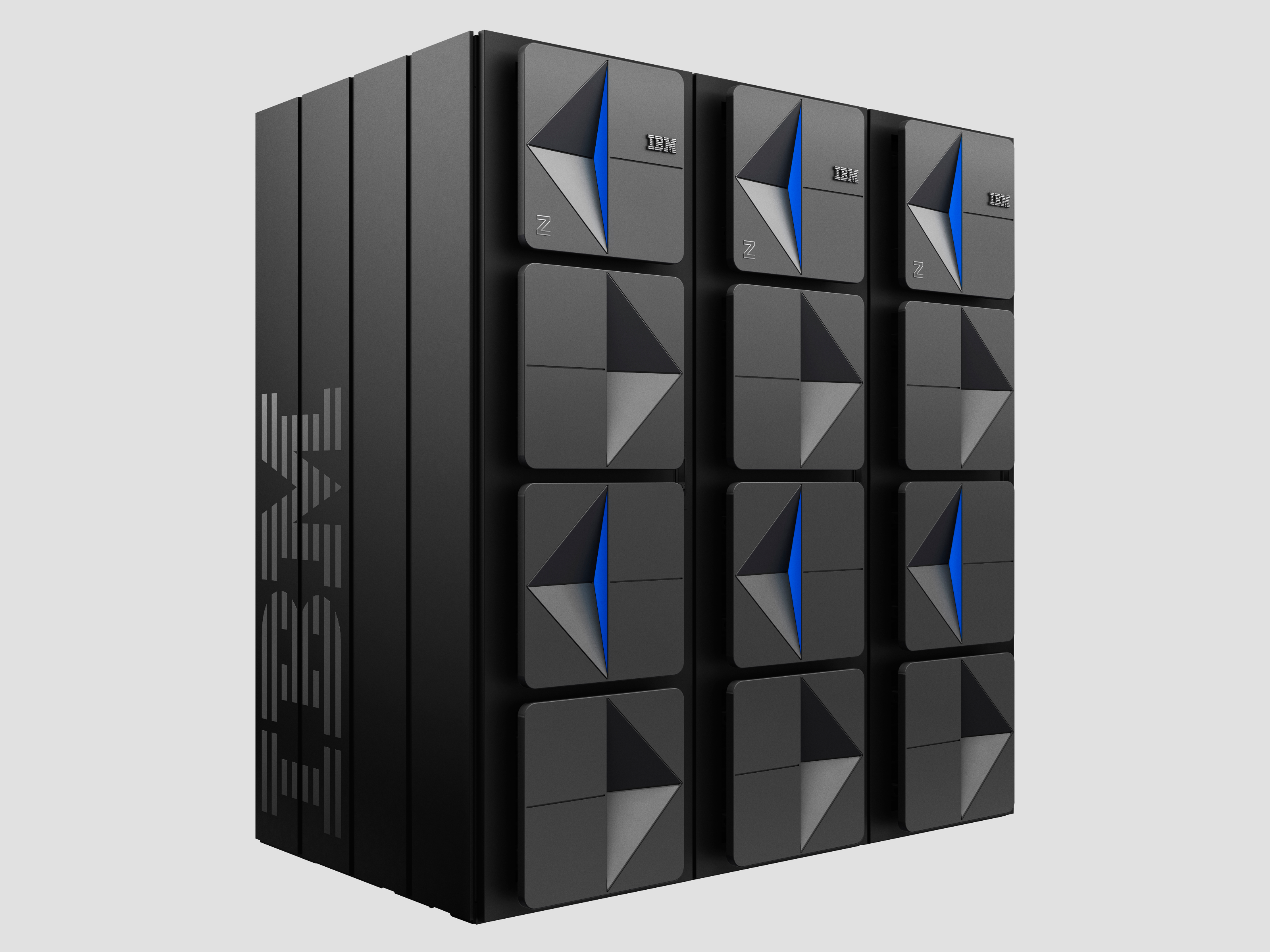  | Teradata Vantage Screenshots  |