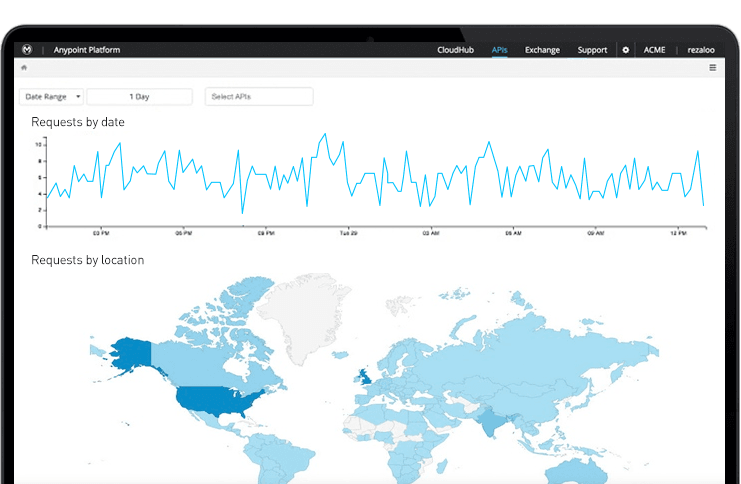
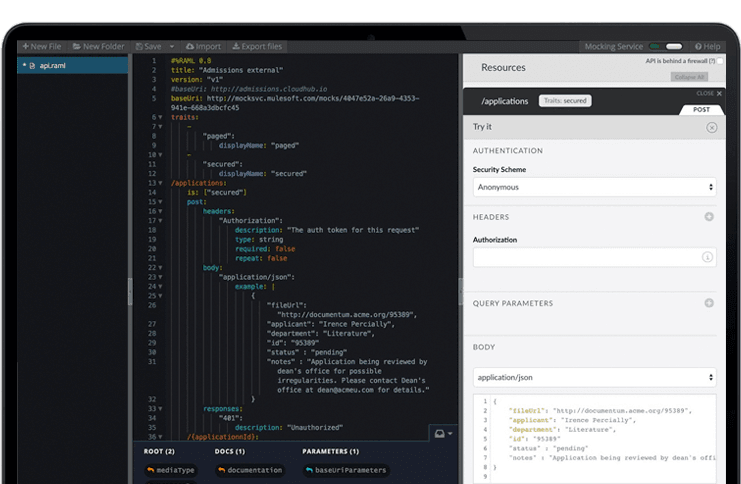
The Anypoint Platform developed by MuleSoft and acquired by Salesforce in early 2018 is designed to
connect apps, data, and devices anywhere, on-premises or in the cloud. This platform was built to
offer out-of-the-box connectors as well as tools that architects and developers can adopt quickly to
design, build and manage the entire lifecycle of their APIs, applications, and products.
N/A
Toad Data Point
Score 8.0 out of 10
N/A
Toad Data Point is a cross-platform, self-service, data-integration tool that simplifies data access, preparation and provisioning. It provides data connectivity and desktop data integration, and with the Workbook interface for business users, it provides simple-to-use visual query building and workflow automation.
$365
Pricing
MuleSoft Anypoint Platform
Toad Data Point
Editions & Modules
No answers on this topic
Base Edition
$365
Pro Edition
$528
Offerings
Pricing Offerings
Anypoint Platform
Toad Data Point
Free Trial
Yes
No
Free/Freemium Version
Yes
No
Premium Consulting/Integration Services
No
No
Entry-level Setup Fee
No setup fee
No setup fee
Additional Details
—
—
More Pricing Information
Community Pulse
MuleSoft Anypoint Platform
Toad Data Point
Features
MuleSoft Anypoint Platform
Toad Data Point
Cloud Data Integration
Comparison of Cloud Data Integration features of Product A and Product B
MuleSoft Anypoint Platform is best tool in the market for developing APIs with complex structures communicating with various different types of applications including web applications as well as legacy applications. Also applications including database connectivity for fetching and updating data in the DB tables. I cant think of any scenario which MuleSoft Anypoint Platform could not be used for developing the integrations.
Appropriate for general querying and some DBA work. It's the universal least-offensive solution for most environments - not best of breed, but not subject to unusual/extensive requirements. It just works. On the other hand, some functionality (e.g. data import/export, snippets) are perfunctory and minimal and seem to be either difficult or impossible to automate. If you need to streamline those operations, you'll be forced to rely on third-party solutions that mostly work on top of (instead of with) TOAD.
Has more features than what we really need so we're paying for more than we use. Sort of like paying for an Abrams tank when all we really need is a Toyota Corolla.
Not a value product, tends to be expensive.
Takes a while for developers to learn to use Mulesoft Anypoint.
The workflow is a relatively new feature. Quest is adding additional functionality and the workflows are useful now.
Would be nice if the 'Automate' feature was a bit easier to use.
Would be nice if some of the SQL Editor features in the traditional interface worked better in the new workflow interface (although, these are being fixed with each release).
There’s a lot of learning curve at the beginning when it comes to building the code and everything. In terms of usability, I’d say once you get used to it, it’s fine — but it’s not very easy during the initial stages.
I find Toad Data Point easy to use for both the novice and the experienced business analyst. If all you desire is to access data and create spreadsheets...this is a snap. Toad Data Point actually has cool data analysis features built into it. The newer workflow interface makes automating steps a snap
Anypoint Platform support is very responsive. There is also a huge knowledge base and an active online forum where answers to most questions can be found. When needed support engages the engineering group so adequate solutions or workarounds are always provided.
Once we have moved all of our system integration APIs to the MuleSoft Anypoint Platform, we will need to communicate with a wide variety of external systems. All of our business and service logic is stored in the aforementioned core systems. Anypoint Platform (and all of our APIs) makes it easy to connect to various other platforms. In order to link to these many other systems, connectors and/or components are utilized, and they are simple to configure and integrate.
It is the least common denominator - not particularly optimized for our environment or workflows.
Hangs or slowdowns add anywhere from 5% - 7% for projects utilizing large/complicated data setts. (This could be due to other IT-imposed constraints and not entirely due to TOAD.)
Trying to perform some operations requires reading documentation and experimenting in order to figure out the TOAD-specific approaches and commands.
It just works (when we understand it). Updates don't break things and things don't suddenly start behaving differently. Best of all, we don't mysteriously lose functionality.