Oracle’s Enterprise Manager is an on-premises monitoring and management tool. The console is designed primarily to manage other Oracle products, it but can integrate to manage non-Oracle components as well.
N/A
Redgate Monitor
Score 8.0 out of 10
N/A
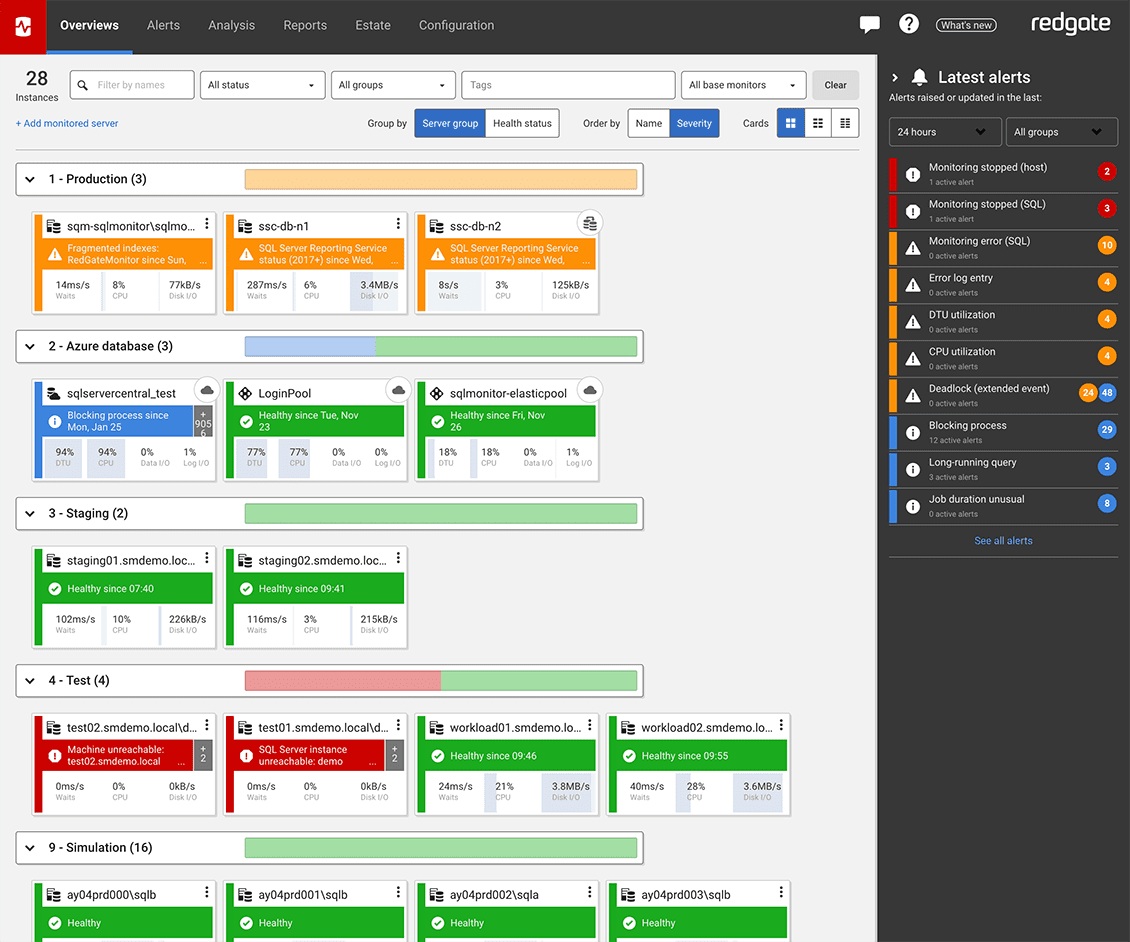
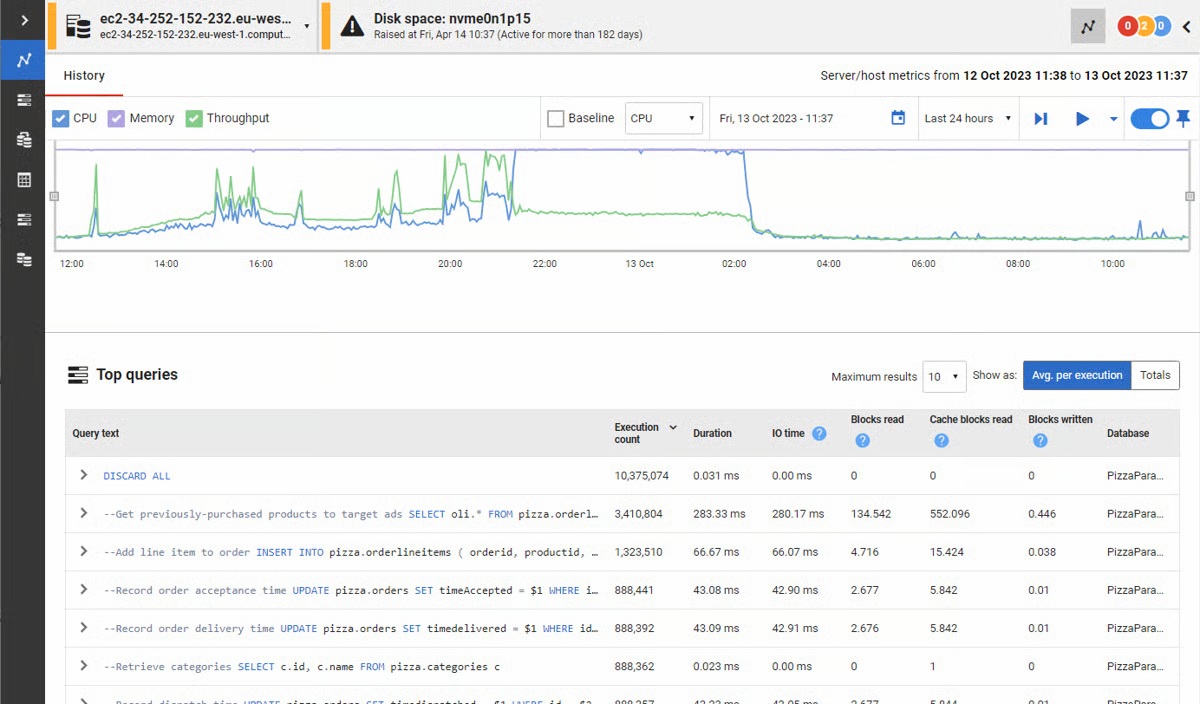
Redgate’s SQL Monitor helps teams looking after SQL servers be more proactive. SQL Monitor enables monitoring environments custom to the user’s SQL server to recognize issues before they impact users. It supports monitoring on-premises and cloud-based servers from a single interface.
$1,164
per year per server
Pricing
Oracle Enterprise Manager
Redgate Monitor
Editions & Modules
No answers on this topic
No answers on this topic
Offerings
Pricing Offerings
Oracle Enterprise Manager
Redgate Monitor
Free Trial
No
Yes
Free/Freemium Version
No
No
Premium Consulting/Integration Services
No
Yes
Entry-level Setup Fee
No setup fee
Optional
Additional Details
—
All prices are per server and include one year’s support and upgrades.
OEM is very well suited for all Oracle products, especially Oracle databases and Exadata machines; even not Oracle hardware, it is very good and displaying high level details. OEM is not well suited for older hardware vendors like AIX, HP-UX, DEC/Digital, Microsoft (sql server). This is a big negative as most large companies have a heterogeneous environment with many different vendor hardware and (database) software products.
With mission-critical SQL Server instances at multiple physical locations and in the cloud, it's critical for us to know immediately when there are performance issues or outages. The Redgate SQL Monitor provides an intuitive dashboard that allows for detailed resource monitoring. Perhaps not as useful in a 100% managed SQL environment.
Monitoring Templates: There are out of box monitoring templates for each target types, you can customize them or use them as it is.
Administrative Groups: This is a relatively new feature in OEM Cloud Control. This lets you create and manage your targets and monitoring templates smarter and with less re-work.
DB Monitoring: There are so many cool DB monitoring features and visual graphics, that it can be used by both DBA and functional people to see what's going on in the database.
Bugs. Every version we upgrade to has a number of bugs. Some stop us from rolling to production OEM (we have a sandbox OEM), some are simply annoying. If I could improve on one thing, it would be for better QA from oracle before releasing each version.
Flash. I'm told that they are moving from Flash to Jet in version 13.3 and beyond (we are on 13.2 currently). That change cannot come soon enough. The OEM pages load SO slowly due to Flash.
Hierarchy Groups. OEM allows five Hierarchy groups. A Hierarchy group allows a top down metric/rule roll out. However, they limit you to five. I'd like to see them open that up, so that we can have any number of custom groups.
Openness - They are too attached to their Intellectual Property to the detriment of usability, stability and reliability. So once its is installed and working leave it alone. Best run it on a VM as that can be restored quickly for when it breaks.
If they exposed an API/SDK that allowed you to leaver their products life would be far sweeter, it would feel less of a battle.
Add WebHooks to SQL Monitor to enhance integration to other subsystems.
Make it easy to install in default mode. So you are not forced to use TomCat Use as ASP.Core Selfl Hosting options.
It's great! It does everything and anything you would want it to do. It can monitor things which doesn't comes out of the box by adding plug ins to it, for example, you can even monitor Oracle GoldenGate Replication by adding a plug-in to OEM Cloud Control.
In general, the Redgate dashboard is one of the most thorough yet intuitive products I've had the pleasure of using. Compared to other vendors in different verticals, the Redgate dashboard's deployment, configuration, monitoring, and reporting is second to none
I still rate OEM as a must-have tool for central management of Oracle fleet. The pros and cons of the product is prominent. Meanwhile, I also acknowledge that OEM was design about a decade ago. At that time, it did not have the landscape we have today, such as cloud, DEVOPS, machine learning, etc. I hope in future releases, the design will incorporate those features.
Being an Oracle shop using Oracle Database and MySQL, management console from Oracle was a better choice than IBM or Microsoft even though we do use Microsoft Azure and storage/servers from IBM (on-prem).
We are a 7x24 shop. Oracle Enterprise Manager Cloud Control helps us meet that objective by proactively warning us before issues cause down time. Things like disk space, archive log issues or temporary table space issues.
Spreading the use of this tool outside of the DBA group has allowed us to not hire additional personnel for those teams. Over time, as folks have retired from our operations team, we are not replacing them. Instead we have used OEM Cloud Control to automate tasks.
We also now have the tools to measure up-time by using specific measurements inside of OEM. This allows us to report real numbers to management.