Oxygen is a Selenium & Appium infrastructure for beginners and pros, available free and open source under the GPL 3.0 license. Oxygen has been developed and contributed to the community by CloudBeat.
$0
Rapise
Score 8.0 out of 10
Mid-Size Companies (51-1,000 employees)
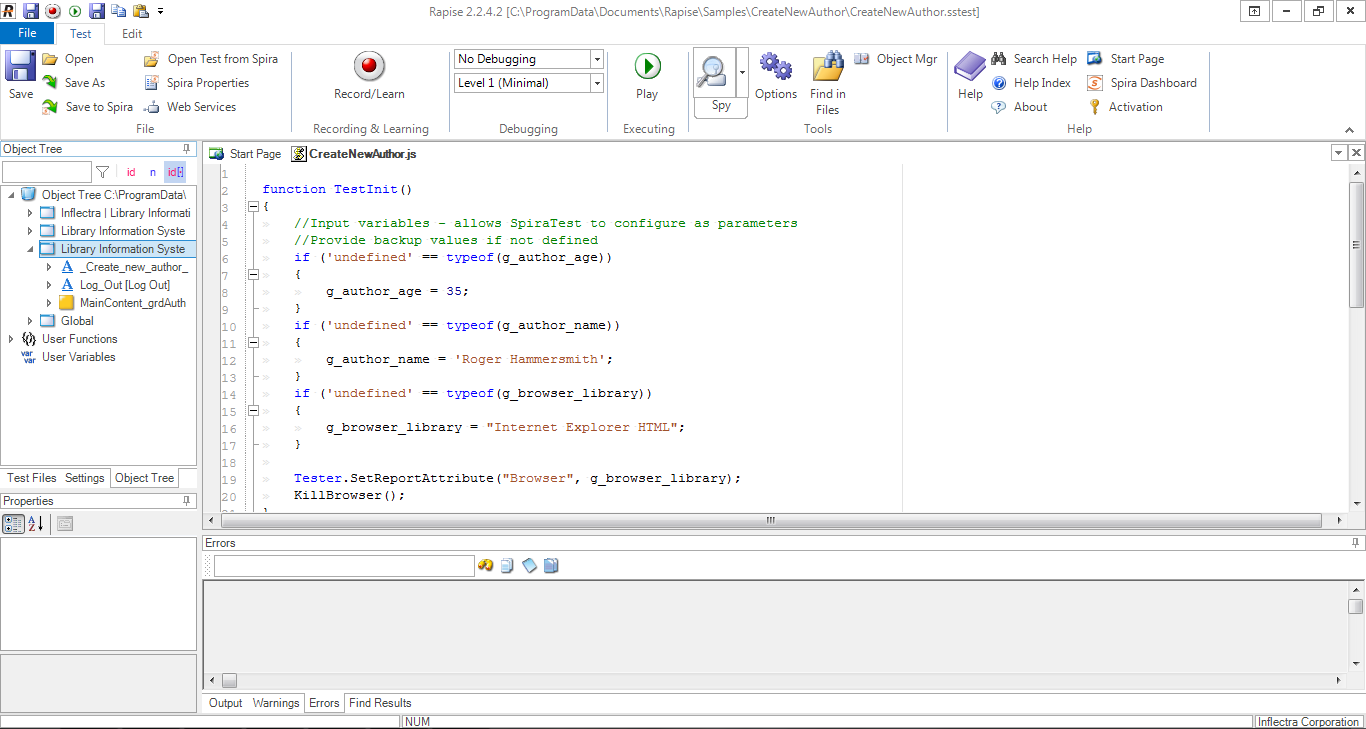
Rapise is a software testing platform that allows users to regression test web, desktop and mobile applications. Some key features include: Playback of Tests, Test Script Editing and Data Driven Testing.
$324
per month (1 license)
React (React.js)
Score 8.8 out of 10
N/A
React or React.js is a JavaScript library for building user interfaces. React enables users to create interactive UIs.
$0
Pricing
Oxygen
Rapise
React (React.js)
Editions & Modules
No answers on this topic
No answers on this topic
No answers on this topic
Offerings
Pricing Offerings
Oxygen
Rapise
React (React.js)
Free Trial
No
Yes
No
Free/Freemium Version
Yes
No
Yes
Premium Consulting/Integration Services
No
No
No
Entry-level Setup Fee
No setup fee
No setup fee
No setup fee
Additional Details
—
Discount available for annual billing (up to 10%).
The appropriate scenario to use Rapise is when we have a project that is considered from medium onwards, since Rapise will help us to define, develop and implement the testing phase in a reliable and efficient way. Also with Rapise we will not have to worry about the platform that we are using since it has great versatility and flexibility.
React is a JavaScript user interface construction library that works well for:
Developing web apps with dynamic and complicated user interfaces.
creating reusable UI elements that may be used in other applications.
creating single-page applications with dynamic content updates that don't require a page reload.
The Virtual DOM's effective updating mechanism allows it to handle large volumes of data updates.
React, on the other hand, might be less suitable for:
Websites that are simple, stagnant, and have no interaction. Other libraries or simple HTML, CSS, and JavaScript may be a better fit in such circumstances.
Web sockets may be a better choice for applications that need real-time updates, such as chat or gaming apps.
When creating mobile apps, React Native is a better option.
Server side rendering only, as React is designed to run on the client side.
React is fantastic for building performant user interfaces. Our web app is snappy and great for our customers.
React has the philosophy of doing one thing and doing it well which is the view layer of the application. This makes it incredibly intuitive and flexible for developers to use.
React has lead the way in being able to write modular and structured code. It is a drastic improvement since the days of spaghetti jQuery code.
React has an unmatched community. The amount of tools and libraries available is fantastic, and there plenty of solutions available online for common problems.
For tests that require specific approaches it is necessary to have advanced knowledge of programming in javascrip, which sometimes the QA team does not have experience
Sometimes I have noticed that when using object dragging errors occur intermittently
The integration with some tools (Dynamics) is only with the basic functions from my point of view
Debugging React is challenging. Bugs in react code generate stack traces internal to React and it is often totally unclear how it relates to the code you actually wrote.
Relating your React elements to corresponding DOM elements is difficult. The intentional separation of virtual and actual DOM also makes it difficult to map the elements to the structures in the DOM. This is partially ameliorated by the use of the React dev tool, which provides a DOM-like view of the React elements, but the tool still does not provide a direct correspondence with the DOM that is often necessary to figure out why something isn't right.
Because JSX is React-specific and not a language feature, a special compilation process is necessary to convert JSX code to normal JS. Coming from a C++ background, compiling things doesn't bother me, but many JS developers are used to a less structured development.
React is just a bit of a different animal. I was avoiding it for the longest time. I thought for sure I would land on Vue or something else with a more approachable and familiar appearance. But after taking an online course in React, I started realize what people were raving about (and complaining about) and decided to implement it at our office for one of our products.
Since it's open-source and very popular, the community support for React and related tools and libraries is excellent. There are a lot of people using the same tools, and so issues tend to get fixed quickly and "recipes" are easy to come by. And since it's backed by Facebook, they have a dedicated engineering team working on the progression of React.
While this is a widely contested debate with various blog posts and benchmarks all over the place, its really a personal choice to determine what works for the team. Coming from a Angular 1.x background, I decided to try a new framework when Angular 2.x was announced and at that time React is gaining popularity and Vue hasn't taken off yet. Compared to Angular 1.x and Vue (hybrid of React and Angular) that split the logic from the html templates, I loved the way React breaks code into components using the jsx syntax. In my mind, this allows for cleaner components and easier maintenance
The primary objective of the institution is a service to the public, so everything that improves response times to the public helps us to achieve it.
As a department in charge of the development of systems and applications, our objective is fulfilled by delivering quality products and tools such as Rapise help us greatly
The return on investment can be more than justified by fulfilling the primary objectives