PostgreSQL (alternately Postgres) is a free and open source object-relational database system boasting over 30 years of active development, reliability, feature robustness, and performance. It supports SQL and is designed to support various workloads flexibly.
N/A
Pragmatic Workbench (discontinued)
Score8.5 out of 10
Enterprise companies (1,001+ employees)
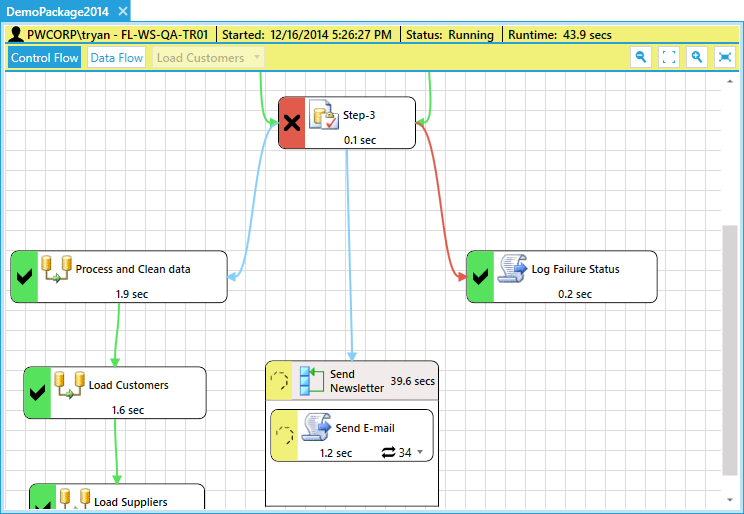
Pragmatic Workbench Enterprise was a suite that combined four Pragmatic Works products: BI xPress, DBA xPress, DOC xPress and LegiTest. It was acquired by SentryOne in April 2018, and has reached its EOL phase. After the summer of 2022 it will likely no longer be available, and unsupported.
$2,490
per seat
Pricing
PostgreSQL
Pragmatic Workbench (discontinued)
Editions & Modules
No answers on this topic
Workbench Client Edition
2,490
per seat
Workbench Server Edition
8,995
per server
Workbench Enterprise Edition (Client + Server)
9,995
1 user / 1 server
Offerings
Pricing Offerings
PostgreSQL
Pragmatic Workbench (discontinued)
Free Trial
No
Yes
Free/Freemium Version
No
Yes
Premium Consulting/Integration Services
No
Yes
Entry-level Setup Fee
No setup fee
No setup fee
Additional Details
—
Workbench Enterprise combines all of the functionality within Workbench Client (local install) and Workbench Server (server install).
PostgreSQL is best used for structured data, and best when following relational database design principles. I would not use PostgreSQL for large unstructured data such as video, images, sound files, xml documents, web-pages, especially if these files have their own highly variable, internal structure.
A de minimis incentive was given to thank the reviewer for their time. The incentive was not used to bias or drive a particular response, nor was the incentive contingent on a positive endorsement. More Info
Workbench Enterprise is consistent across devices and users so far. It works the same, and access is easy. I have a problem with its security. If you use an enterprise password to access databases, it's very easy to click the show password on the connection page and expose the enterprise password. You shouldn't allow users to use the same accounts to access the database because that means all users are sharing the same password.
A de minimis incentive was given to thank the reviewer for their time. The incentive was not used to bias or drive a particular response, nor was the incentive contingent on a positive endorsement. More Info
A de minimis incentive was given to thank the reviewer for their time. The incentive was not used to bias or drive a particular response, nor was the incentive contingent on a positive endorsement. More Info
A de minimis incentive was given to thank the reviewer for their time. The incentive was not used to bias or drive a particular response, nor was the incentive contingent on a positive endorsement. More Info
A de minimis incentive was given to thank the reviewer for their time. The incentive was not used to bias or drive a particular response, nor was the incentive contingent on a positive endorsement. More Info
A de minimis incentive was given to thank the reviewer for their time. The incentive was not used to bias or drive a particular response, nor was the incentive contingent on a positive endorsement. More Info
Postgresql is the best tool out there for relational data so I have to give it a high rating when it comes to analytics, data availability and consistency, so on and so forth. SQL is also a relatively consistent language so when it comes to building new tables and loading data in from the OLTP database, there are enough tools where we can perform ETL on a scalable basis.
A de minimis incentive was given to thank the reviewer for their time. The incentive was not used to bias or drive a particular response, nor was the incentive contingent on a positive endorsement. More Info
A de minimis incentive was given to thank the reviewer for their time. The incentive was not used to bias or drive a particular response, nor was the incentive contingent on a positive endorsement. More Info
The data queries are relatively quick for a small to medium sized table. With complex joins, and a wide and deep table however, the performance of the query has room for improvement.
A de minimis incentive was given to thank the reviewer for their time. The incentive was not used to bias or drive a particular response, nor was the incentive contingent on a positive endorsement. More Info
There are several companies that you can contract for technical support, like EnterpriseDB or Percona, both first level in expertise and commitment to the software.
But we do not have contracts with them, we have done all the way from googling to forums, and never have a problem that we cannot resolve or pass around. And for dozens of projects and more than 15 years now.
A de minimis incentive was given to thank the reviewer for their time. The incentive was not used to bias or drive a particular response, nor was the incentive contingent on a positive endorsement. More Info
Our team does the support for us. Sometimes we see download related issues that can easily be fixed by our team. Most issues you will see with one user in your org will probably happen to others, so keep a log and track those issues. Then have a fix for them somewhere that everyone has access to. This will save you a lot of time troubleshooting.
A de minimis incentive was given to thank the reviewer for their time. The incentive was not used to bias or drive a particular response, nor was the incentive contingent on a positive endorsement. More Info
The online training is request based. Had there been recorded videos available online for potential users to benefit from, I could have rated it higher. The online documentation however is very helpful. The online documentation PDF is downloadable and allows users to pace their own learning. With examples and code snippets, the documentation is great starting point.
A de minimis incentive was given to thank the reviewer for their time. The incentive was not used to bias or drive a particular response, nor was the incentive contingent on a positive endorsement. More Info
A de minimis incentive was given to thank the reviewer for their time. The incentive was not used to bias or drive a particular response, nor was the incentive contingent on a positive endorsement. More Info
Although the competition between the different databases is increasingly aggressive in the sense that they provide many improvements, new functionalities, compatibility with complementary components or environments, in some cases it requires that it be followed within the same family of applications that performs the company that develops it and that is not all bad, but being able to adapt or configure different programs, applications or other environments developed by third parties apart is what gives PostgreSQL a certain advantage and this diversification in the components that can be joined with it, is the reason why it is a great option to choose.
A de minimis incentive was given to thank the reviewer for their time. The incentive was not used to bias or drive a particular response, nor was the incentive contingent on a positive endorsement. More Info
A de minimis incentive was given to thank the reviewer for their time. The incentive was not used to bias or drive a particular response, nor was the incentive contingent on a positive endorsement. More Info
Easy to administer so our DevOps team has only ever used minimal time to setup, tune, and maintain.
Easy to interface with so our Engineering team has only ever used minimal time to query or modify the database. Getting the data is straightforward, what we do with it is the bigger concern.
A de minimis incentive was given to thank the reviewer for their time. The incentive was not used to bias or drive a particular response, nor was the incentive contingent on a positive endorsement. More Info
A de minimis incentive was given to thank the reviewer for their time. The incentive was not used to bias or drive a particular response, nor was the incentive contingent on a positive endorsement. More Info