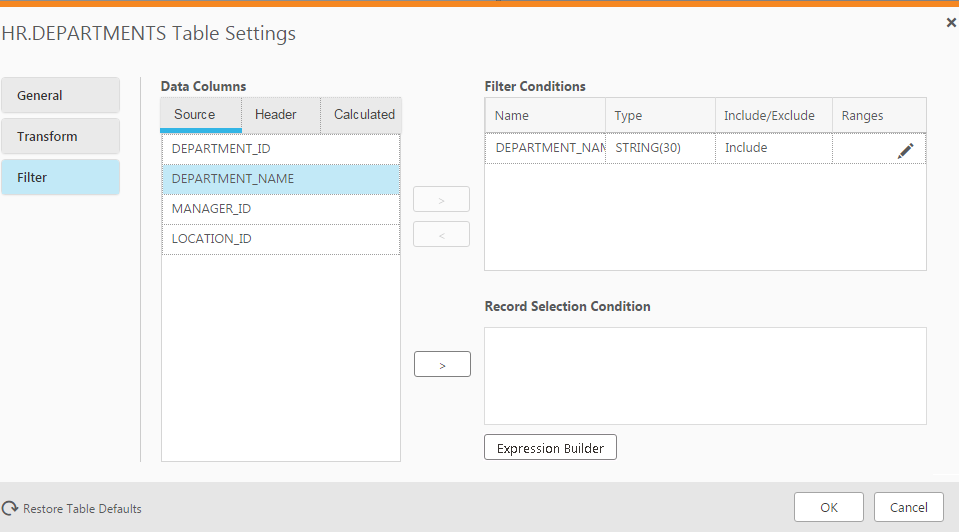
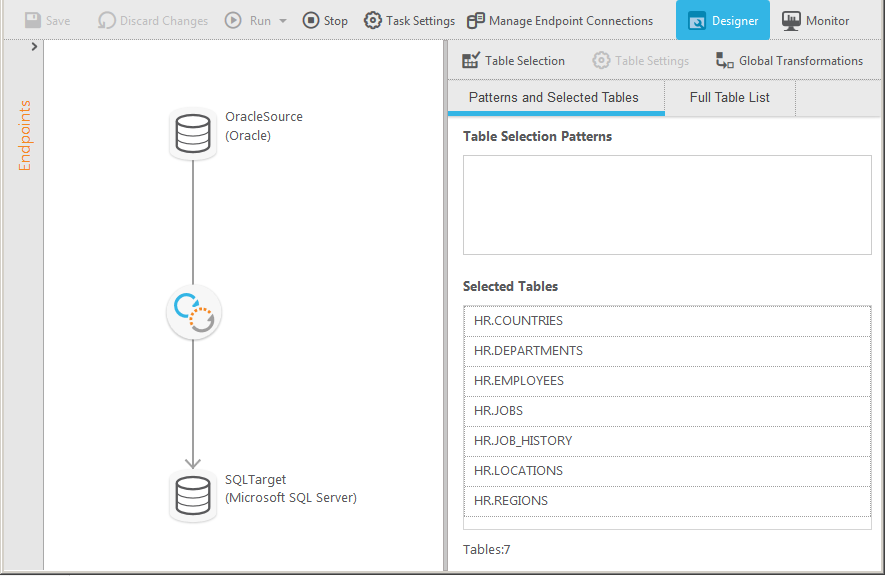
Qlik Replicate enables organizations to accelerate data real-time replication, ingestion and streaming via change data capture, across a wide range of heterogeneous databases, data warehouses and data lake platforms.
N/A
Talend Open Studio (discontinued)
Score9.7 out of 10
N/A
Talend Open Studio was an open source integration software, used to build basic data pipelines or execute simple ETL and data integration tasks. Qlik and Talend discontinued the service in early 2024, and it is no longer available.
Senior Analytics Manager at AFNI, INC. (Outsourcing/Offshoring, 5001-10,000 employees)
Chose Qlik Replicate
Qlik Replicate's power is in its simple 1:1 copying of database tables and architecture and maintaining a near real-time copy of that database. Talend and SSIS are different tools and more for custom ETL's that require various steps to connect to SFTP or download files. …
A de minimis incentive was given to thank the reviewer for their time. The incentive was not used to bias or drive a particular response, nor was the incentive contingent on a positive endorsement. More Info
Qlik Replicate works very well with relational data platforms, both on premise and in the cloud, for example Oracle, SQL Server, PostgreSQL, MySQL and others, it also works very well with DB2. If the data source is MongoDB, it is more complicated and currently there is no possibility of sending data to MongoDB.
For quick daily integrations Talend is a very good tool and it makes development time so short and easy. Citizen developers who are not great programmers can pick up and start using Talend Open Studio within weeks. It's well suited for all kinds of data migration between various systems. It is less appropriate for smaller synchronous services where you need to trace the complete transaction and how data moved between them. It's also less appropriate for small data movements where other tools can be easier to use and manage.
A de minimis incentive was given to thank the reviewer for their time. The incentive was not used to bias or drive a particular response, nor was the incentive contingent on a positive endorsement. More Info
Replicate is extremely stable and does not generate a lot of alerts/failures/issues that take up time to troubleshoot.
It is very easy to add new source tables to a Replicate task so that we're always in sync with new data available from the CRM.
It's nice that Qlik Replicate also allows you to create a job to stop and then restart your tasks during maintenance windows that occur on both the source and target systems.
A de minimis incentive was given to thank the reviewer for their time. The incentive was not used to bias or drive a particular response, nor was the incentive contingent on a positive endorsement. More Info
A de minimis incentive was given to thank the reviewer for their time. The incentive was not used to bias or drive a particular response, nor was the incentive contingent on a positive endorsement. More Info
The base Replicate web GUI is lacking. If you have dozens or more tasks, it's hard to get a sense of how they're performing. Enterprise Manager solves all of these problems but is a separate install.
The support portal is extremely difficult to navigate. It's hard to track down exactly what you're looking for.
It would be helpful to have better documentation and example queries for the tables in the Enterprise Manager analytics database.
Destination databases that don't support common DDL commands behave unpredictably. And the replication of schema changes isn't consistent.
A de minimis incentive was given to thank the reviewer for their time. The incentive was not used to bias or drive a particular response, nor was the incentive contingent on a positive endorsement. TR verified that a representative sample of customers was invited. More Info
The community is not that up to date and forum is not that great in response. Probably we should make people aware of the tool more on how to use and its implementations.
Talend crashes when transforming a lot of data (millions of rows).
Proper training documentation is a must for talend which is currently lagging. This will help users to learn more about Talend and use it effectively.
A de minimis incentive was given to thank the reviewer for their time. The incentive was not used to bias or drive a particular response, nor was the incentive contingent on a positive endorsement. More Info
The availability of the replicated data in disparate environments has is now crucial. Replacing a product like Qlik Replicate would require significant time, investments, and work. In addition, Qlik Replicate is reasonably reliable with few failures.
A de minimis incentive was given to thank the reviewer for their time. The incentive was not used to bias or drive a particular response, nor was the incentive contingent on a positive endorsement. More Info
There is no licence requirement for Talend Open Studio. So, this is not relevant question. However, if you are asking whether we will use Talend in future. Yes. We will continue to use it. It's very powerful free tool which caters to all our extra, transform, load capabilities. We just love Talend for it's great functionality and ease of use.
A de minimis incentive was given to thank the reviewer for their time. The incentive was not used to bias or drive a particular response, nor was the incentive contingent on a positive endorsement. More Info
We now have greater business flexibility and scalability, and our big data integration projects have a quick rate of growth, which has been profitable for us. Independent of the sources involved, maintaining data consistency between sources is easy. One of my favorite features is the way it lets owners of the source system start and stop processes from updating their system windows.
A de minimis incentive was given to thank the reviewer for their time. The incentive was not used to bias or drive a particular response, nor was the incentive contingent on a positive endorsement. More Info
Talend Open Studio is based on Eclipse and is full of redundant procedures to do one thing, like when installing libraries. Sometimes I cannot manually download the libraries that it can't find.
Many times, Talend freezes. When you give a cancel command, it takes several minutes to stop. It also takes a great toll on our PC with 16 GB of ram and I7 CPU, even in idle status. If you are downloading Maven Jar/Libraries, you cannot do anything and have to wait until the task is finished.
The issue I've had is that Qlik does an awful job of keeping their customers informed when new versions of the software are available. We found that we were using a version that was no longer supported and could never get help. When it came time to get us upgraded so that we were on a current version, no one knew how to help get us to where we needed to be. We had to purchased professional services time and even then I was basically on my own to get everything built out and set up. Qlik needs to be more proactive with communicating about new releases and how to get your version upgraded in the most secure, safe way possible.
A de minimis incentive was given to thank the reviewer for their time. The incentive was not used to bias or drive a particular response, nor was the incentive contingent on a positive endorsement. More Info
Talend Open Studio is free and we are not using the enterprise version which comes with licence and support. So, mostly depend on the open source community for any issues that we face. The document is good and we didn't have to use any support so far. We did evaluate the enterprise version and so far sticking to the free version.
A de minimis incentive was given to thank the reviewer for their time. The incentive was not used to bias or drive a particular response, nor was the incentive contingent on a positive endorsement. More Info
Follow the directions from the Qlik documentation. They are pretty straight forward and easy enough to follow. If you follow these, then you are not likely to have issues on implementation.
A de minimis incentive was given to thank the reviewer for their time. The incentive was not used to bias or drive a particular response, nor was the incentive contingent on a positive endorsement. More Info
Great tool for data replication solution for Oracle/SQLServers/etc. Real easy to get it set up and start realizing business value. Getting the PoC accomplished in a short window. Product costing and easy to start small and scale as needed. It helped cover most of our ask compared to other solutions.
A de minimis incentive was given to thank the reviewer for their time. The incentive was not used to bias or drive a particular response, nor was the incentive contingent on a positive endorsement. TR verified that a representative sample of customers was invited. More Info
Informatica has a limited number of components that you can use. This places a heavy limitation on the capabilities of Informatica. On the other hand, Talend allows you to create your own custom components using Java. For businesses that need to perform a wide variety of data operations, it can be quite useful to have the option of creating your own custom components to satisfy business needs.
A de minimis incentive was given to thank the reviewer for their time. The incentive was not used to bias or drive a particular response, nor was the incentive contingent on a positive endorsement. More Info
Prior to using Qlik Replicate, we used an ETL solution to copy data from the Oracle ERP system to the Microsoft SQL Server BI system at a 15-minute interval. It was very tedious to maintain. Qlik Replicate is much easier to use and we replicate data near real-time now.
A de minimis incentive was given to thank the reviewer for their time. The incentive was not used to bias or drive a particular response, nor was the incentive contingent on a positive endorsement. TR verified that a representative sample of customers was invited. More Info
I delivered projects the client did not believe were possible, and I provided intermediate value by providing visibility to hidden data problems in their systems they could not detect before.
I was able to work 3 projects at a time, pausing gracefully in one while switching to the other, with minimal effort.
A de minimis incentive was given to thank the reviewer for their time. The incentive was not used to bias or drive a particular response, nor was the incentive contingent on a positive endorsement. More Info