




Workday Adaptive Planning at Browne Jacobson

Use Cases and Deployment Scope
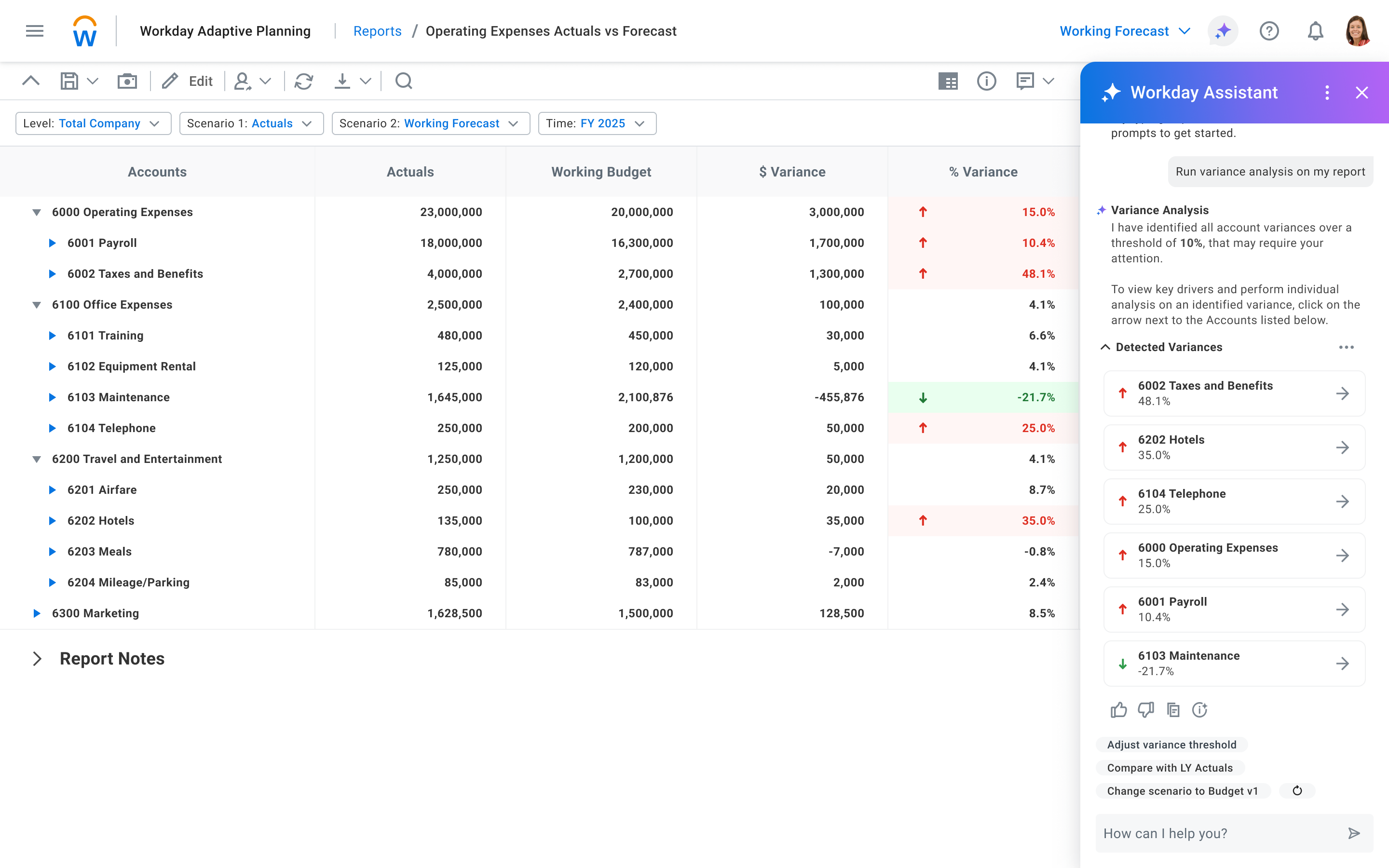
It's primarily used by the Commercial Finance team for budgeting and forecasting of the P&L and cashflow, and by HR business partners for Workforce Planning. It replaced a manual, spreadsheet-based planning environment that consumed a great deal time and was overly complex and cumbersome to maintain.
Prior to using Workday Adaptive Planning, the team was managing multiple linked Excel models leaving them with the constant challenge of version control and exposed to potential inaccuracies. This, plus the sheer amount of time my team were spending on budgeting and reporting drove the need for a better solution.
Prior to using Workday Adaptive Planning, the team was managing multiple linked Excel models leaving them with the constant challenge of version control and exposed to potential inaccuracies. This, plus the sheer amount of time my team were spending on budgeting and reporting drove the need for a better solution.
Pros
- One single source of truth on data shared across the entire team, rather than information shared across many localised files
- Provides a consistent approach on planning, including workflows and centrally held assumptions, ensuring all planning is managed in line with central policy
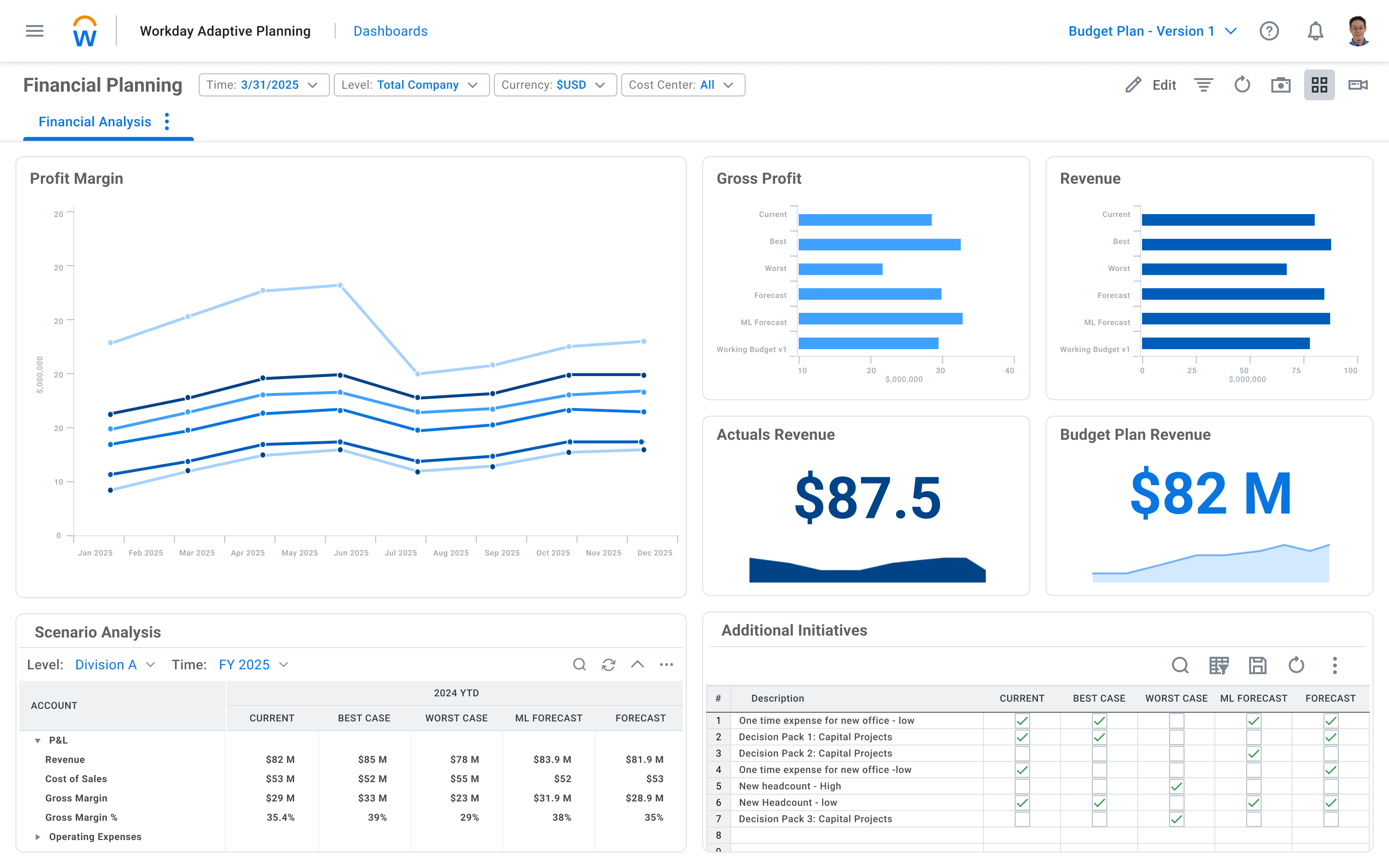
- Easy to build dashboards and reports that are professional and visually appealing
- The structural design of the system makes it effectively a sandbox environment to build whatever solutions you need to fit your particular business
- Ultimately, does what the sales team promise at the outset, which is not always common.
Cons
- Configuring integrations in the system is complex and often requires outside advice from implementation consultants. This area of the system could be improved to make it more intuitive to the user
- While dashboards are simple to build and effective, they could do with more visualisation options to improve reporting capabilities
- Having templated solutions for certain use cases would be really good to see. For example, if I wanted to build a simple 13 week cashflow, having something out of the box as a starting point that I could build on rather than designing it from scratch would be a huge benefit
Return on Investment
- Reduced annual budget timeline from 3 months down to 1 month
- Reduced quarterly forecast process from 6 weeks to 2 weeks
- Reduced month end close from WD9 to WD7
- We went from having just 6 weeks of value-add time available (any week where we weren't involved in a budget, forecast or month end) to 24 weeks of value-add time. That's 18 weeks of additional time each for 5 business partners.
Usability
Alternatives Considered
Vena and OneStream


