
Chose Amazon Relational Database Service (RDS)
Amazon Relational Database Service (RDS) vs. InfluxDB
Amazon Relational Database Service (RDS) vs. InfluxDB
| Product | Rating | Most Used By | Product Summary | Starting Price |
|---|---|---|---|---|
 Amazon RDS | N/A | Amazon Relational Database Service (Amazon RDS) is a database-as-a-service (DBaaS) from Amazon Web Services. | N/A | |
 InfluxDB | N/A | The InfluxDB is a time series database from InfluxData headquartered in San Francisco. As an observability solution, it is designed to provide real-time visibility into stacks, sensors and systems. It is available open source, via the Cloud as a DBaaS option, or through an Enterprise subscription. | N/A |
| Amazon Relational Database Service (RDS) | InfluxDB | |||||||||||||||
|---|---|---|---|---|---|---|---|---|---|---|---|---|---|---|---|---|
| Editions & Modules |
| No answers on this topic | ||||||||||||||
| Offerings |
| |||||||||||||||
| Entry-level Setup Fee | Optional | No setup fee | ||||||||||||||
| Additional Details | — | — | ||||||||||||||
| More Pricing Information | ||||||||||||||||
| Amazon Relational Database Service (RDS) | InfluxDB | |
|---|---|---|
| Considered Both Products | Amazon RDS |  InfluxDB No answer on this topic |
| Amazon Relational Database Service (RDS) | InfluxDB | |
|---|---|---|
| Small Businesses |  InterSystems IRIS Score 8.0 out of 10 | No answers on this topic |
| Medium-sized Companies | InterSystems IRIS Score 8.0 out of 10 | No answers on this topic |
| Enterprises |  SAP IQ Score 6.1 out of 10 | No answers on this topic |
| All Alternatives | View all alternatives | View all alternatives |
| Amazon Relational Database Service (RDS) | InfluxDB | |
|---|---|---|
| Likelihood to Recommend | 8.9 (131 ratings) | 9.0 (4 ratings) |
| Likelihood to Renew | 8.4 (5 ratings) | 9.1 (2 ratings) |
| Usability | 8.8 (8 ratings) | - (0 ratings) |
| Availability | 9.0 (1 ratings) | - (0 ratings) |
| Performance | 7.0 (1 ratings) | - (0 ratings) |
| Support Rating | 9.6 (13 ratings) | 9.0 (1 ratings) |
| Online Training | 10.0 (1 ratings) | - (0 ratings) |
| Product Scalability | 9.0 (1 ratings) | - (0 ratings) |
| Amazon Relational Database Service (RDS) | InfluxDB | |
|---|---|---|
| Likelihood to Recommend | Amazon AWS
| InfluxData
 Valentin Höbel Senior Consultant IT Infrastructure |
| Pros | Amazon AWS
| InfluxData
|
| Cons | Amazon AWS
 Animesh Kumar Senior Member of Technical Staff | InfluxData
|
| Likelihood to Renew | Amazon AWS
 Rahul Jain Software Engineer | InfluxData
 Jonathan Yarbor CEO & Co-Founder |
| Usability | Amazon AWS
 Erlon Sousa Pinheiro Senior Devops Engineer | InfluxData No answers on this topic |
| Support Rating | Amazon AWS
 Michael Jenkins Senior Systems Reliability Engineer | InfluxData
|
| Online Training | Amazon AWS
 KAUSHIK DEBNATH SAP BASIS Consultant | InfluxData No answers on this topic |
| Alternatives Considered | Amazon AWS
| InfluxData
Valentin Höbel Senior Consultant IT Infrastructure |
| Return on Investment | Amazon AWS
| InfluxData
|
| ScreenShots | Amazon RDS Screenshots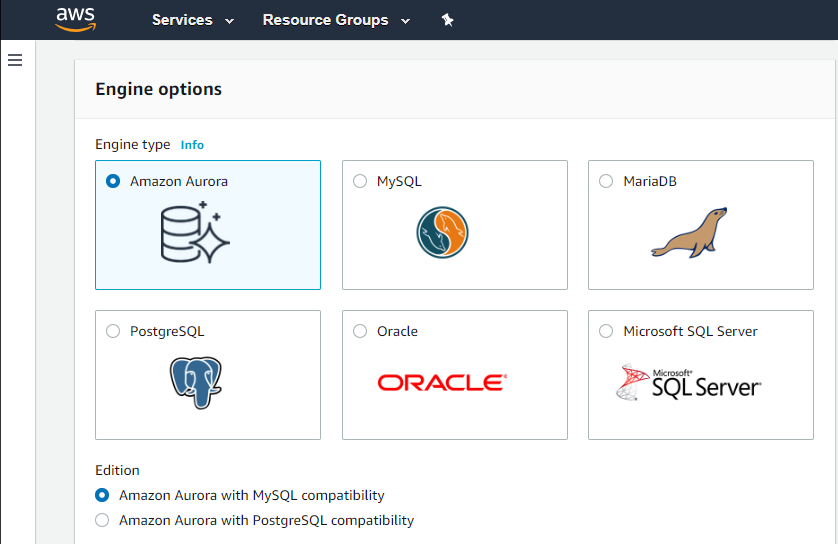 |