Anaconda is an enterprise Python platform that provides access to open-source Python and R packages used in AI, data science, and machine learning. These enterprise-grade solutions are used by corporate, research, and academic institutions for competitive advantage and research.
$0
per month
IntelliJ IDEA
Score 9.3 out of 10
N/A
IntelliJ IDEA is an IDE that aims to give Java and Kotlin developers everything they need out of the box, including a smart code editor, built-in developer tools, framework support, database support, web development support, and much more.
$19.90
per month
PhpStorm
Score 9.5 out of 10
N/A
JetBrains supports PhpStorm, an integrated development environment (IDE).
$9.90
per month per user
Pricing
Anaconda
IntelliJ IDEA
PhpStorm
Editions & Modules
Free Tier
$0
per month
Starter Tier
$15
per month per user
Business
$50
per month per user
Custom
Contact Sales
For Individual Use (Monthly billing)
$19.90
per month
For Organizations (Monthly billing)
$71.90
per month
For Individual Use (Yearly billing)
$199
per year
For Organizations (Yearly billing)
$719
per year
For Individuals
$99
per year per user
For Organizations
$249
per year per user
Offerings
Pricing Offerings
Anaconda
IntelliJ IDEA
PhpStorm
Free Trial
No
Yes
Yes
Free/Freemium Version
Yes
Yes
No
Premium Consulting/Integration Services
Yes
No
No
Entry-level Setup Fee
No setup fee
No setup fee
No setup fee
Additional Details
Users within organizations with 200+ employees/contractors (including Affiliates) require a paid Business license. Academic and non-profit research institutions may qualify for exemptions.
All Products Pack (For Individual Use) – $299 /1st year, $ 239 /2nd year and $ 179 /3d year onwards
All Products Pack (For Organizations) – $979 / year
IDEA has great roadmap, every update brings useful features. Support is great. Excellent documentation. It's full-featured as it comes out of the box and even if you can't find something you'll get it via plugins.
I have asked all my juniors to work with Anaconda and Pycharm only, as this is the best combination for now. Coming to use cases: 1. When you have multiple applications using multiple Python variants, it is a really good tool instead of Venv (I never like it). 2. If you have to work on multiple tools and you are someone who needs to work on data analytics, development, and machine learning, this is good. 3. If you have to work with both R and Python, then also this is a good tool, and it provides support for both.
This is a superb tool if your project involves a lot of backend development, especially in Java/Spring Boot and Kotlin. The support for the front end is great as well, but some developers may prefer to use the GitHub copilot add-on. I especially love using the GitHub copilot add-on. It may be less appropriate if your project requires heavy use of HotSwaps for backend debugging, as sometimes the support for that can be limited.
PhpStorm is well suited for any project that utilizes PHP. I have used it on Windows, Ubuntu, and Mac OS and it works great on all those platforms. Having a solution that keeps the developer from having to constantly switch tools to do their job is invaluable. Whether you're a junior developer, front end engineer or a senior developer, PhpStorm is a great product that will help you get your work done.
Anaconda is a one-stop destination for important data science and programming tools such as Jupyter, Spider, R etc.
Anaconda command prompt gave flexibility to use and install multiple libraries in Python easily.
Jupyter Notebook, a famous Anaconda product is still one of the best and easy to use product for students like me out there who want to practice coding without spending too much money.
Unit testing: Fully integrated into IntelliJ IDEA. Your unit tests will run smoothly and efficiently, with excellent debugging tools for when things get tricky.
Spring integration: Our Spring project using Maven works flawlessly in IntelliJ IDEA. I know firsthand that Apache is also easily and readily supported too. The integration is seamless and very easy to set up using IntelliJ IDEA's set up wizard when importing new projects.
Customization: IntelliJ IDEA comes out of the box with a bunch of handy shortcuts, as well as text prediction, syntax error detection, and other tools to help keep your code clean. But even better is that it allows for total customization of shortcuts you can easily create to suit your needs.
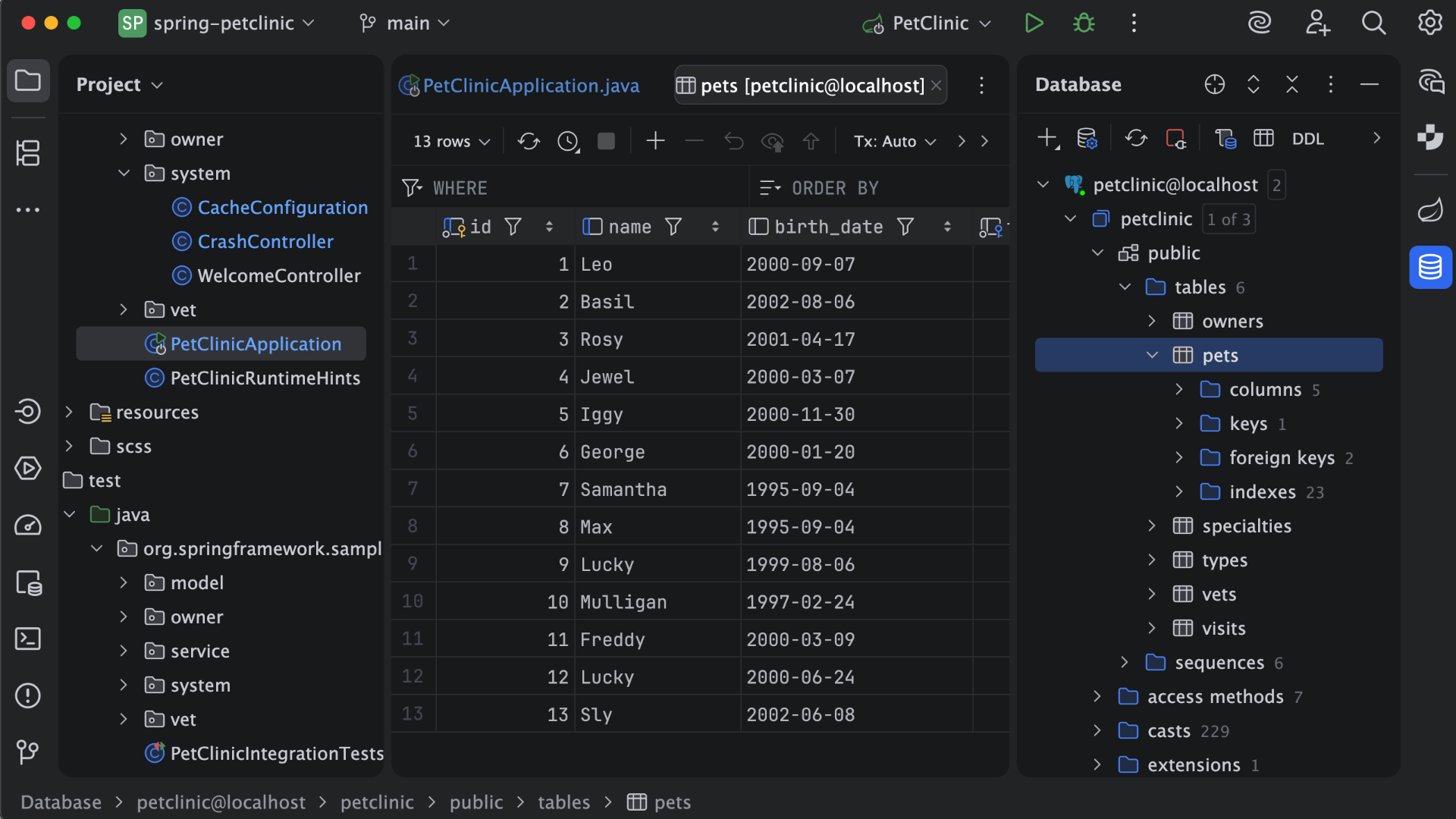
Database browsing, Remote host browsing, and all the deep seated customizations for both the UI and Technical feasability are the result of an amazing integrity and compatibility with most components and technologies.
The built-in shell is insanely helpful for traversing code in order to debug scripts with ease, and the plug-in system makes this software quite extensible.
Not to mention the variety of options and settings (divided into global settings and per-project settings) are both intuitive & easy to use, especially the fact that I can export and import them across my workstations while maintaining my spacing & indentation, highlighting, inspection patterns and syntax styling.
I used R Studio for building Machine Learning models, Many times when I tried to run the entire code together the software would crash. It would lead to loss of data and changes I made.
Some of the newest github copilot features lag behind what's being done in vs code and would be nice if more of the newer features were brought over though this has greatly improved recently
Interface can be a little overwhelming for newcomers
Some features like rainbow brackets should be native rather than addon
It's really good at data processing, but needs to grow more in publishing in a way that a non-programmer can interact with. It also introduces confusion for programmers that are familiar with normal Python processes which are slightly different in Anaconda such as virtualenvs.
VS Code is maturing and has a Scala plugin now. The overall experience with VS Code - for web development at least - is very snappy/fast. IntelliJ feels a bit sluggish in comparison. If that Scala plugin for VS Code is deemed mature enough - we may not bother renewing and resort to the Community Edition if we need it.
I am giving this rating because I have been using this tool since 2017, and I was in college at that time. Initially, I hesitated to use it as I was not very aware of the workings of Python and how difficult it is to manage its dependency from project to project. Anaconda really helped me with that. The first machine-learning model that I deployed on the Live server was with Anaconda only. It was so managed that I only installed libraries from the requirement.txt file, and it started working. There was no need to manually install cuda or tensor flow as it was a very difficult job at that time. Graphical data modeling also provides tools for it, and they can be easily saved to the system and used anywhere.
There is always room for improvement, but I haven't met any IDE that I liked more so far. Even if it did not fit a use case right out of the box, there is always a way to configure how it works to do just that.
PhpStorm is very easy to use, once you get the hang of it. It can take a while to get the hang of it because there's so many options, some of which are buried in the imposing settings panel. It could use some help with multi-cursor, especially multi-file editing but that's a minor gripe.
Anaconda provides fast support, and a large number of users moderate its online community. This enables any questions you may have to be answered in a timely fashion, regardless of the topic. The fact that it is based in a Python environment only adds to the size of the online community.
Customer support is really good in the case of IntelliJ. If you are paying for this product then, the company makes sure that you will get all the services adequately. Regular update patches are provided to improve the IDE. An online bug report makes it easier for the developers to find the solution as fast as possible. The large online community also helps to find the various solutions to the issues.
The JetBrains community is all about helping others succeed, even in the most obscure setups. I have never had a question go unanswered, or I have never been able to come up with empty results in searching for the answer. My questions or concerns are typically address from other users in the community, so timing is pretty quick for a response
This installs just like any other application - its pretty straight forward. Perhaps licensing could be more challenging - but if you use the cloud licensing they offer its as simple as having engineers login to the application and it just works.
I have experience using RStudio oustide of Anaconda. RStudio can be installed via anaconda, but I like to use RStudio separate from Anaconda when I am worin in R. I tend to use Anaconda for python and RStudio for working in R. Although installing libraries and packages can sometimes be tricky with both RStudio and Anaconda, I like installing R packages via RStudio. However, for anything python-related, Anaconda is my go to!
Eclipse is just so old, like a dinosaur, compared to IntelliJ. There are still formats that Eclipse supports better, especially old and/or propriety ones. Still, most of the modern software development needs can be done on IntelliJ, & in a much better way, some of them are not even supported on Eclipse.
Easier to use, more features, more reliable. Much more purpose built with specific integrations aimed directly at php code instead of the broad generic interfaces the other software have that are aiming to support many different languages.
It has helped our organization to work collectively faster by using Anaconda's collaborative capabilities and adding other collaboration tools over.
By having an easy access and immediate use of libraries, developing times has decreased more than 20 %
There's an enormous data scientist shortage. Since Anaconda is very easy to use, we have to be able to convert several professionals into the data scientist. This is especially true for an economist, and this my case. I convert myself to Data Scientist thanks to my econometrics knowledge applied with Anaconda.
PhpStorm decreased the time to market of new features - we are following the Agile SCRUM methodology with 2 weeks sprints. Using PhpStorm helped with releasing UI features even faster than 2 weeks.
Considering the price of the license and the cost of the server where we run it, the ROI is still high due to less time spent by developers with writing code, debugging, refactoring etc. Especially when you have highly paid developers.
Increased people's happiness - by using a modern tool with lots of features which has made their work easier.