CloudStack is a cloud management platform, from Apache.
N/A
AppFog (discontinued)
Score 6.6 out of 10
N/A
AppFog was a cloud-agnostic application and infrastructure management platform used to manage workloads across on-premises and third-party cloud environments. It has been discontinued.
$0
Microsoft Defender for Cloud
Score 8.5 out of 10
N/A
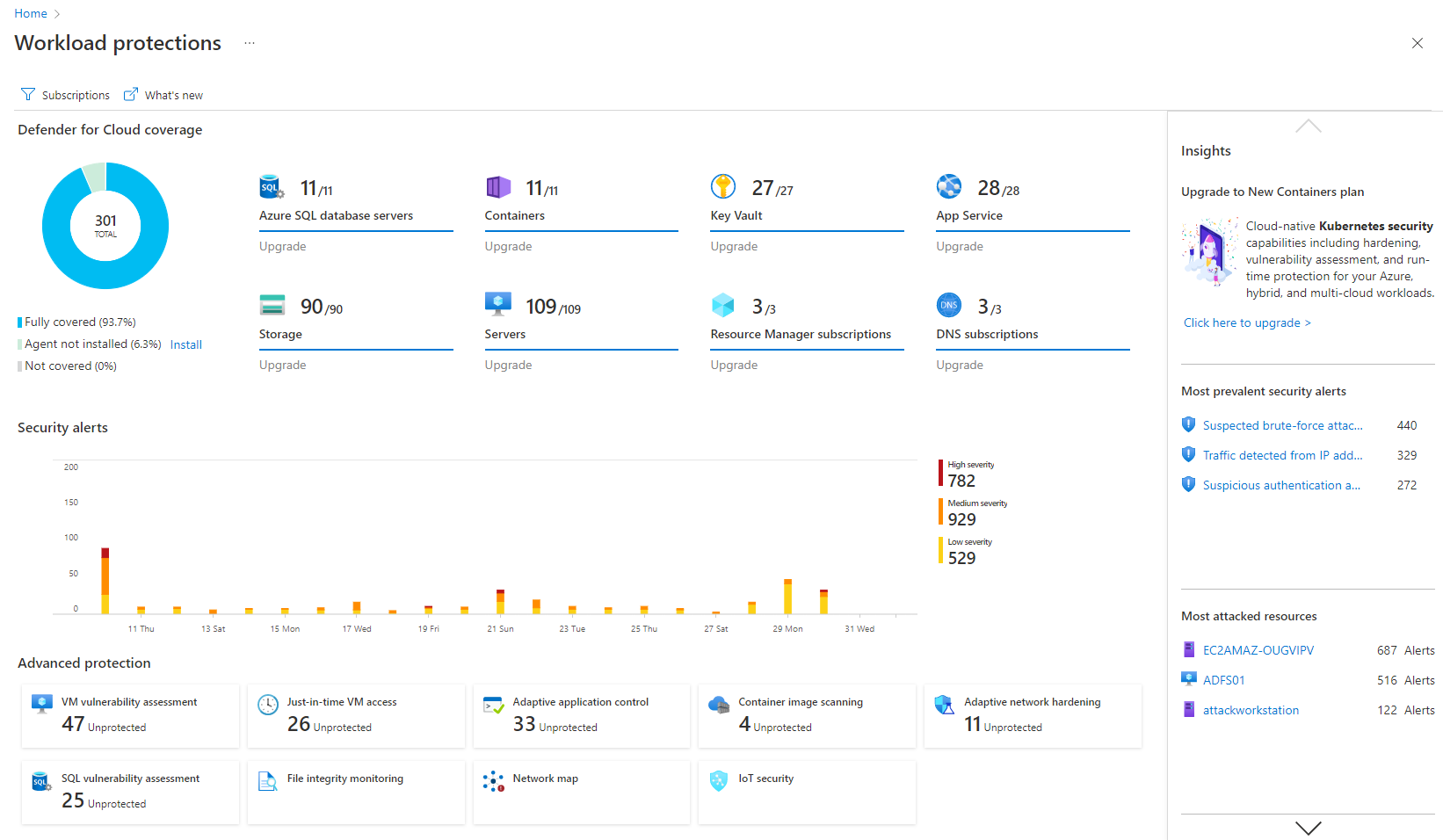
Microsoft Defender for Cloud is a Cloud Security Posture Management (CSPM) and Cloud Workload Protection Platform (CWPP) for Azure, on-premises, and multicloud (Amazon AWS and Google GCP) resources.
Whether our clients are VPS hosting providers or operate private cloud infrastructure for their internal enterprise requirements, CloudStack provides solutions in an easy to implement and operate way that is simple to provide training for. The learning curve for our customesr adopting CloudStack for the management of their cloud infrastructure is shallow, enabling our clients to come up to speed quickly without having to outsource their administrative functions any longer than necessary
It was very good to use in small scale projects. Considering the high end projects with many instances and multi-platform architectures, it is better to test before the application is deployed. I think few of the questions can be general - who are the system users and what size is the application focussing on? How much resources are required? Will the application require any additional services?
Microsoft is well-suited with its definitive cloud, and I also like its Microsoft Intune ID. The conditional policies are great with that, and they're really good and well situated, so you can't beat them at that conditional policy level. Less appropriate, as I said, some of these low-hanging fruit features, like being good in phishing campaigns, and then I feel like maybe doing better at their seam products. So we'll see how that goes.
Granular permissions and role-based access management could improve security. This would enable organizations to control who has access to and can set specific features.
While it offers integration with various Microsoft services, expanding support for third-party cloud platforms and applications would enhance its versatility. Many organizations use multiple cloud providers, and broader compatibility would be advantageous.
The cost structure could be more transparent, especially for larger organizations with extensive cloud resources. Clearer cost breakdowns and predictions would help organizations budget more effectively.
It is a great product that integrates nicely when running an Azure platform and even multi-cloud environment. Not looking for point-solutions but a suite that answers most requirements. It is very comfortable being able to use KQL, workbooks and automation that is native to the azure platform
My visibility is limited because I'm only doing very small pieces of what the overall org does. And also, we have limitations on what we're allowed to use. It's not like we get a new product as users or leadership level users, and everything is on, and we can just do whatever we want. We're very restricted in what we can use any tooling within the org because of the different levels of regulatory constraints we have, because of just the nature of who we are inherently. So that's why. I don't think it's necessarily the product. I think it's more or less of what we're able to do with the product.
The University, my first large implementation, had a big issue with 149 small data centers spread on São Paulo State, this data centers costs to university were very high, the consolidation idea in two data centers were awesome, but were worried with the management, so we adopted ACS to management of all 576 physical hosts. Now a days the university is delivering IaaS for all staff, students, teachers and researchers, they are using these resources to delivery services to their clients and have a great results in research area
Primarily because it used to have a good free tier earlier, which it does not anymore. It's simple, and things are available to use. Compared to it's competitors, it does has less features, but that kind of acts in its favor. That adds to the simplicity, and ease of use for a new user.
Microsoft Defender for Cloud is definitely the choice with the latest market trend and attacks that are currently happening. Microsoft has been able to safe guard a lot after the recent serious attacks happening globally in the digital world. There is a trust in this software and with the latest updates and machine learning capabilities, Microsoft Defender for Cloud should be the choice.
It simplifies security management and saves time. I'm not sure, but I'm very confident it saved me a couple of paychecks by centralizing the data I need to secure the cloud environment.
I also utilize the inventory overview to monitor my team's activities and verify they are following internal regulations, as well as cost overruns.
The recommendations can be utilized as a valuable instructional tool. I have the team explain why they are receiving them, why they are not following them, and what they are doing differently.