JMeter, from Apache, is a load and performance testing tool.
$0
BlazeMeter
Score 8.0 out of 10
N/A
The BlazeMeter Continuous Testing Platform is a unified, end-to-end, next-generation software test automation platform built for both Agile and COE teams, from Perforce. BlazeMeter includes complete continuous testing capabilities deeply integrated into a single, intuitive workflow.
$199
per month
Microsoft Defender for Cloud
Score 8.5 out of 10
N/A
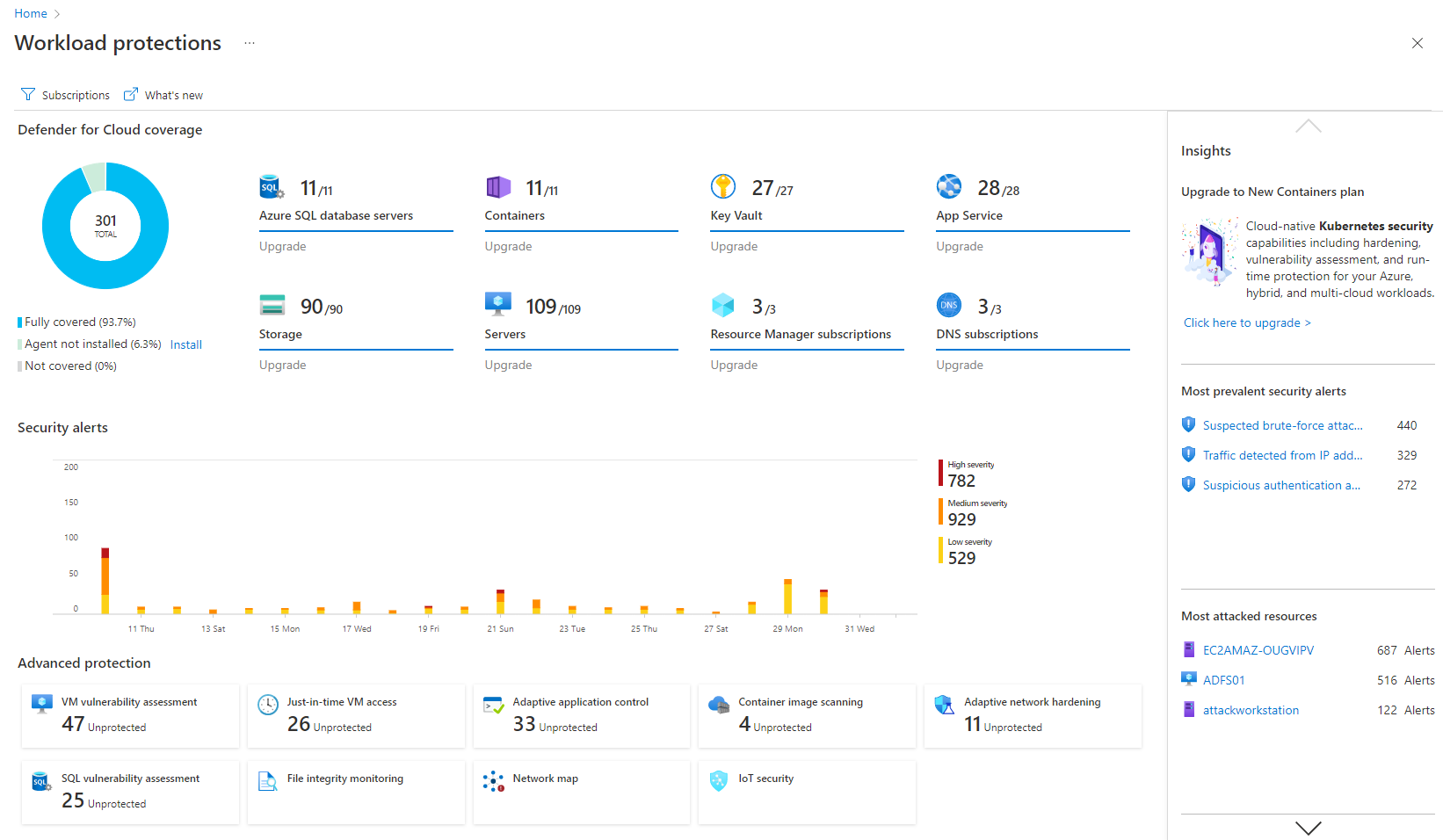
Microsoft Defender for Cloud is a Cloud Security Posture Management (CSPM) and Cloud Workload Protection Platform (CWPP) for Azure, on-premises, and multicloud (Amazon AWS and Google GCP) resources.
We found BlazeMeter's service to fit great with our JMeter scripts, since they execute our JMeter scripts and provide excellent reporting tools and graphs, besides multi region and infrastructure to support different configurations of multiple concurrent users. I have used HP …
BlazeMeter is a cloud offering and can be useful if you don't have dedicated system resources for doing load testing. It also avoids cases where the testing system becomes the bottleneck.
More threads supported, open-source, more reliable, and easy to work with. The User interface is very elegant and simple to use, as compared to other competitors.
It's very easy GUI helps the tester to perform various testing scenarios. Easy to configure test cases and modules which has proper and well-maintained documentation. Its an excellent tool for performance testing and running a variety of load tests, stress tests, and longevity …
It has very powerful capabilities and for free!!! It's ease of use and installation and easy to get started are highlights. A lot of community support and youtube videos from JMeter developers to help you understand various functionalities within JMeter to support you. You can …
LoadRunner and Silk Test were the tools I used in the past to compare with JMeter. I thought LoadRunner had a more commercial appearance and it comes with HP support from your service provider. It also comes at a steep price. JMeter and LoadRunner have a similar learning curve …
NeoLoad is far ahead of JMeter in terms of reporting and user interface, the turn around time is less compared to JMeter as there are enough experts in market.
Besides JMeter, we've looked at WebLOAD and Gatling. Our organization used to use WebLOAD and we switched to JMeter at our division for its ease of use and configurability compared to WebLOAD. However, we will eventually switch to Gatling because Gatling provides greater …
BlazeMeter
Verified User
Analyst
Chose BlazeMeter
In comparison with Blazemeter the closes competitor is JMeter but it has disadvantages like it is not a tool that can be use as a collaborative tool and works locally in a computer, Blazemeter is in the web so different people can access and run tests or collaborate do add, …
BlazeMeter scores well against Apache JMeter in one Key point , the load generation from different cloud based systems. This helps to measure the capacity of the the application in a transparent way and not bogged down by the capacity of the system from where the test is …
Personally, I prefer using JMeter + Redline13, however we had some business folks that wanted to be able to run a few of their own tests. The non-technical individuals preferred to use Blazemeter because of its simple and intuitive UI.
JMeter is well suited for Java applications where the user can script the scenario once and make changes to accommodate for as many numbers of users for load test execution. The image and selection of any files or exporting files scenario is handled well.
It is less appropriate to test Ajax applications where it is required to script click per use.
It is well suited for applications that are mission-critical or applications that can receive high traffic/transactions at unscheduled time periods. Using the load testing feature of BlazeMeter, we can test and ascertain the capacity of the application without the drawbacks of the usual Apache JMeter load testing which depends heavily on the host system from where the load testing is performed.
Microsoft is well-suited with its definitive cloud, and I also like its Microsoft Intune ID. The conditional policies are great with that, and they're really good and well situated, so you can't beat them at that conditional policy level. Less appropriate, as I said, some of these low-hanging fruit features, like being good in phishing campaigns, and then I feel like maybe doing better at their seam products. So we'll see how that goes.
Easy of use - in generate load like HTTP requests, and processing/analyzing the responses. No coding is necessary at the basic level, just need to understand load testing and the infrastructure being tested.
Automatic management of things like cookies to help with session state support - so you don't specifically have to worry about it or handle it
Lots of testing/configuration options to suit your needs in making the right load generation (sampling requests), and analyzing the results, including any pre and post processing of the results first. Things like the Beanshell/BSF pre/post processors, response assertion, regular expression extractor, XPath extractor, CSV data set config
There is a JMeter cloud service called BlazeMeter that I think would be useful for those that need to scale up high load without provisioning their own systems. I've not personally tried it though, but I recently attended a meetup presentation that highlighted nice useful features that BlazeMeter provides. One should evaluate the service if they are considering JMeter and need to expand beyond existing hardware resources.
Jmeter requires many tweaks with respect to its configuration file and thread properties. users need to edit theses files themselves. There could be some interface where we can edit this fields.
Jmeter cannot handle more threads and hangs up when we increase the number of threads. This causes lot of inconvenience. In these situations, user can be notified that such change would be lead to slow performance so that user can do as required. The same appears when we try to view huge files on graph listener.
Jmeter should optimize the read and write access to output csv since it acts as overhead to the I/O performance. This affects our test results for the application which we are testing.
Blazemeter reporting is very basic and shallow. There is no way to drill down or correlate. I can get better reports by using JMeter for free.
Blazemeter is very costly. Testing with volumes of more than 1K cu is expensive, and can be done for much cheaper if a company/team is willing to invest a bit of time to figure out how to use cloud instances and jmeter slaves, and to write a basic script to collect resulting xml output.
Granular permissions and role-based access management could improve security. This would enable organizations to control who has access to and can set specific features.
While it offers integration with various Microsoft services, expanding support for third-party cloud platforms and applications would enhance its versatility. Many organizations use multiple cloud providers, and broader compatibility would be advantageous.
The cost structure could be more transparent, especially for larger organizations with extensive cloud resources. Clearer cost breakdowns and predictions would help organizations budget more effectively.
Price, Wiki and user sharing. Having access to the information provided by the developers and other open source providers is key for me. The ability to share information and get answers directly is very important to success in software testing. And the price of this product currently is amazing. Too many companies charge way too much money for products that are far behind in their value and pertinence
It is a great product that integrates nicely when running an Azure platform and even multi-cloud environment. Not looking for point-solutions but a suite that answers most requirements. It is very comfortable being able to use KQL, workbooks and automation that is native to the azure platform
The purpose related to performance and load testing through Apache JMeter works fine but the usability of the tool should be improved quite a lot. If someone starts with the Jmeter fresh without prior experience, they need to put more efforts in understanding the tool. The UI is not that great which is the main reason not to give high rating on usability.
My visibility is limited because I'm only doing very small pieces of what the overall org does. And also, we have limitations on what we're allowed to use. It's not like we get a new product as users or leadership level users, and everything is on, and we can just do whatever we want. We're very restricted in what we can use any tooling within the org because of the different levels of regulatory constraints we have, because of just the nature of who we are inherently. So that's why. I don't think it's necessarily the product. I think it's more or less of what we're able to do with the product.
I have been using JMeter for the last year. By using this tool, you can make sure the system will work under varied loads. It helps us to simulate real time scenarios by creating required virtual users and make sure the application will work under load. Perform load, stress, and stability testing using JMeter.
I have used LoadRunner and Silkperformer, and so far Jmeter turns out be the easiest to use of all these. While each of them have their own ROI, Jmeter can be picked by anyone in hours and start testing within a day. While with other tools, we need to get license, install them (takes a while) and setup tests and firewalls, etc.
In comparison with Blazemeter the closes competitor is JMeter but it has disadvantages like it is not a tool that can be use as a collaborative tool and works locally in a computer, Blazemeter is in the web so different people can access and run tests or collaborate do add, edit or delete the existent scripts.
Microsoft Defender for Cloud is definitely the choice with the latest market trend and attacks that are currently happening. Microsoft has been able to safe guard a lot after the recent serious attacks happening globally in the digital world. There is a trust in this software and with the latest updates and machine learning capabilities, Microsoft Defender for Cloud should be the choice.
It simplifies security management and saves time. I'm not sure, but I'm very confident it saved me a couple of paychecks by centralizing the data I need to secure the cloud environment.
I also utilize the inventory overview to monitor my team's activities and verify they are following internal regulations, as well as cost overruns.
The recommendations can be utilized as a valuable instructional tool. I have the team explain why they are receiving them, why they are not following them, and what they are doing differently.