Apica is an observability cost optimization provider helping IT teams gain complete control over their telemetry data economics. Apica Ascent processes all observability data types including metrics, logs, traces, and events while optimizing observability costs.
N/A
SolarWinds AppOptics
Score7.6 out of 10
N/A
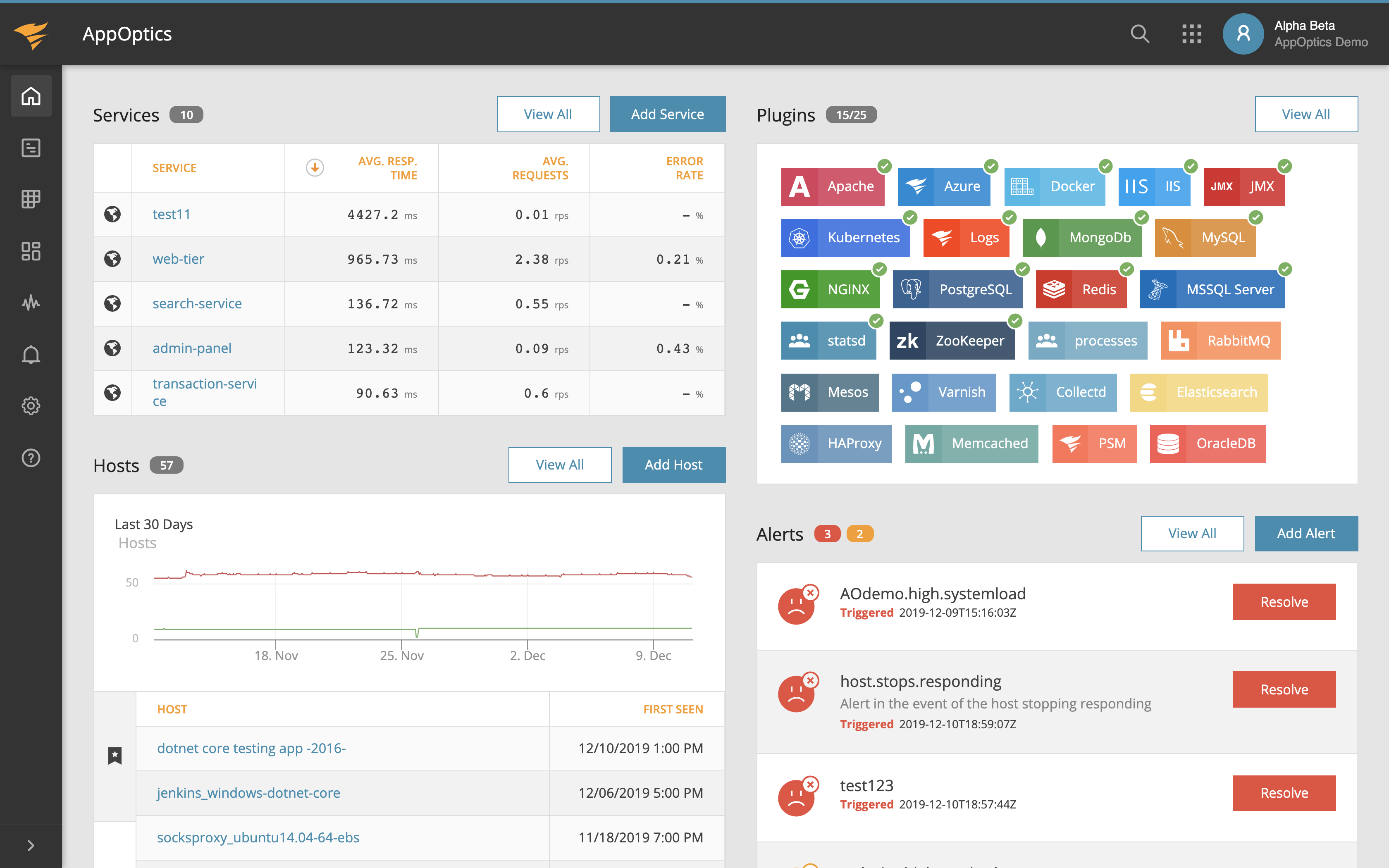
SolarWinds AppOptics (formerly Librato) is an IT infrastructure monitoring service and APM, based on technology acquired by SolarWinds with Librato in 2015 to expand its cloud monitoring portfolio.
As I use this for only my area, it is very well suited to what I need it to do. Apica Synthetic monitors two different web applications in a time interval that is easily customizable for uptime and latency. These are critical indicators for a cloud-based point-of-sale system. We need solid uptime and limited latency across the enterprise.
A de minimis incentive was given to thank the reviewer for their time. The incentive was not used to bias or drive a particular response, nor was the incentive contingent on a positive endorsement. TR verified that a representative sample of customers was invited. More Info
AppOptics is good for small to medium-sized organizations with less than 150 servers or less than 40 services to monitor. It performs well for this use case where people need to get an overview of application performance, and 95%ile data is okay. Somewhere every data point and every record is critical; it should be avoided.
A de minimis incentive was given to thank the reviewer for their time. The incentive was not used to bias or drive a particular response, nor was the incentive contingent on a positive endorsement. More Info
A de minimis incentive was given to thank the reviewer for their time. The incentive was not used to bias or drive a particular response, nor was the incentive contingent on a positive endorsement. More Info
A de minimis incentive was given to thank the reviewer for their time. The incentive was not used to bias or drive a particular response, nor was the incentive contingent on a positive endorsement. More Info
It's very clunky. Infrastructure is large and very difficult to upgrade.
SaaS and On-premise versions are different. There is an LDAP integration but users can only be assigned to one group (i.e. department). If you are in 2 departments, you need 2 separate logins.
Update: they now offer federated logins
It filled a gap in monitoring for us, but we're looking to move on.
A de minimis incentive was given to thank the reviewer for their time. The incentive was not used to bias or drive a particular response, nor was the incentive contingent on a positive endorsement. More Info
The only thing that I would add is the possibility to display every single query our servers receive to eventually analyze them and query through them. We could also generate nice visualizations from that. Right now I believe we can only see averages.
A de minimis incentive was given to thank the reviewer for their time. The incentive was not used to bias or drive a particular response, nor was the incentive contingent on a positive endorsement. More Info
We trust the results that Apica Synthetic has achieved. Real-time alerting is critical to our clients and with limited resources, we can't handle many false positives; Apica Synthetic is the only solution that provides both of those features.
A de minimis incentive was given to thank the reviewer for their time. The incentive was not used to bias or drive a particular response, nor was the incentive contingent on a positive endorsement. More Info
A de minimis incentive was given to thank the reviewer for their time. The incentive was not used to bias or drive a particular response, nor was the incentive contingent on a positive endorsement. More Info
As far a usability is concerned for AppOptics, it is just as matter of few minutes away even if you start from scratch, as all you need to do is register on the site and you will get the URL and password. And after this all you have to do is follow the instruction, as per the configuration wizard (tool tip) within the console for various technology such as SQL, IIS, .NET
A de minimis incentive was given to thank the reviewer for their time. The incentive was not used to bias or drive a particular response, nor was the incentive contingent on a positive endorsement. TR verified that a representative sample of customers was invited. More Info
Solarwinds AppOptics is rated as 9 out of 10 and the reason is there are still few areas where AppOptics needs to improve such as Service Now Integration, GCP Cloud Support, Better Dashboard visualization for application transactions flow. Other than these feature everything is there in AppOptics and that's a reason given 9 points out of 10.
A de minimis incentive was given to thank the reviewer for their time. The incentive was not used to bias or drive a particular response, nor was the incentive contingent on a positive endorsement. TR verified that a representative sample of customers was invited. More Info
We were using different monitoring tools for different requirements (e.g.,Nagios and Checkmk for infrastructure issues) and we were in need of a tool for service and API monitoring for which we were using ThousandEye. But alerts were 60-70% valid irrespective of conditions like network issues. But Apica Synthetic's alert mechanism is a perfect fit for our department. It helped us to reduce unnecessary/false alerts and a number of wrong tickets.
A de minimis incentive was given to thank the reviewer for their time. The incentive was not used to bias or drive a particular response, nor was the incentive contingent on a positive endorsement. More Info
What we found positive in AppOptics from others is:
Easy to install and manage.
Various stack support.
Point to point deep-dive metrics and correlation.
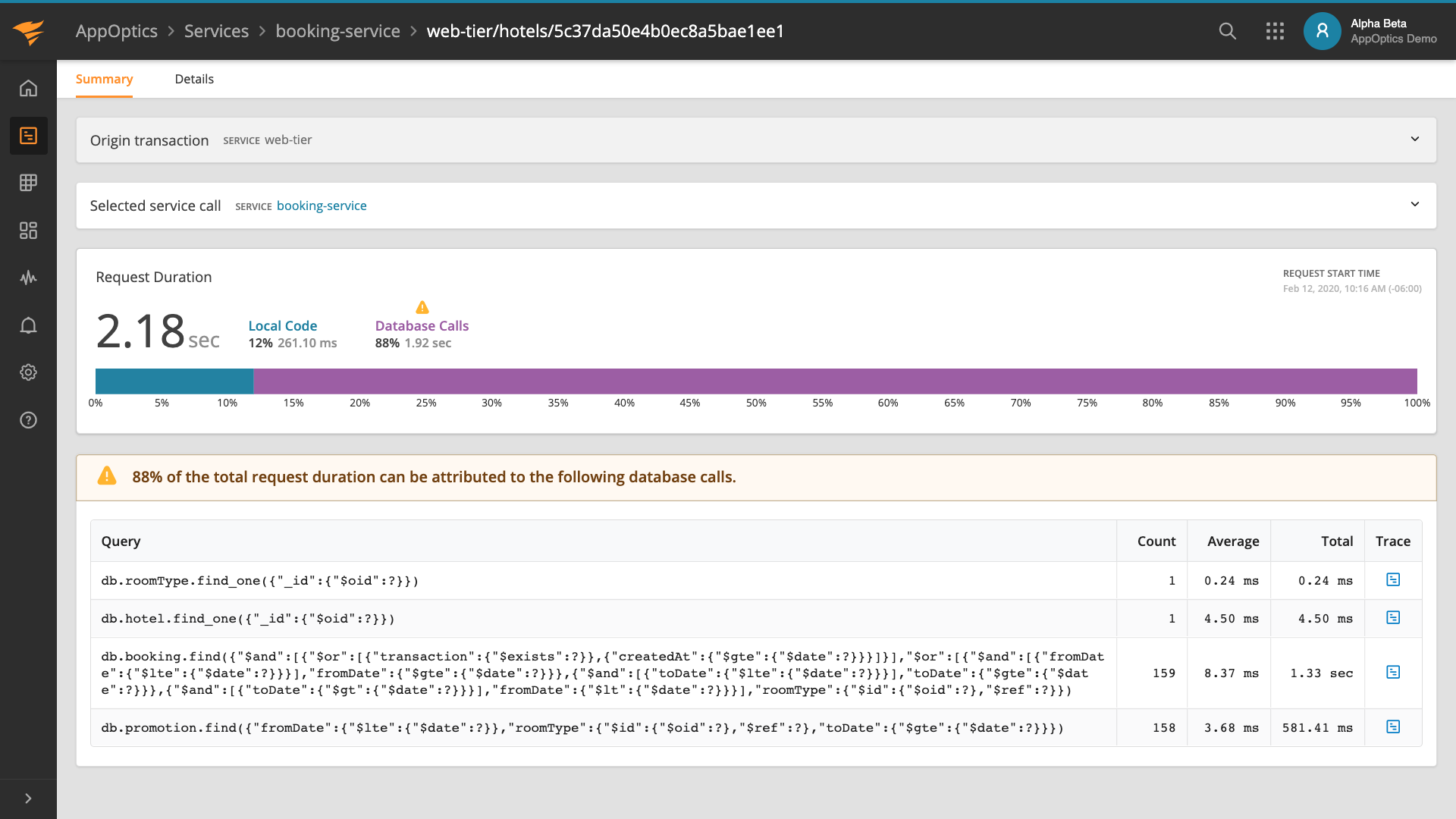
Metrics like DB connection, query analysis, latency in API calls, and other connections, response codes for various APIs, etc are the key ones in our case, which AppOptics provides efficiently.
A de minimis incentive was given to thank the reviewer for their time. The incentive was not used to bias or drive a particular response, nor was the incentive contingent on a positive endorsement. More Info
My department is not charged for Apica Synthetic so no ROI, but from a customer service perspective, we can react to an outage and repair it faster than our customers can report the outage.
Our vendor's own monitoring tools are not as accurate nor as timely as ours. They rely on us telling them, from Apica Synthetic, that they have an issue.
A de minimis incentive was given to thank the reviewer for their time. The incentive was not used to bias or drive a particular response, nor was the incentive contingent on a positive endorsement. TR verified that a representative sample of customers was invited. More Info
A de minimis incentive was given to thank the reviewer for their time. The incentive was not used to bias or drive a particular response, nor was the incentive contingent on a positive endorsement. More Info