AutoCAD is a CAD product from Autodesk. It allows designers to work in 2D and 3D, and is available on Windows and Mac, but with extensive online collaboration tools.
$245
per month
On-Screen Takeoff®
Score7.3 out of 10
N/A
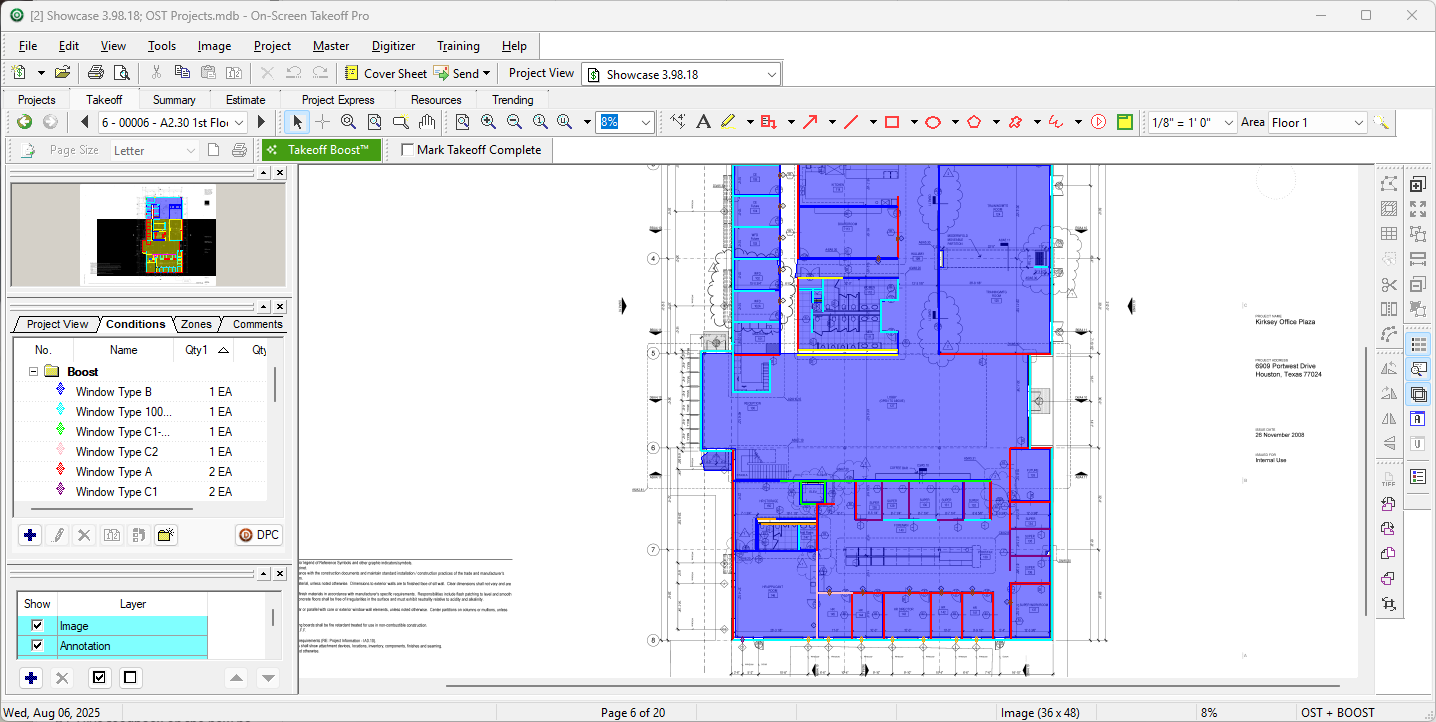
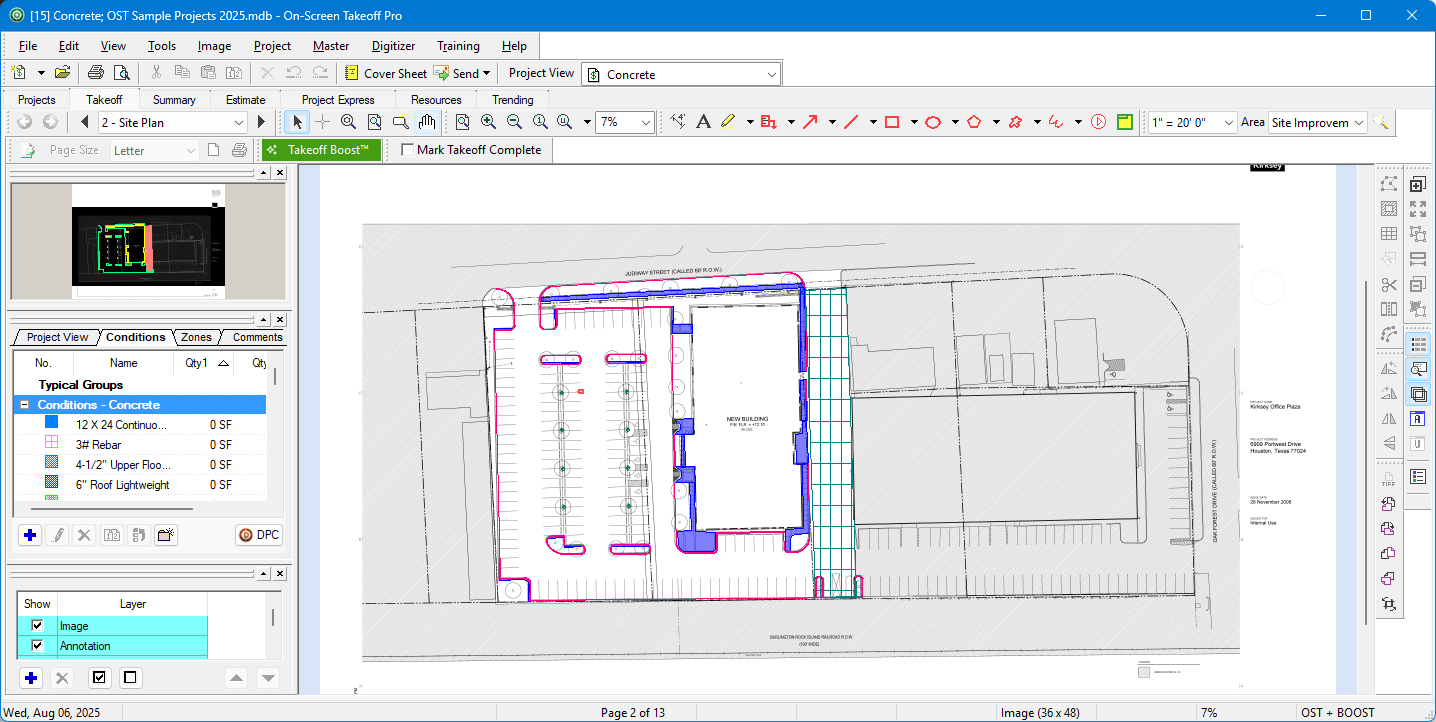
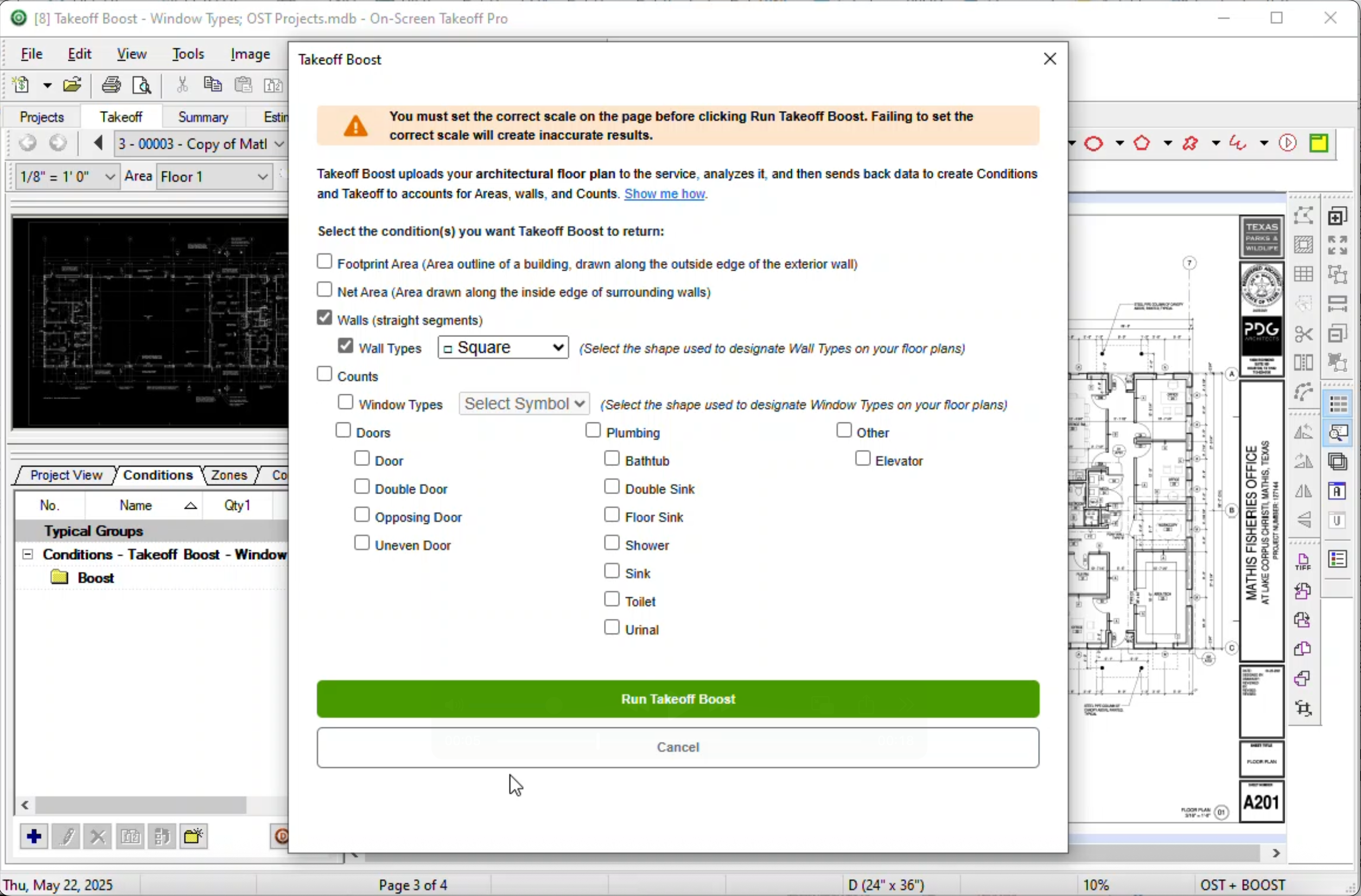
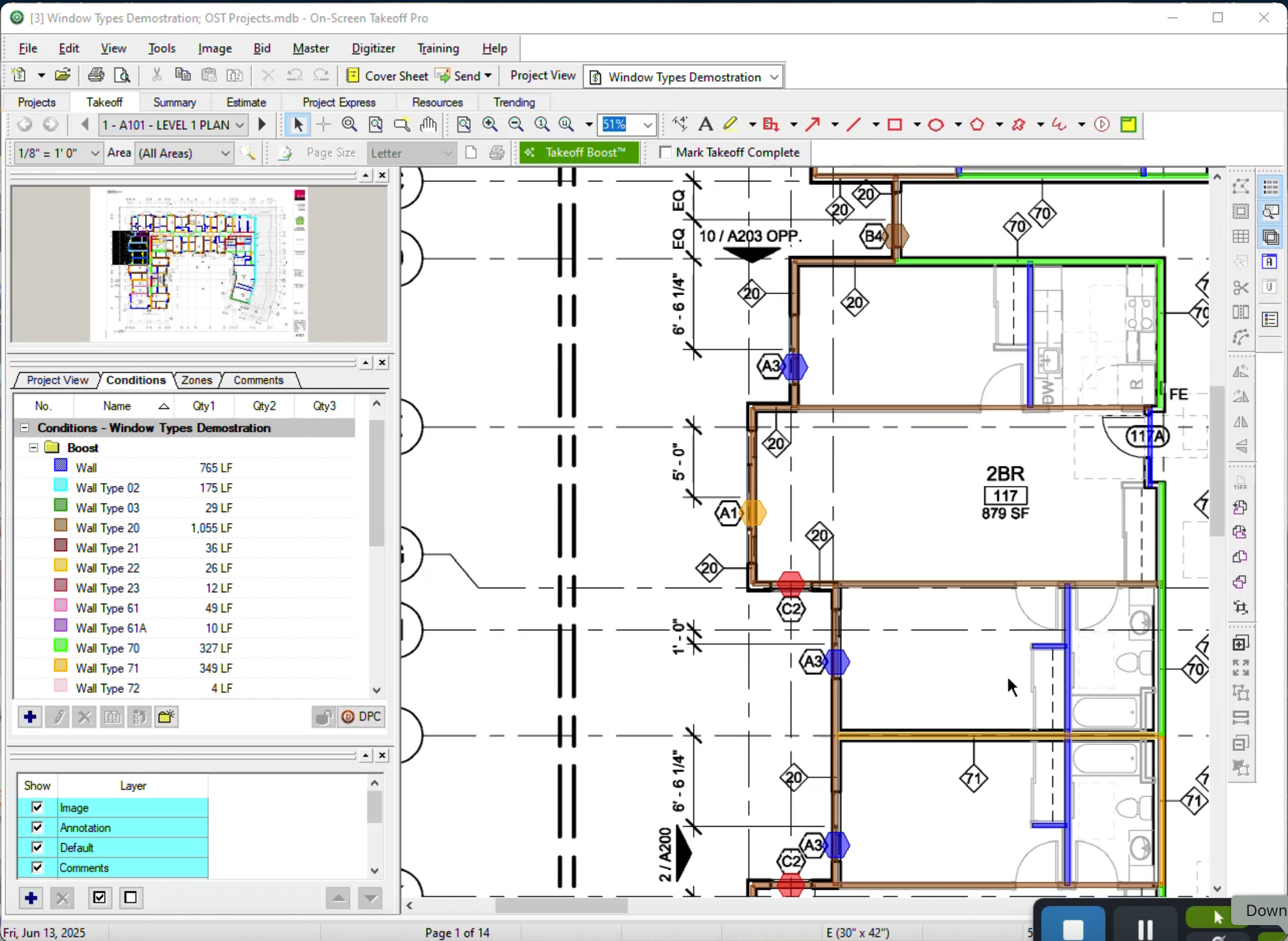
On-Screen Takeoff is a construction takeoff and estimating solution. It is intended to streamline takeoff, RFI, and bidding processes.
N/A
Pricing
AutoCAD
On-Screen Takeoff®
Editions & Modules
Monthly Subscription
$245
per month per user
Yearly Subscription
$1975
per year per user
3-Year Subscription
$5925
3 years per user
No answers on this topic
Offerings
Pricing Offerings
AutoCAD
On-Screen Takeoff®
Free Trial
Yes
Yes
Free/Freemium Version
No
No
Premium Consulting/Integration Services
No
No
Entry-level Setup Fee
No setup fee
No setup fee
Additional Details
—
On-Screen Takeoff® pricing varies based on licensing options and specific business needs. The annual subscription plans are designed to scale with project and team size.
Available Subscription Options:
•On-Screen Takeoff
•On-Screen Takeoff with Takeoff Boost™
•On-Screen Takeoff and Quick Bid®
•On-Screen Takeoff with Takeoff Boost and Quick Bid
Each subscription is customized to match the subscriber's workflow requirements. A 14-day free trial is available.
Project Engineer at Okland Construction (Construction, 501-1000 employees)
Chose On-Screen Takeoff®
I think that the simplicity and set up of On-Screen Takeoff makes this an overall better software than Bluebeam or Navisworks. Both of which can be used to create good takeoffs but they are limited in ways that on screen is not so it is a much more versatile take off tool. I …
A de minimis incentive was given to thank the reviewer for their time. The incentive was not used to bias or drive a particular response, nor was the incentive contingent on a positive endorsement. More Info
Once again, for jobs/companies where you are doing a lot of design and modelling of tanks, pipework or filling machine or basic electronics its fantastic as a 3D and 2D modelling tool, however once again when it comes to testing these actual products in the real world, I feel like AutoCAD is let down by its clunky fitting and spec management and also in very limited in-house engineering simulations.
I think most of the reasoning was just provided on the previous pros and cons questions. On-Screen Takeoff (OST) is well suited for doing either quick takeoffs or getting into an elaborate, detailed takeoff. All though the viewing tools are quick and easy, I would still very much prefer using BlueBeam for looking through an overall set of drawings. With all of the hyperlink and bookmark functions of BlueBeam, OST doesn't compare and I rarely use OST unless I'm actually doing a takeoff.
A de minimis incentive was given to thank the reviewer for their time. The incentive was not used to bias or drive a particular response, nor was the incentive contingent on a positive endorsement. More Info
A de minimis incentive was given to thank the reviewer for their time. The incentive was not used to bias or drive a particular response, nor was the incentive contingent on a positive endorsement. More Info
The biggest thing for me is that it is so easy to use, which allows it to be used widely throughout our organization without a lot of intense training.
Another great thing is that it does not matter how big or little the scope of the take off may be, it works just as well for a whole 12 story building take off as it does for a stretch of sidewalk.
A de minimis incentive was given to thank the reviewer for their time. The incentive was not used to bias or drive a particular response, nor was the incentive contingent on a positive endorsement. More Info
User Interface Customisation: AutoCAD's user interface could benefit from more robust customisation options. Allowing users to rearrange toolbars, menus, and panels according to their specific workflows and preferences would enhance productivity.
Enhanced 3D Modeling Tools: While AutoCAD is capable of 3D modeling, it's not as intuitive or feature-rich as dedicated 3D modeling software. Streamlining the process and adding more advanced modeling tools would be a welcome improvement.
Enhanced Collaboration and Version Control: AutoCAD could improve its collaboration tools, such as real-time editing and version tracking, to facilitate smoother teamwork, especially in multi-disciplinary projects.
Intelligent Object Libraries: AutoCAD could benefit from an expanded and more intelligent library of standard objects and components. This would save time for designers who often have to create custom components from scratch.
A de minimis incentive was given to thank the reviewer for their time. The incentive was not used to bias or drive a particular response, nor was the incentive contingent on a positive endorsement. More Info
Because rarely we [would] rather wait for a whole year to update, sometimes the new updates don't bring many new features and we are still ok with the current version. Also the change of interface is always something that takes time for every partner in the company to get comfortable with. So those are the main reasons we may want to keep the same version.
A de minimis incentive was given to thank the reviewer for their time. The incentive was not used to bias or drive a particular response, nor was the incentive contingent on a positive endorsement. More Info
It provides invaluable communication, organization, and flexibility to generate a project overview both visually and by the numbers. In addition to the overview it makes getting into the project details easy and quick, so our takeoff is accurate and correct every time
A de minimis incentive was given to thank the reviewer for their time. The incentive was not used to bias or drive a particular response, nor was the incentive contingent on a positive endorsement. More Info
It is very usable once you understand the program. I believe there is room for improvement in the 2D to 3D modeling capability. We have to use other apps to 3D model and that can be time consuming and sometimes AutoCAD doesn't transfer work that well between apps. They can improve there.
On Screen Takeoff is a valuable tool for what it does. Across the board it can keep track of the critical data and corresponding values without extra legwork. While powerful, it is prone to user error, and the problem can compound quickly if not realized up front. Overall a great project tool, but not without limitations
A de minimis incentive was given to thank the reviewer for their time. The incentive was not used to bias or drive a particular response, nor was the incentive contingent on a positive endorsement. More Info
AutoCAD has the issue of crashing or slowing down the design procedure once a heavy design that includes several disciplines or multiple families/blocks is involved. Customer services gets the feedback from the crash reports but this issue seems like it has never been addressed in the software updates past several years.
A de minimis incentive was given to thank the reviewer for their time. The incentive was not used to bias or drive a particular response, nor was the incentive contingent on a positive endorsement. More Info
I have had very few issues with the software which is probably the first sign that there is a good customer support team, since I am sure they are working and fixing problems for everyone when they get a report from somewhere. The few times I have had to reach out to support they have been knowledgeable and on top of helping me quickly get my issues resolved.
A de minimis incentive was given to thank the reviewer for their time. The incentive was not used to bias or drive a particular response, nor was the incentive contingent on a positive endorsement. More Info
the implementation was realy easy , to set up our workstation we pay for the licenses we are about to use , there was a little bit of delay to get the payment processed to receive the serial but after that the install runs without any problem , so you can fell secure there will be not issue with the implementation.
A de minimis incentive was given to thank the reviewer for their time. The incentive was not used to bias or drive a particular response, nor was the incentive contingent on a positive endorsement. More Info
Implementation was as simple as setting up the program and creating databases. Everything else was already in use and this was a supplement to the final organization of the system
A de minimis incentive was given to thank the reviewer for their time. The incentive was not used to bias or drive a particular response, nor was the incentive contingent on a positive endorsement. More Info
I use Revit far more than I use AutoCAD. AutoCAD is great for simple linework, but even then I will often create the lines in Revit and then export to AutoCAD for final touches and printing. AutoCAD is a bit easier for large-format prints, which is why I almost always end up using it after starting in Revit.
A de minimis incentive was given to thank the reviewer for their time. The incentive was not used to bias or drive a particular response, nor was the incentive contingent on a positive endorsement. More Info
Being able to train individuals in a single afternoon on the program and trusting them to get you something usable as soon as possible is quite invaluable. It is also something that I feel is unique to this program. It is just easier.
A de minimis incentive was given to thank the reviewer for their time. The incentive was not used to bias or drive a particular response, nor was the incentive contingent on a positive endorsement. More Info
A de minimis incentive was given to thank the reviewer for their time. The incentive was not used to bias or drive a particular response, nor was the incentive contingent on a positive endorsement. More Info
The software has more than paid for itself because the company has been able to save lots of money when awarding to subs since it is easy to verify quantities to qualify their bids.
Less of a chance of under-ordering products since the visible audit trail improves accuracy. Also you spend less since you aren't ordering more than you should be.
A de minimis incentive was given to thank the reviewer for their time. The incentive was not used to bias or drive a particular response, nor was the incentive contingent on a positive endorsement. More Info