AutoRABIT is a DevSecOps provider that allows working off the Salesforce platform, protecting users from outages and vulnerabilities experienced by those working directly within Salesforce.
N/A
GitLab
Score 8.7 out of 10
N/A
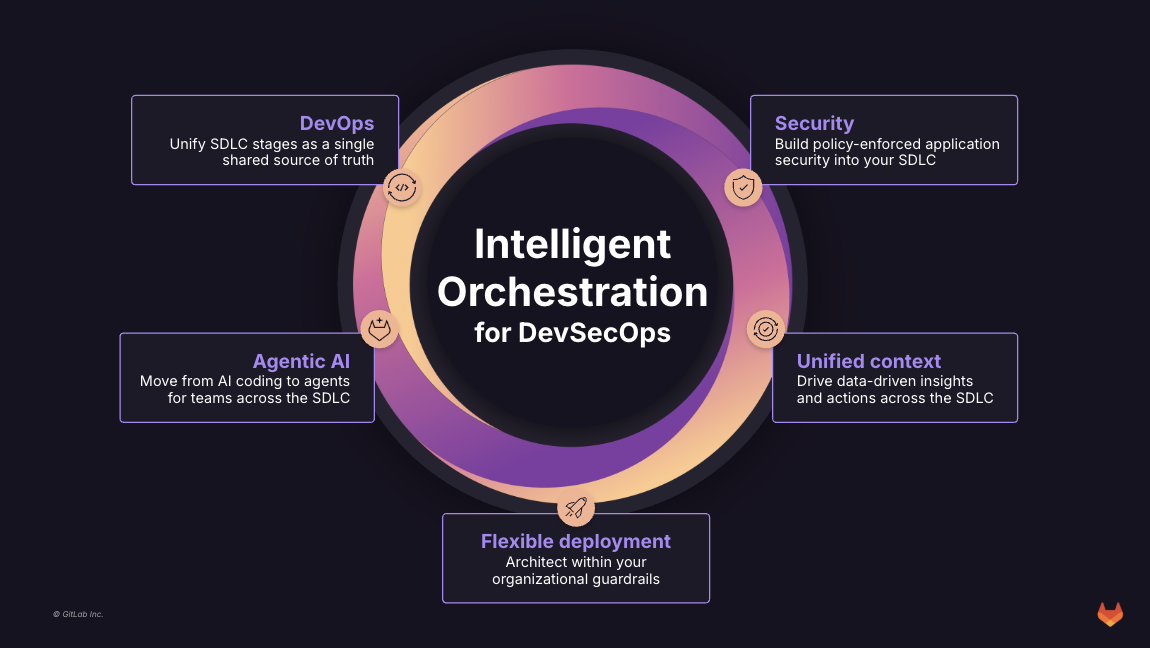
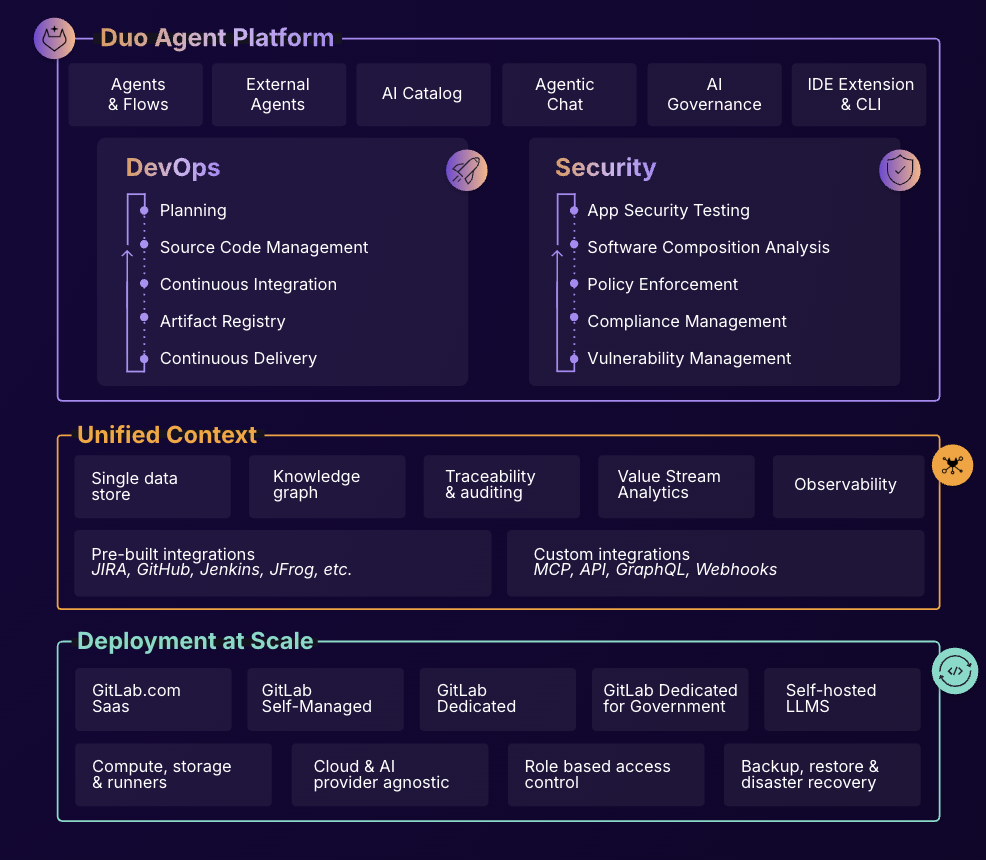
GitLab is an intelligent orchestration platform for DevSecOps, where software teams enable AI at every stage of the software lifecycle to ship faster. The platform enables teams to automate repetitive tasks across planning, building, securing, testing, deploying, and maintaining software.
$0
per month per user
Oracle VirtualBox
Score 8.6 out of 10
N/A
Oracle VirtualBox is an open source, cross-platform, virtualization software, enables developers to deliver code faster by running multiple operating systems on a single device.
$0
per month
Pricing
AutoRABIT
GitLab
Oracle VirtualBox
Editions & Modules
No answers on this topic
GitLab Free (self-managed)
$0
GitLab Free
$0
GitLab Premium
$29
per month per user
GitLab Premium (self-managed)
$29
per month per user
GitLab Ultimate
Contact Sales
GitLab Ultimate (self-managed)
Contact Sales
No answers on this topic
Offerings
Pricing Offerings
AutoRABIT
GitLab
Oracle VirtualBox
Free Trial
No
Yes
No
Free/Freemium Version
No
Yes
Yes
Premium Consulting/Integration Services
Yes
Yes
No
Entry-level Setup Fee
No setup fee
Optional
No setup fee
Additional Details
Contact vendor for pricing information
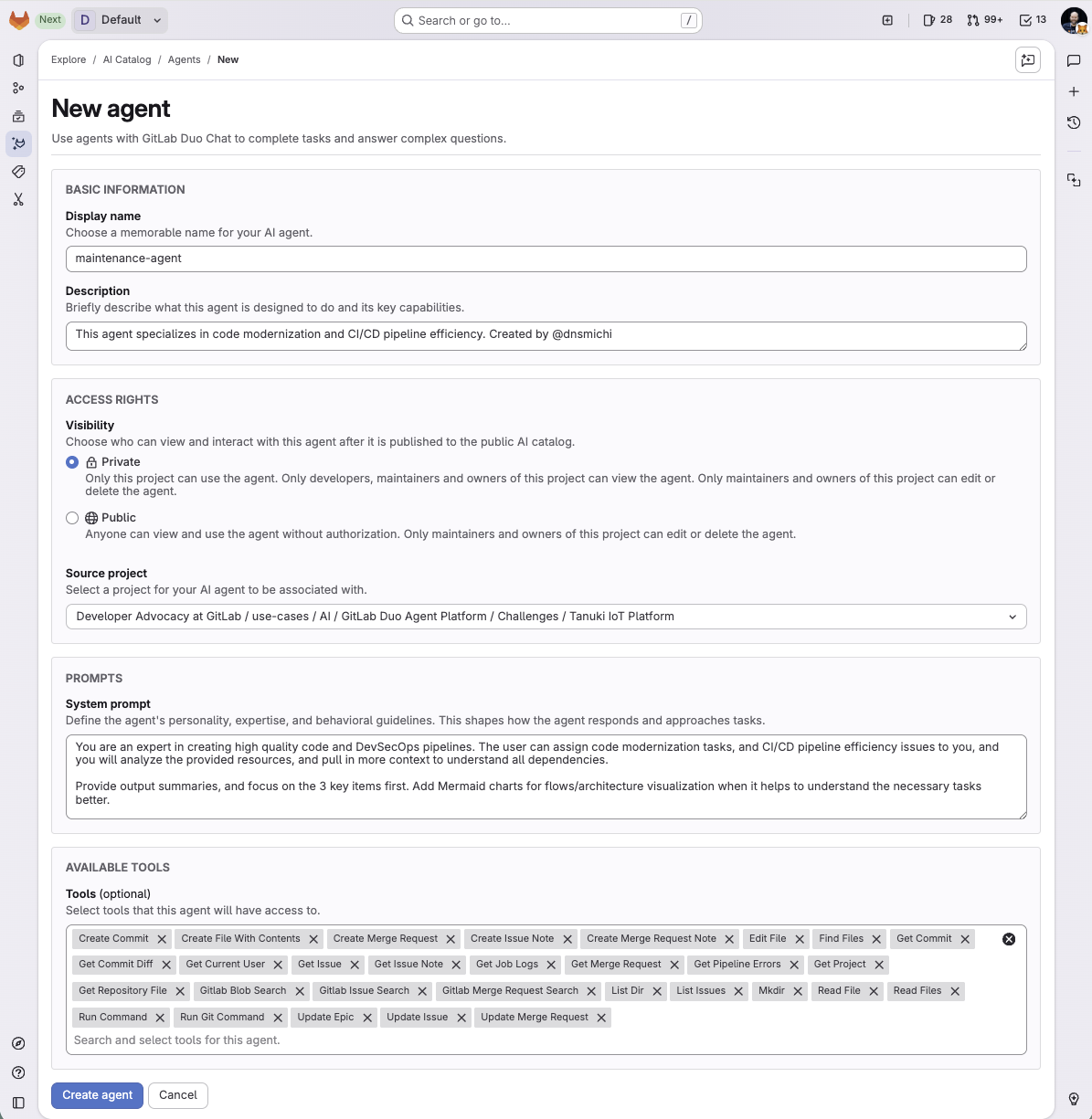
GitLab Credits enable flexible, consumption-based access to agentic AI capabilities in the GitLab platform, allowing you to scale AI adoption at your own pace while maintaining cost predictability. Powered by Duo Agent Platform, GitLab’s agentic AI capabilities help software teams to collaborate at AI speed, without compromising quality and enterprise security.
If usage exceeds monthly allocations and overage terms are accepted, automated on-demand billing activates without service interruption, so your developers never lose access to AI capabilities they need.
Real-time dashboards provide transparency into AI consumption patterns. Software teams can see usage across users, projects, and groups with granular attribution for cost allocation. Automated threshold alerts facilitate proactive planning. Advanced analytics deliver trending, forecasting, and FinOps integration.
As a front-end to revision control workflows, all three products are similar. Bitbucket suffers from the usual problems with Atlassian: it's slow and bloated. GitHub is a viable alternative for these workflows; the choice is entirely dependent on organizational constraints. For …
It always depends on the usecase which product is better suited. But generally, Oracle VM VirtualBox is very easy to set up on every operating system and is intuitive in the usage. Compared to VMware Workstation it offers less features but for a basic setup, I prefer Oracle VM …
AutoRABIT is well suited- 1. Continuous Integration and Continuous Deployment 2.AutoRABIT provides a centralized platform to orchestrate and automate release activities, ensuring consistency and compliance across environments.AutoRABIT is a comprehensive DevOps platform with associated costs. Less appropriate. Organizations with limited budget or resources may find it more cost-effective to use alternative tools or manual processes for Salesforce development and release management.
GitLab is good if you work a lot with code and do complex repository actions. It gives you a very good overview of what were the states of your branches and the files in them at different stages in time. It's also way easier and more efficient to write pipelines for CI\CD. It's easier to read and it's easier to write them. It takes fewer clicks to achieve the same things with GitLab than it does for competitor products.
It is best suited when you want to have different operating systems on your laptop or desktop. You can easily switch between operating systems without the need to uninstall one. In another scenario, if you expect some application to damage your device, it would be best to run the application on the VM such that the damage can only be done to the virtual machine. It is less appropriate when time synchronization is very important. At times the VMs run their own times differently from the host time and this may cause some losses if what you doing is critical. Another important thing to take note of is the licensing of the application you want to run your VM. Some licenses do not allow the applications to be run on virtual servers so it is not appropriate to use the VM at this time.
user interface can be overwhelming and complex for new users
AutoRABIT offers integration with various Salesforce tools and platforms, some users may find the integration options limited or lacking flexibility.
Depending on the size and complexity of Salesforce orgs, some users may experience performance issues with certain AutoRABIT functionalities, such as deployments or data migrations.
I have had issues in the past when it has come to resizing VM disk storage. The issue is entirely detailed here: https://www.virtualbox.org/ticket/9103 -- the problem was caused because of having existing snapshots (which error message output was not detailing). I haven't had to deal with the issue due to my dynamic disk sizes not being small from the start anymore (this is mostly an issue for my Windows VMs where the base disk may need significant size for the OS). It looks like, for a resize, that a merge of all snapshots has to occur first -- one user on that list details a workaround to maintain snapshots by cloning the VM. (Note: 5.2 was just released a few weeks ago, and looks like it should prevent the problem happening in the future by properly informing users that it isn't possible with snapshots).
Certain scenarios, like resizing disks, required dropping into a terminal as there were no options to previously do so via the GUI. According to some recent posts, I've seen that v5.2 has added disk management stuff like that to the GUI (or will be adding it). I'm comfortable with dropping into the terminal, but in a teaching scenario or when evaluating the learnability of the tools, it complicates things.
I really feel the platform has matured quite faster than others, and it is always at the top of its game compared to the different vendors like GitHub, Azure pipelines, CircleCI, Travis, Jenkins. Since it provides, agents, CI/CD, repository hosting, Secrets management, user management, and Single Sign on; among other features
I find it easy to use, I haven't had to do the integration work, so that's why it is a 9/10, cause I can't speak to how easy that part was or the initial set up, but day to day use is great!
I love using the Graphical User Interface. The VirtualBox Manager is very easy to understand and use. You can quickly create, configure and manage all your virtual machines in one window. It makes operating virtual machines easy and simple. When using VBoxManage it gives the user comprehensive control over VirtualBox so that you can use automation and scripting at the command-line interface
I've never had experienced outages from GItlab itself, but regarding the code I have deployed to Gitlab, the history helps a lot to trace the cause of the issue or performing a rollback to go back to a working version
GItlab reponsiveness is amazing, has never left me IDLE. I've never had issues even with complex projects. I have not experienced any issues when integrating it with agents for example or SSO
At this point, I do not have much experience with Gitlab support as I have never had to engage them. They have documentation that is helpful, not quite as extensive as other documentation, but helpful nonetheless. They also seem to be relatively responsive on social media platforms (twitter) and really thrived when GitHub was acquired by Microsoft
Gitlab seems more cutting-edge than GitHub; however, its AI tools are not yet as mature as those of CoPilot. It feels like the next-generation product, so as we selected a tool for our startup, we decided to invest in the disruptor in the space. While there are fewer out-of-the-box templates for Gitlab, we have never discovered a lack of feature parity.
VirutalBox is very similar to using Vmware with the slight difference in appearance and what might be considered a less polished look. However, what it lacks in polish and looks it makes up for in functionality, easy of use and the wide range of operating systems and features it supports without the need of buying the full professional edition
The only problem I have found is that the deployment is dependent and intrinsically linked to the Host OS. This is different from bare metal solutions which remove that dependency on a Host OS. The latter is more reliable and removes a layer of potential failure.
AutoRABIT can significantly streamline Salesforce development and release management processes, reducing manual effort and time spent on repetitive tasks.
By automating testing, code quality checks, and deployment processes, AutoRABIT helps ensure consistency and reliability in Salesforce deployments.
While there is an initial investment associated with implementing and licensing AutoRABIT, the long-term cost savings from reduced manual effort, decreased deployment errors, and improved productivity can result in a positive ROI over time.
Minimal-to-no support needed from the DevOps team.
Provides a direct and an easy way to access multiple VMs inside the same machines which enables performing various testing and QA tasks without the need to switch hardware.
Automatic provisioning using tools (esp. Vagrant) which enables developing a base image once, and allows for exporting/importing anywhere across the developers team.
Very cost-effective (no fees or monthly subscriptions).