AWS CodePipeline is a fully managed continuous delivery service that helps users automate release pipelines. CodePipeline automates the build, test, and deploy phases of the release process every time there is a code change, based on the release model a user defines.
$1
per active pipeline/per month
Pulseway
Score 7.1 out of 10
Mid-Size Companies (51-1,000 employees)
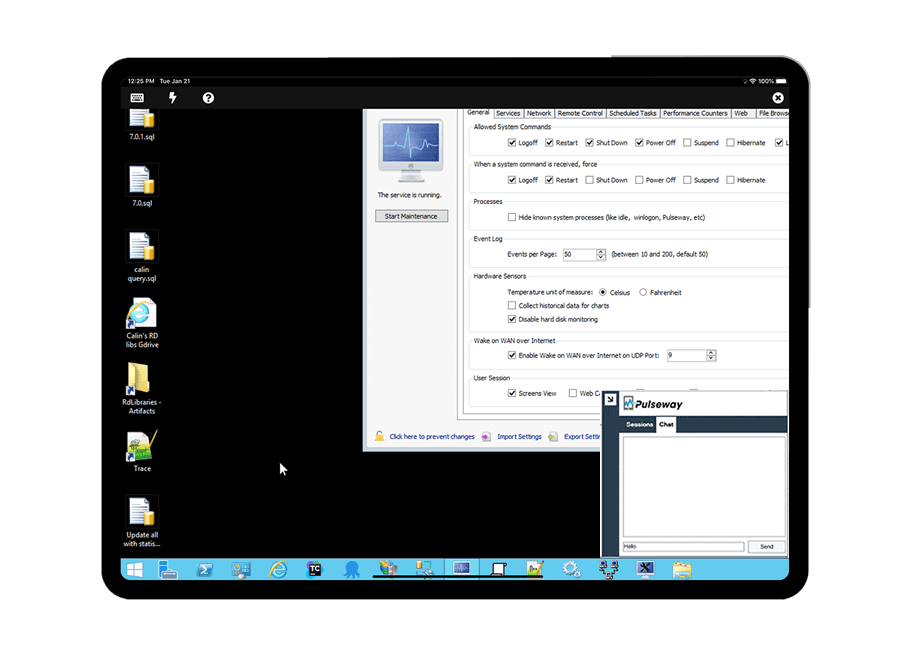
Pulseway is an IT monitoring and management solution that enables users to monitor, manage and control all systems and servers from a smartphone, tablet or browser. For system administrators, Pulseway sends a notification, so they can see an issue and sort it in seconds. Pulseway features: Automation: Auto-remediation workflows, so that IT issues are fixed before users even notice them. Mobile Access: Customers can monitor, manage, connect with…
$0.80
per month per installation
Pricing
AWS CodePipeline
Pulseway
Editions & Modules
AWS CodePipeline
$1
per active pipeline/per month
Free Tier
Free
Enterprise
$0.80
per month per installation
Offerings
Pricing Offerings
AWS CodePipeline
Pulseway
Free Trial
No
Yes
Free/Freemium Version
Yes
Yes
Premium Consulting/Integration Services
No
Yes
Entry-level Setup Fee
No setup fee
No setup fee
Additional Details
—
No hidden fees or contracts. Term-based discounts.
I think AWS CodePipeline is a great tool for anyone wanted automated deployments in a multi-server/container AWS environment. AWS also offers services like Elastic Beanstalk that provide a more managed hosting & deployment experience. CodePipeline is a good middle ground with solid, built-in automation with enough customizability to not lock people into one deployment or architecture philosophy.
If you have to manage a large number of computers, especially spread over multiple clients or a large physical area. This is one of the main products that allows us to act as a Managed Service Provider (MSP) and actually manage our clients devices and not just react to issues as clients call them in. Clients really love the proactive approach it allows us to take. Sadly as we became more familiar with options out there we found this area lacking and what was actually holding us back.
It monitors computers and notifies us of any issues with any computer.
It allows remote control of computers, such as requesting a computer to reboot itself.
It is very highly configurable to monitor exactly what we need to monitor. For example, on server, we can have it notify us any time the server is shutdown or rebooted. On the other hand, for a desktop computer, we don't have to be bothered with notifications when a user decides to reboot his computer.
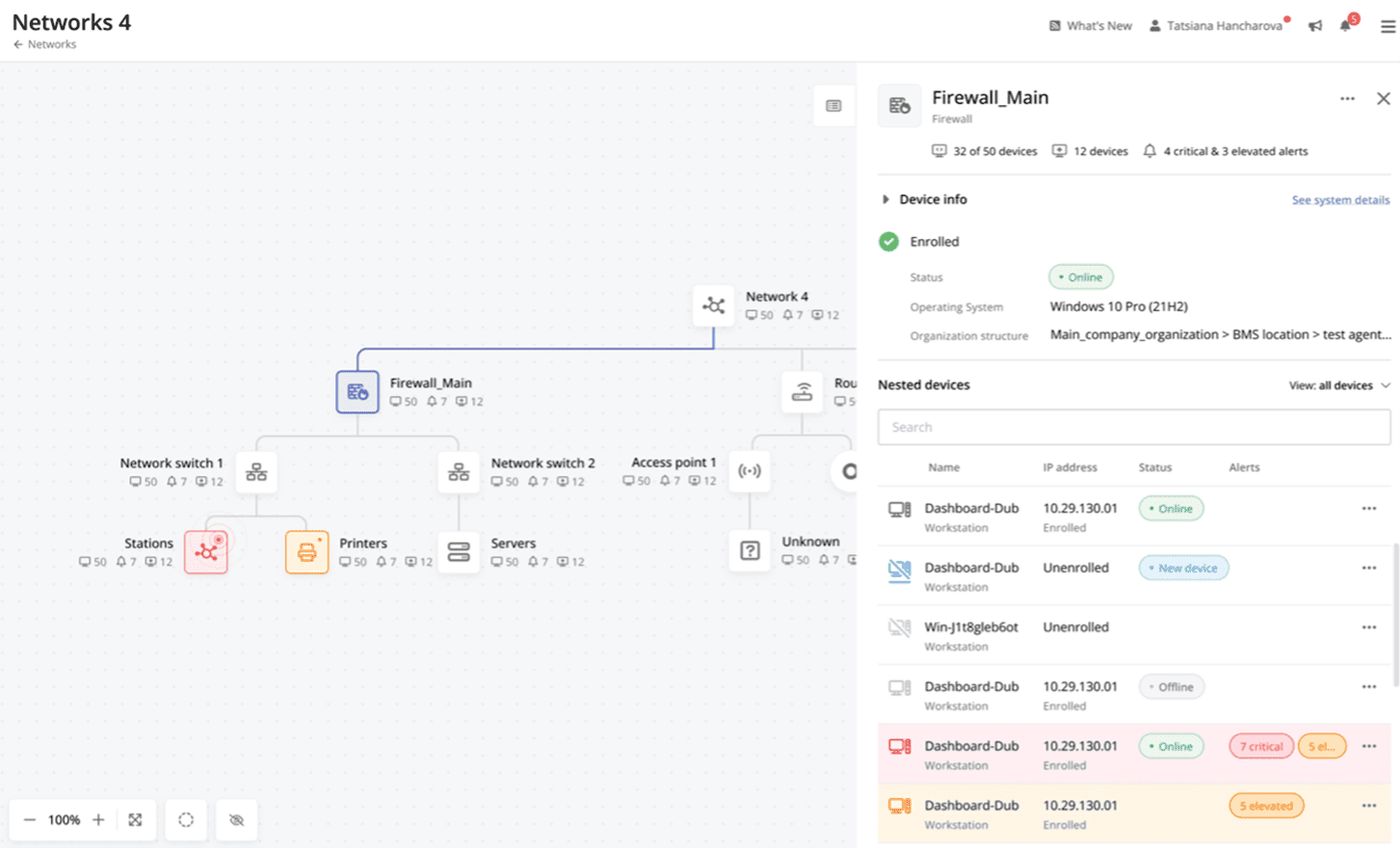
Overall, I give AWS Codepipeline a 9 because it gets the job done and I can't complain much about the web interface as much of the action is taking place behind the scenes on the terminal locally or via Amazon's infrastructure anyway. It would be nicer to have a better flowing and visualizable web interface, however.
The tool is easy to use however it is can be daunting with the amount of features available in it. Last I checked, their knowledge base was not very expansive and they relied a lot on the changelog for how to do some stuff. This can make it hard to learn how to do some more advanced things like the automation.
Our pipeline takes about 30 minutes to run through. Although this time depends on the applications you are using on either end, I feel that it is a reasonable time to make upgrades and updates to our system as it is not an every day push.
We didn't need a lot of support with AWS CodePipeline as it was pretty straightforward to configure and use, but where we ran into problems, the AWS community was able to help. AWS support agents were also helpful in resolving some of the minor issues we encountered, which we could not find a solution elsewhere.
I have never had to use the support for Pulseway. However, when initially starting out, we would receive emails every so often asking how we are doing and if there is any support that they can provide. I would imagine that any request would be supplied with the same great support!
CodeCommit and CodeDeploy can be used with CodePipeline so it’s not really fair to stack them against each other as they can be quite the compliment. The same goes for Beanstalk, which is often used as a deployment target in relation to CodePipeline.
CodePipeline fulfills the CI/CD duty, where the other services do not focus on that specific function. They are supplements, not replacements. CodePipeline will detect the updated code and handle deploying it to the actual instance via Beanstalk.
Jenkins is open source and not a native AWS service, that is its primary differentiator. Jenkins can also be used as a supplement to CodePipeline.
Pulseway has the most features, the best looking app with the best design and better usability than any others we evaluated. We liked the uniformity of the app design across all platforms (Windows, Android, Apple) and the notifications displayed on each platform. The price was a major contributor to our selection of Pulseway compared to the competition.
CodePipeline has reduced ongoing devops costs for my clients, especially around deployment & testing.
CodePipeline has sped up development workflow by making the deployment process automated off git pushes. Deployment takes very little coordination as the system will just trigger based on what is the latest commit in a branch.
CodePipeline offered a lot of out-of-the-box functionality that was much simpler to setup than a dedicated CI server. It allowed the deployment process to built and put into production with much less and effort and cost compared to rolling the functionality manually.
Problems can be dealt with more rapidly because I have access to systems from anywhere. I don't have to carry a computer with me nor do I have to find a location with potentially non-secure wifi to gain access to my systems.
I can handle 99% of my system admin tasks using Pulseway and never have to touch a system or connect to the console.
Pulseway gives so much control over a system that I don't need to spend extra money on other software to perform management tasks.