AWS Data Exchange is an integration for data service, from which subscribers can easily browse the AWS Data Exchange catalog to find relevant and up-to-date commercial data products covering a wide range of industries, including financial services, healthcare, life sciences, geospatial, consumer, media & entertainment, and more.
N/A
Azure Databricks
Score 8.6 out of 10
N/A
Azure Databricks is a service available on Microsoft's Azure platform and suite of products. It provides the latest versions of Apache Spark so users can integrate with open source libraries, or spin up clusters and build in a fully managed Apache Spark environment with the global scale and availability of Azure. Clusters are set up, configured, and fine-tuned to ensure reliability and performance without the need for monitoring. The solution includes autoscaling and auto-termination to improve…
N/A
OpenText Magellan
Score 9.0 out of 10
N/A
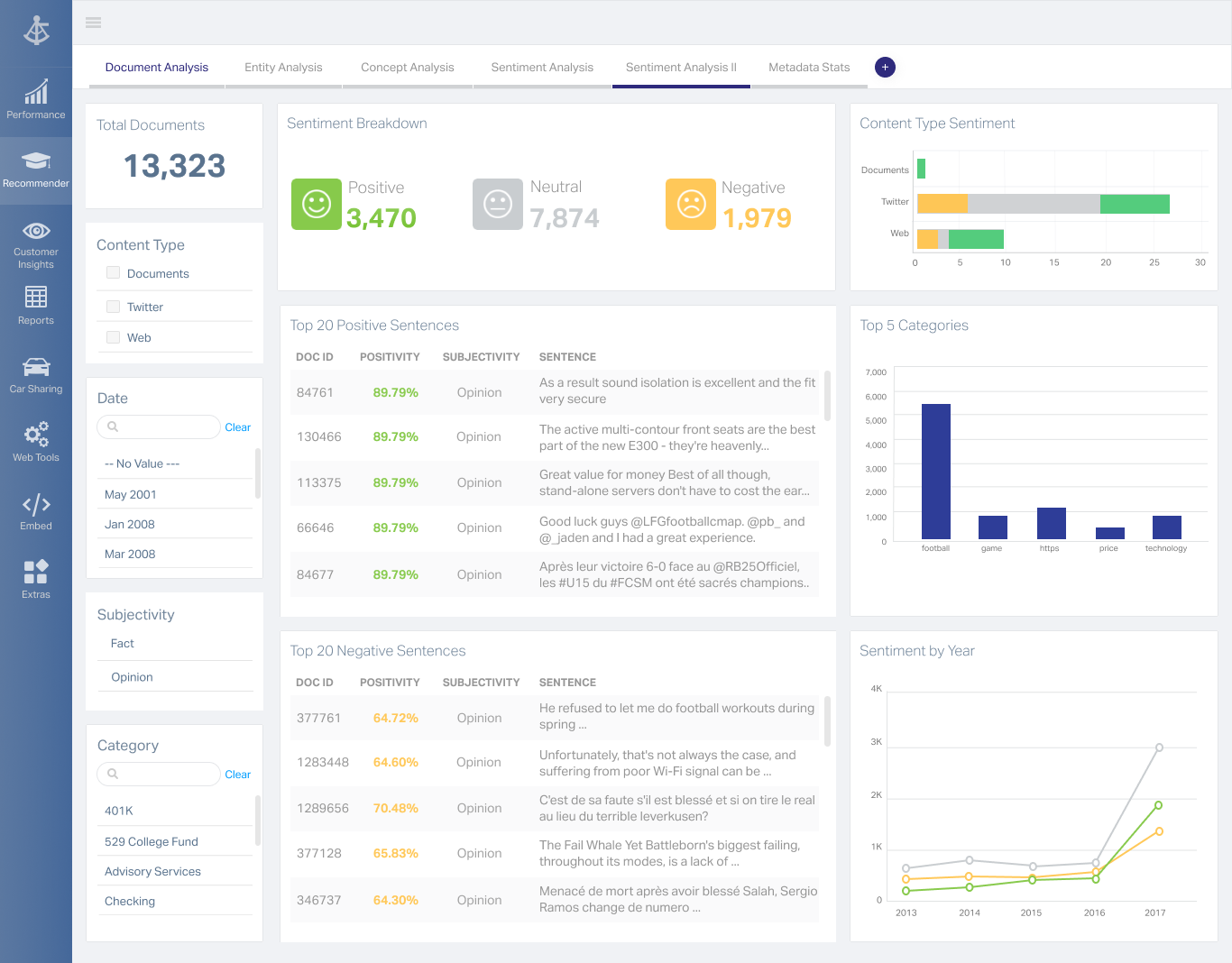
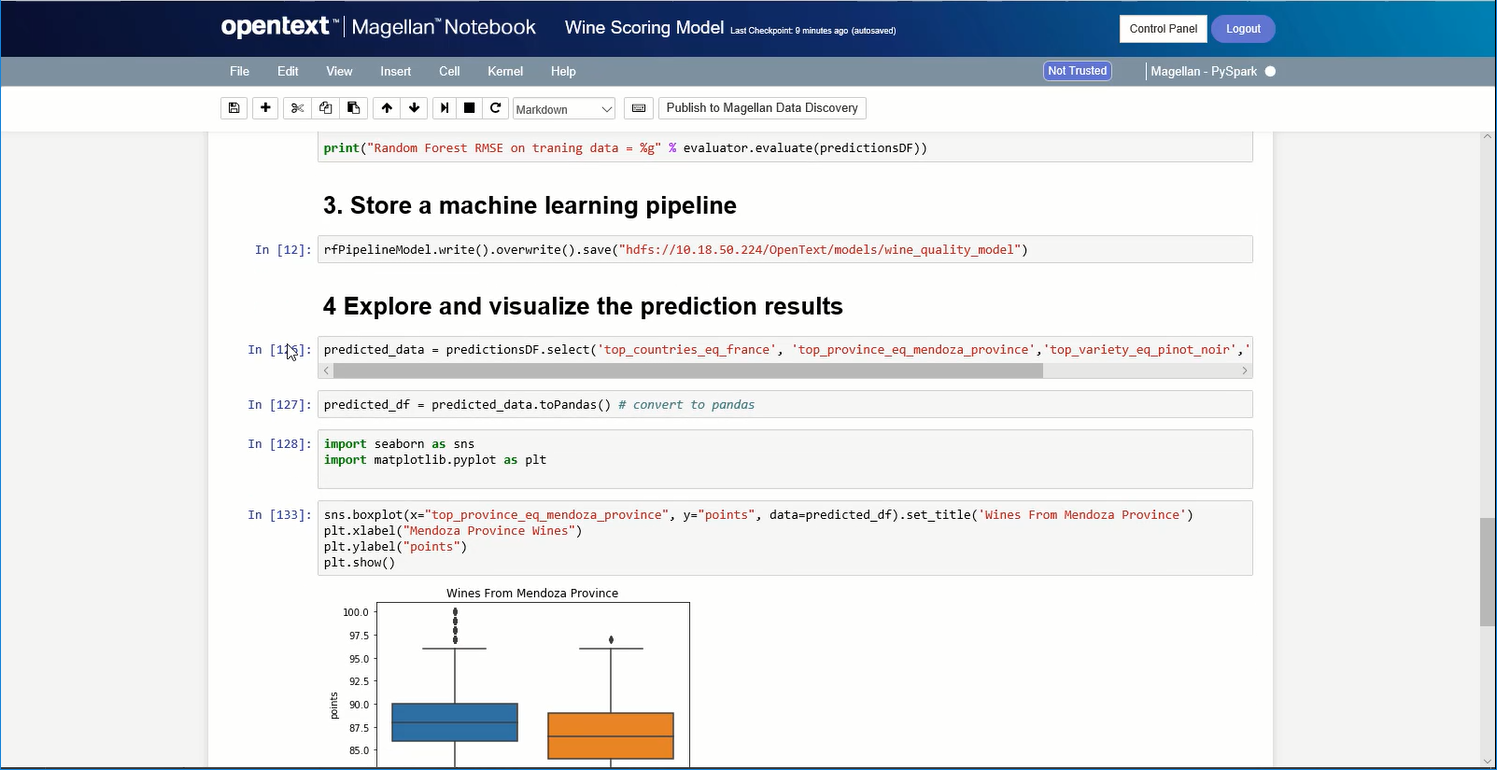
OpenText Magellan Analytics Suite leverages a comprehensive set of data analytics software to identify patterns, relationships and trends through data visualizations and interactive dashboards.
N/A
Pricing
AWS Data Exchange
Azure Databricks
OpenText Magellan
Editions & Modules
No answers on this topic
Offerings
Pricing Offerings
AWS Data Exchange
Azure Databricks
OpenText Magellan
Free Trial
No
No
No
Free/Freemium Version
No
No
No
Premium Consulting/Integration Services
No
No
No
Entry-level Setup Fee
No setup fee
No setup fee
No setup fee
Additional Details
—
—
—
More Pricing Information
Community Pulse
AWS Data Exchange
Azure Databricks
OpenText Magellan
Features
AWS Data Exchange
Azure Databricks
OpenText Magellan
Data Source Connection
Comparison of Data Source Connection features of Product A and Product B
AWS Data Exchange
8.0
2 Ratings
3% below category average
Azure Databricks
-
Ratings
OpenText Magellan
-
Ratings
Connect to traditional data sources
7.02 Ratings
00 Ratings
00 Ratings
Connecto to Big Data and NoSQL
9.01 Ratings
00 Ratings
00 Ratings
Data Modeling
Comparison of Data Modeling features of Product A and Product B
AWS Data Exchange
8.2
1 Ratings
4% above category average
Azure Databricks
-
Ratings
OpenText Magellan
-
Ratings
Data model creation
9.01 Ratings
00 Ratings
00 Ratings
Metadata management
9.01 Ratings
00 Ratings
00 Ratings
Business rules and workflow
7.01 Ratings
00 Ratings
00 Ratings
Collaboration
9.01 Ratings
00 Ratings
00 Ratings
Testing and debugging
7.01 Ratings
00 Ratings
00 Ratings
Data Governance
Comparison of Data Governance features of Product A and Product B
AWS Data Exchange
7.0
1 Ratings
14% below category average
Azure Databricks
-
Ratings
OpenText Magellan
-
Ratings
Integration with data quality tools
7.01 Ratings
00 Ratings
00 Ratings
Platform Connectivity
Comparison of Platform Connectivity features of Product A and Product B
AWS Data Exchange
-
Ratings
Azure Databricks
7.3
4 Ratings
13% below category average
OpenText Magellan
-
Ratings
Connect to Multiple Data Sources
00 Ratings
6.04 Ratings
00 Ratings
Extend Existing Data Sources
00 Ratings
7.84 Ratings
00 Ratings
Automatic Data Format Detection
00 Ratings
7.44 Ratings
00 Ratings
MDM Integration
00 Ratings
8.03 Ratings
00 Ratings
Data Exploration
Comparison of Data Exploration features of Product A and Product B
AWS Data Exchange
-
Ratings
Azure Databricks
6.8
4 Ratings
22% below category average
OpenText Magellan
-
Ratings
Visualization
00 Ratings
6.04 Ratings
00 Ratings
Interactive Data Analysis
00 Ratings
7.63 Ratings
00 Ratings
Data Preparation
Comparison of Data Preparation features of Product A and Product B
AWS Data Exchange
-
Ratings
Azure Databricks
8.6
4 Ratings
5% above category average
OpenText Magellan
-
Ratings
Interactive Data Cleaning and Enrichment
00 Ratings
8.24 Ratings
00 Ratings
Data Transformations
00 Ratings
9.04 Ratings
00 Ratings
Data Encryption
00 Ratings
9.44 Ratings
00 Ratings
Built-in Processors
00 Ratings
7.84 Ratings
00 Ratings
Platform Data Modeling
Comparison of Platform Data Modeling features of Product A and Product B
AWS Data Exchange
-
Ratings
Azure Databricks
8.0
4 Ratings
5% below category average
OpenText Magellan
-
Ratings
Multiple Model Development Languages and Tools
00 Ratings
6.44 Ratings
00 Ratings
Automated Machine Learning
00 Ratings
8.64 Ratings
00 Ratings
Single platform for multiple model development
00 Ratings
8.44 Ratings
00 Ratings
Self-Service Model Delivery
00 Ratings
8.44 Ratings
00 Ratings
Model Deployment
Comparison of Model Deployment features of Product A and Product B
AWS Data Exchange
-
Ratings
Azure Databricks
8.3
4 Ratings
3% below category average
OpenText Magellan
-
Ratings
Flexible Model Publishing Options
00 Ratings
8.04 Ratings
00 Ratings
Security, Governance, and Cost Controls
00 Ratings
8.64 Ratings
00 Ratings
BI Standard Reporting
Comparison of BI Standard Reporting features of Product A and Product B
AWS Data Exchange
-
Ratings
Azure Databricks
-
Ratings
OpenText Magellan
7.0
2 Ratings
16% below category average
Customizable dashboards
00 Ratings
00 Ratings
7.02 Ratings
Report Formatting Templates
00 Ratings
00 Ratings
7.01 Ratings
Ad-hoc Reporting
Comparison of Ad-hoc Reporting features of Product A and Product B
AWS Data Exchange
-
Ratings
Azure Databricks
-
Ratings
OpenText Magellan
8.3
3 Ratings
3% above category average
Drill-down analysis
00 Ratings
00 Ratings
8.03 Ratings
Formatting capabilities
00 Ratings
00 Ratings
8.03 Ratings
Integration with R or other statistical packages
00 Ratings
00 Ratings
9.01 Ratings
Report sharing and collaboration
00 Ratings
00 Ratings
8.02 Ratings
Report Output and Scheduling
Comparison of Report Output and Scheduling features of Product A and Product B
AWS Data Exchange
-
Ratings
Azure Databricks
-
Ratings
OpenText Magellan
8.3
2 Ratings
1% above category average
Publish to Web
00 Ratings
00 Ratings
8.02 Ratings
Publish to PDF
00 Ratings
00 Ratings
8.02 Ratings
Report Versioning
00 Ratings
00 Ratings
9.02 Ratings
Report Delivery Scheduling
00 Ratings
00 Ratings
8.02 Ratings
Data Discovery and Visualization
Comparison of Data Discovery and Visualization features of Product A and Product B
AWS Data Exchange fits best for scenarios where you have datasets that you would like to sell and you want to deliver it to anyone who would like to purchase it. It really beats having to set up downloads via your own website or portal. However, it can get complicated to manage if you're trying to deliver a dataset a client has already paid for.
Centralised notebooks are out directly into production. This can lead to poorly engineered code. It is very good for fast queries and our data team are always able to provide what we ask for. It is a big cost to our business so it is important it runs efficiently and returns on our investment.
If you do not have a large budget and are a large organization, I would steer clear of Actuate. If you are looking to do very complex washboarding, I would not use them. Your developers have to be very skilled to work with this. Plan to bring in consultants if necessary to help your process. Adhoc reporting is weak. If your pricing is user based and you expand, this could be very expensive.
There have been a lot of problems with ADX. First, the entire system is incredibly clunky from beginning to end.First, by AWS's own admission they're missing a lot of "tablestakes functionality" like the ability to see who is coming to your pages, more flexibility to edit and update your listings, the ability to create a storefront or catalog that actually tries to sell your products. All-in-all you're flying completely blind with AWS. In our convos with other sellers we strongly believe very little organic traffic is flowing through the AWS exchange. For the headache, it's not worth the time or the effort. It's very difficult to market or sell your products.We've also had a number of simple UX bugs where they just don't accurately reflect the attributes of your product. For instance for an S3 bucket they had "+metered costs" displayed to one of our buyers in the price. This of course caused a lot of confusion. They also misrepresented the historical revisions that were available in our product sets because of another UX bug. It's difficult to know what other things in the UX are also broken and incongruent.We also did have a purchase, but the seller is completely at their whim at providing you fake emails, fake company names, fake use cases because AWS hasn't thought through simple workflows like "why even have subscription confirmation if I can fake literally everything about a subscription request." So as a result we're now in an endless, timewasting, unhelpful thread with AWS support trying to get payment. They're confused of what to do and we feel completely lost.Lastly, the AWS team has been abysmal in addressing our concerns. Conversations with them result in a laundry list of excuses of why simple functionalities are so hard (including just having accurate documentation). It was a very frustrating and unproductive call. Our objective of our call was to help us see that ADX is a well-resourced and well-visioned product. Ultimately they couldn't clearly articulate who they built the exchange for both on the seller side and the buyer side.Don't waste your time. This is at best a very foggy experiment. Look at other sellers, they have a lot of free pages to try to get attention, but then have smart tactics to divert transactions away from the ADX. Ultimately, smart move. Why give 8-10% of your cut to a product that is basically bare-bones infrastructure.
I am no longer working for the company that was using Actuate but I believe they would continue to use it because the stitching costs would be to high. It would require a complete rewrite of the reports and the never version of Actuate (BIRT) even required an almost complete report rewrite
The developers are able to switch between Python and SQL in the Notebook which allows the collaboration of SQL analyst and Data scientist. The integration of Mosaic AI allows users to write complex codes in natural languages. Unity catalog has centralized the security and governance features and simplified the process of maintaining it
It is quite intuitive to use. It is fit specifically for doing sentiment, emotion, and intention analysis as well as text classification and text summarization. I would have given 10 if it is fit for the purpose of doing image processing and analysis as well. There is a huge market to analyze video and image data.
I have found Azure Databricks to be much better than Snowflake for handling bigger, diverse data types. Snowflake is much simpler and better for smaller warehousing. The real time processing is much better in Azure Databricks and we have much more language options. Snowflake is more expensive but simpler to use. Both are great for different needs.
It is vastly superior to these in many ways, for complex reporting it is a much more sophisticated solution. Visualizations are very good. Javascript extensibility is very powerful, others don't support this or as well. Pentaho and MS are both OLAP oriented. Pentaho is moving more toward big data, which was not our primary focus. Others are stuck in the Crystal Reports Band metaphor.
Actuate can handle 50 to 60 sub reports inside a report very well.
Dynamically creating the datasource, chart, graph, reports are the main advantages. We can do any level of drilling, and can create a performance matrix dashboard efficiently.