
Chose Azure Databricks
Azure Databricks vs. Azure Synapse Analytics vs. Snowflake
Azure Databricks vs. Azure Synapse Analytics vs. Snowflake
| Product | Rating | Most Used By | Product Summary | Starting Price |
|---|---|---|---|---|
 Azure Databricks | N/A | Azure Databricks is a service available on Microsoft's Azure platform and suite of products. It provides the latest versions of Apache Spark so users can integrate with open source libraries, or spin up clusters and build in a fully managed Apache Spark environment with the global scale and availability of Azure. Clusters are set up, configured, and fine-tuned to ensure reliability and performance without the need for monitoring. The solution includes autoscaling and auto-termination to improve… | N/A | |
 Azure Synapse Analytics | N/A | Azure Synapse Analytics is described as the former Azure SQL Data Warehouse, evolved, and as a limitless analytics service that brings together enterprise data warehousing and Big Data analytics. It gives users the freedom to query data using either serverless or provisioned resources, at scale. Azure Synapse brings these two worlds together with a unified experience to ingest, prepare, manage, and serve data for immediate BI and machine learning needs. | $4,700 per month 5000 Synapse Commit Units (SCUs) | |
 Snowflake | N/A | The Snowflake Cloud Data Platform is the eponymous data warehouse with, from the company in San Mateo, a cloud and SQL based DW that aims to allow users to unify, integrate, analyze, and share previously siloed data in secure, governed, and compliant ways. With it, users can securely access the Data Cloud to share live data with customers and business partners, and connect with other organizations doing business as data consumers, data providers, and data service providers. | N/A |
| Azure Databricks | Azure Synapse Analytics | Snowflake | ||||||||||||||||||||||
|---|---|---|---|---|---|---|---|---|---|---|---|---|---|---|---|---|---|---|---|---|---|---|---|---|
| Editions & Modules | No answers on this topic |
| No answers on this topic | |||||||||||||||||||||
| Offerings |
| |||||||||||||||||||||||
| Entry-level Setup Fee | No setup fee | No setup fee | No setup fee | |||||||||||||||||||||
| Additional Details | — | — | — | |||||||||||||||||||||
| More Pricing Information | ||||||||||||||||||||||||
| Azure Databricks | Azure Synapse Analytics | Snowflake | |
|---|---|---|---|
| Considered Multiple Products |  Azure Databricks | Azure Synapse Analytics  Paras Jasal Data Engineer Chose Azure Synapse Analytics Synapse, in comparison has its ups and downs against the competitors. However, where it excels, and builds it's markets is the cheaper costs (compared to Redshift), low code platforms and an in house solution that does not need you to leave the Synapse workspace for end to end …  Scott Kennedy Director, eCommerce Analytics and Digital Marketing Chose Azure Synapse Analytics Azure Synapse Analytics stacks up well against the competitors I mentioned above. Technically, Azure SQL Datawarehouse is an upgraded version of the Azure SQL Database. So, the choice to move from one to the other depends on the processing needs of your company. If you need … |  Snowflake  Harvey Wyche Director of Technical Product Management Chose Snowflake In my opinion, the other tools have similar and some different features; however, when I ran proof of technologies between Synapse and Snowflake. Snowflake did things better or just had functionality that the other tools did not. One that stuck out at the time was scale up …  Brian Bickell Data Practice Director Chose Snowflake In my experience running the data management practice at InterWorks, we believe that cloud data warehouse products will eventually serve the majority of data warehousing use cases and power data analytics at most companies. Of this cohort, we believe that Snowflake is the best … |
| Azure Databricks | Azure Synapse Analytics | Snowflake | |||||||||||||||||||
|---|---|---|---|---|---|---|---|---|---|---|---|---|---|---|---|---|---|---|---|---|---|
| Platform Connectivity |
| ||||||||||||||||||||
| Data Exploration |
| ||||||||||||||||||||
| Data Preparation |
| ||||||||||||||||||||
| Platform Data Modeling |
| ||||||||||||||||||||
| Model Deployment |
|
| Azure Databricks | Azure Synapse Analytics | Snowflake | |
|---|---|---|---|
| Small Businesses |  Jupyter Notebook Score 8.5 out of 10 |  Google BigQuery Score 8.7 out of 10 | Google BigQuery Score 8.7 out of 10 |
| Medium-sized Companies |  Posit Score 10.0 out of 10 | Snowflake Score 8.7 out of 10 | Google BigQuery Score 8.7 out of 10 |
| Enterprises | Posit Score 10.0 out of 10 | Snowflake Score 8.7 out of 10 | Google BigQuery Score 8.7 out of 10 |
| All Alternatives | View all alternatives | View all alternatives | View all alternatives |
| Azure Databricks | Azure Synapse Analytics | Snowflake | |
|---|---|---|---|
| Likelihood to Recommend | 9.8 (3 ratings) | 7.7 (12 ratings) | 9.0 (43 ratings) |
| Likelihood to Renew | - (0 ratings) | - (0 ratings) | 10.0 (2 ratings) |
| Usability | 8.0 (1 ratings) | 8.3 (5 ratings) | 9.3 (19 ratings) |
| Support Rating | - (0 ratings) | 9.6 (2 ratings) | 9.9 (8 ratings) |
| Contract Terms and Pricing Model | - (0 ratings) | 10.0 (1 ratings) | 8.0 (1 ratings) |
| Azure Databricks | Azure Synapse Analytics | Snowflake | |
|---|---|---|---|
| Likelihood to Recommend | Microsoft
| Microsoft
| Snowflake Computing
|
| Pros | Microsoft
| Microsoft
| Snowflake Computing
Harvey Wyche Director of Technical Product Management |
| Cons | Microsoft
| Microsoft
Paras Jasal Data Engineer | Snowflake Computing
|
| Likelihood to Renew | Microsoft No answers on this topic | Microsoft No answers on this topic | Snowflake Computing
|
| Usability | Microsoft
| Microsoft
| Snowflake Computing
|
| Support Rating | Microsoft No answers on this topic | Microsoft
| Snowflake Computing
 David Williams Head of Engineering |
| Alternatives Considered | Microsoft
| Microsoft
| Snowflake Computing
|
| Contract Terms and Pricing Model | Microsoft No answers on this topic | Microsoft
 Vladimír Mužný Owner, Developer | Snowflake Computing No answers on this topic |
| Return on Investment | Microsoft
| Microsoft
| Snowflake Computing
 Sahil Khan Data Analyst |
| ScreenShots | Snowflake Screenshots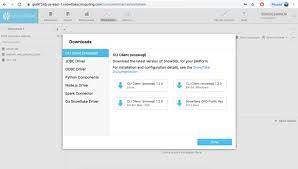 |