Azure SQL Managed Instance vs. Oracle Autonomous Database vs. Oracle Database

Overview
ProductRatingMost Used ByProduct SummaryStarting Price
Azure SQL Managed Instance
Score 8.8 out of 10
N/A
Azure SQL Managed Instance is a scalable cloud database service that combines SQL Server database engine compatibility with a fully managed and evergreen platform as a service.N/A
Oracle Autonomous Database
Score 9.0 out of 10
N/A
Oracle Autonomous Database provides a self-driving, self-securing, self-repairing cloud service that eliminate the overhead and human errors associated with traditional database administration. Oracle Autonomous Database takes care of configuration, tuning, backup, patching, encryption, scaling, and more.N/A
Oracle Database
Score 8.3 out of 10
N/A
Oracle Database, currently in edition 23ai, is a converged, multimodel database management system. It is designed to simplify development for AI, microservices, graph, document, spatial, and relational applications.
$0.05
per hour
Pricing
Azure SQL Managed InstanceOracle Autonomous DatabaseOracle Database
Editions & Modules
No answers on this topic
Oracle Base Database Service - Standard
$0.0538
per hour
Oracle Base Database Service - Enterprise
$0.1075
per hour
Oracle Base Database Service - High Performance
$0.2218
per hour
Standard Edition
Contact Sales
Enterprise Edition
Contact Sales
Personal Edition
Contact Sales
Offerings
Pricing Offerings
Azure SQL Managed InstanceOracle Autonomous DatabaseOracle Database
Free Trial
NoYesYes
Free/Freemium Version
NoYesYes
Premium Consulting/Integration Services
NoYesNo
Entry-level Setup FeeNo setup feeOptionalNo setup fee
Additional Details
More Pricing Information
Community Pulse
Azure SQL Managed InstanceOracle Autonomous DatabaseOracle Database
Considered Multiple Products
Azure SQL Managed Instance

No answer on this topic

Oracle Autonomous Database
Chose Oracle Autonomous Database
Oracle Autonomous Database provides self administration features that are not available in previous databases like Oracle Database 12c and previous versions. So this is really good for the organizations to best use the resources and improve the performance of the applications. …
Oracle Database

No answer on this topic

Features
Azure SQL Managed InstanceOracle Autonomous DatabaseOracle Database
Platform-as-a-Service
Comparison of Platform-as-a-Service features of Product A and Product B
Azure SQL Managed Instance
9.0
2 Ratings
15% above category average
Oracle Autonomous Database
-
Ratings
Oracle Database
-
Ratings
Ease of building user interfaces9.02 Ratings00 Ratings00 Ratings
Scalability9.02 Ratings00 Ratings00 Ratings
Platform management overhead9.02 Ratings00 Ratings00 Ratings
Workflow engine capability9.02 Ratings00 Ratings00 Ratings
Platform access control9.02 Ratings00 Ratings00 Ratings
Services-enabled integration9.02 Ratings00 Ratings00 Ratings
Development environment creation9.02 Ratings00 Ratings00 Ratings
Development environment replication9.02 Ratings00 Ratings00 Ratings
Issue monitoring and notification9.02 Ratings00 Ratings00 Ratings
Issue recovery9.02 Ratings00 Ratings00 Ratings
Upgrades and platform fixes9.02 Ratings00 Ratings00 Ratings
Database Development
Comparison of Database Development features of Product A and Product B
Azure SQL Managed Instance
-
Ratings
Oracle Autonomous Database
7.2
24 Ratings
16% below category average
Oracle Database
-
Ratings
Version control tools00 Ratings6.213 Ratings00 Ratings
Test data generation00 Ratings5.714 Ratings00 Ratings
Performance optimization tools00 Ratings8.224 Ratings00 Ratings
Schema maintenance00 Ratings9.023 Ratings00 Ratings
Database change management00 Ratings7.015 Ratings00 Ratings
Database Administration
Comparison of Database Administration features of Product A and Product B
Azure SQL Managed Instance
-
Ratings
Oracle Autonomous Database
8.3
25 Ratings
3% above category average
Oracle Database
-
Ratings
User management00 Ratings9.024 Ratings00 Ratings
Database security00 Ratings9.124 Ratings00 Ratings
Database status reporting00 Ratings9.025 Ratings00 Ratings
Change management00 Ratings6.216 Ratings00 Ratings
Relational Databases
Comparison of Relational Databases features of Product A and Product B
Azure SQL Managed Instance
-
Ratings
Oracle Autonomous Database
-
Ratings
Oracle Database
8.5
5 Ratings
7% above category average
ACID compliance00 Ratings00 Ratings8.85 Ratings
Database monitoring00 Ratings00 Ratings8.85 Ratings
Database locking00 Ratings00 Ratings8.85 Ratings
Encryption00 Ratings00 Ratings9.84 Ratings
Disaster recovery00 Ratings00 Ratings9.34 Ratings
Flexible deployment00 Ratings00 Ratings6.25 Ratings
Multiple datatypes00 Ratings00 Ratings8.05 Ratings
Best Alternatives
Azure SQL Managed InstanceOracle Autonomous DatabaseOracle Database
Small Businesses
AWS Lambda
AWS Lambda
Score 8.3 out of 10
DBeaver
DBeaver
Score 8.6 out of 10
InterSystems IRIS
InterSystems IRIS
Score 7.9 out of 10
Medium-sized Companies
Red Hat OpenShift
Red Hat OpenShift
Score 9.2 out of 10
ER/Studio
ER/Studio
Score 9.9 out of 10
InterSystems IRIS
InterSystems IRIS
Score 7.9 out of 10
Enterprises
Red Hat OpenShift
Red Hat OpenShift
Score 9.2 out of 10
ER/Studio
ER/Studio
Score 9.9 out of 10
SAP IQ
SAP IQ
Score 10.0 out of 10
All AlternativesView all alternativesView all alternativesView all alternatives
User Ratings
Azure SQL Managed InstanceOracle Autonomous DatabaseOracle Database
Likelihood to Recommend
9.0
(2 ratings)
8.5
(52 ratings)
9.0
(190 ratings)
Likelihood to Renew
-
(0 ratings)
9.0
(2 ratings)
9.0
(6 ratings)
Usability
10.0
(1 ratings)
8.0
(1 ratings)
7.4
(5 ratings)
Support Rating
-
(0 ratings)
-
(0 ratings)
7.0
(5 ratings)
Implementation Rating
-
(0 ratings)
-
(0 ratings)
9.6
(3 ratings)
User Testimonials
Azure SQL Managed InstanceOracle Autonomous DatabaseOracle Database
Likelihood to Recommend
Microsoft
Data management scenarios where there is a strong need to provide dynamic context for web based applications. Also can work as an infrastructure piece for ticketing systems without relying on another set of database software. The ease of importing data from Microsoft Excel &/or .csv files makes this really easy to use when importing data into the managed instance.
Read full review
Oracle
Pro - Stability. Does everything anyone could need. If it's not there it will be on the next update. There is plenty of support for it. It's been around for a long time and it's reliable. The support is well documented and has a great reputation. Cons - Errors have been found in the documentation provided by Oracle with guidelines, etc. Oracles salespeople have a reputation of being obnoxious and condescending.
Read full review
Oracle
We migrated from NoSQL to an Oracle database. One of the reasons was robust backup and recovery options available in the Oracle database, which provide zero data loss. A transactional database like Oracle is a better fit for our use case than NoSQL. On a large scale, deployment was evaluated as a cheaper option than the NoSQL engine. This conclusion came even after considering Oracle license is expensive.
Read full review
Pros
Microsoft
  • executes the queries efficiently
  • has tools/dashboards to show where the query problems lie
  • alerting for problems
Read full review
Oracle
  • Robust - this product doesn't have a lot of downtime. It's less prone to errors than some other tools I've worked with.
  • Scalable - we can keep adding more things to it. We haven't hit any roadblocks when we've tried to do more with our database.
Read full review
Oracle
  • Supports most of the Operating Systems like Unix, Linux and Windows Server.
  • It works well in high load environment under intense parallel transactions setup.
  • Highly reliable DBMS, especially RAC is very much reliable.
  • Well managed and predictable release of security patches.
  • We have highly scaled it from on-prem to a cloud cluster environment for our product.
  • One of the best-performing DBMSs on Linux machines under test delivers high throughput (QPS).
Read full review
Cons
Microsoft
  • hard to use without Microsoft knowledge
  • Intimidating CLI
  • Commands are not intuitive
Read full review
Oracle
  • There is no access to the physical host of the DB. This is expected from a managed DB. Everything must be done through the console or via API calls. This is a new learning curve for the DBAs.
  • Due to the lack of physical host access, certain features are not supported, such as Transportable tablespaces and Oracle LogMiner.
  • Certain special data types, (such as XMLType) are not allowed; be sure the app vendor certifies their product on this platform.
Read full review
Oracle
  • The memory demand and management makes it impossible to run it in a container.
  • It is hard to perform local unit testing with Oracle even using the personal edition (aggressive all the available memory grab for itself).
  • Lack of built in database migrations (e.g. as Flyway).
  • The need to install the Oracle client in addition to its drivers.
  • The cost of running it, especially in the Cloud.
  • Comes with very spartan community grade client/management tools whereas the commercial offerings tend to demand a premium price.
Read full review
Likelihood to Renew
Microsoft
No answers on this topic
Oracle
Because it does exactly what we need: it enables us to manage our development and testing database environments in a quick and simple way without requiring support from a database administrators team.
Read full review
Oracle
There is a lot of sunk cost in a product like Oracle 12c. It is doing a great job, it would not provide us much benefit to switch to another product even if it did the same thing due to the work involved in making such a switch. It would not be cost effective.
Read full review
Usability
Microsoft
it runs the workload very well without causing any issues to the business. there are many applications running on Azure SQL Managed Instances in my organization. Most users are happy with its performance. Is able to provide good dashboard for the visibility of the workload. Can add cpu without a downtime to deal with high workload.
Read full review
Oracle
The product is continuously evolving and new features are added frequently. Management options through the OCI (Oracle Cloud Infrastructure) console and through the command line and API are being enhanced frequently.
Read full review
Oracle
Many of the powerful options can be auto-configured but there are still many things to take into account at the moment of installing and configuring an Oracle Database, compared with SQL Server or other databases. At the same time, that extra complexity allows for detailed configuration and guarantees performance, scalability, availability and security.
Read full review
Support Rating
Microsoft
No answers on this topic
Oracle
No answers on this topic
Oracle
1. I have very good experience with Oracle Database support team. Oracle support team has pool of talented Oracle Analyst resources in different regions. To name a few regions - EMEA, Asia, USA(EST, MST, PST), Australia. Their support staffs are very supportive, well trained, and customer focused. Whenever I open Oracle Sev1 SR(service request), I always get prompt update on my case timely. 2. Oracle has zoom call and chat session option linked to Oracle SR. Whenever you are in Oracle portal - you can chat with the Oracle Analyst who is working on your case. You can request for Oracle zoom call thru which you can share the your problem server screen in no time. This is very nice as it saves lot of time and energy in case you have to follow up with oracle support for your case. 3.Oracle has excellent knowledge base in which all the customer databases critical problems and their solutions are well documented. It is very easy to follow without consulting to support team at first.
Read full review
Implementation Rating
Microsoft
No answers on this topic
Oracle
No answers on this topic
Oracle
Overall the implementation went very well and after that everything came out as expected - in terms of performance and scalability. People should always install and upgrade a stable version for production with the latest patch set updates, test properly as much as possible, and should have a backup plan if anything unexpected happens
Read full review
Alternatives Considered
Microsoft
Azure to our enviironment where we have everything integrated stacks up far better than MySQL where we would have to reinvent and use everything to fit a MySQL environment including the data and the commands within that data. Furthermore, doesn't work really well on SQL Management Studio which makes it completely useless for what we are trying to do.
Read full review
Oracle
I found Oracle Autonomous Database very secure to store data and private information.I always feel secure with Oracle Autonomous Databases disaster recovery features.It is very effective to build applications for mobile and desktop devices lesser code using a low code development framework namely Oracle Application Express (ApEx).
Read full review
Oracle
Because of a rich user base and support for any critical issue, this is one of the best options to choose. In case the project has a TCO issue, it can compromise and choose Postgres as the best alternative. SQL server is also good and easy to code and maintain but performance is not as good as the Oracle
Read full review
Return on Investment
Microsoft
  • it had a positive impact to my business and allowed me to be able to move my workload from on-premise to cloud.
Read full review
Oracle
  • Oracle Autonomous Database has a wide range of warehouses, which is competent and of high performance.
  • The transactional processing power that Oracle Autonomous Database outlines are completely important and digital.
  • The efficiency of Oracle Autonomous Database data encryption fosters security measures, a form that demands more threat detectors.
Read full review
Oracle
  • Multiple applications can use the same database and still get high performance
  • Licensing cost is still a concern compared to the other options available in the market that are very very inexpensive
  • Almost a maintenance free database
  • Oracle Grid makes life easy in terms of monitoring and managing the databases
Read full review
ScreenShots

Oracle Autonomous Database Screenshots

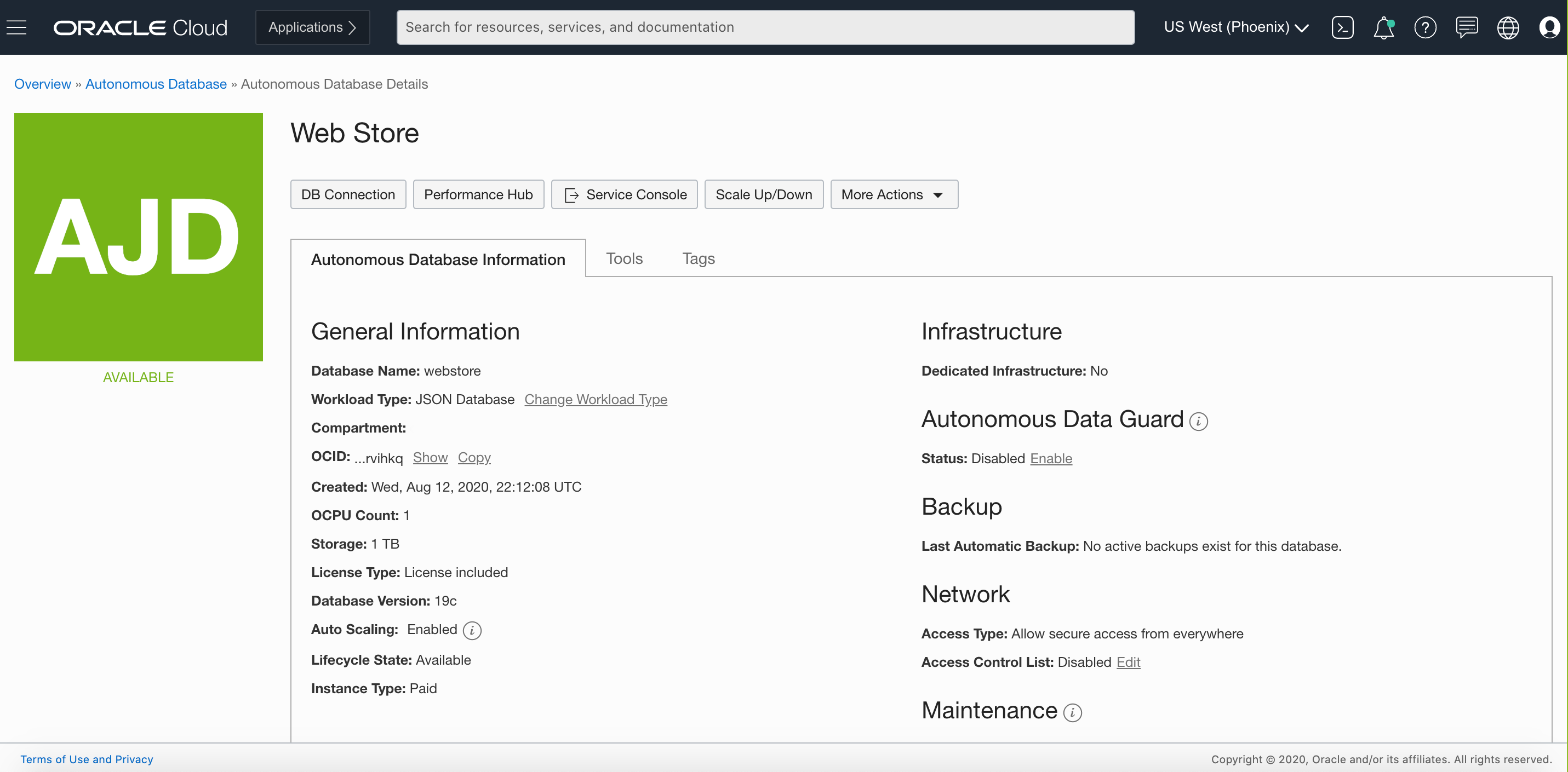
Screenshot of Oracle Autonomous Database is supported on Shared or Dedicated Exadata InfrastructureScreenshot of Oracle Autonomous Database supports workload-optimized cloud services for Data Warehouse, Transaction Processing,  JSON centric applicationsScreenshot of Oracle Autonomous Database supports  both License Included and Bring Your Own Licensing (BYOL) with  Yearly and Pay As You Go subscription pricingScreenshot of Oracle Autonomous Database provides built-in development  tools such as SQL Developer web, Performance Hub, APIs for data managementScreenshot of Oracle Autonomous Database provides native shell for API driven development