Blackfire.io is designed to empower PHP developers to continuously verify and improve their app’s performance in development, testing, staging and production. It makes it possible to drill down to function/method call level to understand and fix performance bottlenecks. The vendor says its wide variety of automation options makes it a breeze to add it to a development and testing workflow. The Blackfire Player, an Open Source Web Crawling, Web Tester, and Web…
N/A
BlazeMeter
Score 8.0 out of 10
N/A
The BlazeMeter Continuous Testing Platform is a unified, end-to-end, next-generation software test automation platform built for both Agile and COE teams, from Perforce. BlazeMeter includes complete continuous testing capabilities deeply integrated into a single, intuitive workflow.
$149
per month
SolarWinds AppOptics
Score 8.2 out of 10
N/A
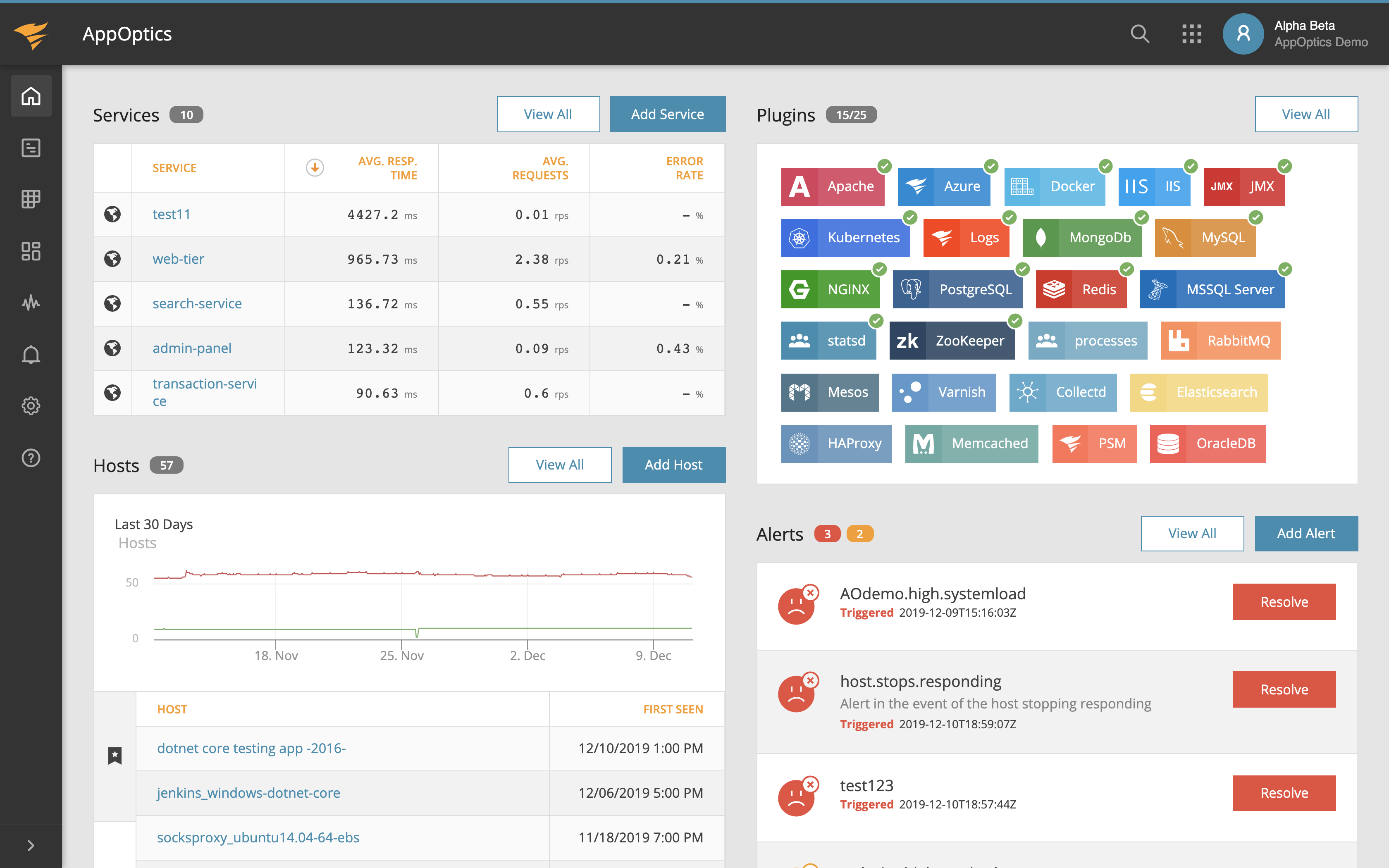
SolarWinds AppOptics (formerly Librato) is an IT infrastructure monitoring service and APM, based on technology acquired by SolarWinds with Librato in 2015 to expand its cloud monitoring portfolio.
The pricing offered by blackfire.io was highly competitive and customisable as we opted for pay per use pricing model. Initial setup was very easy. The support team provided us with the detailed demo of the product and helped with the initial integration and setup. We already …
blackfire.io definitely provides an edge over competing products such as Datadog due to the level of monitoring and analysis it provides. Datadog is a great tool however when evaluating and catching inefficiencies in lower non production environments, blackfire.io provides a …
BlazeMeter scores well against Apache JMeter in one Key point , the load generation from different cloud based systems. This helps to measure the capacity of the the application in a transparent way and not bogged down by the capacity of the system from where the test is …
In comparison with Blazemeter the closes competitor is JMeter but it has disadvantages like it is not a tool that can be use as a collaborative tool and works locally in a computer, Blazemeter is in the web so different people can access and run tests or collaborate do add, …
Personally, I prefer using JMeter + Redline13, however we had some business folks that wanted to be able to run a few of their own tests. The non-technical individuals preferred to use Blazemeter because of its simple and intuitive UI.
AppOptics was about 60% cheaper with most of the functionalities that we needed. Datadog had some advanced features which were not important to us, and hence we decided to go with AppOptics.
Everyone used to know the names of AppDynamics and Dynatrace when it comes to APM or Application Tracing Monitoring. Since these tools were the evolver of this particular technology, I still believe that these tools are the market player. But SolarWinds AppOptics is not less, …
As an early-stage startup, we evaluated the different options on the following parameters: Functionality Monitoring overhead Cost Easy-to-use dashboard AppOptics had most of the features that we needed and offered their services at a reasonable price that made sense for …
AppOptics is way more user friendly than Kibana. When you first log in to AppOptics, you have the information you need very easily while Kibana takes a lot of learning before getting your first results. Kibana almosts requires the help of developers and technicians to learn how …
It was a decision made based on our requirements. We felt like AppOptics gave us what we need precisely. When we tried it out, we were satisfied with the performance. It didn't compare to the rest in the market.
We felt the competitors were both more expensive and more difficult to configure and deploy. We selected SolarWinds AppOptics because it provided better value both in terms of cost and user experience.
SolarWinds AppOptics serves a specific use case for us--diving down on the application layer to identify root causes of latency. It does not offer the same use case as SignalFx, which offers metrics for the overall service and integration for custom metrics. AppOptics also does …
We analyzed a number of alternatives to AppOptics, but none combined strong performance in all of our key areas - we needed a solution which could be deployed on premise, supported multi tenant hosts, provided the ability to analyse individual requests, presented intuitive …
AppOptics provides us visibility of the overall system. SLACK helps us to keep the communication better among our collegues. Sentry One is also being used to dive deeper into SQL queries performance tuning. SolarWinds AppOptics clearly displays the flow of information in …
blackfire.io is best suited for any company that has a development team managing code releases into different environments. This tool is crucial in cases where there are codebase changes or upgrades and it really helps in load testing and code validity. With every new codebase release there could be a risk of how it affects the infrastructure supporting it so blackfire.io helps report on those metrics.
It is good for measurements of performance testing. It can be used to run API testing. I can not use this for monitoring but it can be used as a complement for monitoring tools (like Catchpoint or New Relic). It can help to produce load on your site and monitor.
AppOptics is good for small to medium-sized organizations with less than 150 servers or less than 40 services to monitor. It performs well for this use case where people need to get an overview of application performance, and 95%ile data is okay. Somewhere every data point and every record is critical; it should be avoided.
Blazemeter has very intuitive and uncluttered UI. It is very easy for a beginner to figure out and get started.
Blazemeter allows several methods of creating performance tests - using several popular open source applications. Therefore most often there is no need to learn to use a new tool or language.
The only thing that I would add is the possibility to display every single query our servers receive to eventually analyze them and query through them. We could also generate nice visualizations from that. Right now I believe we can only see averages.
AppOptics has performed well for all of the major functions we have needed it for. Especially when it comes to tracking down response time issues and researching app performance for different pages and different times of day we have been able to do everything we need to. We know there are some more advanced features that could help us in more niche areas, but haven't had the time to delve deeper into using or setting them up.
Solarwinds AppOptics is rated as 9 out of 10 and the reason is there are still few areas where AppOptics needs to improve such as Service Now Integration, GCP Cloud Support, Better Dashboard visualization for application transactions flow. Other than these feature everything is there in AppOptics and that's a reason given 9 points out of 10.
The pricing offered by blackfire.io was highly competitive and customisable as we opted for pay per use pricing model. Initial setup was very easy. The support team provided us with the detailed demo of the product and helped with the initial integration and setup. We already had tried our free version as well and the results looked good. So opted for blackfire.io
BlazeMeter scores well against Apache JMeter in one Key point , the load generation from different cloud based systems. This helps to measure the capacity of the the application in a transparent way and not bogged down by the capacity of the system from where the test is executed (in this case Apache JMeter)
What we found positive in AppOptics from others is:
Easy to install and manage.
Various stack support.
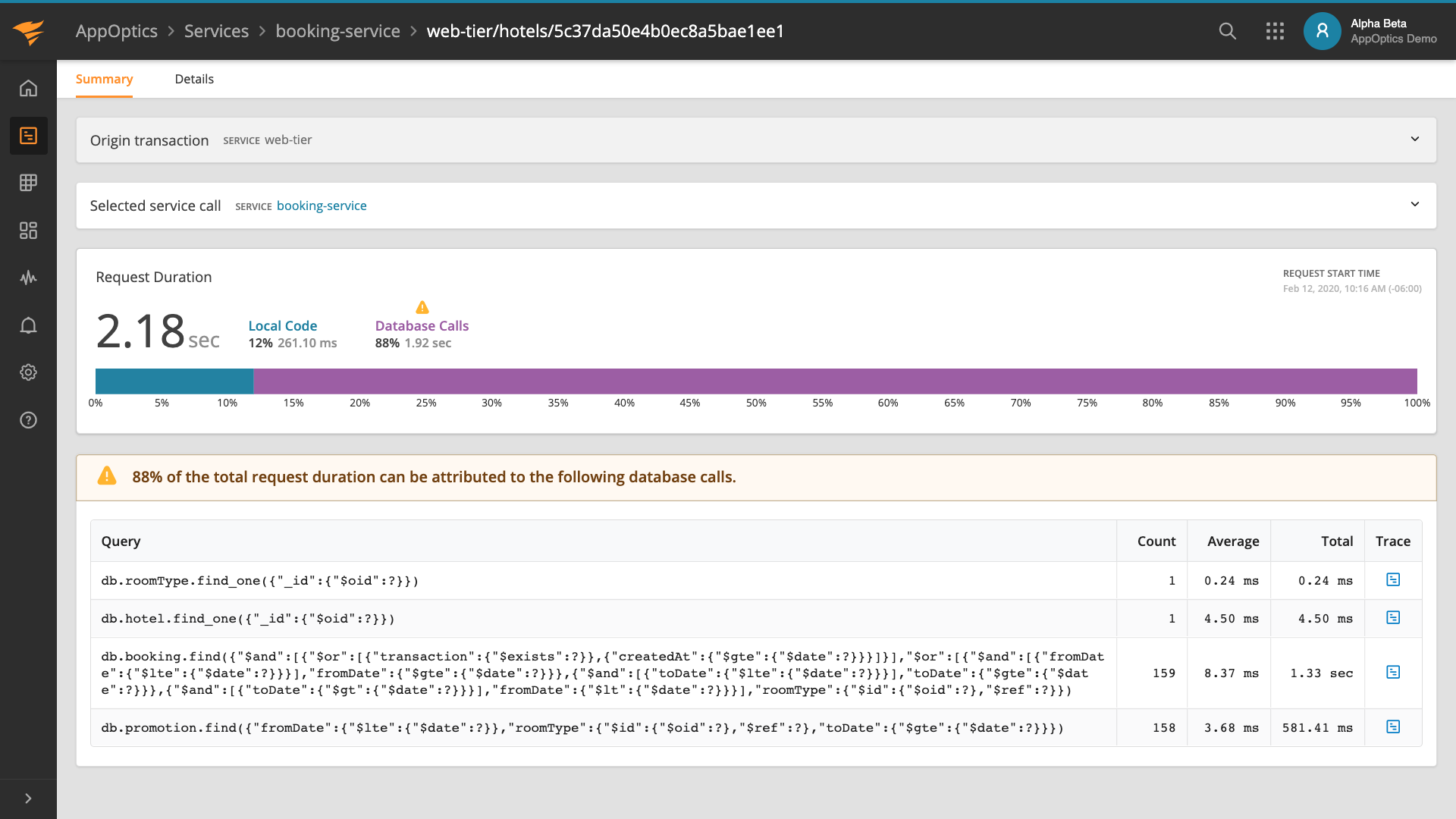
Point to point deep-dive metrics and correlation.
Metrics like DB connection, query analysis, latency in API calls, and other connections, response codes for various APIs, etc are the key ones in our case, which AppOptics provides efficiently.