Bugfender vs. SolarWinds Loggly

Overview
ProductRatingMost Used ByProduct SummaryStarting Price
Bugfender
Score 9.0 out of 10
N/A
Bugfender is a cloud-hosted remote logging tool that helps find bugs even before users do. Beyond crash reporting, Bugfender provides remote access to mobile or web application logs for any user in real-time - wherever they are in the world. Every app developer knows the pain of trying to find (and reproduce) a bug when it’s happening to just one user. Bugfender provides visibility into any user, any device, even when it’s offline. It provides remote access to all application logs, to…
$0
per month
SolarWinds Loggly
Score 7.6 out of 10
Mid-Size Companies (51-1,000 employees)
Loggly is a cloud-based log management service provider. It does not require the use of proprietary software agents to collect log data. The service uses open source technologies, including ElasticSearch, Apache Lucene 4 and Apache Kafka.
$79
per month/billed annually
Pricing
BugfenderSolarWinds Loggly
Editions & Modules
Free
$0
per month
Basic
$39
per month
Pro
$109
per month
Premium
$479
per month
Standard
$79
per month/billed annually
Pro
$159
per month/billed annually
Enterprise
$279
per month/billed annually
Offerings
Pricing Offerings
BugfenderSolarWinds Loggly
Free Trial
NoYes
Free/Freemium Version
YesYes
Premium Consulting/Integration Services
NoNo
Entry-level Setup FeeNo setup feeNo setup fee
Additional DetailsFree trial for Standard and Pro plans for 14 days with all features.
More Pricing Information
Community Pulse
BugfenderSolarWinds Loggly
Considered Both Products
Bugfender

No answer on this topic

SolarWinds Loggly
Chose SolarWinds Loggly
Loggly is all in one window and much easier to search. Any string of text can be used to create alert traps.
Chose SolarWinds Loggly
Security Onion was a much better fit for our uses at this time. The more we integrate into a hybrid environment the more need for Loggly but at this time Security Onion accomplishes our goals.
Chose SolarWinds Loggly
Loggly seems like a cleaner more intuitive solution altogether.
Chose SolarWinds Loggly
We found that Loggly is a very good balance between functionality and costs. With the ability to analyze different log files across different platforms gives it just a bit of a bigger edge compared to other monitoring systems.
Chose SolarWinds Loggly
Loggly proved to be very easy to set up and integrate with our existing systems without having to add extra agents or roll our own everything. Insights others give for Java performance may be better than we've seen with Loggly, but in terms of log aggregation and data insights …
Chose SolarWinds Loggly
I actually couldn't get anybody from Datadog to engage with me, the main problem we had was that our devices couldn't connect to an encrypted port, but we didn't want to send our logs in plain text over the internet. We implemented an on-net log aggregator which then connects …
Chose SolarWinds Loggly
We have a Nagios Log Server, however needed specialist help to get it running before it fell over, which is why we went down the Loggly route.
We also use Microsoft Cloud App Security, however we find using this as well as Loggly gives us double the power to search for issues …
Chose SolarWinds Loggly
Homegrown, AWS Cloud Watch, Splunk, DataDog, ...
Chose SolarWinds Loggly
Loggly was a mistake. We selected it to get a cheap vendor-hosted solution up and running quickly but have come to regret the decision and should have spent the effort to set up the right tool from the beginning.
Chose SolarWinds Loggly
Loggly enabled us to get moving quickly. Update our logger, setup the account, done. We scaled as we used the logging more.
Chose SolarWinds Loggly
SolarWinds Loggly integrates well with other SOlarWinds products, and that is ultimately why we chose to use Loggly. LogDNA was fine for our needs, but costly for only providing logging.
Chose SolarWinds Loggly
Graylog would also have met our requirements, but since we then needed to run a virtual machine (with huge disk space) and also needed more work for setup and maintenance, our calculations resulted in Loggly being more cost effective.
Icinga is not made for log file monitoring …
Chose SolarWinds Loggly
With Loggly we can manage not only AWS apps but all the apps we have (not only Cloud-based apps).
It is also very convenient to add users that need to have access to a given log streams: we do not need to manage an AWS IAM role/user.
And the search engine is way more easy and …
Chose SolarWinds Loggly
Loggly is at another level at indexing and search experience. However, since CloudWatch has the full history with least cost it is always the fallback. So if Loggly has something like S3 glacier kind of feature for keeping old logs which are least accessed with less cost, that …
Chose SolarWinds Loggly
I've used ELK, Sumo, Splunk, Cloudtrail/watch, Sentinel. You get what you pay for. If you have the time, expertise, and budget for a Splunk setup, you can't beat it. ELK is great for OSS shops but takes more hand-holding to scale and stabilize. Loggly, for us, was closer to …
Chose SolarWinds Loggly
Loggly was the easiest to use and the one that really allowed us to get a full view of what's going on with our services, and proactively solve problems.
Chose SolarWinds Loggly
I honestly didn't shop around that much. I came from CloudWatch, which though it has been improving, was very frustrating when it came to just setting up a simple alarm when a specific log message is found, or extracting useful metrics from logs. Loggly was recommended to me by …
Chose SolarWinds Loggly
I have used pingdom for http monitoring in my previous company.
Chose SolarWinds Loggly
Price and ease of deployment were huge factors in our decision to use Loggly. Loggly is actually within reach for most companies while also being very easy to setup. Elasticsearch, for instance, had wildly outdated documentation when I was previewing all these tools so I was …
Chose SolarWinds Loggly
I have used EFK stack (ElasticSearch, Fluentd, and Kibana) and Splunk. Solarwind Loggly is the most flexible managed service out of these solutions and suitable for companies embracing the SaaS model
Chose SolarWinds Loggly
Loggly is simple and reliable. It doesn’t require a huge amount of overhead and gets us the data we need to do the job with minimal intrusion.
Chose SolarWinds Loggly
SolarWinds Kiwi Syslog Server
Best Alternatives
BugfenderSolarWinds Loggly
Small Businesses
SolarWinds Papertrail
Score 8.9 out of 10
SolarWinds Papertrail
Score 8.9 out of 10
Medium-sized Companies
Sumo Logic
Sumo Logic
Score 8.8 out of 10
Sumo Logic
Sumo Logic
Score 8.8 out of 10
Enterprises
Sumo Logic
Sumo Logic
Score 8.8 out of 10
Sumo Logic
Sumo Logic
Score 8.8 out of 10
All AlternativesView all alternativesView all alternatives
User Ratings
BugfenderSolarWinds Loggly
Likelihood to Recommend
-
(0 ratings)
8.2
(0 ratings)
Likelihood to Renew
-
(0 ratings)
4.5
(0 ratings)
Usability
-
(0 ratings)
7.8
(0 ratings)
Support Rating
-
(0 ratings)
7.4
(0 ratings)
Implementation Rating
-
(0 ratings)
7.3
(0 ratings)
User Testimonials
BugfenderSolarWinds Loggly
Likelihood to Recommend
No answers on this topic
SolarWinds Loggly is great for capturing and organizing logs from 3rd party sources such as NGINX. Without SolarWinds Loggly it's really difficult to manage the logs overtime, find traffic patterns, and identify issues before they become a problem. Anyone who is routinely searching through massive log files could quickly benefit from the SolarWinds Loggly and it's capabilities.
Read full review
Pros
No answers on this topic
  • Modern: Loggly is modern: Dashboards, realtime information and the ability speak many different data sources and environments makes it an attractive choice
  • Configurability: Loggly gets log parsing right: by allowing you to in real time- filtering of log data, tagging and identifying data sources
  • DevOps friendly: Loggly is very Componentized: You can have an instance of Loggly running that will Monitor your Linux instance, in addition to all of it's services, as an example. Also, you can start/stop Loggly, without affecting your other components
Read full review
Cons
No answers on this topic
  • Once the logging limit is exceeded, there are no logs period. Unexpectedly noisy logs often correlate with services misbehaving and potentially leading to disruption. An outage is an awful time to lose visibility into the entire system of apps. Some ways to bridge this gap would be appreciated.
  • Filtering by tags is not intuitive in the web interface. You may believe that you are performing the same search and filter as last time since the tags entered are the same, however, this is often not the case. The reliable way to know that you have the same filter is to bookmark the URL. This lack of ease in usability results in devs using Loggly less than they could and implementing logs less effectively during development time (since they don't consider themselves likely to view them anyway).
  • Would like to see a way to onboard our less experienced devs to using Loggly effectively.
Read full review
Likelihood to Renew
No answers on this topic
Management is not open to having an agent sending the data to the cloud instance.
Read full review
Usability
No answers on this topic
Loggly's easy setup, very good customer support, and intuitive interface make Loggly very easy to use. User access management is also very easy as we can tailor the experience for each of our developers to access the information they need without having to wade through other information. While there was a slight learning curve in how to view the logs the way some specifically wanted, everything was possible and quite easy to do.
Read full review
Support Rating
No answers on this topic
The support team have been great when we have logged tickets or had issues, most of the time it is down to user training, however we have had a couple of bugs that they have been able to iron out for us.
Read full review
Implementation Rating
No answers on this topic
It has good architecture, which focus on ese of use.
Read full review
Alternatives Considered
No answers on this topic
I actually couldn't get anybody from Datadog to engage with me, the main problem we had was that our devices couldn't connect to an encrypted port, but we didn't want to send our logs in plain text over the internet. We implemented an on-net log aggregator which then connects to Loggly over encrypted UDP. In theory Loggly made this particularly easy providing configuration snippets for most of the common log services (e.g. rSyslog, syslog-ng). Unfortunately the documentation was out of date and none of the provided configs worked, fortunately they were close enough that combined with our own syslog-ng experience we were able to get it up and going relatively painlessly. The choice then of going with Loggly, backed by an industry favourite in Solarwinds was a no brainer.
Read full review
Return on Investment
No answers on this topic
  • Loggly has alerted us to several bugs, ranging from major to small to "would have been a major problem under load."
  • It's great having our disparate logs collected and the alerts we have set up around them let us know recently that somebody used an incorrect document to generate a mass email. Users were trying to log in with the link provided but getting 401s and I have an alert configured to tell me about high numbers of 4xx errors.
  • Metrics and alerts around metrics have given us peace of mind that automated fulfillment systems aren't going off the rails and costing us hundreds of dollars.
Read full review
ScreenShots

Bugfender Screenshots

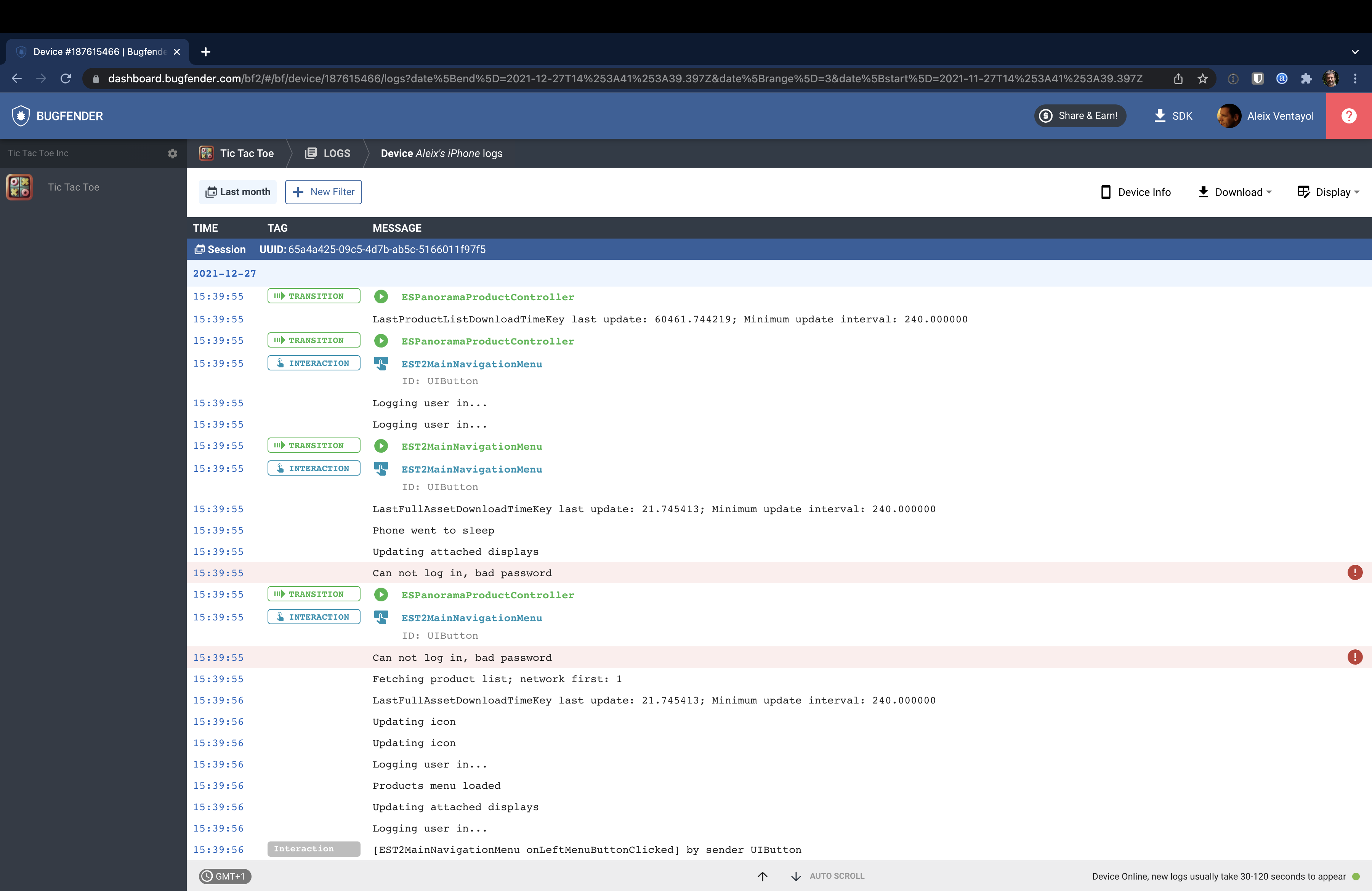
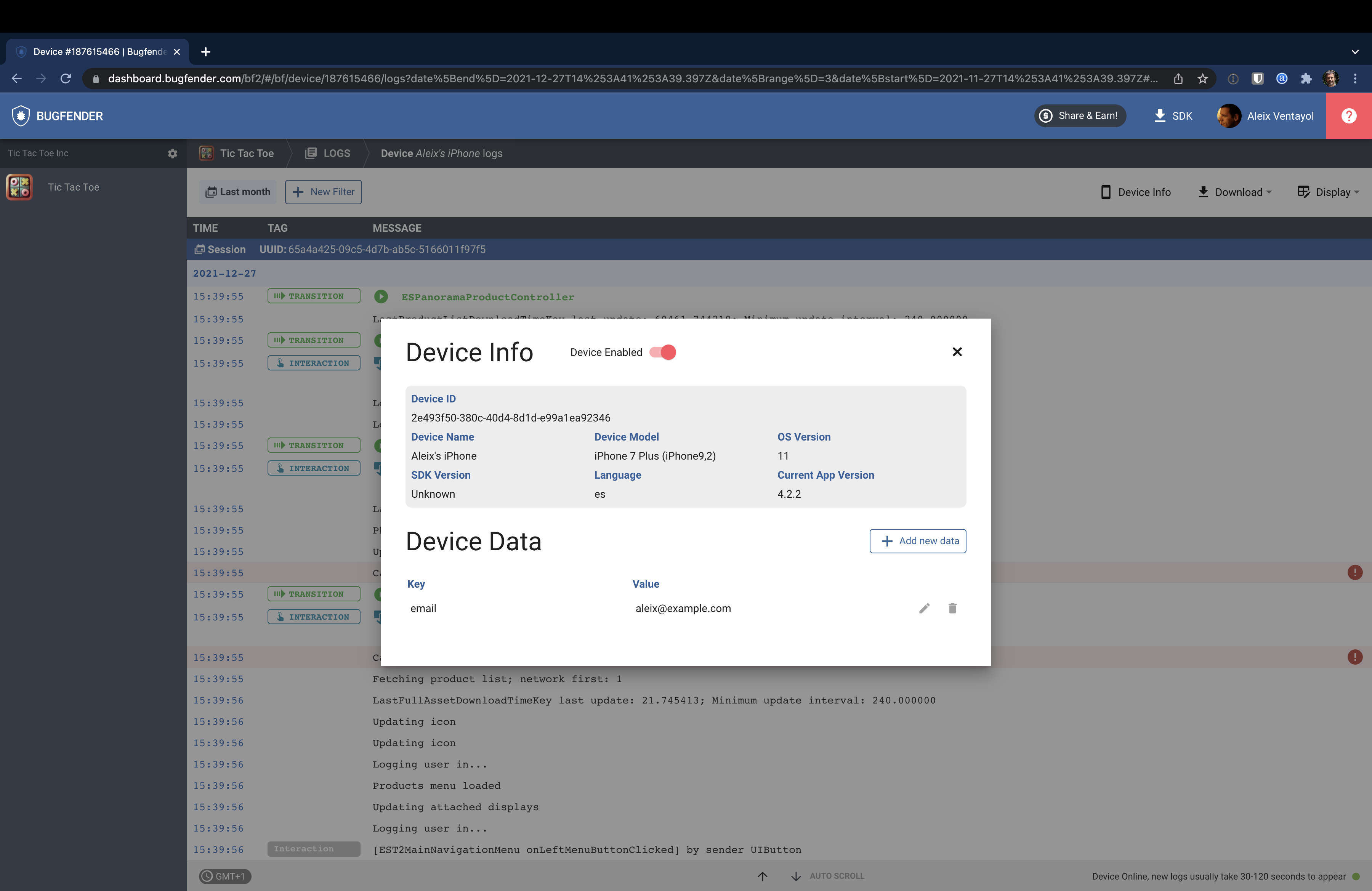
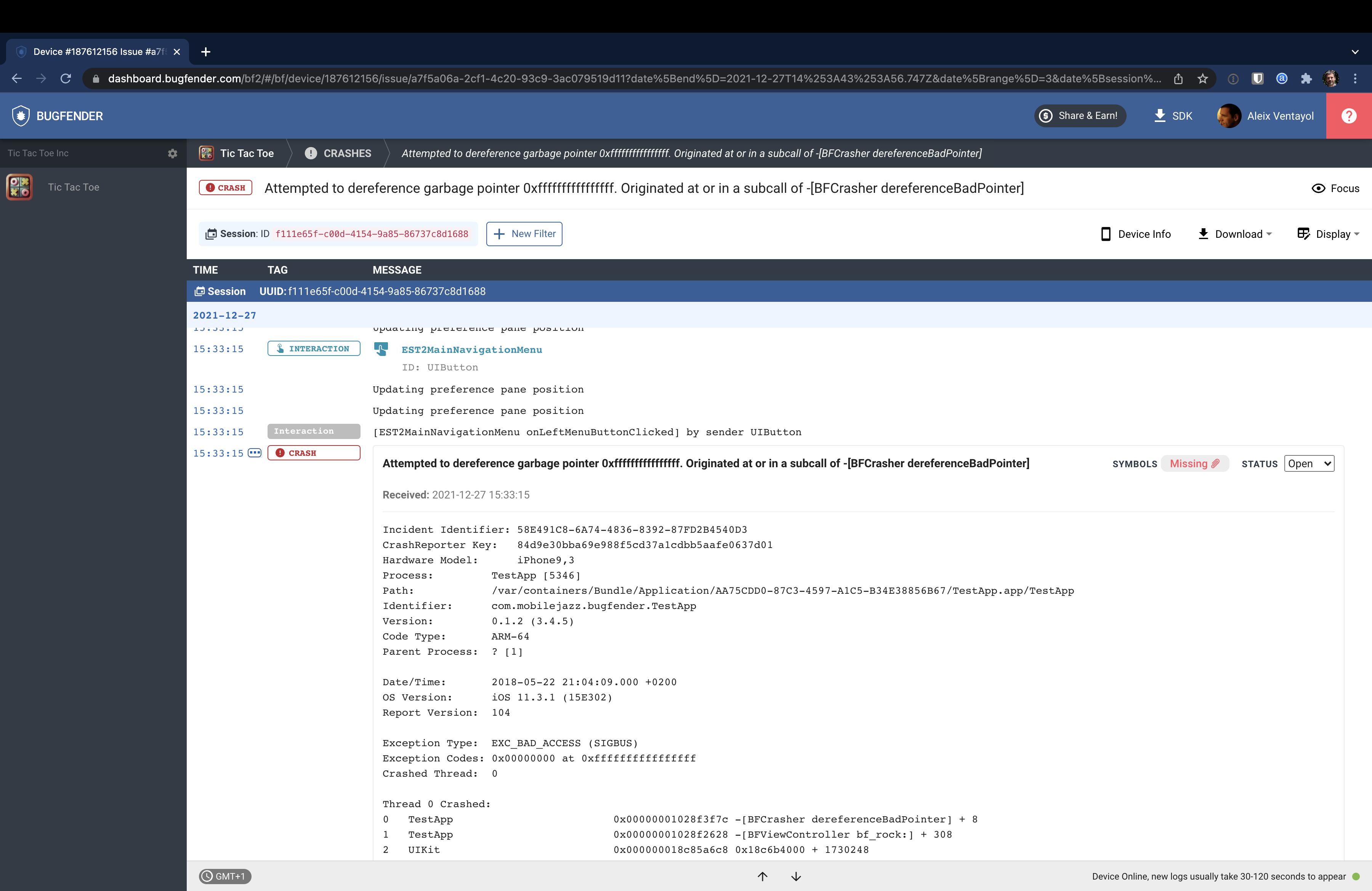
Screenshot of List of devicesScreenshot of Log ViewerScreenshot of Device InformationScreenshot of Crash Information with Logs

SolarWinds Loggly Screenshots

Screenshot of Streamlined Log AnalysisScreenshot of Monitoring & AlertingScreenshot of Screenshot of Screenshot of