Caspio is a solution providing the infrastructure, tools and support that allows users to create customized online databases, applications, reports, forms, and charts/graphs. The point-and-click interface requires no coding experience and apps can be integrated into any website, blog, intranet or content management system.
$100
per month
GNU Emacs
Score 8.0 out of 10
N/A
GNU Emacs is described as a free extensible and customizable text editor for the Lisp programming language.
N/A
Pricing
Caspio
GNU Emacs
Editions & Modules
LITE
$100
per month
PLUS
$300
per month
BUSINESS
$600
per month
ENTERPRISE
Contact Us
per month
No answers on this topic
Offerings
Pricing Offerings
Caspio
GNU Emacs
Free Trial
Yes
No
Free/Freemium Version
No
No
Premium Consulting/Integration Services
Yes
No
Entry-level Setup Fee
Optional
No setup fee
Additional Details
> All plans include unlimited users.
> Caspio offers a 10% discount to non-profits, NGOs, and customers in qualifying countries.
> Compliance plans support strict regulatory requirements: HIPAA; FERPA; PCI DSS Level 1; VPAT 2.0/Section 508; GDPR; EU-US Privacy Shield; SOC 2 Type II; ISO 9001, 27001; CSA Star Level 1, 2 & 3; 3D Secure 2.
> Project consultations for planning and customization, in-depth online help, how-to videos and instructor-led training.
> Pricing plans designed for teams of all sizes. Discount for annual pricing.
—
More Pricing Information
Community Pulse
Caspio
GNU Emacs
Features
Caspio
GNU Emacs
Low-Code Development
Comparison of Low-Code Development features of Product A and Product B
Contact forms are incredibly easy to build and customize, as are most other kinds of more involved forms. Forms allow html input and can be designed in a number of ways. It's helpful if you know some HTML. JavaScript knowledge can add advanced options, but is not necessary for the most common uses. The company used to call itself "No-Code," but has changed to say "Low Code," which is much more accurate.
Emacs is best utilized on a Unix system where it can be easily installed and accessed. It allows for quick editing of files on a system whether you are accessing it locally through the console or remotely via an ssh connection. Once users familiarize themselves with the Emacs shortcuts, it becomes a pretty efficient text manipulation program. On a standard Windows computer, it is less likely to use Emacs for code editing, especially if you have a local repository on your host machine.
Caspio is an online database platform. It allows one to create multiple tables and views to be stored via the web. Tables can be configured to not only hold data but also to hold files like Word docs and images.
Caspio is great at creating online forms and reports. It allows the user to create forms to capture, update data, whether it's password protected or just a simple form.
As a database platform, one can create online tables and forms linking multiple tables and views to each other. I would say it is the Microsoft Access of the online platforms.
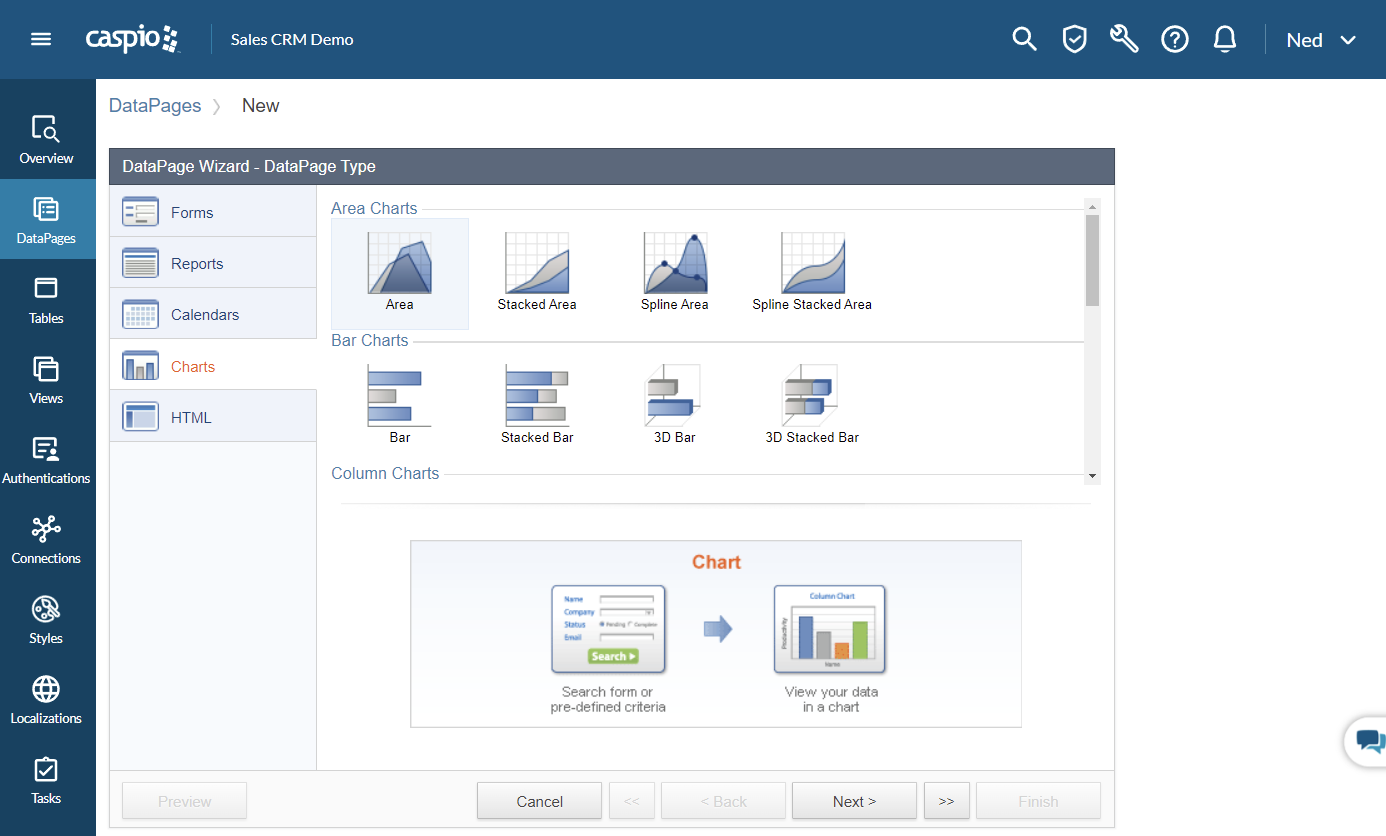
The system is very easy. Wizards allow one to create forms, tables, and datapages. Since the platform is online, you may access your database anywhere.
GNU Emacs is a text editor that can do almost anything that you want to do with it. It is fairly easy to extend the functionality using Emacs Lisp with a large library available.
It can be easily customized using themes as well as custom code to change the look and feel as well as how everything works.
Emacs is old, so it's a little crufty and not too easy to pick up and start using. There is a community package called Spacemacs that simplifies a lot of things that you do with Emacs. It is probably better suited to beginners.
Sometimes, the choices that were made to integrate certain functionality change the basic models for that functionality. This is seen primarily in the version control system support, where multiple version control systems are supported and "unified" to a standard Emacs-y way of doing things. This can be confusing to the new user not familiar with the Emacs way.
Emacs has, as its foundation, a lisp interpreter. This means that the extension language for Emacs is emacs-lisp. Some people find lisp hard to understand and have difficulties writing Emacs extension code, or understanding existing code.
We are committed to Caspio Bridge. We could migrate to another product, but we would not be able to do so quickly. I estimate that we would need about a year (maybe more) to convert all of our forms and processes if we were to switch to some other product
I've had some instances where my team and I discovered a bug in Caspio. We alerted the company, and the bug was fixed in the next regular update of the software. The few times that I've had to contact support, it was a pretty good experience. They're not terribly quick to respond and take action, but they don't ignore you, either.
Everything that you need to know about Emacs can be found on the internet. There are many Emacs "cheat sheets" that list out all of the shortcuts for Emacs. There are videos on how to use Emacs. Emacs is easily installed using the standard Linux package managers and can also be easily updated through them as well. There are tutorials on how to customize Emacs to your liking.
GroupHigh is so frustrating to use. It is constantly changing the way you can search for bloggers, and we can never find exactly what we are looking for
Of course, Vim is a good contender for comparison as well, so I'll include it. I find Emacs much easier to learn, which will help speed up productivity for newer users. It seems much faster than VIM and VSCode, especially under load. It's highly highly customizable, in ways other editors don't stack up against. Its lack of bloat also is a nice addition to a great product.