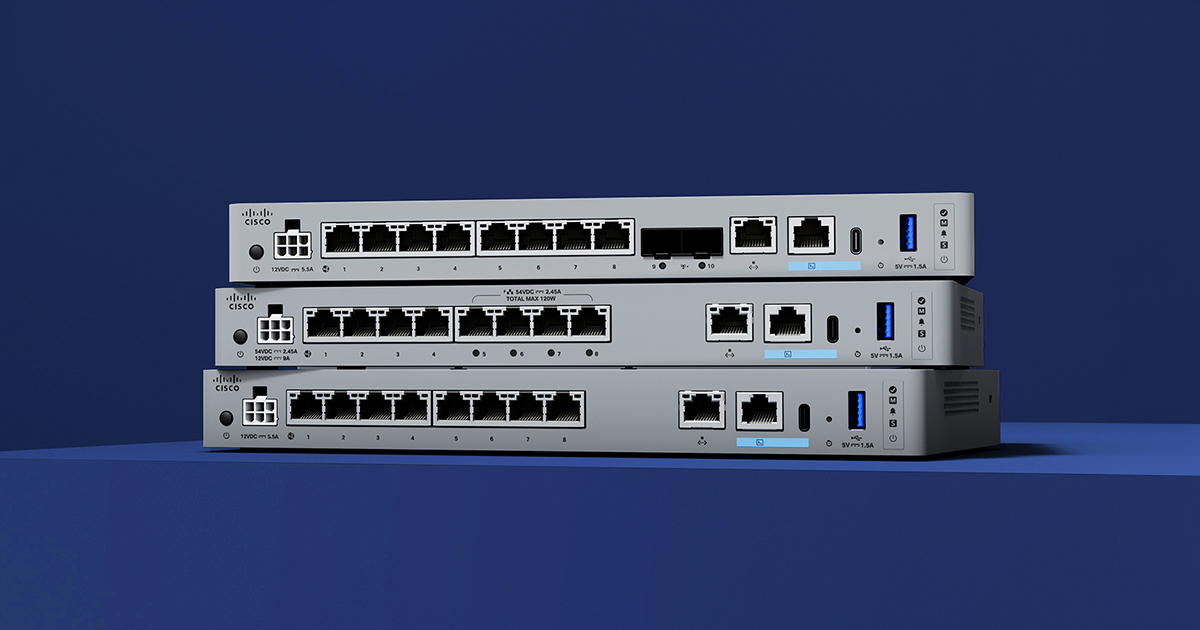
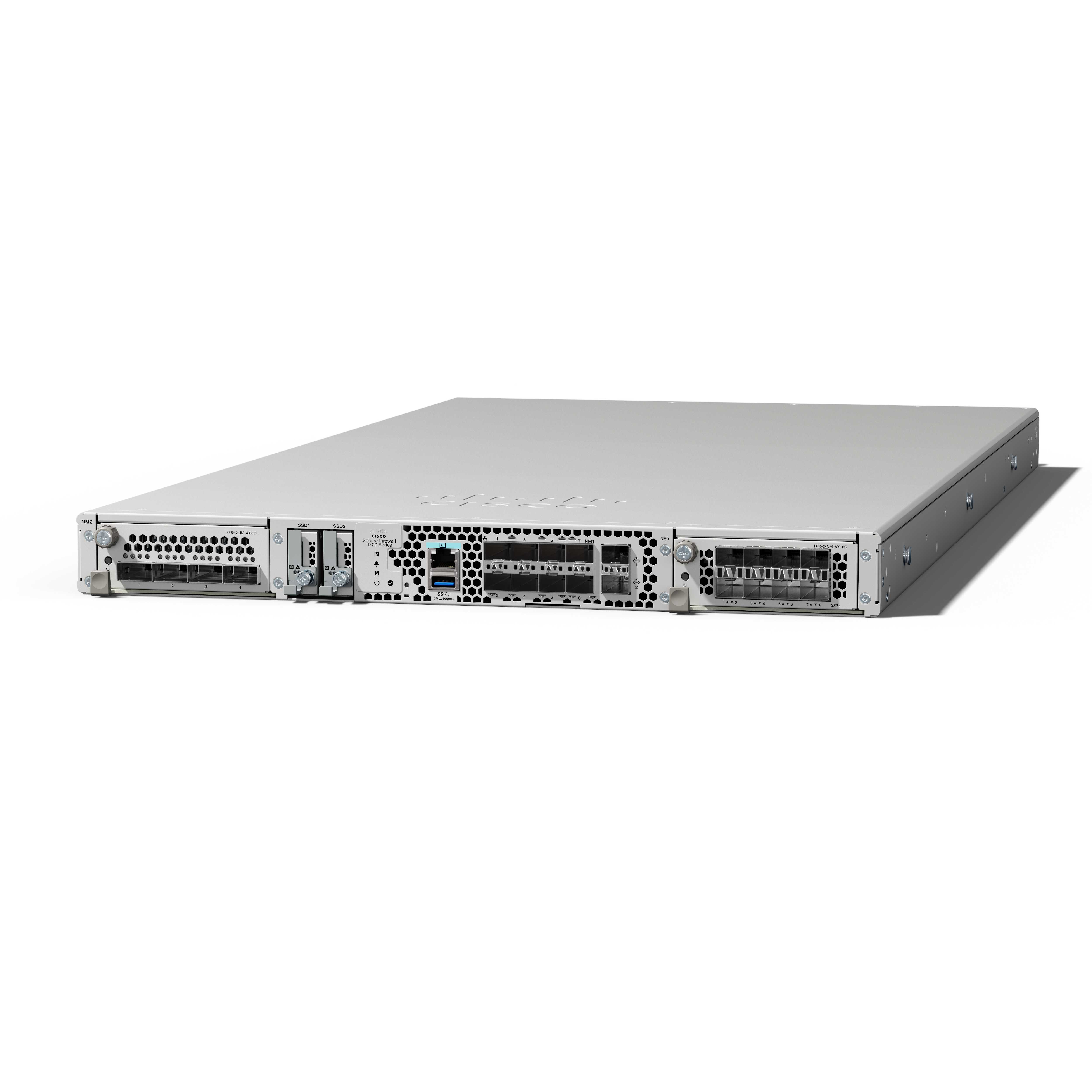
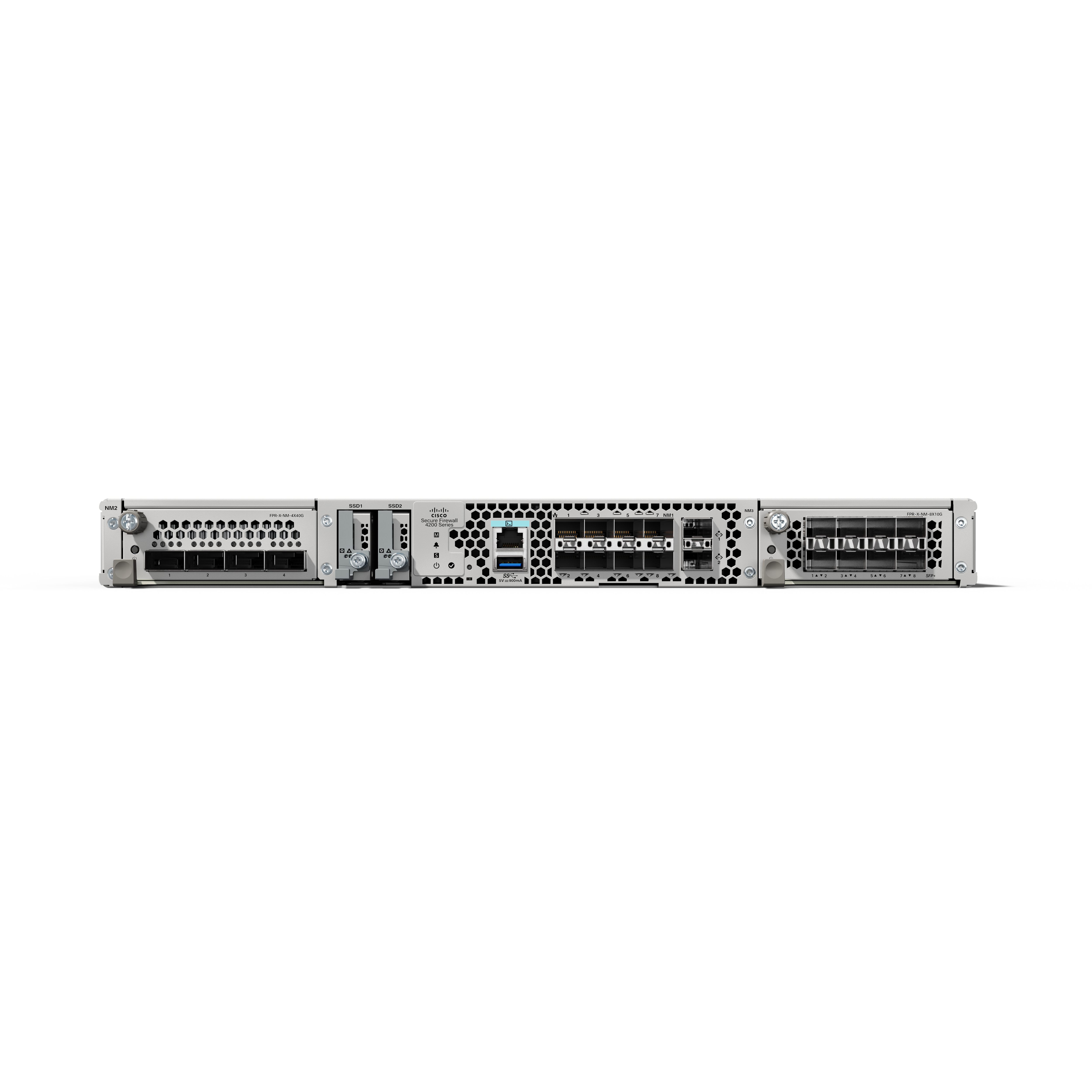
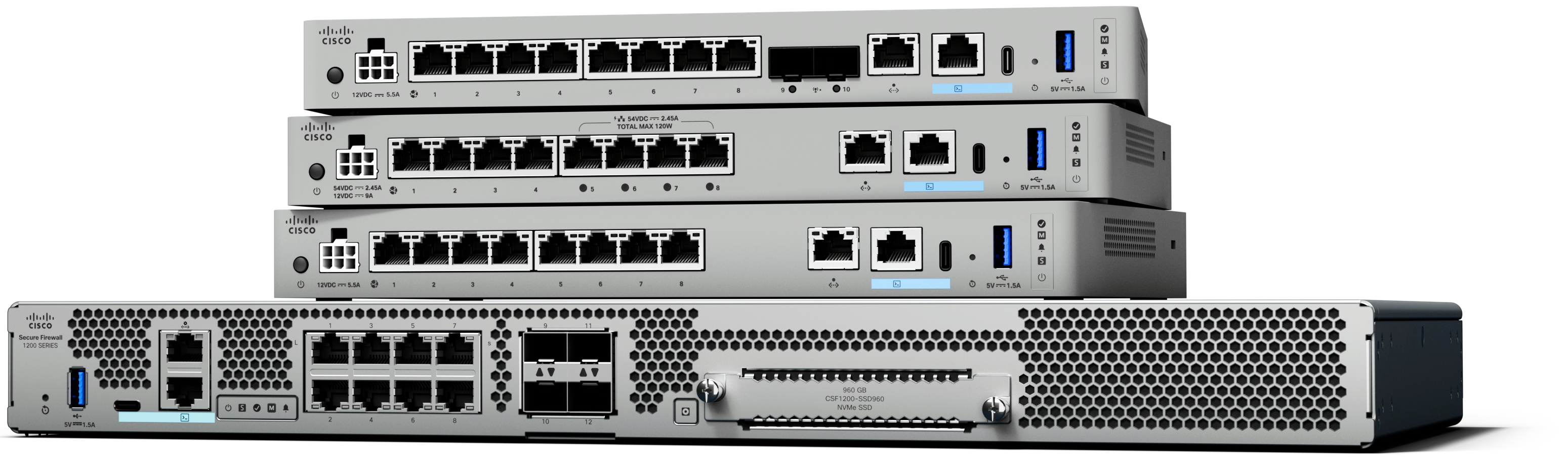
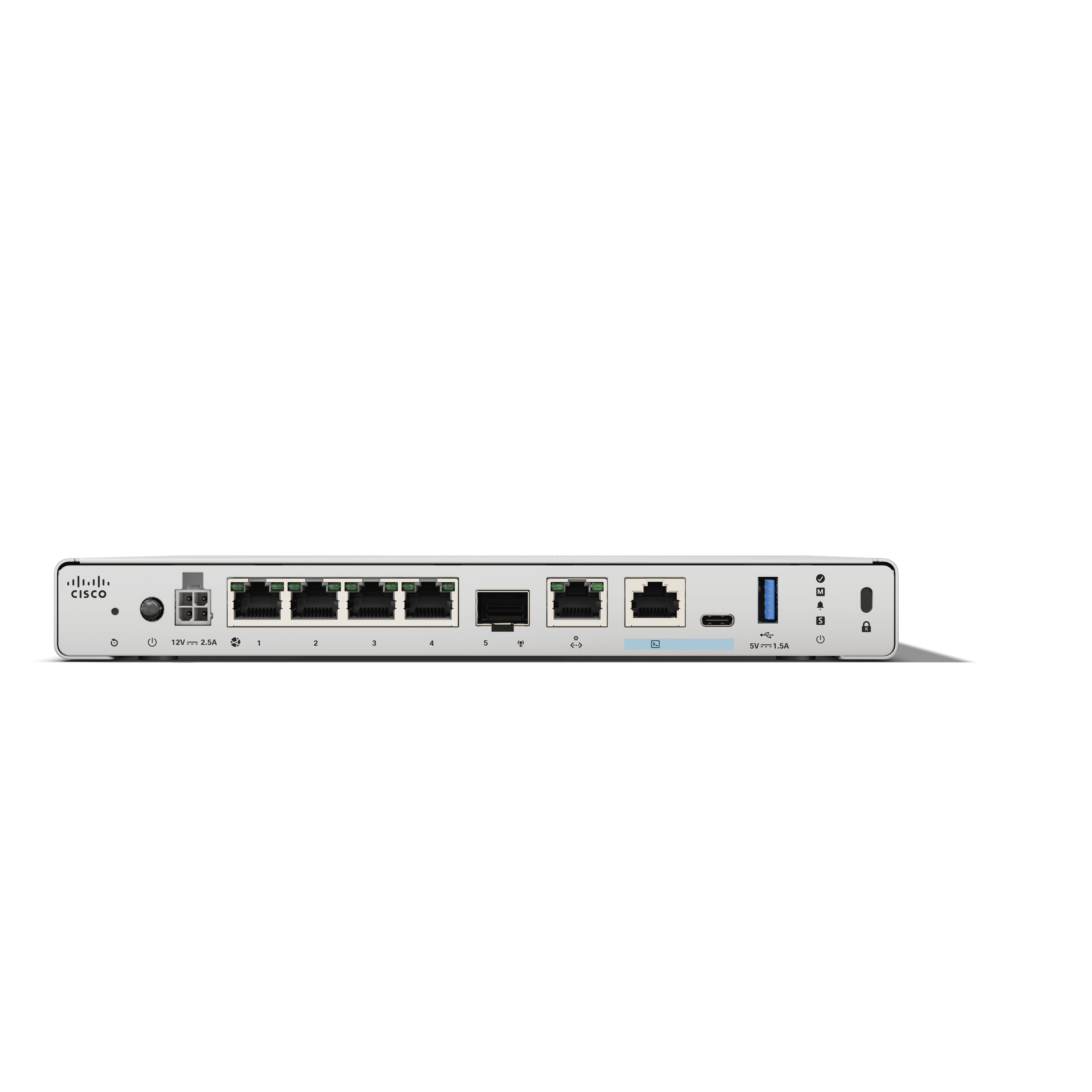
Cisco Adaptive Security Appliance (ASA) software is the core OS for the ASA suite. It provides firewall functionality, as well as integration with context-specific Cisco security modules. It is scaled for enterprise-level traffic and connections.
N/A
Cisco Secure Firewall
Score 8.2 out of 10
N/A
Cisco Secure Firewall delivers comprehensive threat protection for modern, distributed networks. Built to support hybrid workforces and multicloud environments, it enables Zero Trust access, application visibility, and secure remote connectivity. With integration across the Cisco Secure portfolio, including SecureX and Talos threat intelligence, the firewall powers organizations to detect and stop more sophisticated threats. Centralized management simplifies policy enforcement, orchestration,…
Cisco Secure Firewall aka Firepower has a more visibility than the ASA, specially with use of FMC. The Secure Firewall also adds a lot of security features, with IPS, IDS, AVC, Security Intelligence, Identity Mapping and so on.
Cisco ASA's are great for internal network connected access between a firewall and the central management server. And, for complex networks where high security requirements with overly strict compliance are necessary. For networks with limited connectivity to the core or for poor network connectivity these are not the best solution. There are other more stand-alone firewall's that do this better. These firewall's are a little more complex to set up to start with so significant knowledge of these devices is required to set them up and ensure they are best practice installed.
This security solution is well-suited for a complex environment that requires a scalable and secure solution with granular control. It is also recommended that it be implemented with other Cisco security solutions. Requirements are Security-First. It is less appropriate in a small business scenario where advanced configurations are not required. It should be well-trained on this solution.
It's good at segregating networks and ensuring that you only give the access that you need to give. Especially with medical devices, you want to only give the access that they need and keep them in their own separate areas so that they can't just communicate with the rest of the network. It's also good at the border for keeping attackers out of the network.
I wish that the deployment of the updates to the sensors from the FMC was faster.
Cisco ASA firewall did a great job of authentication and authorization on the local firewall. FTD does not authorize users well in terms that an AAA must be setup to provide the granular tools that the ASA did.
Cisco's method of licensing the firewall can be improved. The FMC and the FTD are licensed through the Cisco software manager and there are instances where the devices are licensed but the firewall still displays and error due to licensing.
To be honest there has been now great products out in the market compared to Cisco ASA. I beleieve Cisco has to do a lot of improvement in this area. The other defeiniete factors is the cost when it comes to renewals which is always a premium on Cisco products
It works really well. We can do most anything we want or need to with it, and you don’t have to have a doctorate or multiple certs to necessarily figure it out. The thing that would probably have to happen to make us switch would be if we just got priced out - Cisco’s more powerful and higher bandwidth models cost a pretty penny.
i think overall after ALOT of tac cases it works allright now. But still have alot of issues if you use cloud based mangement. fx, if you open 2 windows of access policys, both of the pages, rules starte to jump form side to side. if you then open one more list, its start to jump even faster. if you close the 2 of them, its back to normal. ALSO the extended access lists for VPN, SUCKS. Its the tiniest window when opening the editor, and you are not able to give the rules names, Which means finding and editing rules SUCKS, its a horrible experience, and eveytime we have to we want to yell :P
I generally have not noticed the outages, however since it's a machine it can malfunction, we need to implement the firewall infrastructure in such a way that it is highly available with device failure, region failure etc. Else any solution will be having the issues if they are not build with resiliency.
would rate Cisco Secure Firewall’s availability a 9 out of 10. In our production environments at Rackspace, the platform has been consistently reliable. We’ve deployed it in high-availability pairs, and failover works as expected with minimal disruption. Over the past several quarters, we’ve had no major unplanned outages directly attributable to the firewall itself. The software has been stable
The support is usually very good and gets back to you very quickly. However I had some instances of when two engineers will give me wildly different answers to what I thought was a simple question. Overall however I do rate the support highly and they are generally always very good.
Firewall support is professional just like any other technology Cisco sells. From answering simple questions to bringing out outages affecting a large population of our workforce, Cisco support is always courteous, professional, and communicates with our team to keep our request on their radar. Some of the brightest people I've met are from Cisco support both in IQ and EQ which shows the talent Cisco is able to onboard to their team.
was a good training but questions was answered not so good. Training was "Fundamentals of Cisco Firewall Threat Defense and Intrusion Prevention (SFWIPF)".
It was quite a good one, how ever requires an expertise to deploy hence the SMB segment would be finding it difficult to implement this product. The one good reason is that there are lot of ASA certified engineers in compared to the other certified engineers. Hence this resembles positively on the deployment as you have quite a lot of experienced engineer on your deployment
Our initial implementation was aided by Cisco's professional services and was excellent. The engineer was very knowledgeable and helped us work through issues while building out our new internet security edge Part of this involved tools to migrate the firewall configuration from old to new.
We were using [pfSense] before in our environment but we regularly facing difficulties over it due to software bugs & downtime. After implementing Cisco ASA, it resolved our availability issue & provides us a reliable solution with the best security features & easy to understand GUI.
Cisco Secure Firewall works better with the Cisco ecosystem when we can utilize it and feels beefy enough when we utilize it in the data center. The Fortinet we have found are great, small cost boxes for remote offices with a better UI then Cisco Secure Firewalls. The feature set included with the firewalls feels similar from a security point of view.
Positive impact. Cisco is a big player in IT environment. It is future stuff, everything, what you learn today, maybe something can be tomorrow. And yes, it's quite important to learn the new stuff every day. And yes, that's it. Yes, I'm happy with Cisco.