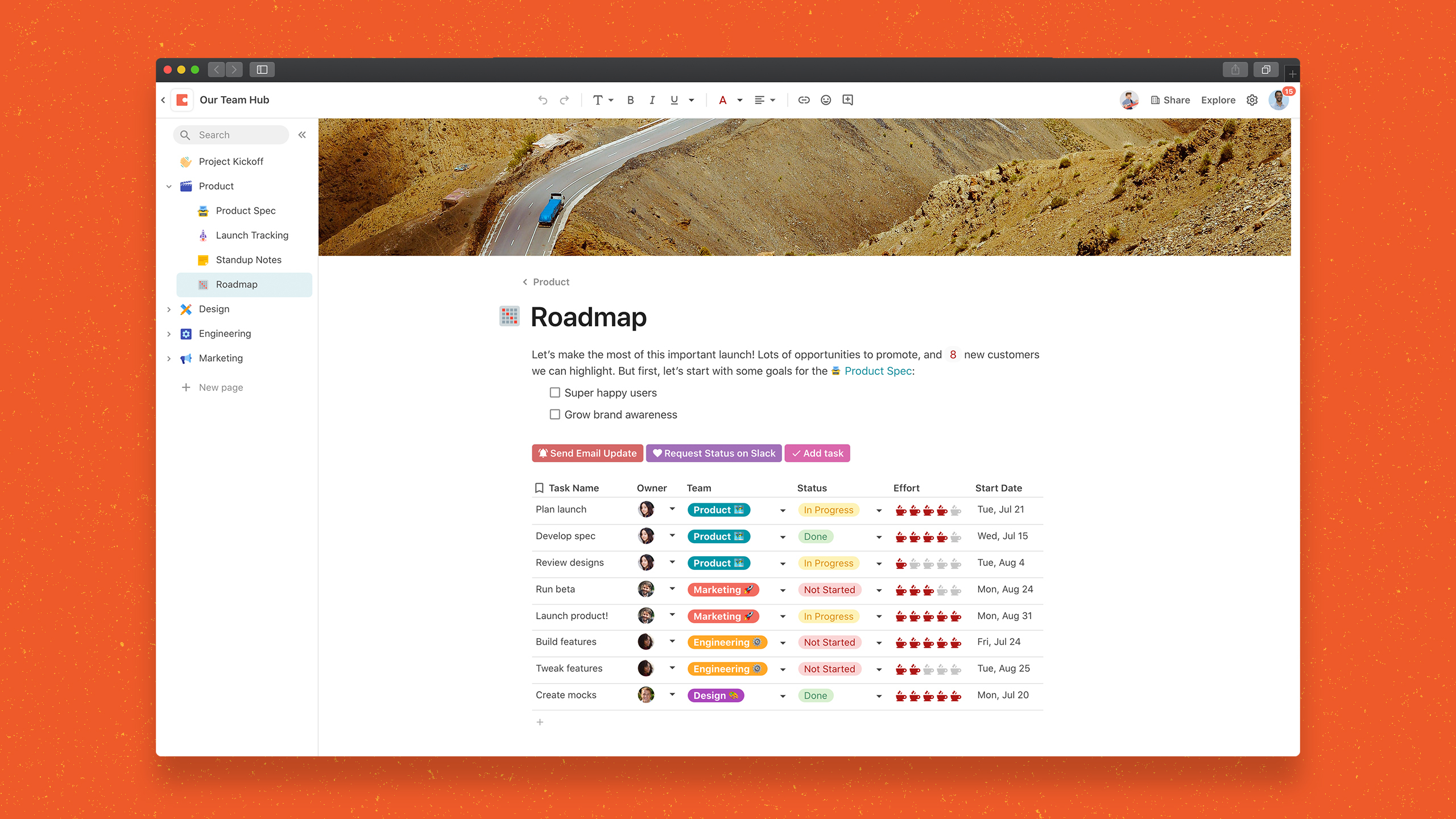
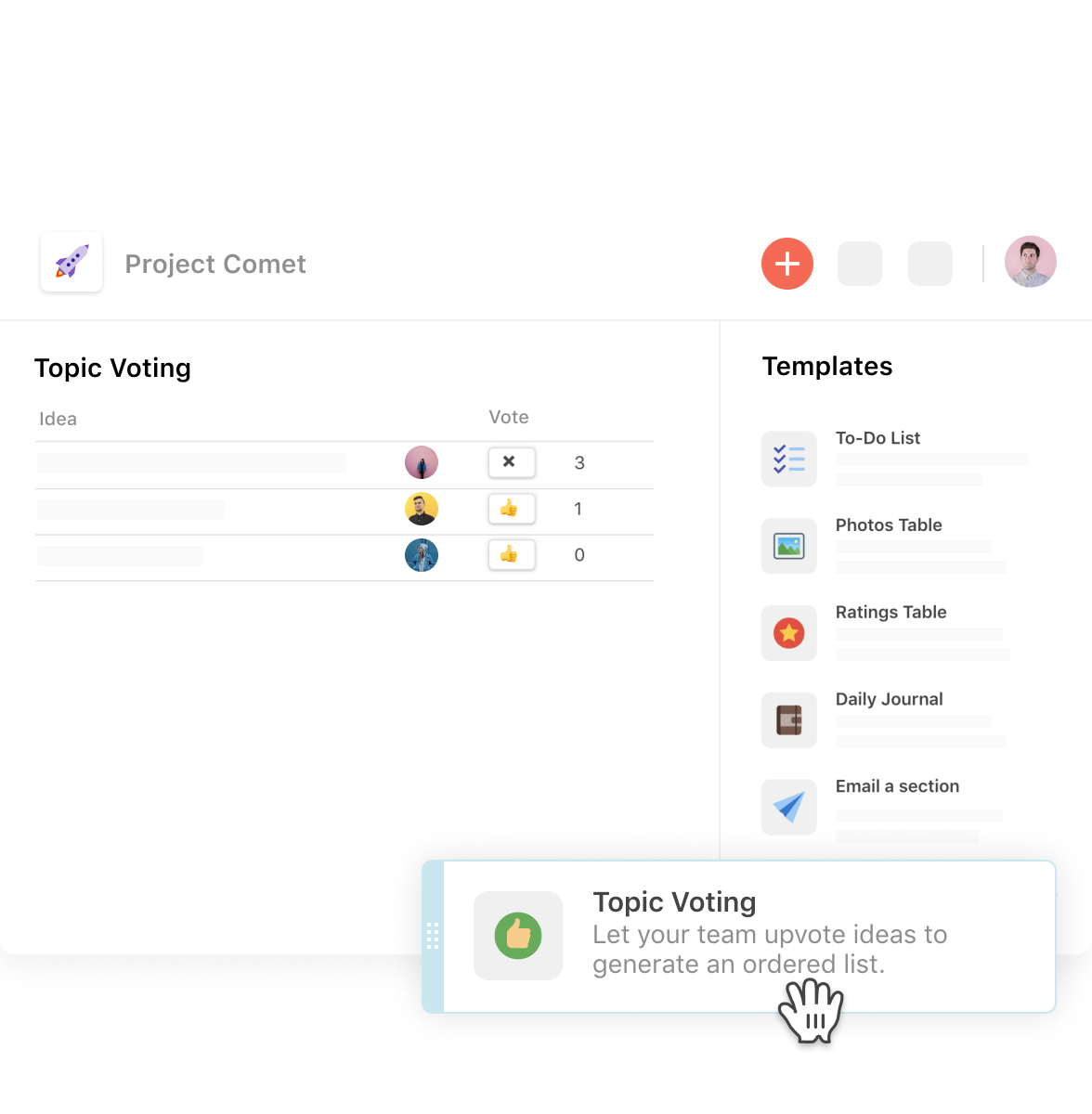
Coda, acquired by Grammarly in early 2025, is a template-based document creation and collaboration solution, supporting a variety of use cases.
$0
per month
ServiceNow IT Service Management
Score 8.2 out of 10
N/A
Built on the ServiceNow Now Platform, the IT Service Management bundle provides an agent workspace with knowledge management, and modules supporting issue tracking and problem resolution, change, release and configuration management.
N/A
Pricing
Coda by Grammarly
ServiceNow IT Service Management
Editions & Modules
Free
$0.00
per month
Pro
$10.00
per month per doc maker; unlimited editors (paid annually)
Team
$30.00
per month per doc maker; unlimited editors (paid annually)
Enterprise
Custom Pricing
ITSM Standard
Custom Quote
ITSM Pro
Custom Quote
ITSM Enterprise
Custom Quote
Offerings
Pricing Offerings
Coda by Grammarly
ServiceNow IT Service Management
Free Trial
Yes
No
Free/Freemium Version
Yes
No
Premium Consulting/Integration Services
Yes
No
Entry-level Setup Fee
No setup fee
No setup fee
Additional Details
With Coda, you only pay for Doc Makers.
Often one person creates a doc, others edit it, and some simply observe from afar. Instead of charging for everyone, we only charge for the people who create docs.
Interested in enterprise pricing? Visit coda.io/enterprise
ITSM Pro and ITSM Enterprise also are available with optional "Plus" add-ons. These include AI Agents, an AI Agent Studio, and other features that augment the capabilities of the platform using AI Virtual Agents to automate tasks.
More Pricing Information
Community Pulse
Coda by Grammarly
ServiceNow IT Service Management
Features
Coda by Grammarly
ServiceNow IT Service Management
Incident and problem management
Comparison of Incident and problem management features of Product A and Product B
Coda by Grammarly
-
Ratings
ServiceNow IT Service Management
8.4
80 Ratings
2% above category average
Organize and prioritize service tickets
00 Ratings
9.179 Ratings
Expert directory
00 Ratings
8.062 Ratings
Service restoration
00 Ratings
8.265 Ratings
Self-service tools
00 Ratings
8.377 Ratings
Subscription-based notifications
00 Ratings
8.474 Ratings
ITSM collaboration and documentation
00 Ratings
8.371 Ratings
ITSM reports and dashboards
00 Ratings
8.474 Ratings
ITSM asset management
Comparison of ITSM asset management features of Product A and Product B
Coda by Grammarly
-
Ratings
ServiceNow IT Service Management
8.2
72 Ratings
1% below category average
Configuration mangement
00 Ratings
8.171 Ratings
Asset management dashboard
00 Ratings
8.370 Ratings
Policy and contract enforcement
00 Ratings
8.362 Ratings
Change management
Comparison of Change management features of Product A and Product B
Coda is great to build a place for your users to go to and see information. It is easy to navigate through and the variety of content creation is great. However, it is not always easy to create what you want and there is a lot of playing around and learning. Coda also sometimes misses some functionality which is expected. For example, downloading a list of users that have access to the platform. Being able to send push notifications when a new page has been created etc. Overall it is a good tool to use just be prepared to invest time!
It is well suited for medium to large companies that require a tool to allow users to create IT requests, have a self-service portal, track the completion of such requests and have access to KPIs to understand the satisaction level of the requestors. It is not the best tool if you want to have a heavy personalized IT Service Management tool to cater to all your needs or when you want to have an easy way to search for past tickets using specific keywords.
It takes getting used to in terms of how the formulas per column is implemented, in contrast to how we build tables in Excel. For organization/team purchase, it would be worth considering having a training for the core team of users. Right now, we do a lot of self-learning.
Inability to email charts or image without these objects being hosted on a third party. The community has been great in providing workarounds but it would be much more convenient to be able to have such ability natively.
APAC Support. I'm based in Malaysia, due to timezone differences, even with a livechat implemented, the support for each step and conversation takes up to 24 hours per response. Having some hours covered in our timezone would greatly improve customer support experience.
Finding requests that I opened and have since been completed by the assigned group/individual is very difficult to accomplish unless I've written down the request numbers somewhere.
Requests that I opened and are subsequently closed, often continue to appear in the list of "My Open Requests" giving the appearance that they were not completed when in fact they were.
It may exist, but if it does I haven't found it yet, which makes it less than intuitive, but I would like to see the ability to recall a request in ServiceNow.
I believe our firewall rule change request for is a custom form, but it has a serious drawback. If I submit such a request and need to make a correction to it before it is approved, there isn't anyway for me to do so. The request has to first be rejected with the creation of a sub-task in order to edit it before it is resubmitted for approval.
Coda is definitely something that has been proven to drive positive impact in our organization. We have many divisions that can benefit from this that we have yet to explore. It would definitely be worth renewing.
To be completely honest setting up a new ticketing system can be a pain in the ass. Once you have it setup and customized the way you want it, you don't want to switch unless you're unhappy with the product. Unless future releases and updates really muck the system up, I wouldn't change.
There is a little bit of a learning curve on where to point and click to add in different elements and make edits. But it is still very manageable once you get the hang of it. I do still have some issues with some of my connected pages updating each other when I don't want them to sync. So I'll end up editing one page, and it will make the same edits on another page.
It has helped us a lot, and after some training and getting to know the product, we are quite comfortable with it and feel much more capable of understanding what's going on in our IT environment. The only reason it doesn't get a perfect score from me is that there is a learning curve for both end users and IT admins using ServiceNow. Once you customize the UI and remove unnecessary fields. You are left with a very clean product that does what it needs to and does it well.
We haven't done any integrations - the initial part of our experience we found that for docs with complex formulas, the page tends to load slowly but in recent months, Coda has improved and optimized the loading times in general and we generally don't find any problems in terms of speed anymore.
Mainly due to timezone differences. I think Coda's support in general is well implemented and executed. They know their stuff and are helpful. But since I'm not in the same timezone, solution rates are slower for me, and that's not something I prefer. I work in customer service, too, and more often than not, time is important. Shortening the solution time would be a much greater experience.
I would give it this rating because we have had no major issues with the support for ServiceNow after we implemented it at our organization. They seem to respond promptly and efficiently if we ever do need to open a support case with them about an issue we are having.
To type in what should be a text box, you have to click an empty cell, a tiny text box pop up opens with a check box and an X. You the. Type in the text box and have to click the check mark. If you have a bunch of fields to fill out, doing this is very annoying. Absolutely know thought went in to this. I'm sure somebody in marketing thought it was a good idea. It wasn't.
I'm relatively inexperienced but this experience is meaningful. It would have been nice to have some guidance from Coda so that we understood more on Coda's purpose and potential.
Without exception, every client I have worked with has been very happy with their resulting product. While this is partly due to my work, I must point out that the platform is the winning decision, not the implementer.
While all of the products listed have great features and platforms, there was always one thing missing from them that I would need to get from another application. Coda was the first one we used that really combined some of the best parts of those products and allowed us to use it in one place. I also appreciate the flexibility of creating your own framework and workflow, unlike in other tools where you have to follow how they capture data and organize projects.
We used to use Jira to handle service tickets but it's way too robust for something this straightforward. Due to the nature of Jira, you needed to already have a lot of documentation and knowledge about who should be assigned the ticket, so the lift of creating a ticket was time consuming.
I think scalability is definitely good here since it's based on number of doc makers. Implementation into each dept becomes simpler. That being said, due to the nature of our work, we find it easier that we have a "super user" and then a team of other doc makers. This would make the doc creation and management more efficient.
We don't currently have a CMDB, so we are leveraging ServiceNow to build one using their ITSM and ITOM tools. This is a huge gap for us as a company and it will be a big win once this is in place.
The core help desk functions are comparable to most other tools on the market, but SN does a great job of integrating that data with other modules like Problem, Change and Event Management to provide a truly integrated solution.
The tool is expensive, so you will need to try to do as much as you can with the platform. We currently use other systems for HAM and SAM but will be including these in our ServiceNow instance in the future to help maximize our ROI.