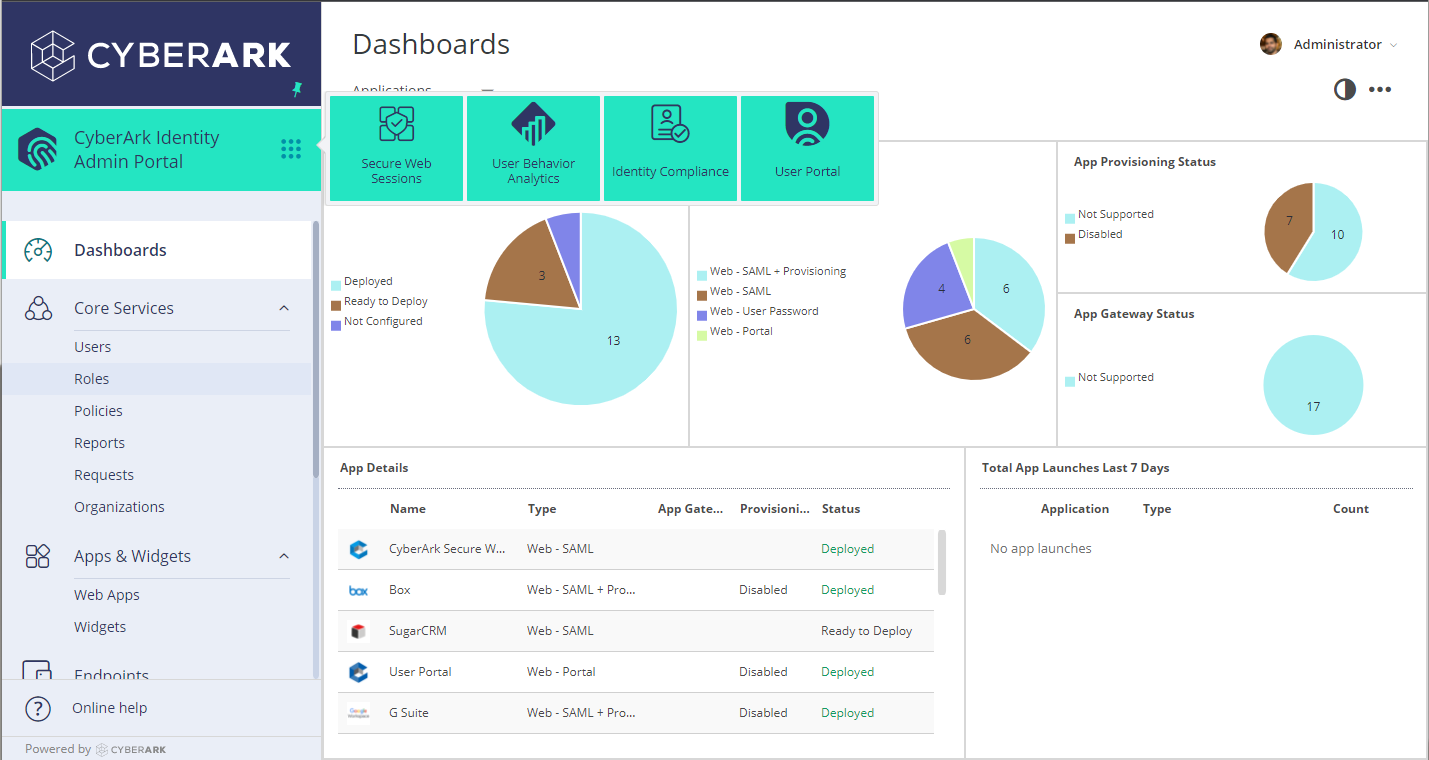
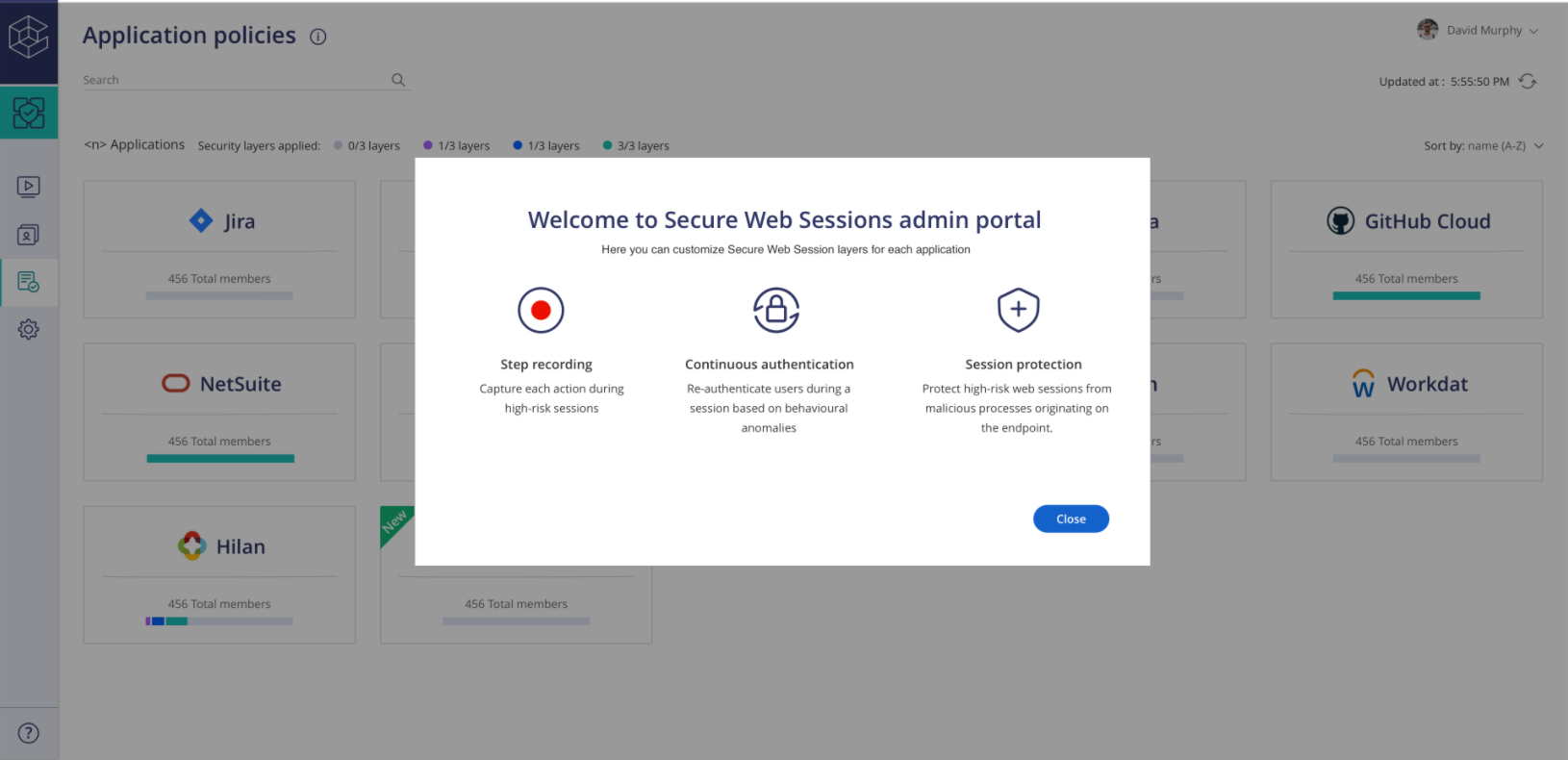
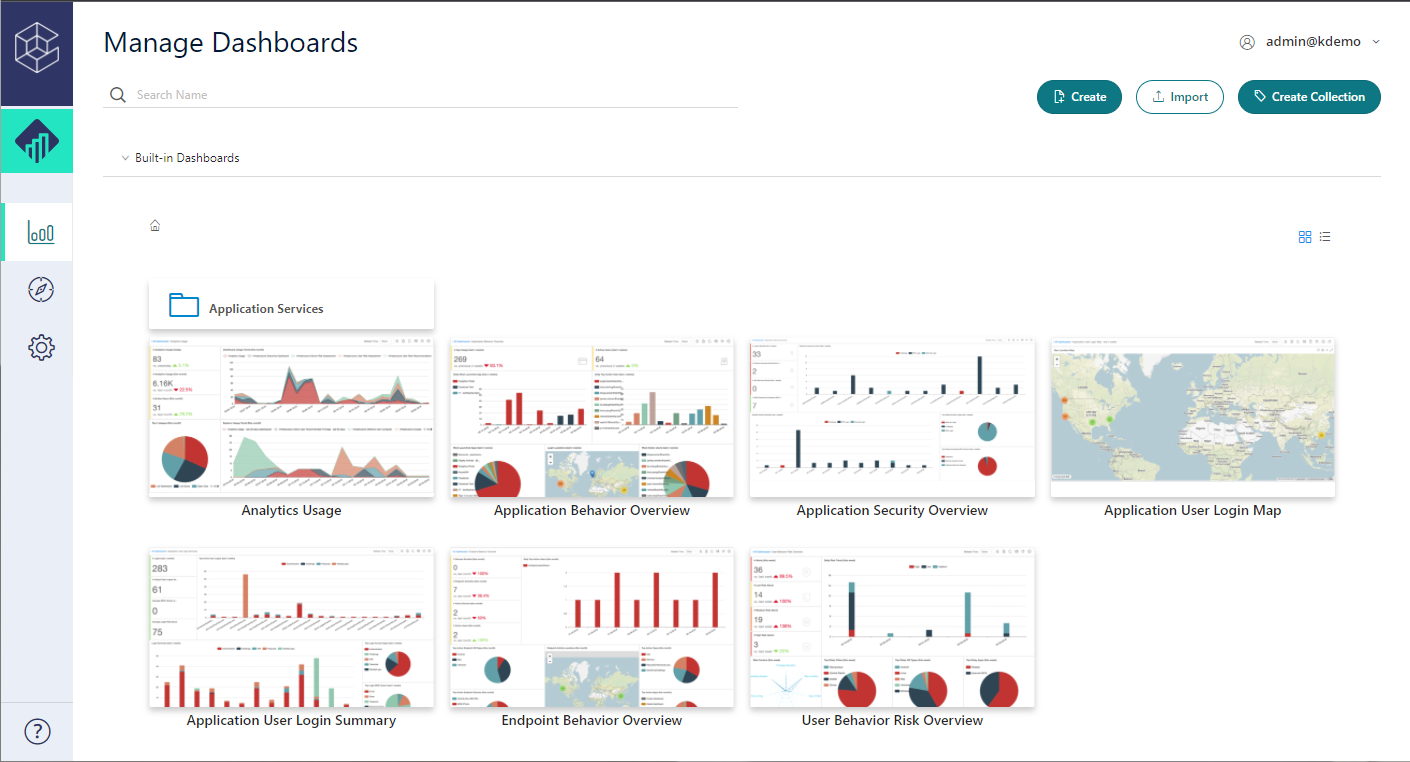
CyberArk Identity is a SaaS-delivered suite of solutions designed to simplify identity and access management in enterprises. CyberArk Identity unifies Workforce Access and Identity Management solutions in a single offering. Workforce Access capabilities include single sign-on, multi-factor authentication, session security, and credential management. Identity Management capabilities include lifecycle management, identity orchestration, and identity governance. With CyberArk Identity,…
N/A
LoadRunner Professional
Score 8.7 out of 10
N/A
A solution simplifies performance load testing for colocated teams. With project-based capabilities, so teams can quickly identify abnormal application behavior.
N/A
Oracle Access Management
Score 7.8 out of 10
N/A
Oracle Access Management delivers risk-aware, end-to-end multifactor authentication (MFA) and single sign-on (SSO) that integrate identities and systems across cloud and on-premises.
N/A
Pricing
CyberArk Workforce Identity
OpenText LoadRunner Professional
Oracle Access Management
Editions & Modules
No answers on this topic
No answers on this topic
No answers on this topic
Offerings
Pricing Offerings
CyberArk Workforce Identity
LoadRunner Professional
Oracle Access Management
Free Trial
Yes
No
No
Free/Freemium Version
No
No
No
Premium Consulting/Integration Services
Yes
No
No
Entry-level Setup Fee
No setup fee
No setup fee
No setup fee
Additional Details
—
—
—
More Pricing Information
Community Pulse
CyberArk Workforce Identity
OpenText LoadRunner Professional
Oracle Access Management
Features
CyberArk Workforce Identity
OpenText LoadRunner Professional
Oracle Access Management
Identity Management
Comparison of Identity Management features of Product A and Product B
CyberArk Workforce Identity
9.0
3 Ratings
9% above category average
OpenText LoadRunner Professional
-
Ratings
Oracle Access Management
-
Ratings
ID-Management Access Control
9.03 Ratings
00 Ratings
00 Ratings
ID Management Single-Sign On (SSO)
9.02 Ratings
00 Ratings
00 Ratings
Multi-Factor Authentication
9.02 Ratings
00 Ratings
00 Ratings
Password Management
9.02 Ratings
00 Ratings
00 Ratings
Account Provisioning and De-provisioning
9.03 Ratings
00 Ratings
00 Ratings
ID Management Workflow Automation
9.03 Ratings
00 Ratings
00 Ratings
ID Risk Management
9.03 Ratings
00 Ratings
00 Ratings
Load Testing
Comparison of Load Testing features of Product A and Product B
Centrify is a great solution for anyone looking to start using Office 365. It is also a great solution for anyone wanting to provide their users with an SSO solution using OAUTH, Federation, or SAML for any hosted service. If you are looking to use Centrify for MDM but you aren't using a hosted/hybrid email solution such as Office 365, there are better on-premise options that should be explored.
Micro Focus LoadRunner and its suite of tools, specifically VuGen works wonderfully for us for all web, http/https and web service calls. We've been able to build tests for near any scenario we need with relative ease. As long as we have crafted up requirements for our scenarios / scripts to managed scope, we've had high success working with scripting and data driving. Our main tests are web service calls - typically chained together to form a full scenario with transactions measuring the journey or a similar (measure along the way) journey through a browser. For web services we will use VuGen and browser we've shifted to Tru Client I have had little-to-no experience scripting against a thick client where a ui-driven test would be required. I know its possible but quite costly due to the need to run the actual desktop client to drive tests. We've been fortunate enough to leverage http calls to represent client traffic.
OAM is designed to be scalable, and it can handle large-scale deployments with thousands of users and applications. It provides a centralized framework for managing access to web applications and resources, enabling organizations to define and enforce security policies across their entire IT environment. OAM offers a range of authentication and authorization mechanisms, including multi-factor authentication and OAuth-based authentication, making it suitable for organizations that need to meet different security and compliance requirements.
Oracle Access Management allows superior session management capabilities. It can maintain and terminate session states using access engine and endpoint cookies or security tokens.
It allows for automated single sign-on as well as protocol translation.
The suite allows for real-time fraud detection and prevention capabilities. This is especially useful where our applications are accessed by tens of thousands of users simultaneously.
Occasionally, I get logged out of Gmail, sometimes in the middle of an email. I'm not sure why it happens, but I think it has something to do with timing out. Which is strange because I'm on email all day. Not sure why.
HP LoadRunner with new patches and releases sometimes makes no longer support older version of various protocols like Citrix, which makes the task time-consuming when using older versions of LoadRunner for some of the cases. So it should support older version as well while upgrading.
Configuring HP LoadRunner over the firewall involves lots of configuration and may be troublesome. So, there should be a script (power shell script for Windows or shell script for Linux users) to make it easy to use and with less pain.
I would like to see the RunTime Viewer of Vugen in HPLoadRunner based on the browser I selected in the run-time configuration to make it feel more realistic as a real user.
Licensing cost is very high when we need to perform a test on application for a specific group of users.
The product could be improved by simplifying changing the master password. That is, if you change a password in one place, it would be good to automate changing the password for all the gateways so that change is less complicated.
It should be more Customizable for Customer Specific needs.
Oracle Access Management connects well with Oracle Database but doesn't work smoothly with Microsoft AD.
Centrify is central to creating efficiency and safety for our clients and internally. To remove it would cause a massive disturbance in the lives of our employees and our clients.
Usability with this platform is pretty good after you get a handle of things. I must say for new users it can take some time for training and adoption. This however is not just limited to Oracle products but most major ERP. Once you get past the initial training period all should be well from there.
The support staff thus far has been very helpful. At times I feel they are driving the process forward without my intervention or constant reminder, which is nice to have in a company for a change. Most support seems to be a hassle but so far Centrify appears to treat your project as their own project.
Customer service is not that great. It's difficult to get hold of someone if an issue is supposed to be addressed on an urgent basis. No online chat service readily available.
Centrify offered us more for our money by being more than just an SSO platform. There were several other features included such as MDM and MFA. This started other initiatives for us and felt the other solutions we evaluated would not have been able to provide.
Both are great products. From a technical point of view Oracle Access Management implementation is relatively simple due to the possibility to adjust the functionality and appearance of the system to the customer's needs. SAP is a robust product but not user friendly and more expensive. Overall cost and product functionality was what drove us to implement Oracle Access Management.
CyberArk Workforce Identity provides secure access to on-premises and cloud applications. The platform is highly scalable and works well for companies of any size.
I can classify and label data. Also keep track of activity in shared applications and data, to know exactly who accesses each of the files.
The scripts created with traditional web/http protocol are not robust thus re-scripting is required after most every code drop. Troubleshooting and fixing the issue takes more time therefore in most cases we do re-scripting to keep it simple and save time.
In ideal world you would rather spend more time doing testing than scripting in that case mostly you could use an Ajax TruClient protocol. This type of script will only fail when an object in the application is removed or changed completely. This way of scripting will save you more time and helps you maintain the scripts with less re-work effort on a release basis. On the long run you will have a better ROI when you use Ajax TruClient protocol for scripting.