Datadog is a monitoring service for IT, Dev and Ops teams who write and run applications at scale, and want to turn the massive amounts of data produced by their apps, tools and services into actionable insight.
$18
per month per host
Virtana
Score 8.8 out of 10
N/A
Virtana delivers enterprise-grade deep hybrid infrastructure observability, enabling organizations to achieve visibility and control across their entire IT estate. The platform unifies monitoring of on-premises, cloud, and Kubernetes environments, to transform complex infrastructure management into a strategic advantage. Core Platform Capabilities Deep Infrastructure Observability: · Automated topology discovery and mapping · Real…
$5
per month per device
Pricing
Datadog
Virtana
Editions & Modules
Log Management
$1.27
per month (billed annually) per host
Infrastructure
$15.00
per month (billed annually) per host
Standard
$18
per month per host
Enterprise
$27
per month per host
DevSecOps Pro
$27
per month per host
APM
$31.00
per month (billed annually) per host
DevSecOps Enterprise
$41
per month per host
Free
$0
Pro
$5
per month per device
Offerings
Pricing Offerings
Datadog
Virtana
Free Trial
Yes
No
Free/Freemium Version
Yes
Yes
Premium Consulting/Integration Services
No
No
Entry-level Setup Fee
Optional
No setup fee
Additional Details
Discount available for annual pricing. Multi-Year/Volume discounts available (500+ hosts/mo).
Volume discounts are available (600+ devices / month)
A device is any running AWS EC2 or Azure VM evaluated by Virtana Optimize in a given month
We don't have much to say bad about other services. We just found that Metricly was a good fit for us. And their customer support is really really good. So if we get stuck we simply reach out for help which hasn't been very often. We didn't get that kind of support from other …
We strongly prefer Metricly for AWS Cost Analysis -- whereas other tools are easier to use on a traditional monitoring basis. To be clear, Merticly's monitoring tools are GREAT, but they require tuning and manual setup that we didn't have the time for on a small Platform …
If I want to see what customers are doing wrong in their sessions, we can do that easily. On the other hand, if we want to know the payload in the API calls, that is the area where Datadog can improve.
Overall I would say that we have been very happy with Zenoss. It has been a great server monitoring tool. There are certain aspects that we would like to expand into, such as Capacity Planning, Network Performance Monitoring, and log analysis. We have coupled Zenoss logs with Splunk for external log management, but would like to start using some of the built-in analysis tools.
The thing which Datadog does really well, one of them are its broad range of services integrations and features which makes it one step observability solution for all. We can monitor all types of our application, infrastructure, hosts, databases etc with Datadog.
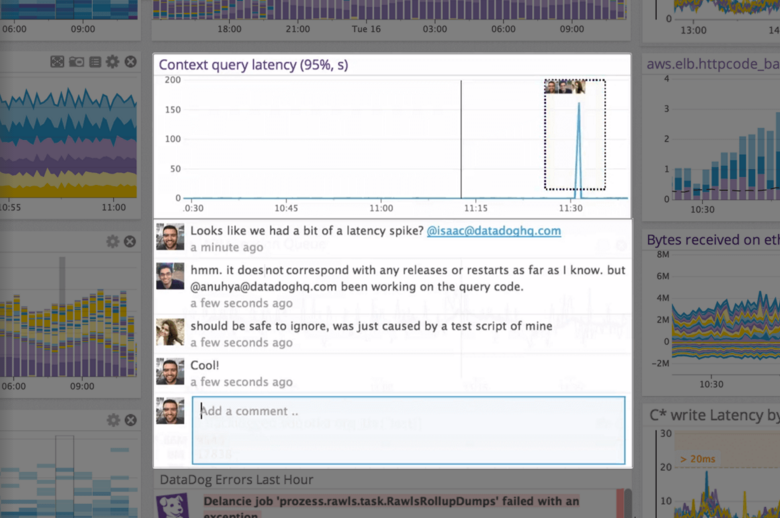
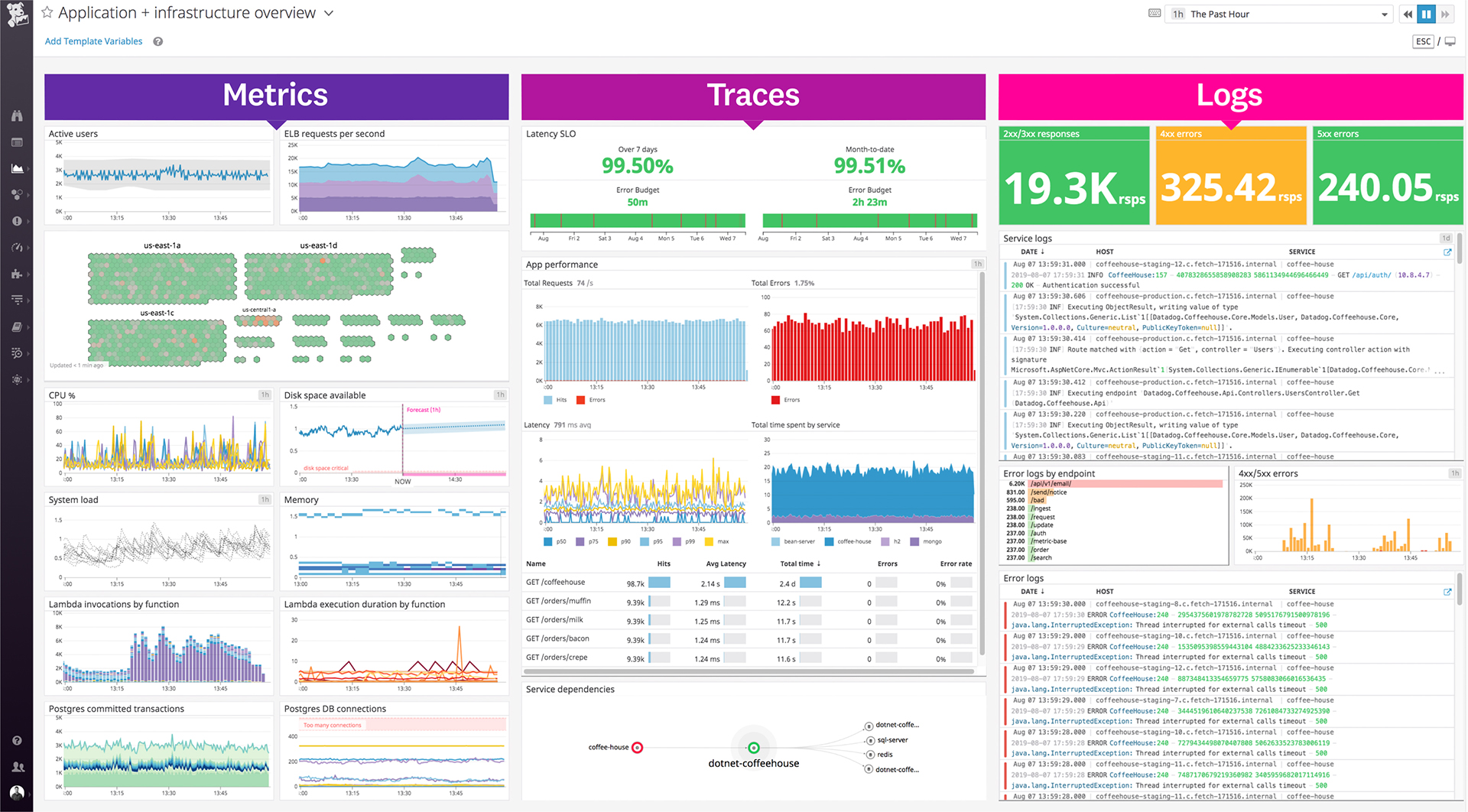
Its custom dashboard feature which helps us to visualize the data in a better way . It supports different types of charts through those charts we can create our dashboard more attractive.
Its AI powered alerting capability though that we can easily identify the root cause and also it has a low noise alerting capability which means it correlated the similar type of issues.
Its a one stop solution for most processes and does reduce cost overall. This does in turn help teams communicate in a much more efficient way, also RUM is a game changer for any quality product; we use RUM alot for debugging and reverse engineering issues. Reports and coverage has been a plus, it all has helped us a lot in our processes.
There are so many features that it can be hard to figure out where you need to go for your own use case. For example, RUM monitoring us buried in a "Digital Experience" sidebar setting when this is one of our key use cases that I sometimes struggle to find in the application. It appears that ECS + Fargate monitoring was recently released which is great because we had to build a lambda reporting solution for ephemeral task monitoring. But this new feature was never on my radar until I starting clicking around the application.
The support team usually gets it right. We did have a rather complicate issue setting up monitoring on a domain controller. However, they are usually responsive and helpful over chat. The downside would be I don’t think they have any phone support. If that is important to you this might not be a good fit.
In terms of usability, I’ve found Datadog significantly more approachable and powerful compared to Elasticsearch, especially for day-to-day operational monitoring. Datadog offers a much more cohesive, user-friendly interface out of the box, with built-in support for metrics, logs, tracing, alerting, and dashboards—all tightly integrated. In contrast, Elasticsearch often felt barebones and required considerable setup and additional tooling (like Kibana or Logstash) to reach the same level of functionality. While Elasticsearch is excellent for high-volume log ingestion and full-text search, it lacks the depth of features and real-time visualization capabilities that Datadog provides natively. The query language in Datadog is also quite usable and comparable for my needs—mainly filtering and aggregating logs and metrics—without needing to learn Elasticsearch's more complex DSL. Overall, Datadog saves our team time and effort, whereas Elasticsearch often felt like building a monitoring system from scratch. The all-in-one nature of Datadog, despite its complexity, is ultimately more efficient and scalable for our use case.
We strongly prefer Metricly for AWS Cost Analysis -- whereas other tools are easier to use on a traditional monitoring basis. To be clear, Merticly's monitoring tools are GREAT, but they require tuning and manual setup that we didn't have the time for on a small Platform Operations team. We have worked closely with Metricly to expand on their cost analysis capabilities, and plan to use them going forward.
We're a reseller/Integrator, so this question has a somewhat different meaning to our business. For us, Zenoss Cloud allows us to provide a single Cloud-based monitoring platform that can address virtually all our clients' use cases, dramatically simplifying our training and staffing requirements. Instead of training Engineers on several platforms, including the installation of physical hardware/software, we can focus on a single platform.
The faster time-to-deployment and always-on cloud platform is a great fit for DevOps environments and newer software-defined data center platforms. The ability of Zenoss to support these environments solves what has been a major blind spot, slowing adoption of platforms that have been difficult to effectively manage with legacy monitoring platforms.
For clients, the ability to consolidate from multiple prem-based tools to a single cloud-based platform is huge. Eliminating multiple licenses and ongoing hardware & administration costs can show a 1-2 year ROI.