dbForge Studio is provided by
Devart and is a universal front-end client for database
management, administration and development. Devart's GUI tool provides
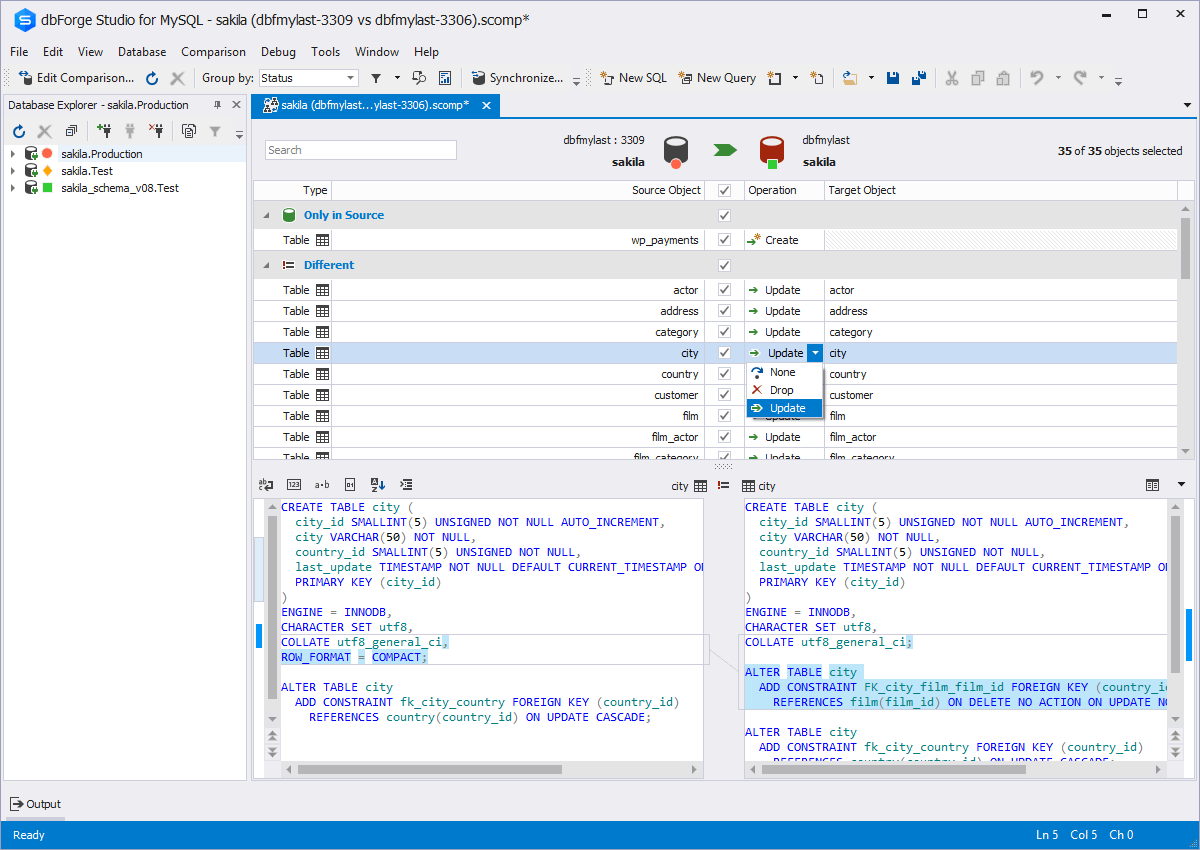
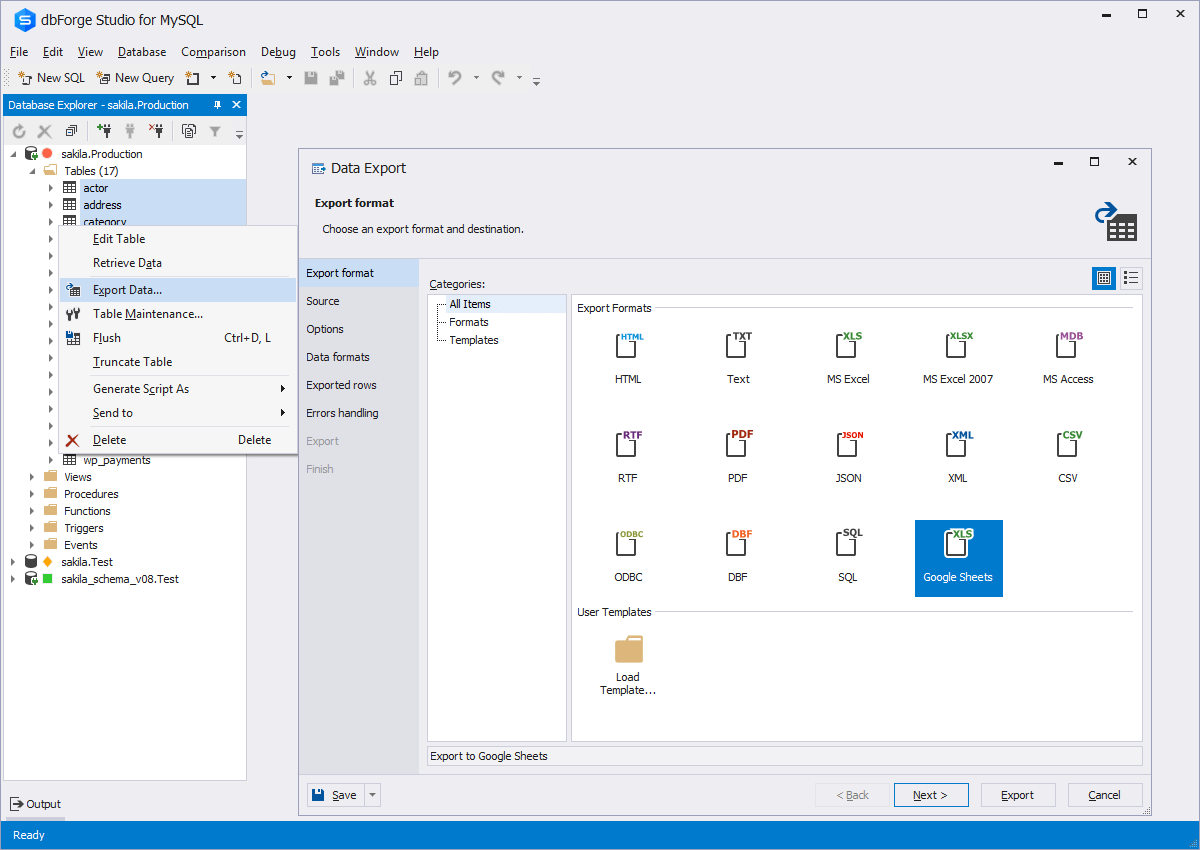
utilities to compare, synchronize, and back up databases (e.g. MySQL, Oracle, SQL Server, PostgreSQL, etc.) with scheduling,
and includes the possibility to analyze and report MySQL tables data. For example, dbForge
Studio for MySQL works with any MariaDB database servers, and supports all
MariaDB objects types. This solution enables users…
$9.95
per month
DataGrip
Score 9.4 out of 10
N/A
DataGrip, from JetBrains, is a database IDE that is tailored to suit the specific needs of professional SQL developers.
$9.90
per month per user
PhpStorm
Score 9.5 out of 10
N/A
JetBrains supports PhpStorm, an integrated development environment (IDE).
I think it blows away MySQL Workbench hands down. Workbench does have more functionality when it comes managing the MySQL instance, viewing performance etc. Navicat is ok, it might be better for new database develoopers. I stumbled upon DataGrip cause it came with jetbrains …
Easier to use, more features, more reliable. Much more purpose built with specific integrations aimed directly at php code instead of the broad generic interfaces the other software have that are aiming to support many different languages.
Verified User
Team Lead
Chose PhpStorm
Both Visual Studio Code an Sublime Text are excellent code editors, and even offer a better performance than PHPStorm. However they are not complete IDE's and do not perform half of the tasks that PHPStorm does.
This tool is useful for small and large IT departments and associated data analysts that perform direct database functions such as DBA tasks or extracting/importing data. Non-technical staff members would not benefit from this tool as much as the functions are detailed and technical. However, automation engineers will find this tool very open for automation, and can generate the scripting code for any of its functions.
You will like DataGrip; it is the best software to channel and influence data systems and efficiently. It will help you be more efficient and productive in exporting computer data; it is very effective. There are no errors, and you will feel comfortable using them. It promotes data quality and has excellent graphics to represent your information through statistical processes.
PhpStorm is well suited for any project that utilizes PHP. I have used it on Windows, Ubuntu, and Mac OS and it works great on all those platforms. Having a solution that keeps the developer from having to constantly switch tools to do their job is invaluable. Whether you're a junior developer, front end engineer or a senior developer, PhpStorm is a great product that will help you get your work done.
Database browsing, Remote host browsing, and all the deep seated customizations for both the UI and Technical feasability are the result of an amazing integrity and compatibility with most components and technologies.
The built-in shell is insanely helpful for traversing code in order to debug scripts with ease, and the plug-in system makes this software quite extensible.
Not to mention the variety of options and settings (divided into global settings and per-project settings) are both intuitive & easy to use, especially the fact that I can export and import them across my workstations while maintaining my spacing & indentation, highlighting, inspection patterns and syntax styling.
The ability to parameterize searches more would be advantageous. For example, being able to specify to only look for certain columns, certain data type changes, etc.
The output reports from dbForge are very plain and could contain more detail, and perhaps be structured more like a pivot table form Excel
Some of the newest github copilot features lag behind what's being done in vs code and would be nice if more of the newer features were brought over though this has greatly improved recently
Interface can be a little overwhelming for newcomers
Some features like rainbow brackets should be native rather than addon
dbForge Studio (Edge) has a great UI and it's versatile, but it still has some glitches. Its multiple database support makes it possible to stick with only one UI to handle different RDBM systems, even though you have to redefine user credentials for each new connection (no copying/cloning feature for database connections). The Edit View and diagramming features also could be improved.
Usability has two aspects, being a complete tool and being easy... DataGrip has a lot of features but it is big, not clear how to use most of the things and most people won't need them. In my opinion, usability is good enough but not friendly.
PhpStorm is very easy to use, once you get the hang of it. It can take a while to get the hang of it because there's so many options, some of which are buried in the imposing settings panel. It could use some help with multi-cursor, especially multi-file editing but that's a minor gripe.
Although experience here is limited, as only one question has been asked and answered promptly, the registration and licensing process was very smooth and professional. There are forums online that discuss dbForge issues, as well as a Facts and Questions section on dbForge's website, so product support does seem to exist if needed.
The JetBrains community is all about helping others succeed, even in the most obscure setups. I have never had a question go unanswered, or I have never been able to come up with empty results in searching for the answer. My questions or concerns are typically address from other users in the community, so timing is pretty quick for a response
Before choosing dbForge Studio I evaluated at least a dozen tools, especially on the Visual Query Builder function. For now, I have identified only one product that has a better Visual Query Builder than dbForge Studio. This other product also manages UNIONs, while dbStudio still doesn't do it visually. However, the better alternative product is enormously slower in operations and less feature-rich than DbForge Studio
DataGrip provides a single UI for many DBMS platforms, instead of using one for each. Because of that, you can migrate things between platforms using the tool and "look across" all databases at once.
Easier to use, more features, more reliable. Much more purpose built with specific integrations aimed directly at php code instead of the broad generic interfaces the other software have that are aiming to support many different languages.
PhpStorm decreased the time to market of new features - we are following the Agile SCRUM methodology with 2 weeks sprints. Using PhpStorm helped with releasing UI features even faster than 2 weeks.
Considering the price of the license and the cost of the server where we run it, the ROI is still high due to less time spent by developers with writing code, debugging, refactoring etc. Especially when you have highly paid developers.
Increased people's happiness - by using a modern tool with lots of features which has made their work easier.