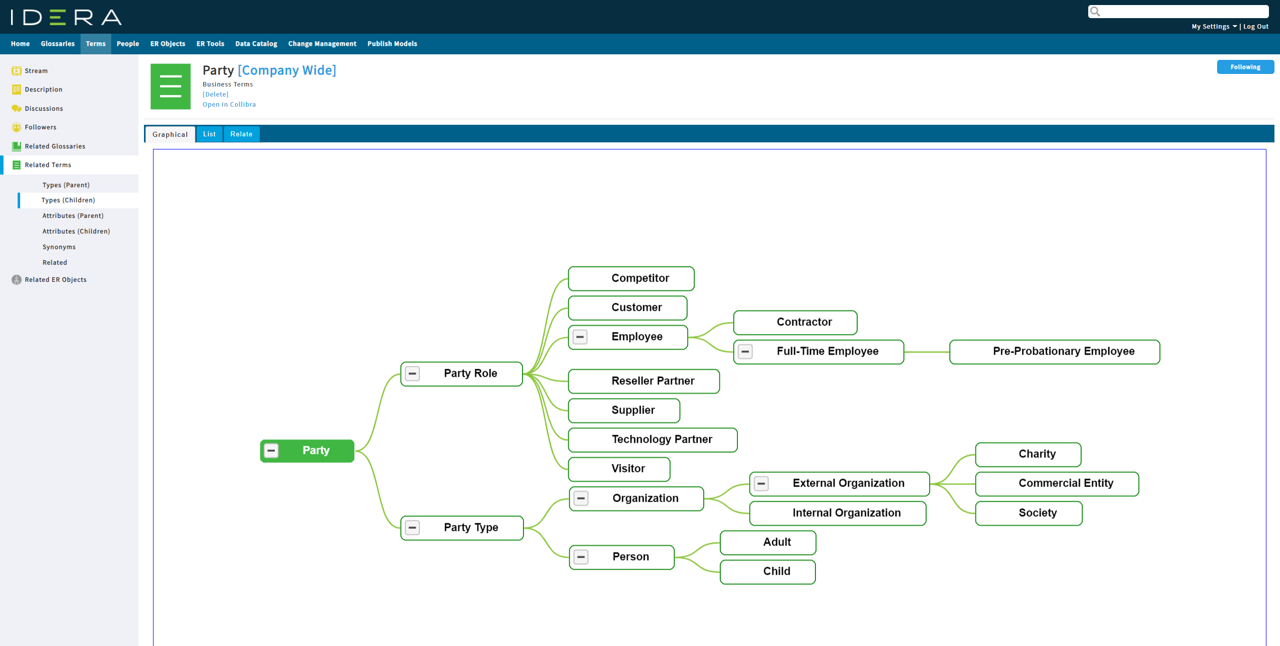
ER/Studio is a database development and management tool from Embarcadero Technologies (acquired by Idera) in California.
$2,687
per year per user
IDERA SQL Diagnostic Manager
Score 8.1 out of 10
N/A
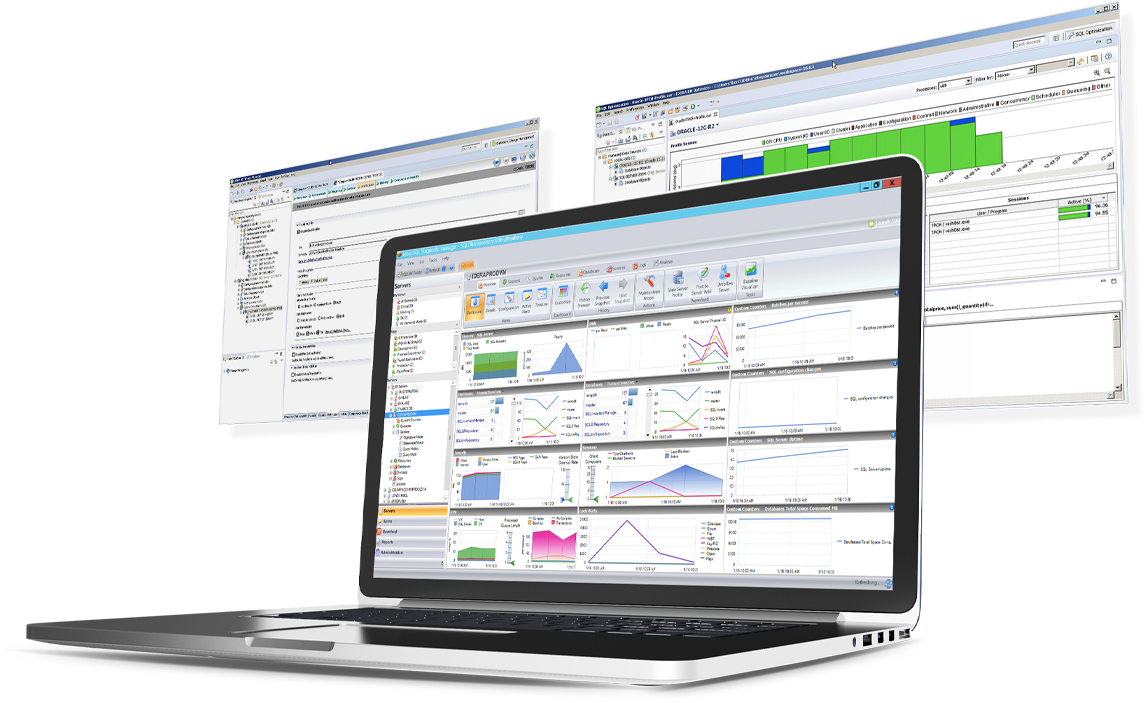
SQL Diagnostic Manager for Microsoft SQL Server helps database administrators to find and fix Microsoft SQL Server performance problems in physical, virtual, and cloud environments. Unlike its competition, it provides effective scalability, advanced SQL query analysis and optimization, prescriptive analysis with corrective SQL scripts, powerful automated alert responses, broad PowerShell integration, complete customization, and extensive support for current and legacy Microsoft SQL Server and…
$1,996
per instance with first year maintenance included
Komprise
Score 10.0 out of 10
N/A
Komprise is the database development and management solution from the company of the same name in Campbell, California.
N/A
Pricing
ER/Studio
IDERA SQL Diagnostic Manager
Komprise
Editions & Modules
Standard
$2,687
per year per user
Professional
$3,693
per year per user
Enterprise
Custom
per year per user
Standard via eCommerce
1,996.00
per instance with first year maintenance included
No answers on this topic
Offerings
Pricing Offerings
ER/Studio
IDERA SQL Diagnostic Manager
Komprise
Free Trial
No
Yes
No
Free/Freemium Version
No
No
No
Premium Consulting/Integration Services
Yes
No
No
Entry-level Setup Fee
No setup fee
No setup fee
No setup fee
Additional Details
Pricing for new customers only, first year maintenance included. Maintenance includes access to technical support and product updates for the defined period of the agreement.
—
—
More Pricing Information
Community Pulse
ER/Studio
IDERA SQL Diagnostic Manager
Komprise
Features
ER/Studio
IDERA SQL Diagnostic Manager
Komprise
SQL Performance Monitoring
Comparison of SQL Performance Monitoring features of Product A and Product B
Data Architect is well suited at organizations of all sizes. It is never too early or unnecessary to enforce proper modelling and design standards on data solutions, and this tool will help that greatly by providing an industry leading data modelling tool, ability to import ETL mappings for data lineage, enforcing and managing naming conventions through the naming convention tool, and publishing of data dictionaries through the report publisher. I was successfully able to build models, provide traceability, and document source to target with lineage throughout for both the business (by providing business definitions in the descriptions), and technical teams (by documenting ETL instructions in text fields) along with field level mapping (by creating "Attachments" representing data sources, tables, and fields) providing easy search capabilities using business friendly terms
SQL Server [Business Intelligence] Manager is useful for tracking performance across SSIS, SSRS and SSA and have the data represented in dashboards. It helps improve performance and helps end users. However, several features are redundant for smaller organization that can use the tools that comes with existing Microsoft products. These features also takes time to learn and use.
As any other archiving solution, it is very well suited for environments with a large footprint of unstructured data (CIFS / NFS shares for user data) with a large amount of unused/old files and a need to keep those unused files for long term. In our scenario, due to some legal and contractual constraints we need to keep these files for 15 years. Archiving is a good choice to move the unused files to a cheaper storage tier, both on-prem or cloud.
ER/Studio has the ability to provide consistent field names and data types through domains, which are templates. This provides a way to have consistent naming of common fields, like CreatedBy and the data types for the fields. They also have the ability to change all the fields that use that domain to a different data type.
ER/Studio provides the ability to create custom macros. These macros can be used to apply everything from standard fields based on domains to naming all constraints and indexes. I've also used a macro that comes with ER/Studio to spell check field and table names.
My favorite feature is the ability to compare your data model to databases for deployments of changes, and to other data models.
SQLdm does a good job of providing information at a high level, but also allows me to drill down to specific queries and events if needed. I don't always need to sift through tons of details to get the information I need. It also gives a very wide range of information from SQL specific metrics, to OS metrics, to VM metrics, all the way up to host server metrics.
I like how the alert and notification system can be customized. For example, if you know a certain server regularly has long-running queries, you can adjust the alert to not fire unless a query has been running for 30 minutes while the rest of the servers fire after 30 seconds. That is very helpful in not being bombarded at dinner with alerts from a server similar to, "I've been at 90% cpu for 26 milliseconds!!!!!!!...and now it's back down to 30%" Good information to know, but not something you need to literally lose sleep over.
I like how you can configure different servers to be monitored differently. For example, you can have a group of servers called DEVELOPMENT that you can turn on heavier monitoring on so you can test how changes in applications might affect the SQL environment, but in the PRODUCTION group, you may only want to enable the heavier analysis and logging when performance issues are actively being reported.
ER\Studio licensing can be cumbersome and upgrading from one version to another usually takes several phone calls and emails to the licensing group to get the update installed and running.
The repository can be slow when the model count gets larger. By large I mean 20 to 30 models.
A nice feature that I would like to see is table comments be displayed on the model along with the attributes. Currently you have to choose between the two.
Windows client has some issues. When you have small time intervals for your data collection, it can cause the client to become unresponsive and require you to restart it.
It takes more time to get the web client running than it does to get the windows client running.
The visualizations have been the same for the last eight years--could use a little bit of a refresh.
I can call or email support and both get quick turn around. The only issue is they are on the west coast (US) and have a west coast work schedule and I'm on the East coast.
IDERA SQL Diagnostic Manager for SQL, Redgate SQL, and MonitorLogicMonitor are similar products to each other. We decided on IDERA SQL Diagnostic Manager for SQL because our experience with locating heavy queries has been very good and it provides real-time monitoring of all servers and databases. It also allows you to have a large volume of historical data which allows you to analyze trends in the databases.
We have used Veritas Enterprise Vault in the past, and besides its being a well-known player on the data archiving market, their tool is far more complex to implement, to manage and to keep working. Komprise is very robust and also very easy to implement, as most part of the job is done on Komprise side. The management console is delivered through a public URL as a SaaS platform. You only need to deploy a few VMs for scan/archiving/user access, which they call "Observer VMs." Komprise also doesn't uses Stub files, which is a poor implementation adopted by the competitor for file access. We had a lot of issues in the past with stub files. Komprise has implemented 'bread crumbs', which are CIFS symlinks to the files on the Observer. It is a very good implementation and it works really well.
ER/Studio has had a positive impact on my project as we can develop the data model and have a clear understanding of business needs before we continue with the development phase.