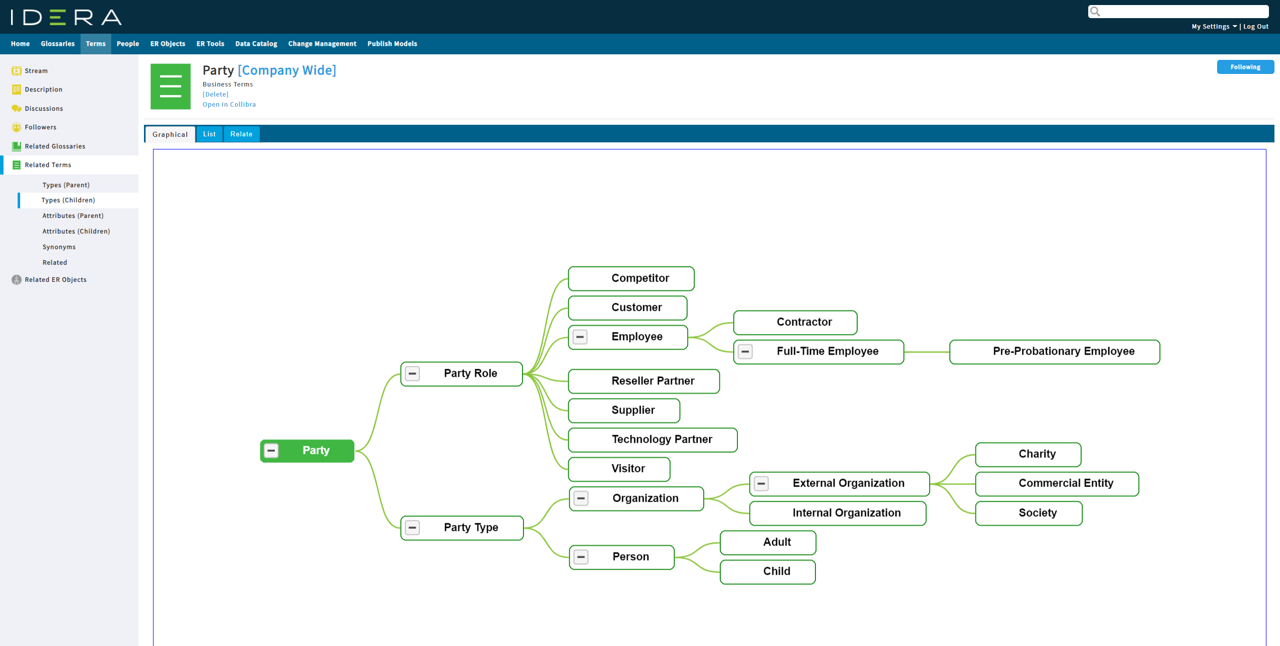
ER/Studio is a database development and management tool from Embarcadero Technologies (acquired by Idera) in California.
$2,687
per year per user
Oracle Autonomous Database
Score 9.0 out of 10
N/A
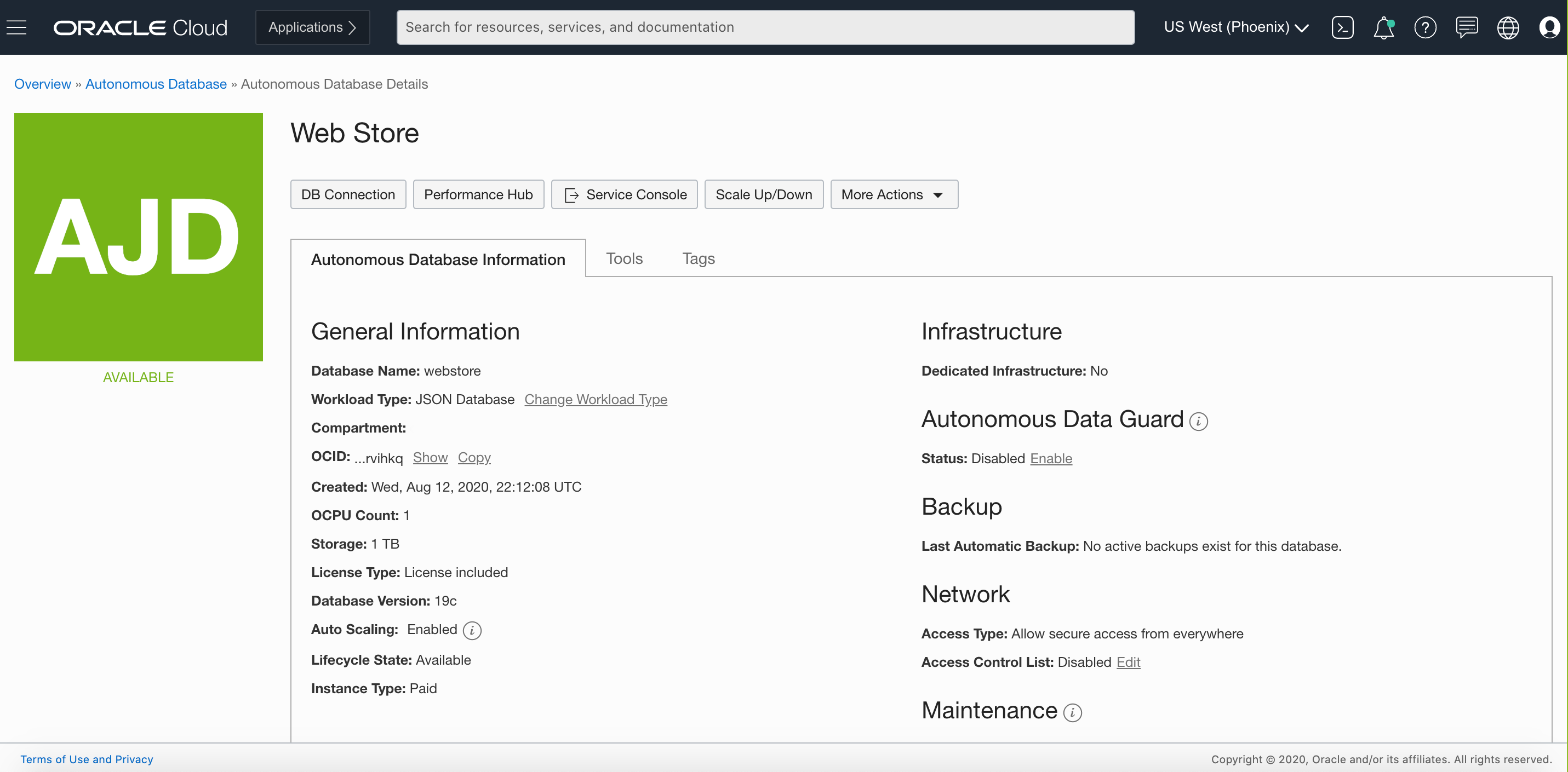
Oracle Autonomous Database provides a self-driving, self-securing, self-repairing cloud service that eliminate the overhead and human errors associated with traditional database administration. Oracle Autonomous Database takes care of configuration, tuning, backup, patching, encryption, scaling, and more.
N/A
Oracle Database
Score 8.3 out of 10
N/A
Oracle Database, currently in edition 23ai, is a converged, multimodel database management system. It is designed to simplify development for AI, microservices, graph, document, spatial, and relational applications.
$0.05
per hour
Pricing
ER/Studio
Oracle Autonomous Database
Oracle Database
Editions & Modules
Standard
$2,687
per year per user
Professional
$3,693
per year per user
Enterprise
Custom
per year per user
No answers on this topic
Oracle Base Database Service - Standard
$0.0538
per hour
Oracle Base Database Service - Enterprise
$0.1075
per hour
Oracle Base Database Service - High Performance
$0.2218
per hour
Standard Edition
Contact Sales
Enterprise Edition
Contact Sales
Personal Edition
Contact Sales
Offerings
Pricing Offerings
ER/Studio
Oracle Autonomous Database
Oracle Database
Free Trial
No
Yes
Yes
Free/Freemium Version
No
Yes
Yes
Premium Consulting/Integration Services
Yes
Yes
No
Entry-level Setup Fee
No setup fee
Optional
No setup fee
Additional Details
Pricing for new customers only, first year maintenance included. Maintenance includes access to technical support and product updates for the defined period of the agreement.
—
—
More Pricing Information
Community Pulse
ER/Studio
Oracle Autonomous Database
Oracle Database
Considered Multiple Products
ER/Studio
No answer on this topic
Oracle Autonomous Database
Verified User
Professional
Chose Oracle Autonomous Database
Oracle Autonomous Database provides self administration features that are not available in previous databases like Oracle Database 12c and previous versions. So this is really good for the organizations to best use the resources and improve the performance of the applications. …
Data Architect is well suited at organizations of all sizes. It is never too early or unnecessary to enforce proper modelling and design standards on data solutions, and this tool will help that greatly by providing an industry leading data modelling tool, ability to import ETL mappings for data lineage, enforcing and managing naming conventions through the naming convention tool, and publishing of data dictionaries through the report publisher. I was successfully able to build models, provide traceability, and document source to target with lineage throughout for both the business (by providing business definitions in the descriptions), and technical teams (by documenting ETL instructions in text fields) along with field level mapping (by creating "Attachments" representing data sources, tables, and fields) providing easy search capabilities using business friendly terms
Pro - Stability. Does everything anyone could need. If it's not there it will be on the next update. There is plenty of support for it. It's been around for a long time and it's reliable. The support is well documented and has a great reputation. Cons - Errors have been found in the documentation provided by Oracle with guidelines, etc. Oracles salespeople have a reputation of being obnoxious and condescending.
We migrated from NoSQL to an Oracle database. One of the reasons was robust backup and recovery options available in the Oracle database, which provide zero data loss. A transactional database like Oracle is a better fit for our use case than NoSQL. On a large scale, deployment was evaluated as a cheaper option than the NoSQL engine. This conclusion came even after considering Oracle license is expensive.
ER/Studio has the ability to provide consistent field names and data types through domains, which are templates. This provides a way to have consistent naming of common fields, like CreatedBy and the data types for the fields. They also have the ability to change all the fields that use that domain to a different data type.
ER/Studio provides the ability to create custom macros. These macros can be used to apply everything from standard fields based on domains to naming all constraints and indexes. I've also used a macro that comes with ER/Studio to spell check field and table names.
My favorite feature is the ability to compare your data model to databases for deployments of changes, and to other data models.
ER\Studio licensing can be cumbersome and upgrading from one version to another usually takes several phone calls and emails to the licensing group to get the update installed and running.
The repository can be slow when the model count gets larger. By large I mean 20 to 30 models.
A nice feature that I would like to see is table comments be displayed on the model along with the attributes. Currently you have to choose between the two.
There is no access to the physical host of the DB. This is expected from a managed DB. Everything must be done through the console or via API calls. This is a new learning curve for the DBAs.
Due to the lack of physical host access, certain features are not supported, such as Transportable tablespaces and Oracle LogMiner.
Certain special data types, (such as XMLType) are not allowed; be sure the app vendor certifies their product on this platform.
Because it does exactly what we need: it enables us to manage our development and testing database environments in a quick and simple way without requiring support from a database administrators team.
There is a lot of sunk cost in a product like Oracle 12c. It is doing a great job, it would not provide us much benefit to switch to another product even if it did the same thing due to the work involved in making such a switch. It would not be cost effective.
The product is continuously evolving and new features are added frequently. Management options through the OCI (Oracle Cloud Infrastructure) console and through the command line and API are being enhanced frequently.
Many of the powerful options can be auto-configured but there are still many things to take into account at the moment of installing and configuring an Oracle Database, compared with SQL Server or other databases. At the same time, that extra complexity allows for detailed configuration and guarantees performance, scalability, availability and security.
I can call or email support and both get quick turn around. The only issue is they are on the west coast (US) and have a west coast work schedule and I'm on the East coast.
1. I have very good experience with Oracle Database support team. Oracle support team has pool of talented Oracle Analyst resources in different regions. To name a few regions - EMEA, Asia, USA(EST, MST, PST), Australia. Their support staffs are very supportive, well trained, and customer focused. Whenever I open Oracle Sev1 SR(service request), I always get prompt update on my case timely. 2. Oracle has zoom call and chat session option linked to Oracle SR. Whenever you are in Oracle portal - you can chat with the Oracle Analyst who is working on your case. You can request for Oracle zoom call thru which you can share the your problem server screen in no time. This is very nice as it saves lot of time and energy in case you have to follow up with oracle support for your case. 3.Oracle has excellent knowledge base in which all the customer databases critical problems and their solutions are well documented. It is very easy to follow without consulting to support team at first.
Overall the implementation went very well and after that everything came out as expected - in terms of performance and scalability. People should always install and upgrade a stable version for production with the latest patch set updates, test properly as much as possible, and should have a backup plan if anything unexpected happens
I found Oracle Autonomous Database very secure to store data and private information.I always feel secure with Oracle Autonomous Databases disaster recovery features.It is very effective to build applications for mobile and desktop devices lesser code using a low code development framework namely Oracle Application Express (ApEx).
Because of a rich user base and support for any critical issue, this is one of the best options to choose. In case the project has a TCO issue, it can compromise and choose Postgres as the best alternative. SQL server is also good and easy to code and maintain but performance is not as good as the Oracle
ER/Studio has had a positive impact on my project as we can develop the data model and have a clear understanding of business needs before we continue with the development phase.