F5 Beacon an open source tool used to gain full visibility across an application landscape, obtain app insights and business intelligence, and make better-informed decisions. With the Beacon Insight Engine, users can leverage pre-built insights or create custom insights. Beacon also integrates with many types of deployments across hybrid and multi-cloud environments—and provides a set of app stats in a simple SaaS model.
$0
SolarWinds AppOptics
Score7.6 out of 10
N/A
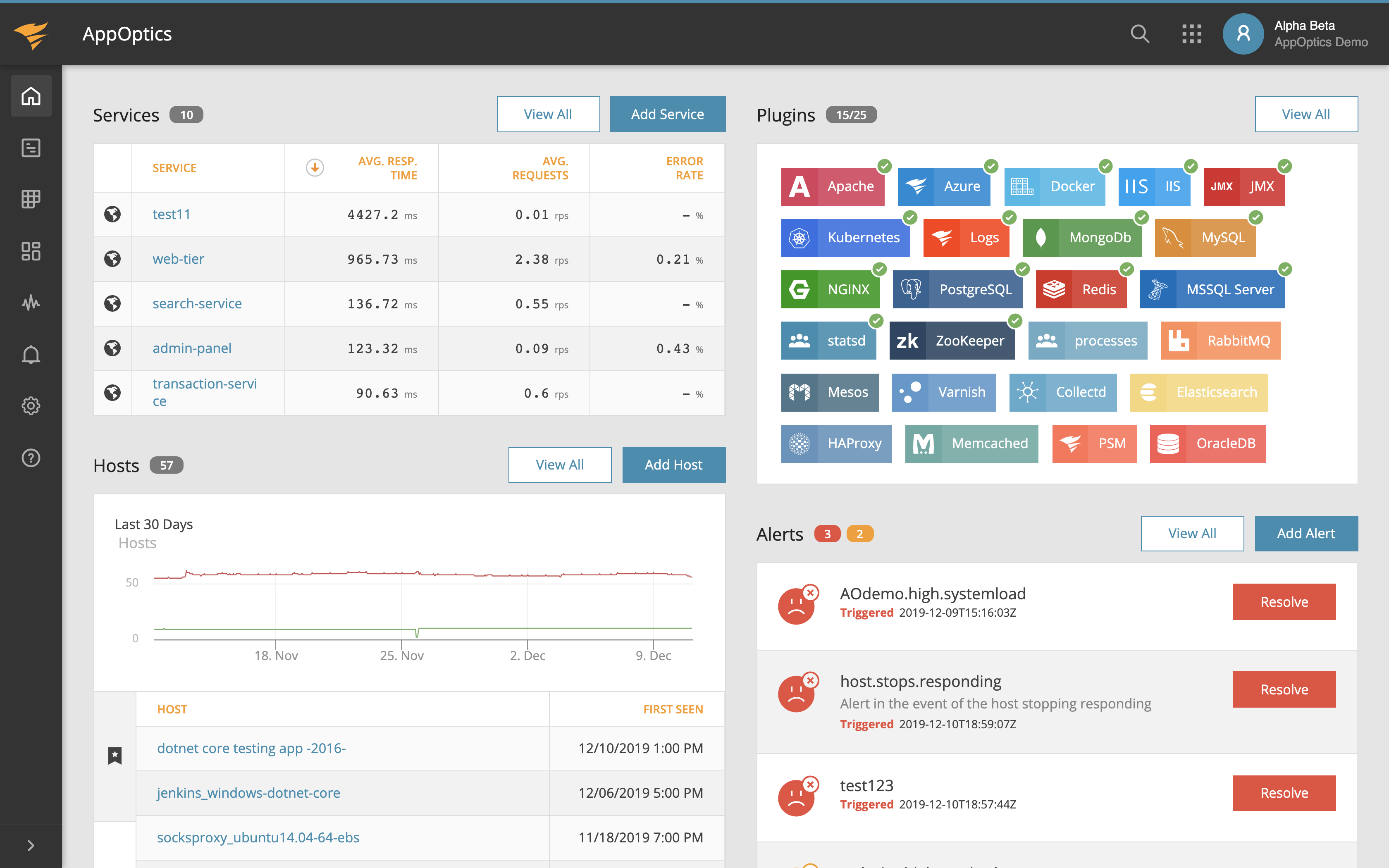
SolarWinds AppOptics (formerly Librato) is an IT infrastructure monitoring service and APM, based on technology acquired by SolarWinds with Librato in 2015 to expand its cloud monitoring portfolio.
It is very well suited in complex, multi-cloud application environments where it provides holistic, application-centric visibility by ingesting data from NGINX and other telemetry sources. It helps troubleshoot performance issues in high-availability and regulated environments where outages have a high impact on strict SLAs. It is less appropriate in situations where organizations rely on unmaintained or archived integrations.
AppOptics is good for small to medium-sized organizations with less than 150 servers or less than 40 services to monitor. It performs well for this use case where people need to get an overview of application performance, and 95%ile data is okay. Somewhere every data point and every record is critical; it should be avoided.
A de minimis incentive was given to thank the reviewer for their time. The incentive was not used to bias or drive a particular response, nor was the incentive contingent on a positive endorsement. More Info
A de minimis incentive was given to thank the reviewer for their time. The incentive was not used to bias or drive a particular response, nor was the incentive contingent on a positive endorsement. More Info
The only thing that I would add is the possibility to display every single query our servers receive to eventually analyze them and query through them. We could also generate nice visualizations from that. Right now I believe we can only see averages.
A de minimis incentive was given to thank the reviewer for their time. The incentive was not used to bias or drive a particular response, nor was the incentive contingent on a positive endorsement. More Info
A de minimis incentive was given to thank the reviewer for their time. The incentive was not used to bias or drive a particular response, nor was the incentive contingent on a positive endorsement. More Info
The reason for the above rating is that F5 Beacon delivers clear visibility, helpful insights, and streamlined decision-making, which, in turn, translates into a better user experience. Beacon easily ingests telemetry from multiple sources, including NGINX, BIG-IP devices, and third-party platforms. The Beacon insight engine generates actionable recommendations and performs anomaly detection.
As far a usability is concerned for AppOptics, it is just as matter of few minutes away even if you start from scratch, as all you need to do is register on the site and you will get the URL and password. And after this all you have to do is follow the instruction, as per the configuration wizard (tool tip) within the console for various technology such as SQL, IIS, .NET
A de minimis incentive was given to thank the reviewer for their time. The incentive was not used to bias or drive a particular response, nor was the incentive contingent on a positive endorsement. TR verified that a representative sample of customers was invited. More Info
Solarwinds AppOptics is rated as 9 out of 10 and the reason is there are still few areas where AppOptics needs to improve such as Service Now Integration, GCP Cloud Support, Better Dashboard visualization for application transactions flow. Other than these feature everything is there in AppOptics and that's a reason given 9 points out of 10.
A de minimis incentive was given to thank the reviewer for their time. The incentive was not used to bias or drive a particular response, nor was the incentive contingent on a positive endorsement. TR verified that a representative sample of customers was invited. More Info
F5 Beacon is best for F5-centric, hybrid, app-centric visibility, whereas Datadog is best for cloud-native, distributed observability. F5 beacon is superior for understanding BIG-IP flows, WAF, ADC behavior at the app level. It has a unified view of F5-powered applications. F5 Beacon simplifies troubleshooting across multicloud F5 deployments. Beacon provides business logic level visibility.
What we found positive in AppOptics from others is:
Easy to install and manage.
Various stack support.
Point to point deep-dive metrics and correlation.
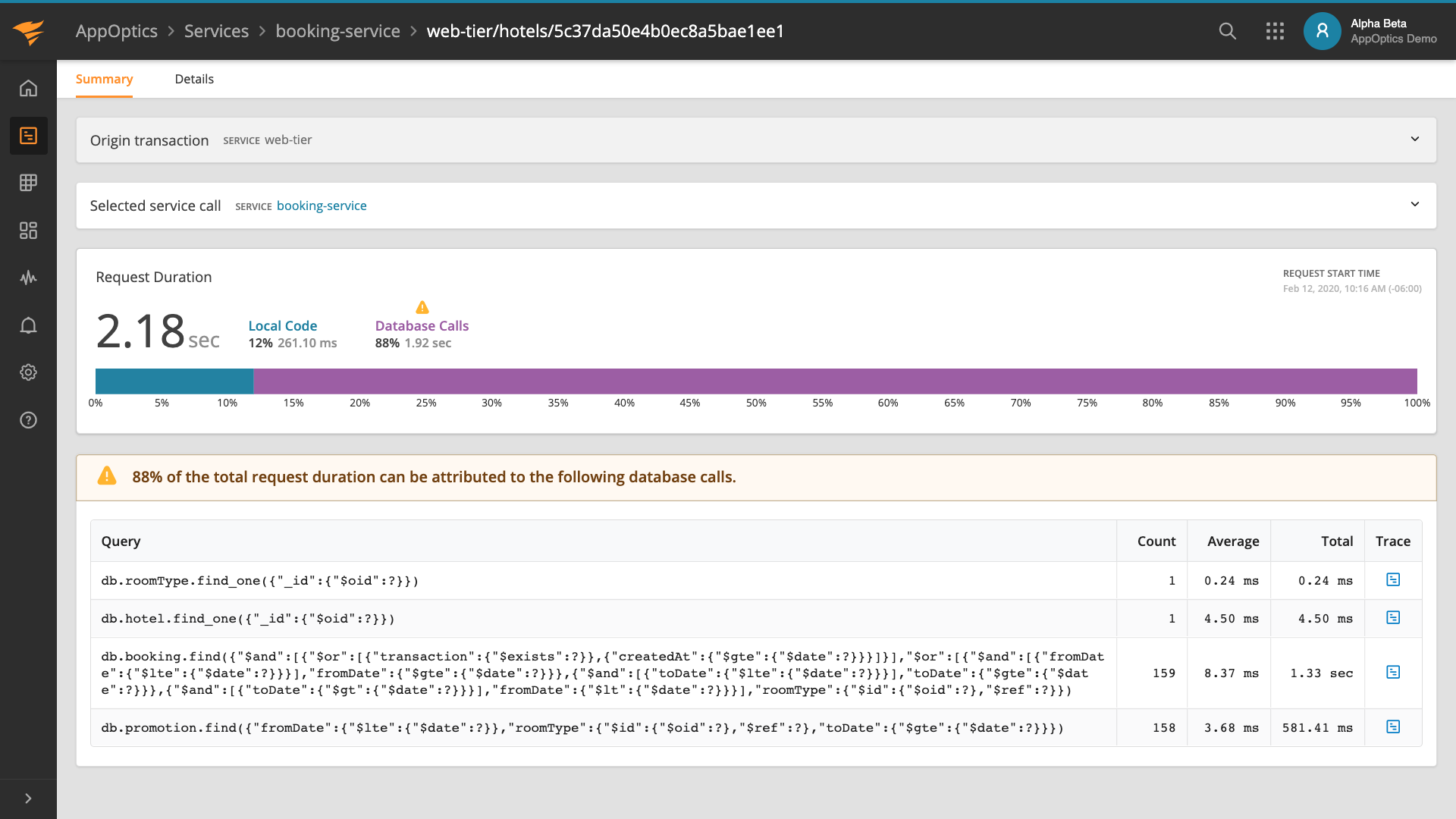
Metrics like DB connection, query analysis, latency in API calls, and other connections, response codes for various APIs, etc are the key ones in our case, which AppOptics provides efficiently.
A de minimis incentive was given to thank the reviewer for their time. The incentive was not used to bias or drive a particular response, nor was the incentive contingent on a positive endorsement. More Info
A de minimis incentive was given to thank the reviewer for their time. The incentive was not used to bias or drive a particular response, nor was the incentive contingent on a positive endorsement. More Info