FluidSurveys was a survey and form building option. SurveyMonkey discontinued the product, it reached end of life (EOL) December 2017.
N/A
XaitPorter
Score9 out of 10
N/A
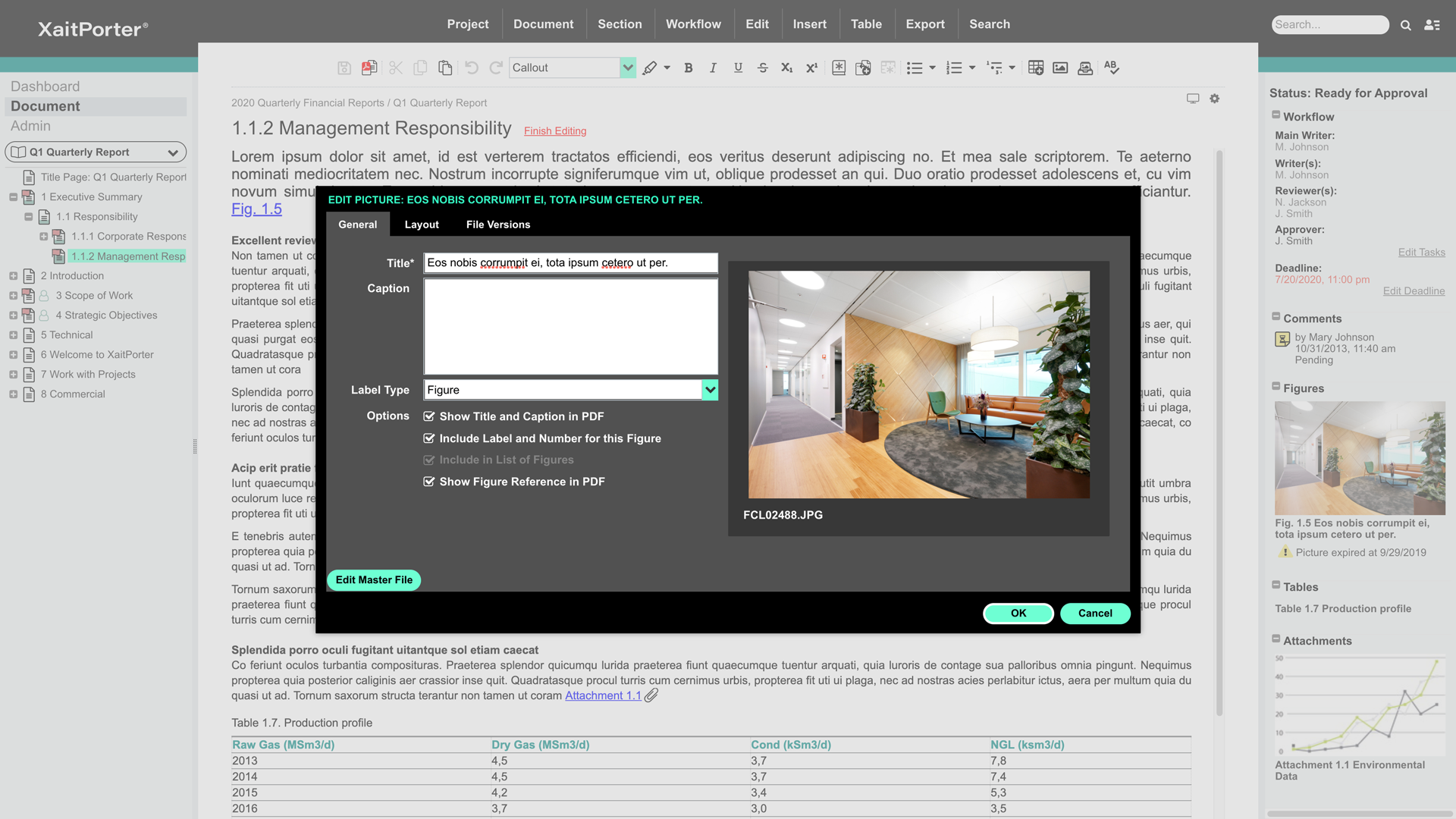
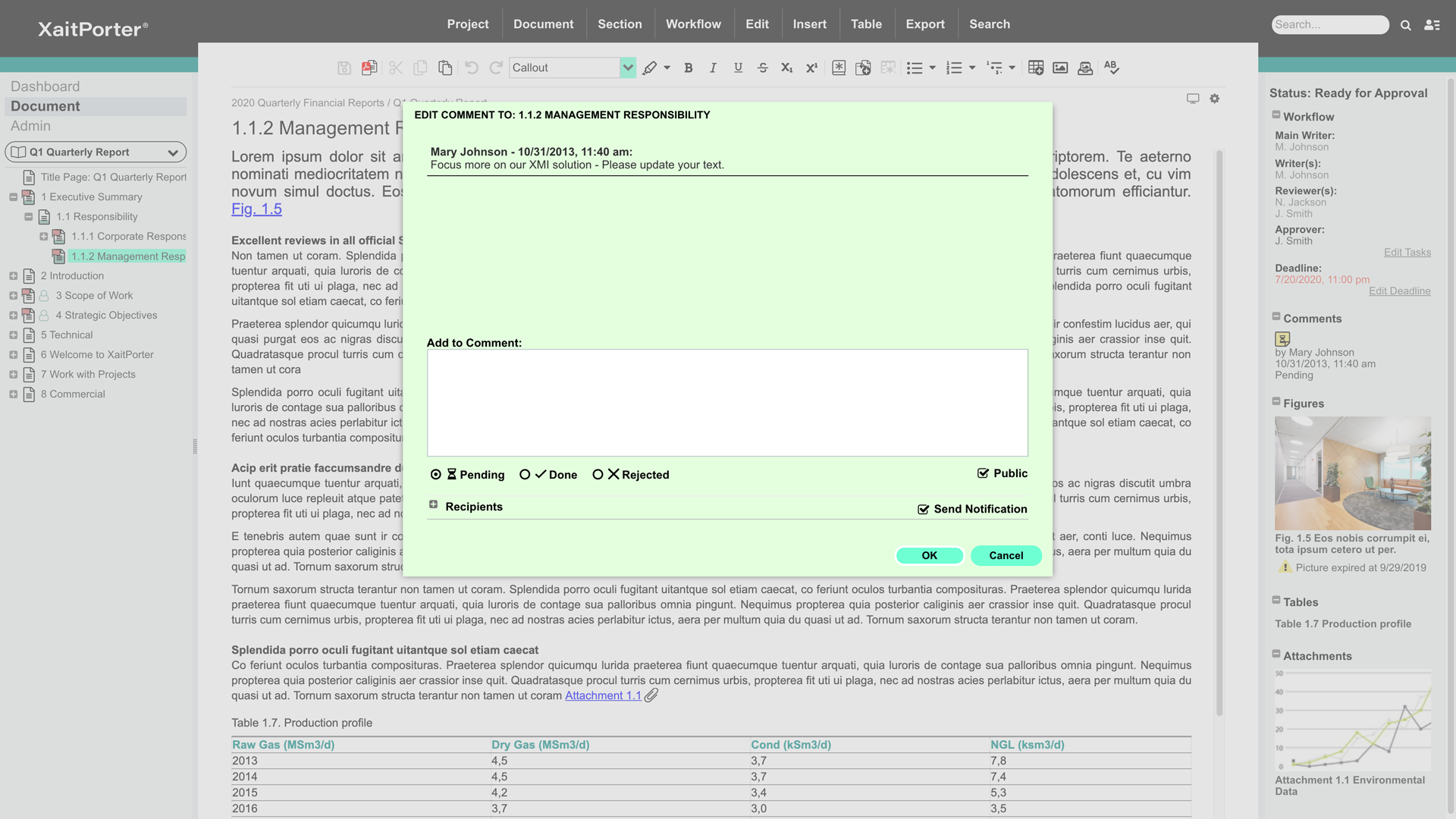
XaitPorter is a co-authoring software solution for teams to collaboratively create, manage and produce documents. With it, users can streamline and optimize document production to maximize revenue from bids and proposals and other business-critical documents. XaitPorter is designed to enable co-authors to focus on creating bid-winning content so that teams can become more efficient while production time and costs are reduced.
For surveys, and for centralized info-gathering, FluidSurveys provides an excellent solution. There are other programs out there which provide a wider range of solutions (i.e., they can be used for surveying AND comprehensive online engagement, rather than just a data-gathering type of consultation); however, for programming and implementing surveys, FluidSurveys has an effective variety of strengths and options that make it optimal for users who are focused specifically on surveys.
XaitPorter is ideal when a large document, containing many (preferably independent) sections is being created by more than five writers across different office locations and is subject to review by multiple reviewers and requires formal approval. It is particularly suited for external documents which are to be delivered as a non-editable PDF file.
A de minimis incentive was given to thank the reviewer for their time. The incentive was not used to bias or drive a particular response, nor was the incentive contingent on a positive endorsement. TR verified that a representative sample of customers was invited. More Info
User-friendly. For the majority of the general and basic tools you can use with FluidSurveys to build surveys are simple to use and intuitive. When certain issues come up, the service is quick (chat room) and effective.
Anonymity: the software has the reputation of being safer in terms of safeguarding private information the respondents share by answering surveys (this is mainly due to the fact that the servers are in Canada). Thus, indirectly, they increase response rates.
Extensive possibilities: FluidSurveys offers a plethora of possibilities and options that really renders the experience interesting in terms of micro-managing each details of the surveys you are sending out there. When the invitation leaves by email, it is exactly how you want it.
This tool gives us the opportunity to work together. We always work in the last revision.
We can write comments as we go along and all involved will see it straight away.
We can structure it the way we want/our the way customer wants it and print the whole book in one go. We are sure that pictures/text/tables are where they are supposed to be (they have not moved around the document as it does when using Microsoft Word).
A de minimis incentive was given to thank the reviewer for their time. The incentive was not used to bias or drive a particular response, nor was the incentive contingent on a positive endorsement. TR verified that a representative sample of customers was invited. More Info
It would be helpful to improve functions used to organize and reorganize sections. They work fine, but could be retooled for ease of use. Simple drag-drop over the tree-view from the primary navigator (not only in the dedicated dialog for reordering sections) would be very good. It would be good to support simple flagging or tagging of sections to indicate whatever is meaningful to the user (e.g., to flag a section as imported text that needs formatting, or a section that is high priority for review). The icons do change to indicate predefined workflow states (e.g. approved), but there isn't support for a user-defined tag, perhaps with the ability to filter by tag as many newer applications can do. That would be handy. These aren't criticisms so much as product enhancement suggestions.
The editor is ok but could be tuned up a bit. For example, styles in the toolbar dropdown apply only to the whole paragraph. It's hard to indent text. The button tool doesn't consistently remove the button attribute on an existing button; works sometimes, sometimes not. Little stuff. Overall it's adequate for text creation.
The process of defining templates and styles appears to be a black art. While it's something you don't do often, it should be simplified and better exposed to ordinary admins.
The ability to have more than one section open at a time in the editor would be fantastic. Great productivity tool.
Word import/export could be cleaner.
The ability to export to html with user-defined style sheets would open new markets for Xait. If the product had that, we'd use Xait to maintain our online help site too.
The ability to link to externally stored images rather than lock them inside the Xait library would be huge, as we've expressed to the support team. We manage hundreds of images (diagrams, screen shots etc.) that are used throughout the company, not just for Xait documents. We would like to store them on a file system (e.g. Dropbox) and have them update into Xait automatically when the master copy is modified. This is a very important capability, though in fairness we didn't find it in other products either. Explicit support for Dropbox/Google Drive/Box would be one way, but dynamic linking a la Microsoft Word would be fine, maybe even better.
A de minimis incentive was given to thank the reviewer for their time. The incentive was not used to bias or drive a particular response, nor was the incentive contingent on a positive endorsement. TR verified that a representative sample of customers was invited. More Info
Note: I am responding to this question as a user of the system and not a representative of my organization.
On a personal level/as a user only, I would definitely continue to use FluidSurveys.On a personal level/as a user only, I would definitely continue to use FluidSurveys.
I think the average person can very quickly pick up on the basics of the system: they would have no problems programming and launching a basic survey. Organizations may benefit from having people of different backgrounds getting their hands dirty in the system: at a minimum, both web programmers and opinion research advisors should be solicited for input or help.
A de minimis incentive was given to thank the reviewer for their time. The incentive was not used to bias or drive a particular response, nor was the incentive contingent on a positive endorsement. TR verified that a representative sample of customers was invited. More Info
A de minimis incentive was given to thank the reviewer for their time. The incentive was not used to bias or drive a particular response, nor was the incentive contingent on a positive endorsement. TR verified that a representative sample of customers was invited. More Info
A de minimis incentive was given to thank the reviewer for their time. The incentive was not used to bias or drive a particular response, nor was the incentive contingent on a positive endorsement. TR verified that a representative sample of customers was invited. More Info
A de minimis incentive was given to thank the reviewer for their time. The incentive was not used to bias or drive a particular response, nor was the incentive contingent on a positive endorsement. TR verified that a representative sample of customers was invited. More Info
He was really good. He came from Xait and trained us for several days. He got all involved and answered the questions asked. He was a professional trainee
A de minimis incentive was given to thank the reviewer for their time. The incentive was not used to bias or drive a particular response, nor was the incentive contingent on a positive endorsement. TR verified that a representative sample of customers was invited. More Info
A de minimis incentive was given to thank the reviewer for their time. The incentive was not used to bias or drive a particular response, nor was the incentive contingent on a positive endorsement. TR verified that a representative sample of customers was invited. More Info
A de minimis incentive was given to thank the reviewer for their time. The incentive was not used to bias or drive a particular response, nor was the incentive contingent on a positive endorsement. TR verified that a representative sample of customers was invited. More Info
Although I do not have much experience with Survey Monkey, the only two reasons why I choose FluidSurveys is that clients demand it (privacy and anonymity) and because managing multiple surveys at a time is easier. As for ODK Collect, I think it is a valuable alternative to FluidSurveys if you have time to learn the coding (not very complicated). ODK is a little less user friendly and you cannot address small details as you can with FluidSurveys (e.g.: formatting).
The standard product for many years has been Microsoft Word. Some have tried to use SharePoint as a collaborative tool, but it is not suited for the purpose and is generally very user un-friendly. It is not intuitive and we have very few persons with any competency in it. Porter is easy to pick up and the new interface is very intuitive, and the way that Porter works removes many of the typical layout and formatting choices that made Microsoft Word so difficult for the average employee. It also greatly simplifies and reduces the amount of corrective work that tender support staff used to have to do. We are not aware of any product in the market that comes close to Porter. It is an ideal product that was purpose built for collaborative writing.
A de minimis incentive was given to thank the reviewer for their time. The incentive was not used to bias or drive a particular response, nor was the incentive contingent on a positive endorsement. TR verified that a representative sample of customers was invited. More Info
A de minimis incentive was given to thank the reviewer for their time. The incentive was not used to bias or drive a particular response, nor was the incentive contingent on a positive endorsement. TR verified that a representative sample of customers was invited. More Info
Too soon to tell. Right now we're still at the near end of the value chain - it still seems expensive given the outputs to date. But we have a lower proposal volume than some companies, so you need to factor that in.
Also, the named user licensing is restrictive and problematic in a small company where people perform multiple roles and may dip in and out of the proposal development process over a period of weeks or months. A concurrent user model would be much, much better for us, though I understand you'd need to figure out a way to handle email notifications.
A de minimis incentive was given to thank the reviewer for their time. The incentive was not used to bias or drive a particular response, nor was the incentive contingent on a positive endorsement. TR verified that a representative sample of customers was invited. More Info