Forcepoint Data Loss Prevention (DLP) protects sensitive data everywhere it resides and moves, across endpoints, cloud apps, web, email, and on-premises environments. It delivers unified policy management and centralized control from a single console.
N/A
Microsoft Defender for Cloud
Score8.6 out of 10
N/A
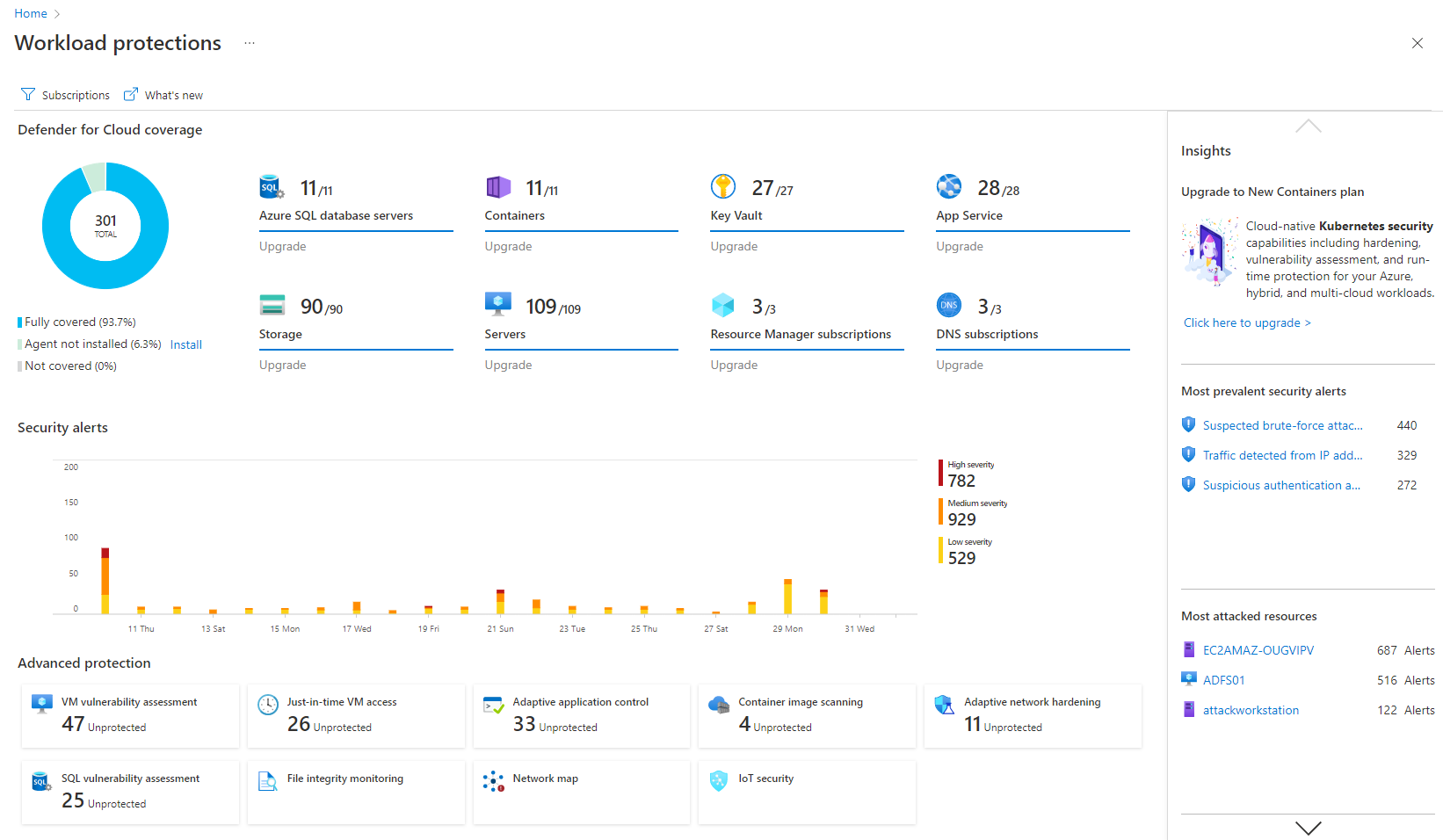
Microsoft Defender for Cloud is a Cloud Security Posture Management (CSPM) and Cloud Workload Protection Platform (CWPP) for Azure, on-premises, and multicloud (Amazon AWS and Google GCP) resources.
-Where companies need to secure their attachment, which goes outside, means from their company to outside -Where companies need to ensure their client's personal information -Where companies need DLP. They need to look for Forcepoint only, as they have the upper hand over the rest of their competitors.
A de minimis incentive was given to thank the reviewer for their time. The incentive was not used to bias or drive a particular response, nor was the incentive contingent on a positive endorsement. More Info
I think it's good for cloud-native companies. A company that, from day zero, they're like, "We're going cloud, and this is how we're going to do it." They get it. It works well for them. Smaller organizations that are under X amount of resources- I don't know what that X might mean- but I feel like it plays well in smaller, more nimble organizations. If you're an older organization or if you're extremely large, it starts becoming a little difficult to manage at scale. And you have to sometimes throw bodies at the problem. Maybe not the most eloquent way of saying it, but that's what it feels like.
A de minimis incentive was given to thank the reviewer for their time. The incentive was not used to bias or drive a particular response, nor was the incentive contingent on a positive endorsement. More Info
It has predominantly protected us from unauthorized parties and has provided us with better visibility and control over our data.
This software has also successfully prevented us from both malicious and accidental tasks, which are quite flexible actions when it comes to the violation of data loss prevention policies.
This product has been successful in improving compliance and even mitigating compliance violations, which further facilitated IT security.
I think there is room for improvement, as the user interface is slightly rough and difficult to adopt in the beginning. The software also hangs up at a few instances, which leads to some wasting of time and annoyance, but other than that, this software is good. The technical staff should work on the complexities for a better user experience.
A de minimis incentive was given to thank the reviewer for their time. The incentive was not used to bias or drive a particular response, nor was the incentive contingent on a positive endorsement. More Info
It's really well laid out, with an easy-to-use, accessible UI.
With Microsoft Defender for Cloud, it has everything you need with the Safelink attachment, the Safelink emails for URL, the way it scans those URLs and attachments within the product, and you're seeing the results. And that adds an extra layer of security for the user, so you feel comfortable knowing the product monitors those. That's something I really like about that product.
A de minimis incentive was given to thank the reviewer for their time. The incentive was not used to bias or drive a particular response, nor was the incentive contingent on a positive endorsement. More Info
Forcepoint technical support--specially for users who go with essential support--is challenging to get support on time. You need the ticket to be raised long beforehand to get support from TAC. However, in the case of enterprise support, its is not like this technical person will come on a priority basis.
However it comes with higher prices, especially for SMB, it is allowed to pay that amount for support only.
A de minimis incentive was given to thank the reviewer for their time. The incentive was not used to bias or drive a particular response, nor was the incentive contingent on a positive endorsement. More Info
Integrations with on-premise workloads can sometimes be challenging. Needs improvement and well standardised integration points
Vulnerability categories can be difficult to understand. It should allow teams to focus on critical findings and help them keep aside low-severity or suppressed vulnerabilities
Pricing can be improved as it can be over-priced for smaller businesses and would potentially affect their ROI due to the small scale
A de minimis incentive was given to thank the reviewer for their time. The incentive was not used to bias or drive a particular response, nor was the incentive contingent on a positive endorsement. More Info
We have been fairly happy with the product and how it has worked. We have looked at other vendors for url filter and such and have not found one that meets our needs or does what we have been doing with Websense. The product has been fairly stable and we have only had a few issues in the past. We have all seen that it was one of the highest leaders from the Gartner Group Magic Quadrant for Web Gateways.
A de minimis incentive was given to thank the reviewer for their time. The incentive was not used to bias or drive a particular response, nor was the incentive contingent on a positive endorsement. More Info
It is a great product that integrates nicely when running an Azure platform and even multi-cloud environment. Not looking for point-solutions but a suite that answers most requirements. It is very comfortable being able to use KQL, workbooks and automation that is native to the azure platform
For us, Forcepoint Data Loss Prevention was difficult to administer, did not work well when it did work, was incredibly expensive for the feature set you get, and was difficult to uninstall when we moved on from the software. Once it was fully set up, it worked occasionally for us.
A de minimis incentive was given to thank the reviewer for their time. The incentive was not used to bias or drive a particular response, nor was the incentive contingent on a positive endorsement. More Info
My visibility is limited because I'm only doing very small pieces of what the overall org does. And also, we have limitations on what we're allowed to use. It's not like we get a new product as users or leadership level users, and everything is on, and we can just do whatever we want. We're very restricted in what we can use any tooling within the org because of the different levels of regulatory constraints we have, because of just the nature of who we are inherently. So that's why. I don't think it's necessarily the product. I think it's more or less of what we're able to do with the product.
A de minimis incentive was given to thank the reviewer for their time. The incentive was not used to bias or drive a particular response, nor was the incentive contingent on a positive endorsement. More Info
Support from Forcepoint has been lacking. When calling in with a high priority issue we rarely are able to work with a technician immediately. The queue waits are very long and when you get through there are no support engineers available and we need to wait for a call back for hours it seems.
A de minimis incentive was given to thank the reviewer for their time. The incentive was not used to bias or drive a particular response, nor was the incentive contingent on a positive endorsement. More Info
User friendly solution that makes it easy to deploy and manage. Forcepoint Data Loss Prevention very effective to protecting our valuable data on endpoints and where data lives like in the Cloud, server and on-premises disk drives and its valuable to just set policies once and start utilizing Forcepoint Data Loss Prevention solution.
A de minimis incentive was given to thank the reviewer for their time. The incentive was not used to bias or drive a particular response, nor was the incentive contingent on a positive endorsement. More Info
I believe Microsoft Defender for Cloud stacks up well against the other tools we looked at. It is native to the Azure platform and provides the same insights as the other tools. We selected Microsoft Defender for Cloud because it integrates well with the Azure resources and gives the needed insight, security alerts and recommendations.
A de minimis incentive was given to thank the reviewer for their time. The incentive was not used to bias or drive a particular response, nor was the incentive contingent on a positive endorsement. TR verified that a representative sample of customers was invited. More Info
The exchange of financial documents with customers creates extreme risk as data loss could result in financial and reputation damage to the customer. The cost of deploying Forcepoint is fractions of pennies compared to the potential financial impact of data loss.
There is some administrative overhead associated as false positives are inevitable, requiring a manual review and a potential loss of productivity.
A de minimis incentive was given to thank the reviewer for their time. The incentive was not used to bias or drive a particular response, nor was the incentive contingent on a positive endorsement. More Info
A de minimis incentive was given to thank the reviewer for their time. The incentive was not used to bias or drive a particular response, nor was the incentive contingent on a positive endorsement. More Info