GitHub vs. Hatica

Overview
ProductRatingMost Used ByProduct SummaryStarting Price
GitHub
Score 9.1 out of 10
N/A
GitHub is a platform that hosts public and private code and provides software development and collaboration tools. Features include version control, issue tracking, code review, team management, syntax highlighting, etc. Personal plans ($0-50), Organizational plans ($0-200), and Enterprise plans are available.
$4
per month per user
Hatica
Score 9.4 out of 10
N/A
Hatica equips engineering teams with work visibility dashboards, actionable insights and workflows to drive team productivity and engagement in remote and in-office environments alike. The vendor offers a free forever plan to help get started. Features: Engineering metrics dashboards 100+ metrics from 20+ apps including Github, Jira, Slack, Zoom, Google Workplace Remote work insights Aggregated work overview, sprint and retro…
$0
per month per user
Pricing
GitHubHatica
Editions & Modules
Team
$40
per year per user
Enterprise
$210
per year per user
No answers on this topic
Offerings
Pricing Offerings
GitHubHatica
Free Trial
YesYes
Free/Freemium Version
YesYes
Premium Consulting/Integration Services
NoNo
Entry-level Setup FeeNo setup feeOptional
Additional Details
More Pricing Information
Community Pulse
GitHubHatica
Features
GitHubHatica
Version Control Software Features
Comparison of Version Control Software Features features of Product A and Product B
GitHub
9.3
10 Ratings
7% above category average
Hatica
-
Ratings
Branching and Merging9.610 Ratings00 Ratings
Version History9.610 Ratings00 Ratings
Version Control Collaboration Tools9.69 Ratings00 Ratings
Pull Requests9.710 Ratings00 Ratings
Code Review Tools8.79 Ratings00 Ratings
Project Access Control9.010 Ratings00 Ratings
Automated Testing Integration8.710 Ratings00 Ratings
Issue Tracking Integration8.710 Ratings00 Ratings
Branch Protection9.89 Ratings00 Ratings
Best Alternatives
GitHubHatica
Small Businesses
Git
Git
Score 10.0 out of 10
GitLab
GitLab
Score 8.8 out of 10
Medium-sized Companies
Git
Git
Score 10.0 out of 10
GitLab
GitLab
Score 8.8 out of 10
Enterprises
Perforce P4
Perforce P4
Score 7.2 out of 10
GitLab
GitLab
Score 8.8 out of 10
All AlternativesView all alternativesView all alternatives
User Ratings
GitHubHatica
Likelihood to Recommend
9.7
(131 ratings)
9.4
(9 ratings)
Likelihood to Renew
10.0
(1 ratings)
-
(0 ratings)
Usability
9.4
(10 ratings)
-
(0 ratings)
Support Rating
8.8
(26 ratings)
-
(0 ratings)
User Testimonials
GitHubHatica
Likelihood to Recommend
GitHub
GitHub is an easy to go tool when it comes to Version Controlling, CI/CD workflows, Integration with third party softwares. It's effective for any level of CI/CD implementation you would like to. Also the the cost of product is also very competitive and affordable. As of now GitHub lacks capabilities when it comes to detailed project management in comparison to tools like Jira, but overall its value for money.
Read full review
Hatica
Engineering team management can be done better if we use metrics and the SPACE metrics are the best in that aspect. This product follows that research to deliver great analytics for team management. We also really like that the support is very hands-on, integration happened without any glitches and works well with our stack
Read full review
Pros
GitHub
  • Version control: GitHub provides a powerful and flexible Git-based version control system that allows teams to track changes to their code over time, collaborate on code with others, and maintain a history of their work.
  • Code review: GitHub's pull request system enables teams to review code changes, discuss suggestions and merge changes in a central location. This makes it easier to catch bugs and ensure that code quality remains high.
  • Collaboration: GitHub provides a variety of collaboration tools to help teams work together effectively, including issue tracking, project management, and wikis.
Read full review
Hatica
  • Great visibility
  • Fewer risks, so better schedule management
  • Historical data is present so we're able to see how we're progressing
Read full review
Cons
GitHub
  • Not an easy tool for beginners. Prior command-line experience is expected to get started with GitHub efficiently.
  • Unlike other source control platforms GitHub is a little confusing. With no proper GUI tool its hard to understand the source code version/history.
  • Working with larger files can be tricky. For file sizes above 100MB, GitHub expects the developer to use different commands (lfs).
  • While using the web version of GitHub, it has some restrictions on the number of files that can be uploaded at once. Recommended action is to use the command-line utility to add and push files into the repository.
Read full review
Hatica
  • There are so many metrics that you’re able to measure - it can get overwhelming at first
  • We had a walkthrough session with the founder that helped us approach the platform with more confidence so maybe they can include help documents for first-time users
Read full review
Likelihood to Renew
GitHub
GitHub's ease of use and continued investment into the Developer Experience have made it the de facto tool for our engineers to manage software changes. With new features that continue to come out, we have been able to consolidate several other SaaS solutions and reduce the number of tools required for each engineer to perform their job responsibilities.
Read full review
Hatica
No answers on this topic
Usability
GitHub
GitHub is a clean and modern interface. The underlying integrations make it smooth to couple tasks, projects, pull requests and other business functions together. The insights and reporting is really strong and is getting better with every release. GitHub's PR tooling is strong for being web based, i do believe a better code editor would rival having to pull merge conflicts into local IDE.
Read full review
Hatica
No answers on this topic
Support Rating
GitHub
There are a ton of resources and tutorials for GitHub online. The sheer number of people who use GitHub ensures that someone has the exact answer you are looking for. The docs on GitHub itself are very thorough as well. You will often find an official doc along with the hundreds of independent tutorials that answers your question, which is unusual for most online services.
Read full review
Hatica
No answers on this topic
Alternatives Considered
GitHub
While I don't have very much experience with these 2 solutions, they're two of the most popular alternatives to GitHub. Bitbucket is from Atlassian, which may make sense for a team that is already using other Atlassian tools like Jira, Confluence, and Trello, as their integration will likely be much tighter. Gitlab on the other hand has a reputation as a very capable GitHub replacement with some features that are not available on GitHub like firewall tools.
Read full review
Hatica
No answers on this topic
Return on Investment
GitHub
  • Team collaboration significantly improved as everything is clearly logged and maintained.
  • Maintaining a good overview of items will be delivered wrt the roadmap for example.
  • Knowledge management and tracking. Over time a lot of tickets, issues and comments are logged. GitHub is a great asset to go back and review why x was y.
Read full review
Hatica
  • Better team management because we can avoid blockers and help the tech team to work seamlessly
Read full review
ScreenShots

Hatica Screenshots

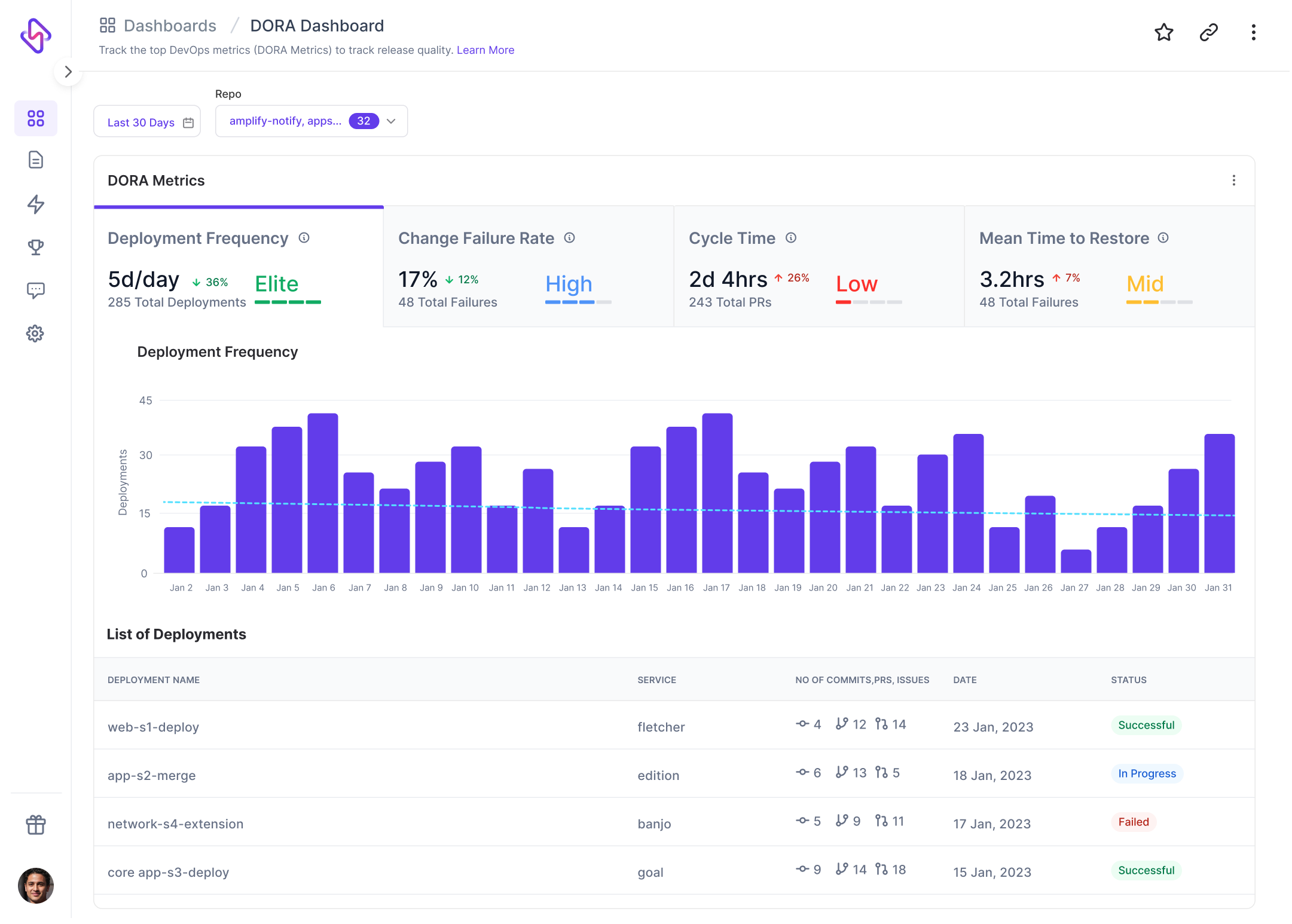
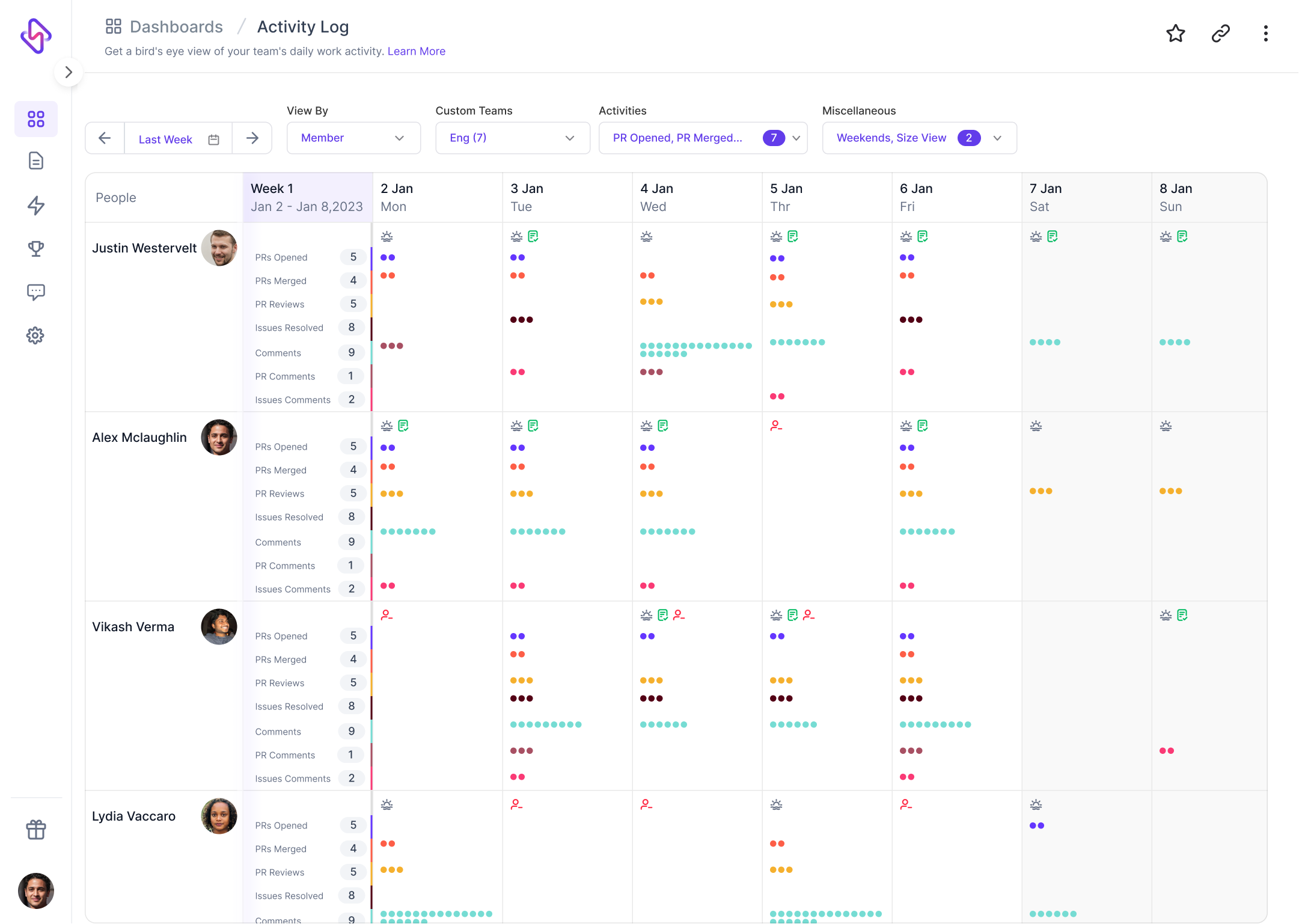
Screenshot of Code cycle time dashboard: Used to track and measure first commit-to-deployment cycle time to identify trends, bottlenecks, and pain points.Screenshot of Team Well-being: Offers insight into team well-being metrics like focus time, meeting time (and its breakdown), and other metrics.Screenshot of Resource Allocation: Provides insight into data and trends around how business strategy translates into engineering work.Screenshot of DORA: Helps to understand DevOps' release velocity and quality.Screenshot of Project Delivery Dashboard: Reveals sprint-over-sprint trends around sprint health, planning and delivery, importance of work, and work allocation.Screenshot of Activity Log: Calendarized view to help visualize work actions, spot trends in unbalanced workload, and be less hands-on.