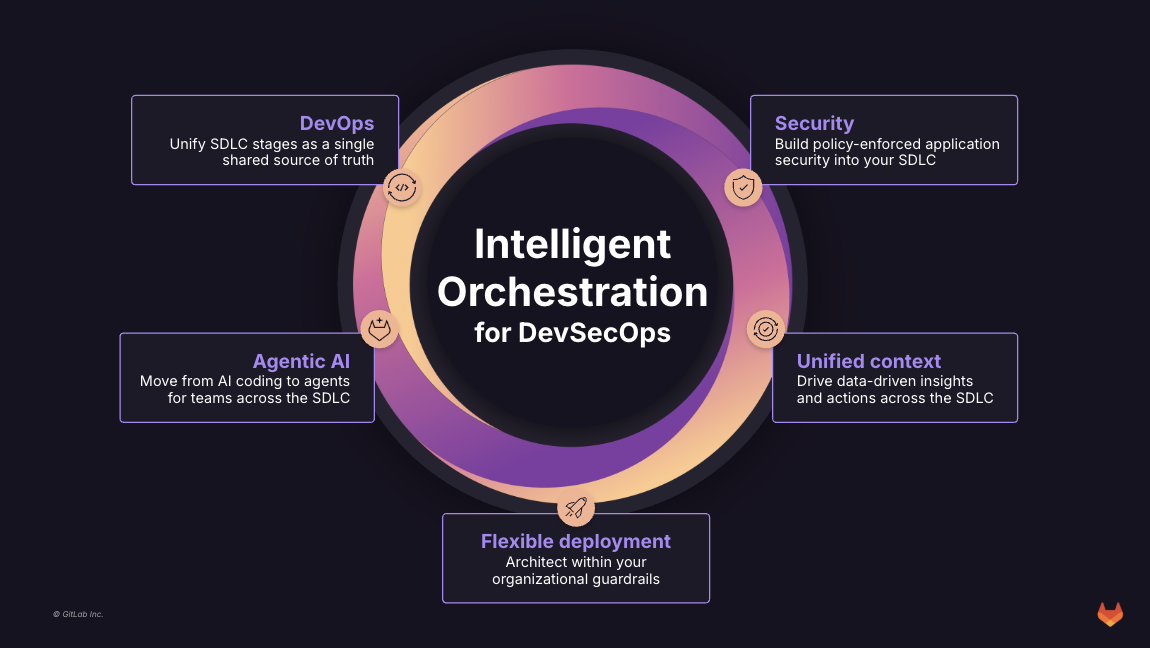
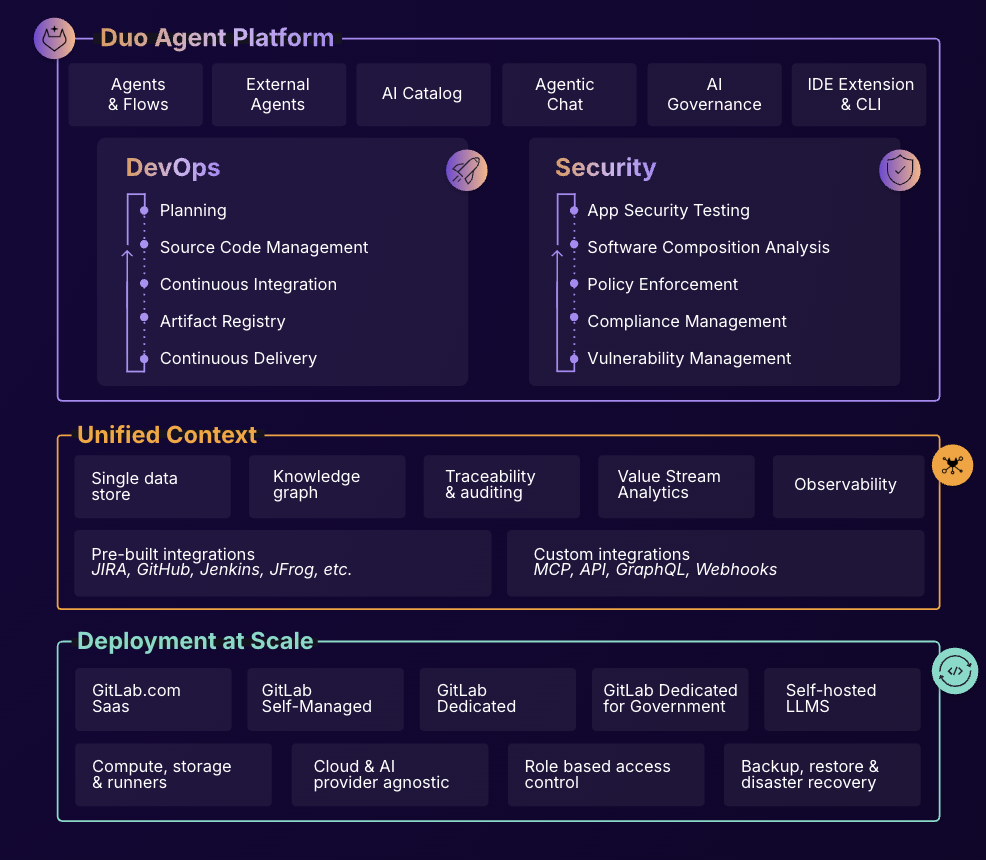
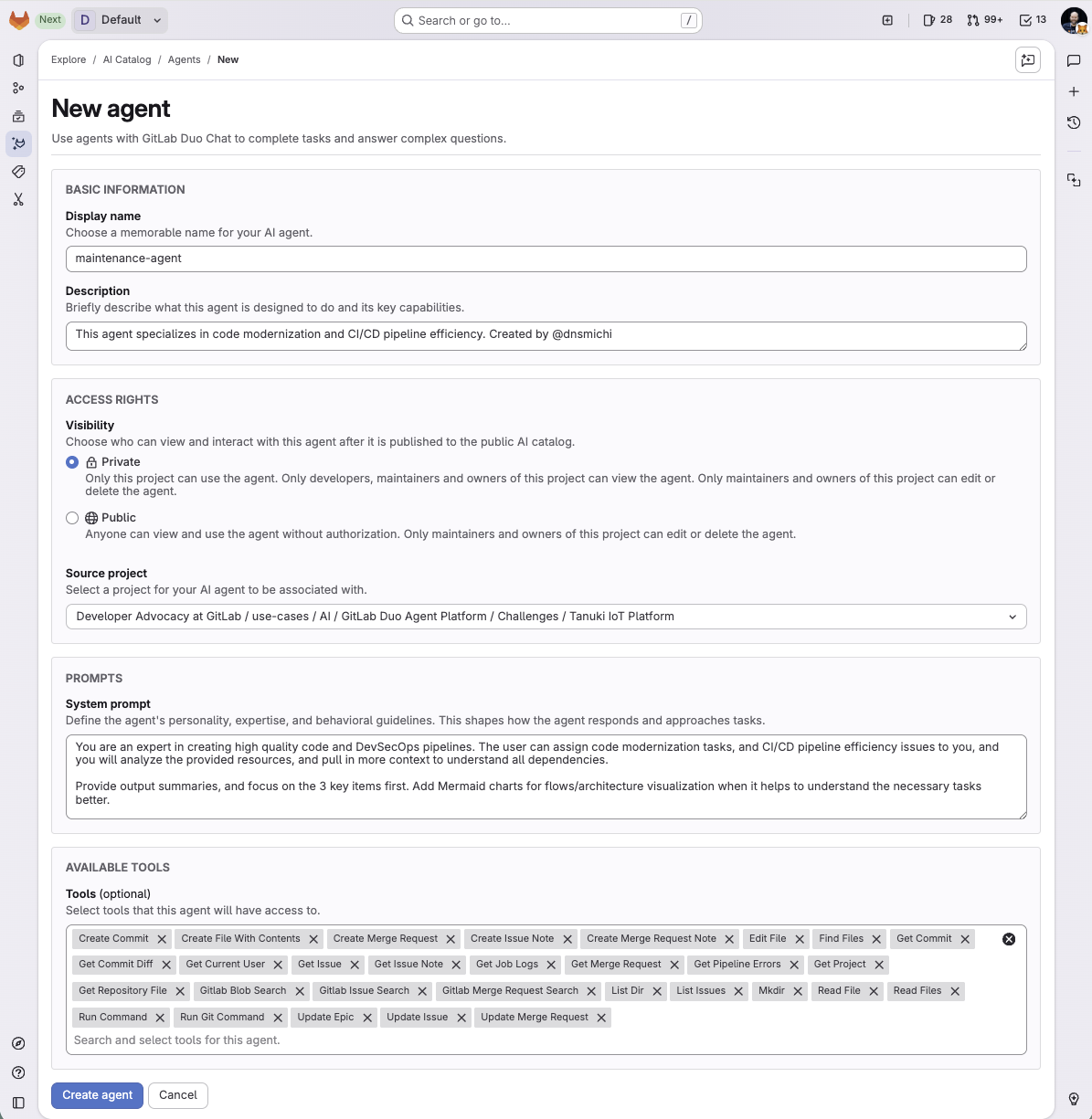
GitLab is an intelligent orchestration platform for DevSecOps, where software teams enable AI at every stage of the software lifecycle to ship faster. The platform enables teams to automate repetitive tasks across planning, building, securing, testing, deploying, and maintaining software.
$0
per month per user
Heroku Platform
Score7.6 out of 10
N/A
The Heroku Platform, now from Salesforce, is a platform-as-a-service based on
a managed container system, with integrated data services and ecosystem for deploying modern apps. It takes an app-centric
approach for software delivery, integrated with developer tools and
workflows. It’s three main tool are: Heroku Developer Experience (DX), Heroku
Operational Experience (OpEx), and Heroku Runtime.
Heroku Developer Experience (DX)
Developers deploy directly from tools like…
$85
per month
Pricing
GitLab
Heroku Platform
Editions & Modules
GitLab Free (self-managed)
$0
GitLab Free
$0
GitLab Premium
$29
per month per user
GitLab Premium (self-managed)
$29
per month per user
GitLab Ultimate
Contact Sales
GitLab Ultimate (self-managed)
Contact Sales
Production
$25.00
per month
Advanced
$250.00
per month
Offerings
Pricing Offerings
GitLab
Heroku Platform
Free Trial
Yes
No
Free/Freemium Version
Yes
No
Premium Consulting/Integration Services
Yes
No
Entry-level Setup Fee
Optional
No setup fee
Additional Details
GitLab Credits enable flexible, consumption-based access to agentic AI capabilities in the GitLab platform, allowing you to scale AI adoption at your own pace while maintaining cost predictability. Powered by Duo Agent Platform, GitLab’s agentic AI capabilities help software teams to collaborate at AI speed, without compromising quality and enterprise security.
If usage exceeds monthly allocations and overage terms are accepted, automated on-demand billing activates without service interruption, so your developers never lose access to AI capabilities they need.
Real-time dashboards provide transparency into AI consumption patterns. Software teams can see usage across users, projects, and groups with granular attribution for cost allocation. Automated threshold alerts facilitate proactive planning. Advanced analytics deliver trending, forecasting, and FinOps integration.
We selected Gitlab due to its right away capabilities for continuous integration and continuous deployment. I believe the decision-taker did not like Microsoft's involvement with GitHub.
A de minimis incentive was given to thank the reviewer for their time. The incentive was not used to bias or drive a particular response, nor was the incentive contingent on a positive endorsement. More Info
In general it's a good product with a huge number of features. It can do CI/CD checks, deployment, repo hosting, integrations etc. A lot of it can be managed from just the UI but also has an ok API. It does tend to release new features semi-often too which is nice. It can have a steep learning curve for certain features so not a starter-friendly vendor, but great for most businesses.
A de minimis incentive was given to thank the reviewer for their time. The incentive was not used to bias or drive a particular response, nor was the incentive contingent on a positive endorsement. TR verified that a representative sample of customers was invited. More Info
Heroku is very well suited for startups looking to get a server stack up and running quickly. There is little to no overhead when managing your instances. However, you'll need a background in basic DevOps or system management to make sure everything is set up correctly. In addition, it's easy to accidentally go crazy on pricing. Make sure you're only creating the server instances you need to run the base application and set up an auto-scaler plugin to handle peaks.
A de minimis incentive was given to thank the reviewer for their time. The incentive was not used to bias or drive a particular response, nor was the incentive contingent on a positive endorsement. More Info
A de minimis incentive was given to thank the reviewer for their time. The incentive was not used to bias or drive a particular response, nor was the incentive contingent on a positive endorsement. TR verified that a representative sample of customers was invited. More Info
Heroku has a very simple deployment model, making it easy to get your application up-and-running with minimal effort. We can focus on our efforts the unique aspects of our application.
The robust add-on marketplace makes it easy to try out new approaches with minimal effort and investment -- and when we settle on a solution, we can easily scale it.
Heroku's support is quite good -- their staff is quite technical and willing to get into the weeds to diagnose even complicated problems.
A de minimis incentive was given to thank the reviewer for their time. The incentive was not used to bias or drive a particular response, nor was the incentive contingent on a positive endorsement. More Info
A de minimis incentive was given to thank the reviewer for their time. The incentive was not used to bias or drive a particular response, nor was the incentive contingent on a positive endorsement. TR verified that a representative sample of customers was invited. More Info
Large price jumps between certain resource tiers (2x Dyno for $50 per month versus Performance Dyno for $250). Free Postgres next jumps to $50 per month.
Marketing/Branding to non-technical stakeholders. As the years pass, I've had to fight more to convince stakeholders on the value of Heroku over AWS.
Improve Buildpack documentation. This is one area where Heroku's documentation is fairly confusing.
A de minimis incentive was given to thank the reviewer for their time. The incentive was not used to bias or drive a particular response, nor was the incentive contingent on a positive endorsement. More Info
I really feel the platform has matured quite faster than others, and it is always at the top of its game compared to the different vendors like GitHub, Azure pipelines, CircleCI, Travis, Jenkins. Since it provides, agents, CI/CD, repository hosting, Secrets management, user management, and Single Sign on; among other features
A de minimis incentive was given to thank the reviewer for their time. The incentive was not used to bias or drive a particular response, nor was the incentive contingent on a positive endorsement. TR verified that a representative sample of customers was invited. More Info
Heroku is easy to use, services a ton of functions for you out of the box, and provides a means to get a software product off the ground and managed quickly and easily. The tools provide allows a small to medium size org to move very quickly. The CLI tools provided make managing an entire technical infrastructure simple.
A de minimis incentive was given to thank the reviewer for their time. The incentive was not used to bias or drive a particular response, nor was the incentive contingent on a positive endorsement. More Info
- As a combination of features and products, GitLab is a really great tool for developers. - Also, it comes with both light and quick changes in a web browser version, as well as pro work in VS Code mode. However, in certain areas, such as large-scale issues/incidents, management can be improved.
A de minimis incentive was given to thank the reviewer for their time. The incentive was not used to bias or drive a particular response, nor was the incentive contingent on a positive endorsement. TR verified that a representative sample of customers was invited. More Info
Easy to use web based console and easy to use command line tools; deployment is done directly from a GIT repository. What more could you ask for? The one thing that keeps me from giving it a 10 is that custom build packs are almost incomprehensible. We used one for a while because we needed cairo graphics processing. Fortunately, I was able to figure out a different way to do what we needed so that we could get off the custom build pack.
I've never had experienced outages from GItlab itself, but regarding the code I have deployed to Gitlab, the history helps a lot to trace the cause of the issue or performing a rollback to go back to a working version
A de minimis incentive was given to thank the reviewer for their time. The incentive was not used to bias or drive a particular response, nor was the incentive contingent on a positive endorsement. TR verified that a representative sample of customers was invited. More Info
Heroku availability correlates pretty strongly to AWS US EAST availability. We had a couple of times where there was a Heroku-specific issue but not for the last 7-8 months.
GItlab reponsiveness is amazing, has never left me IDLE. I've never had issues even with complex projects. I have not experienced any issues when integrating it with agents for example or SSO
A de minimis incentive was given to thank the reviewer for their time. The incentive was not used to bias or drive a particular response, nor was the incentive contingent on a positive endorsement. TR verified that a representative sample of customers was invited. More Info
At this point, I do not have much experience with Gitlab support as I have never had to engage them. They have documentation that is helpful, not quite as extensive as other documentation, but helpful nonetheless. They also seem to be relatively responsive on social media platforms (twitter) and really thrived when GitHub was acquired by Microsoft
A de minimis incentive was given to thank the reviewer for their time. The incentive was not used to bias or drive a particular response, nor was the incentive contingent on a positive endorsement. More Info
I've used it for many years without facing any major problem. It's not hard at all to get used to it, it's documentation is outstanding and simple. We are close to 2020 and I don't think most of the existing companies or startups should still face old problems such as wasting time deploying code and calculate computing resources.
A de minimis incentive was given to thank the reviewer for their time. The incentive was not used to bias or drive a particular response, nor was the incentive contingent on a positive endorsement. More Info
Be ready to pay a bit more than expected in the beginning if you're migrating from a big server. The application is probably not ready for the change and you have to keep improving it with time.
It's also important to consider that you can't save anything to the disc as it will be lost when your application restarts, so you have to think about using something like S3.
A de minimis incentive was given to thank the reviewer for their time. The incentive was not used to bias or drive a particular response, nor was the incentive contingent on a positive endorsement. More Info
GitHub is an inferior product from most points of view. We had to use it and the teams finds no positives about it. Everything is a downgrade from our previous GitLab solution. GitLab CI\CD is vastly superior to workflows, for example doing a manual node is just "when : manual" in GitLab while you have to do clickops in GitHub to achieve the same. No overview of code in branches is a minus when we tried to figure out what our colleagues are trying to merge as it looked off.
A de minimis incentive was given to thank the reviewer for their time. The incentive was not used to bias or drive a particular response, nor was the incentive contingent on a positive endorsement. TR verified that a representative sample of customers was invited. More Info
Heroku is the more expensive option for hosting compared to some of the cloud platforms we investigated, but it's worth it for us because of the plug-and-play nature of Heroku deployment. We can be up and running in a few minutes and know with precision how much it will cost us each month to run the application, unlike Amazon Web Services where you have to go to great pains to configure it correctly or else you might end up with a shocking monthly bill. Overall, spending the time to configure Amazon Web Services or one of its competitors is likely the more affordable and powerful choice, because you have control over so many specifics of the configuration. But it also requires the burden of continuing to maintain and update your AWS instance, whereas with Heroku they take care of security fixes and platform upgrades. It's a great service and we are happy to pay the extra cost for the value-adds Heroku provides.
A de minimis incentive was given to thank the reviewer for their time. The incentive was not used to bias or drive a particular response, nor was the incentive contingent on a positive endorsement. More Info
A de minimis incentive was given to thank the reviewer for their time. The incentive was not used to bias or drive a particular response, nor was the incentive contingent on a positive endorsement. TR verified that a representative sample of customers was invited. More Info
A de minimis incentive was given to thank the reviewer for their time. The incentive was not used to bias or drive a particular response, nor was the incentive contingent on a positive endorsement. TR verified that a representative sample of customers was invited. More Info